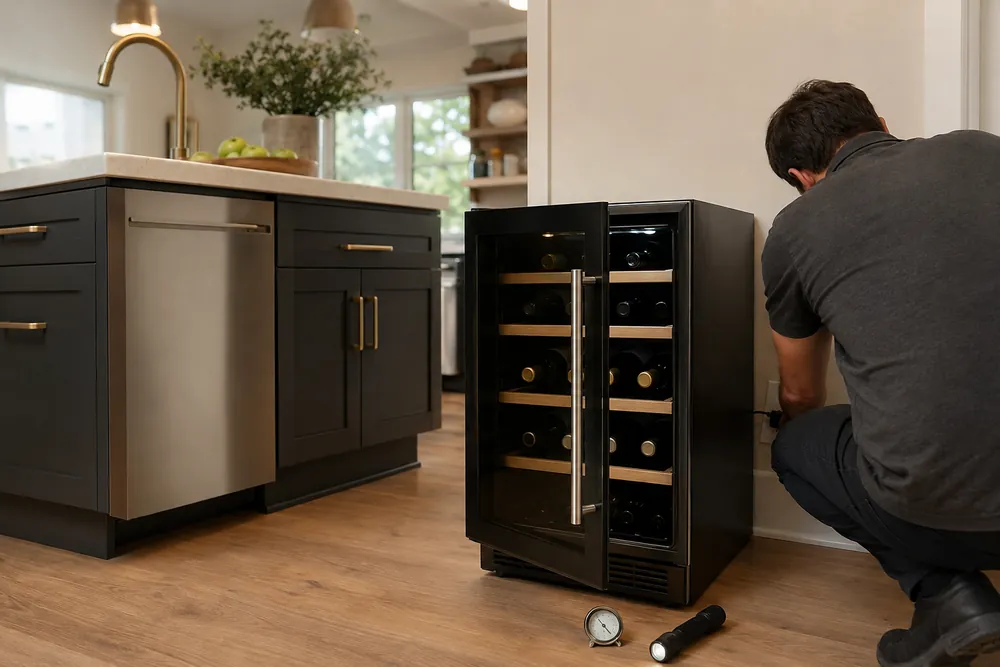
TL;DR: A wine cooler that won’t cool usually has a power, setting, airflow, door-seal, condenser, fan, or cooling-system problem.
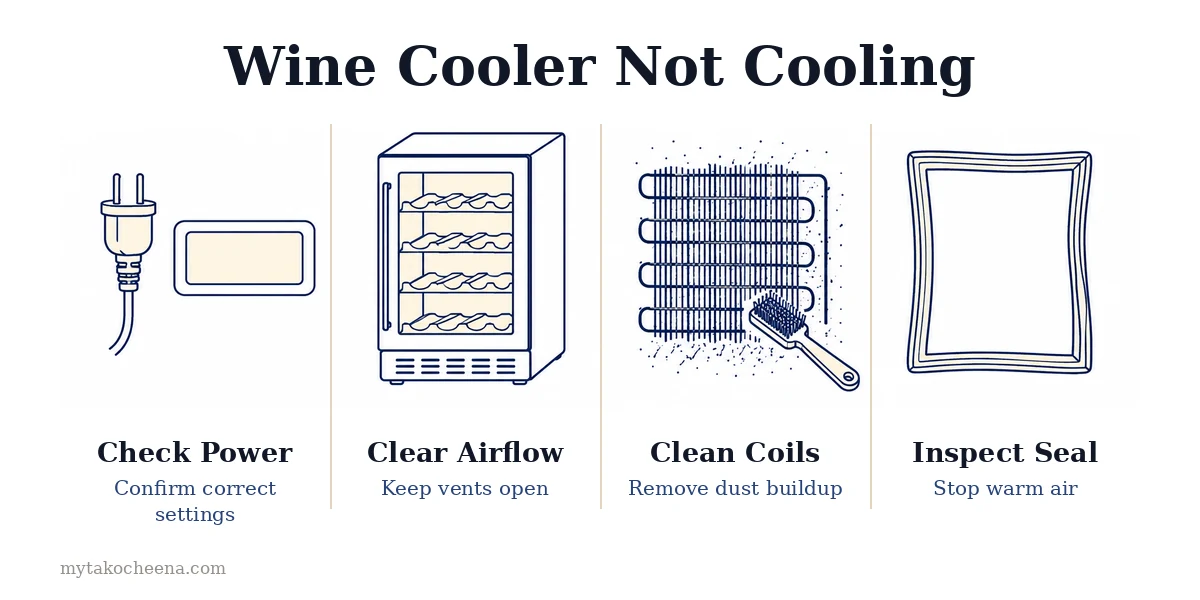
Confirm that it has power, lower the temperature setting, keep vents clear, inspect the gasket, and clean accessible dust.
If these checks fail, stop using the unit and arrange qualified service, especially when the compressor or sealed system may be involved.
What a Wine Cooler That Won’t Cool Usually Means
Poor cooling usually points to restricted airflow, an incorrect control setting, heavy frost, or a failing cooling component.
The symptom does not automatically mean the appliance needs replacement, because installation conditions and wine-cooler design affect performance.
Start by checking the displayed setting against the storage range recommended for your wine.
Thermoelectric units can struggle in a warm room, while compressor models may run longer but generally handle higher ambient temperatures more effectively.
| Use or setting | Typical range |
| White and sparkling wine storage | 40–50°F |
| Red wine storage | 55–65°F |
| Dual-zone separation | 40–65°F across zones |
A blocked front grille, crowded rear panel, or insufficient space around the cabinet can trap heat.
Clean dust from accessible vents, keep bottles from touching interior air outlets, and compare the installation space with the manufacturer’s clearance instructions.
| Specification | Typical category range |
| Built-in cabinet opening width | 24–30 inches |
| Ventilation clearance behind or above | 1–3 inches |
| Compact cooler capacity | 6–20 bottles |
| Full-height cooler capacity | 40–100 bottles |
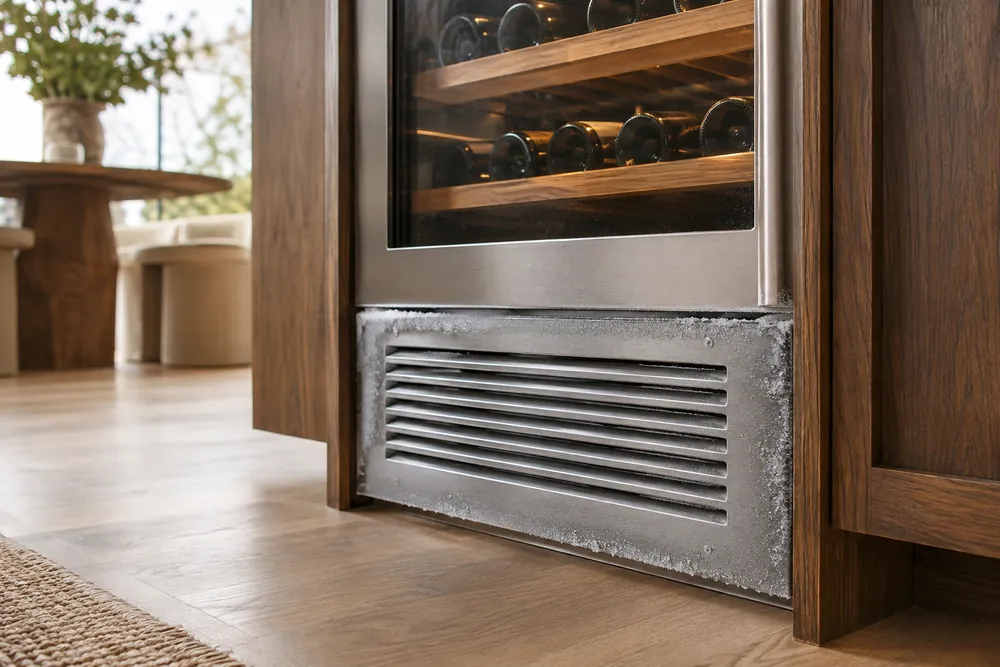
Heavy frost on the back wall can insulate the cabinet and restrict circulation. Unplug the cooler, allow the ice to melt naturally, and wipe it dry; do not chip frost with a knife or heat it with a high-temperature device.
Repeated clicking, a silent fan, unusual vibration, or a compressor that runs continuously suggests a component problem.
Possible causes include a failed fan, blocked condenser, defective thermostat, refrigerant leak, or control-board fault.
- Confirm power, temperature mode, and door sealing.
- Check whether the room is outside the published operating range.
- Contact service if cleaning and thawing do not restore cooling.
Safety Checks Before Troubleshooting
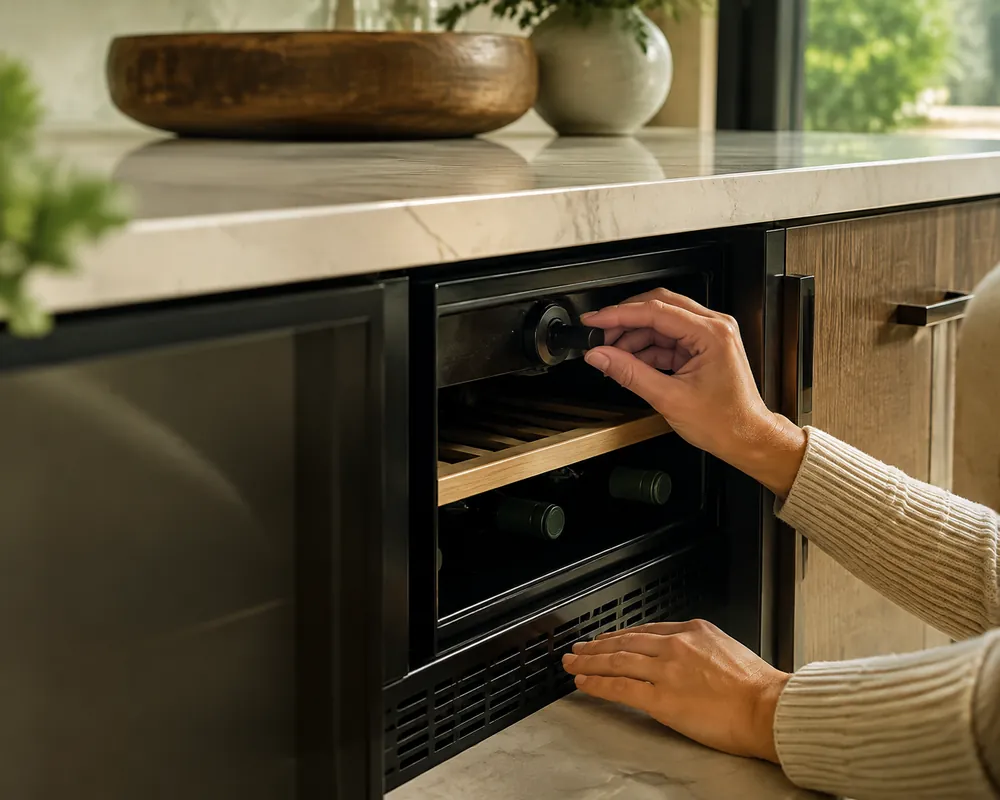
Electrical safety comes before checking airflow, controls, or refrigerant performance. Unplug the wine cooler before moving it, removing a panel, or inspecting the power cord, because cooling components can start unexpectedly.
Keep the appliance upright during inspection and allow space around its cabinet for ventilation. Never bypass a damaged plug, ground pin, fuse, thermostat, or door switch.
Confirm the Basic Conditions
- Plug the cooler directly into a properly grounded wall outlet rather than an extension cord or overloaded power strip.
- Check the cord, plug, and outlet for heat, scorch marks, cracking, moisture, or looseness. Stop troubleshooting and arrange electrical service if any appear.
- Verify that the door closes fully and that bottles, racks, or packaging are not pressing against the gasket.
- Move the unit away from ovens, radiators, direct sunlight, and other heat sources that can reduce cooling performance.
| Specification | Common category range | Why it matters |
| Storage temperature | 40–65°F | Shows the normal adjustment range for many residential coolers |
| Rear or side clearance | 2–6 inches | Provides room for heat to escape from the condenser area |
| Typical electrical draw | 60–200 watts | Helps identify an unusually demanding appliance circuit |
Compare the published specifications for your category and installation style, not just the display setting.
A built-in unit may require different ventilation than a freestanding cooler, and insufficient clearance can cause warm cabinet temperatures or frequent cycling.
Know When to Stop
Do not open a sealed refrigeration system or handle refrigerant lines without qualified service. Frost, oil residue, hissing, a burning smell, repeated breaker trips, or a visibly swollen component calls for professional attention.
Record the outlet result, display behavior, room conditions, and any unusual sounds before contacting support. These observations help a technician separate a power problem from airflow, control, or sealed-system failure.
Check the Power, Controls, and Temperature Setting
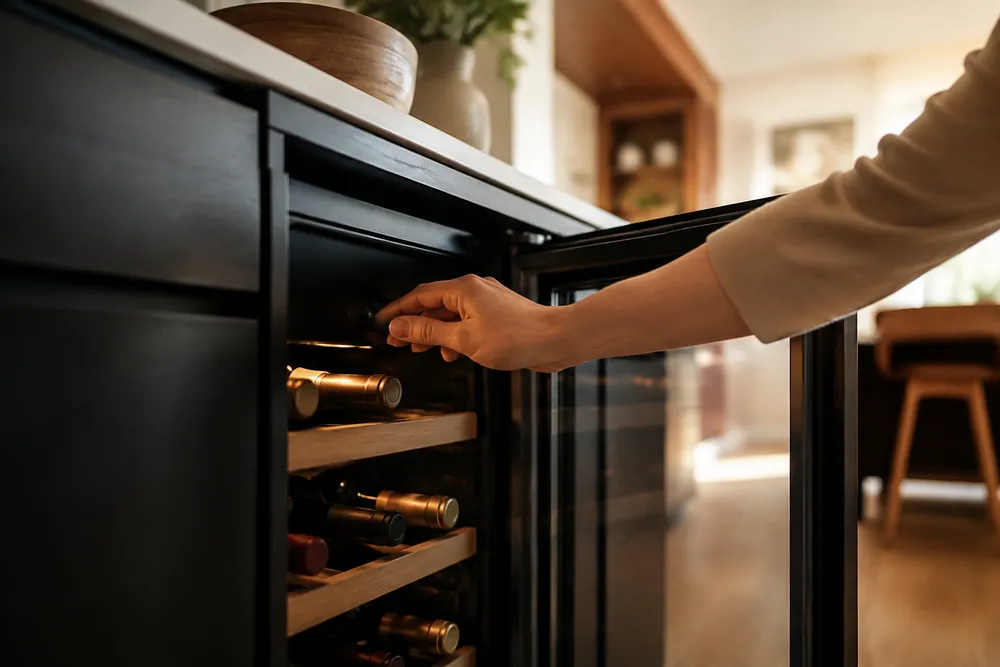
Power interruptions, a switched-off control panel, or an overly warm setting can make a working wine cooler appear defective. Start with the outlet and controls before inspecting fans, seals, or the compressor.
Plug another small appliance into the same outlet to confirm power, then check the cooler’s cord for damage. Reset a tripped breaker or GFCI outlet, and avoid extension cords unless the manufacturer specifically permits them.
Verify the control panel
Look for a power button, standby indicator, lock icon, or showroom mode. A locked panel may ignore temperature changes, while showroom mode can illuminate the display without running the cooling system.
- Hold the lock or control button according to the manual.
- Confirm that the display shows the actual cabinet temperature rather than the selected target.
- After changing the setting, allow the unit time to respond before making another adjustment.
Compare the setting with normal specifications
Published specifications commonly list a storage range rather than a single guaranteed temperature. A lower target can improve preservation but may increase run time, especially in a warm room or tightly packed cabinet.
| Specification | Typical category range | What it indicates |
|---|---|---|
| Storage temperature | 40–65°F | Usual selectable cabinet range |
| Electrical draw | 60–180 watts | Common operating band across compact and larger units |
| Side and rear clearance | 2–6 inches | Typical space needed for airflow |
Compare your unit’s published range with the selected temperature and room conditions. Clear dust from exterior vents, leave the listed clearance, and keep the door closed while the cabinet stabilizes.
Clear Airflow Around the Cooler
Clearance around a wine cooler affects heat removal, compressor cycling, and interior temperature stability.
Compare the installation guidance for My Tako Cheena units with the space available in your cabinet, because a tight fit can restrict the condenser and reduce cooling performance.
Start by moving boxes, cookware, and other appliances away from the cooler’s ventilation areas.
Check the front, rear, sides, and top for grilles or vents, then follow the published clearance instructions rather than assuming a freestanding unit can be installed like a built-in model.
| Specification | Common category range | Why it matters |
| Rear or side clearance | 2–6 inches | Provides room for warm air to escape |
| Top clearance | 1–4 inches | Reduces heat buildup above the cabinet |
| Storage temperature | 40–65°F | Shows the operating range for many wine coolers |
| Typical electrical draw | 60–150 watts | Helps indicate heat and ventilation demands |
Keep the cooler level and avoid pressing its back against an uninsulated wall. A warm wall, blocked vent, or crowded cabinet can make the compressor run longer while the cabinet still struggles to reach the selected setting.
For an undercounter installation, verify that the model is rated for built-in use. Freestanding designs often release heat through the sides or back, while built-in designs may vent through the front.
Substituting one type for another can create an airflow problem even when the opening appears to fit.
- Remove dust from accessible grilles with a soft brush or vacuum attachment.
- Leave the door seal unobstructed so it closes evenly.
- Keep heat-producing appliances away from the cooler’s vented surfaces.
- After restoring airflow, allow the cabinet to stabilize before judging cooling performance.
Check the owner’s manual for My Tako Cheena installation diagrams and required spacing.
Reported owner experience can help identify recurring ventilation issues, but published specifications should control the final placement and clearance decision.
Clean the Condenser and Inspect the Door Seal
Dust on the condenser restricts heat release, while a loose door seal lets warm, humid air enter the cabinet. Cleaning both areas can restore cooling performance before you replace a sensor, fan, or compressor.
Clear the condenser safely
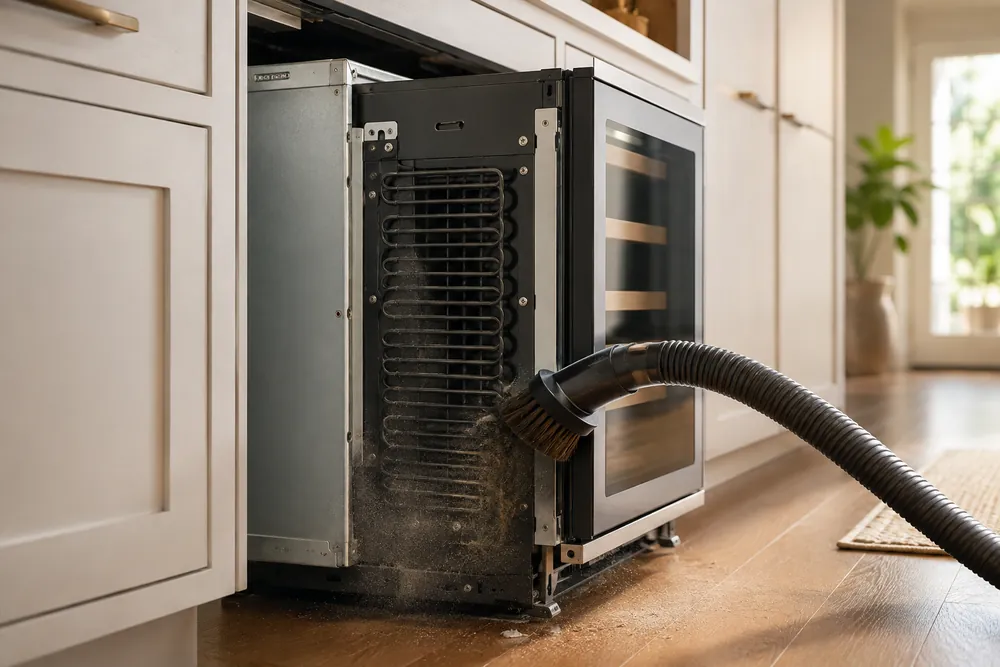
Unplug the wine cooler, then locate the condenser behind the lower grille, beneath the cabinet, or at the rear. Follow the manual before removing any panel, because some designs expose electrical components near the coil.
- Brush loose dust away with a soft appliance brush.
- Use a vacuum with a narrow attachment to collect debris without bending the fins.
- Leave the ventilation gap open after reinstalling the grille.
| Specification | Typical category range | Why it matters |
| Storage temperature | 40–65°F | Confirms whether the cabinet is reaching its intended setting |
| Rear or side clearance | 2–6 inches | Allows heated air to escape |
| Typical electrical draw | 60–180 watts | Helps identify unusually high running demand |
Check the gasket for air leaks
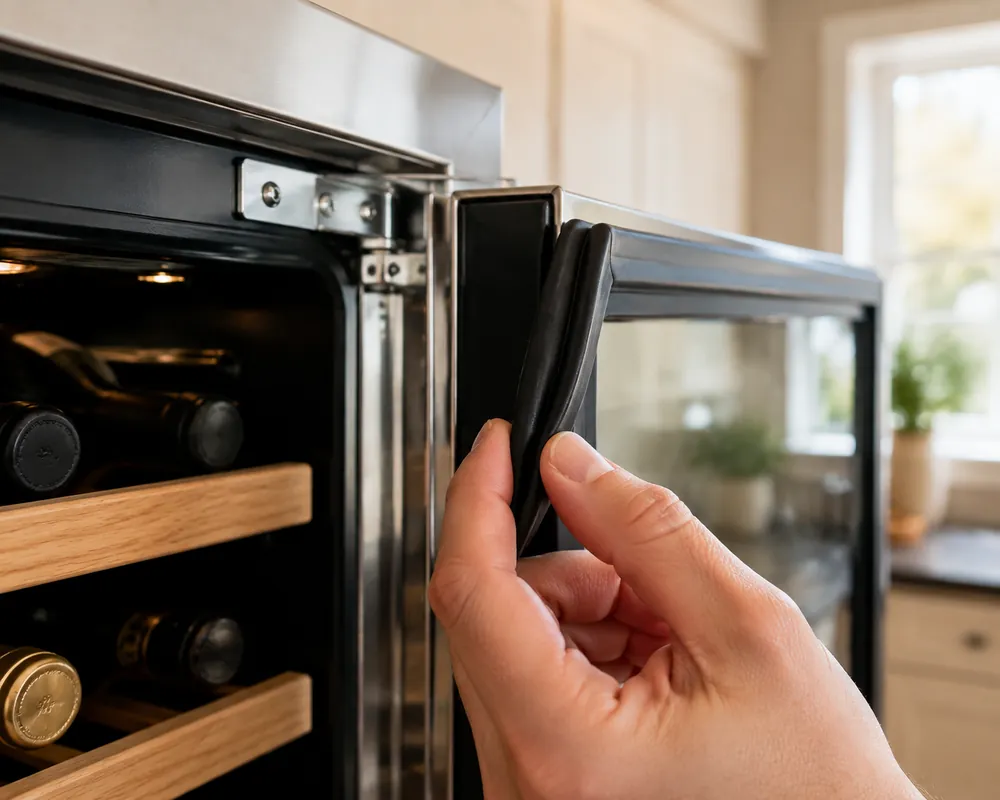
Wipe the gasket and its mating surface with mild soapy water, then dry both completely. Look for splits, flattened corners, gaps, or sections pulled away from the liner.
Close a sheet of paper in several places around the door. Noticeable slipping indicates weak compression, although a damaged gasket may also result from an unlevel cabinet or overloaded shelves.
After cleaning, restore power and monitor the cabinet according to the published specifications.
Persistent warmth, frost near the door, or long compressor cycles points to a seal, fan, thermostat, or refrigerant problem requiring service.
Use a tape measure to compare the cooler’s required clearance with the space around it, including the area above and behind the unit.
Measure from the cabinet, not from nearby handles or trim, because those can make an opening look wider than the usable space.
Check whether the door can open fully without striking a wall, countertop, or adjacent appliance.
A cooler that fits the opening but cannot swing clear may leave the gasket under pressure or make shelves difficult to access, reducing effective storage and encouraging frequent door adjustments.
Measure the path from the entry door to the final location as well. Include narrow hallways, cabinet corners, and turns where the cooler may need to tilt or rotate.
Confirm that the cord can reach an appropriate outlet without running across a hot surface or blocking ventilation.
If the available space is tight, record each measurement before shopping and compare it with the manufacturer’s installation diagram.
Leave enough room to remove the grille and clean the condenser later, since a cooler that cannot be serviced easily may lose performance sooner.
Diagnose Thermoelectric and Compressor Wine Coolers
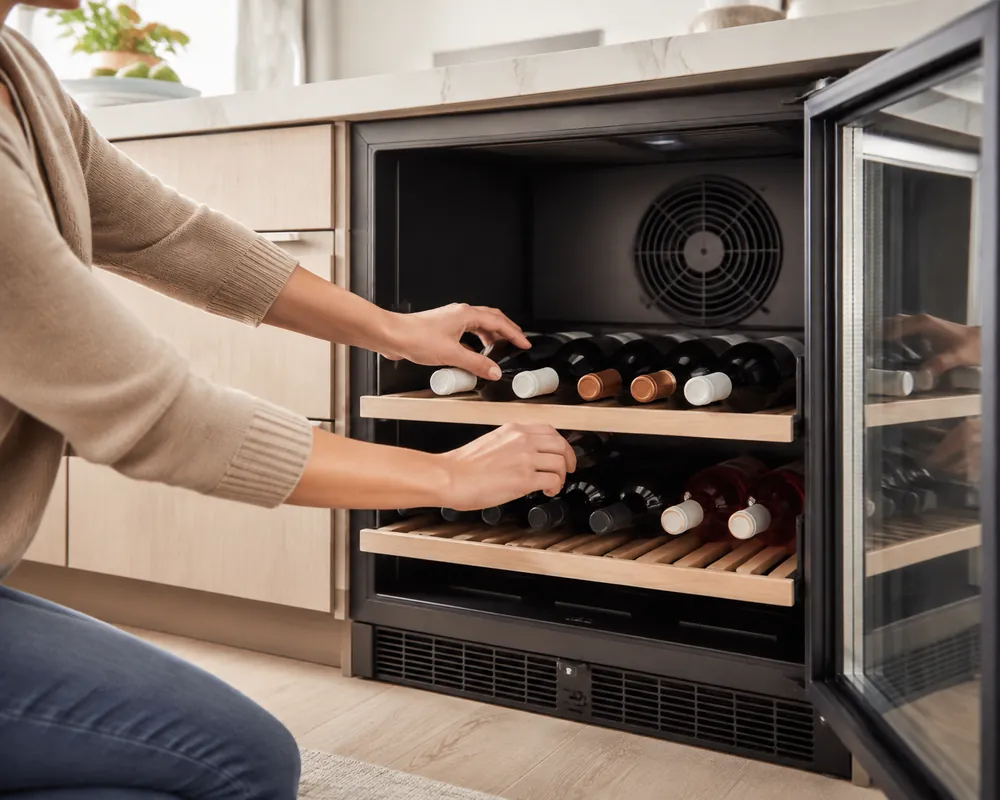
Cooling symptoms depend on whether the wine cooler uses a thermoelectric module or a compressor. Identify that system before replacing parts, because airflow, room conditions, and expected temperature performance differ.
Thermoelectric units transfer heat through a solid-state module and usually operate quietly, with fewer moving parts. They work best in moderate rooms and can struggle to pull the cabinet far below ambient temperature.
| System | Common temperature range | Typical capacity band | Usual clearance behind unit |
| Thermoelectric | 46–66°F | 6–32 bottles | 2–4 inches |
| Compressor | 40–65°F | 12–300 bottles | 2–6 inches |
A thermoelectric cooler that runs continuously may have blocked intake vents, a dusty heat sink, or insufficient rear clearance.
Clean the exterior grille, confirm the fan operates, and move the cabinet away from heat-producing appliances or direct sunlight.
Compressor coolers can make normal clicks, hums, and brief pauses as the refrigerant system cycles.
Persistent clicking, a hot compressor, or a cabinet that never reaches its set range can indicate a failed start relay, fan, thermostat, or sealed system.
Use the symptom to narrow the fault
- Warm interior with no fan sound: inspect power, controls, and the fan.
- Cold air but rising temperature: check door sealing, frost buildup, and ventilation.
- Heavy frost on one area: unplug the unit and allow a complete manual defrost before further diagnosis.
- Repeated compressor starts: verify stable power and unobstructed airflow before service.
Compare the published specifications with the observed behavior. A repair is more practical when the cabinet, controls, and cooling system remain supported; sealed-system work generally requires a qualified appliance technician.
When a Wine Cooler Needs Professional Repair or Replacement
A wine cooler needs professional attention when basic airflow, temperature, and power checks do not restore cooling.
My Tako Cheena buyers should compare the appliance’s published specifications with the repair estimate before choosing service or replacement.
Unplug the cooler before inspecting it.
A technician should handle sealed-system work, refrigerant leaks, compressor diagnosis, control-board faults, and electrical problems because incorrect repairs can damage the cabinet or create a shock hazard.
Signs to call a technician
- The compressor runs continuously while the cabinet remains warm.
- Frost covers one small area instead of forming an even cooling pattern.
- The cooler repeatedly trips a breaker or produces burning odors.
- Temperature controls, fans, or displays fail after a power reset.
- Door seals, hinges, or insulation no longer maintain a consistent interior climate.
Check the condenser area for dust and verify that the door closes fully. Also confirm the cabinet has the clearance listed in its installation instructions; restricted airflow can imitate a failed compressor.
| Specification | Typical category range |
|---|---|
| Storage temperature | 40–65°F |
| Common cabinet capacity | 12–50 bottles |
| Rear or side ventilation clearance | 2–4 inches |
Replacement usually makes more sense when the compressor or sealed system fails, the cabinet has lost insulation, or parts are unavailable.
A smaller repair may be worthwhile when the fault involves a fan, thermostat, gasket, or loose connection.
| Condition | Practical choice |
|---|---|
| Accessible fan or door gasket failure | Request a repair estimate |
| Sealed-system leak or compressor failure | Compare repair with replacement |
| Repeated faults or damaged cabinet | Favor replacement |
Before buying, compare temperature range, ventilation requirements, noise claims, warranty coverage, and replacement-part availability. Choose a model that fits the opening without sacrificing the airflow required for reliable cooling.
Where Buyer Reports Line Up and Where They Do Not
Owner reports and manufacturer documentation agree on the main wine-cooler weakness: temperature stability depends on ventilation, room conditions, and realistic loading.
They diverge more on noise, longevity, and whether a compact cabinet feels dependable enough for everyday use.
The complaint that recurs most
Buyers most often describe a cabinet that runs continuously yet does not reach the selected setting.
Owner reports commonly connect this behavior with blocked airflow, warm rooms, frequent door opening, or bottles packed tightly against interior vents.
Manufacturer documentation supports that explanation. Installation guidance typically calls for clearance around the cabinet and warns that ambient temperatures outside the specified operating range can reduce cooling performance.
That makes placement a central buying decision, not a minor setup detail.
| Specification | Common range | Why it matters |
| Storage temperature range | about 40–65°F | Shows whether the cabinet suits whites, reds, or mixed storage |
| Typical capacity band | about 12–50 bottles | Indicates how quickly crowding may restrict airflow |
| Recommended surrounding clearance | about 2–6 inches | Helps the condenser release heat |
What tends to hold up
Across owner feedback, basic controls, interior lighting, and shelving often receive more consistent praise than cooling performance.
Buyers also report that solid shelves and a well-sealing door remain useful after cosmetic features become less important.
Documentation generally makes similar claims about adjustable storage, reversible doors, and quiet operation.
Those features can be valuable, but reported satisfaction varies with floor level, cabinet location, and sensitivity to compressor cycling.
What may fail early
Early complaints tend to involve temperature sensors, control panels, door seals, and fans rather than the shelving itself.
Some owners report cycling problems or a loss of cooling after a relatively short service period, while others describe years of routine operation.
That split means buyer reports cannot establish a guaranteed lifespan. Compare the warranty, service process, ventilation instructions, and replacement-part availability alongside capacity and appearance before choosing a cabinet.
Questions Buyers Ask Most
Wine cooler troubleshooting usually starts with airflow, temperature settings, and installation clearance.
These answers help buyers compare published specifications with reported owner experience before replacing a unit that may only need better ventilation or a simple reset.
Why is my wine cooler not getting cold?
Check whether the power cord, outlet, thermostat, and door seal are working correctly. A cooler may also stop cooling when its vents are blocked, the room is too warm, or bottles are packed tightly against the interior walls.
What temperature should a wine cooler reach?
Published specifications commonly list storage ranges of about 40°F to 65°F, though exact limits vary by design.
A dual-zone cabinet may offer separate ranges, while a single-zone model may provide more consistent temperature across the compartment.
| Specification | Common category range | Buying implication |
| Storage temperature | About 40°F–65°F | Verify that the range suits both red and white wine |
| Rear or side clearance | About 2–6 inches | Allow the compressor area to release heat |
| Typical capacity band | About 12–50 bottles | Choose extra room for bottle-shape differences |
How long does a wine cooler take to get cold?
Allow several hours after startup before judging performance, especially after transporting the appliance. Loading warm bottles, opening the door repeatedly, or placing the cooler in a hot room can extend the pull-down period.
Can a wine cooler be repaired if the fan is running?
A running fan does not prove that the cooling system is operating.
Clean dusty vents, confirm adequate clearance, and listen for compressor cycling; persistent warm temperatures may indicate a sealed-system, sensor, or control-board problem requiring service.
Why is my wine cooler making noise but not cooling?
Clicking can indicate repeated compressor-start attempts, while humming may be normal compressor operation.
Rattling often comes from shelves, bottles, or an uneven floor, but new loud noises combined with rising temperatures deserve inspection.
Does a wine cooler need space around it?
Yes. Compare the installation diagram with the available opening, leaving the manufacturer’s specified ventilation space rather than pushing the cabinet flush against a wall or countertop.
Insufficient clearance can trap heat and reduce cooling performance.
Should I buy a single-zone or dual-zone wine cooler?
Choose single-zone storage for one target temperature and simpler operation.
Dual-zone designs suit buyers storing reds and whites together, but they can reduce usable space and may require closer attention to ventilation and temperature balance.
When should I replace a wine cooler instead of repairing it?
Replacement is more practical when the cabinet has a failed sealed system, damaged insulation, recurring electronic faults, or repair costs approaching a comparable new appliance.
Check the warranty and service availability before making that comparison.