TL;DR: A wine cooler is a purpose-built appliance for holding wine at steadier, wine-appropriate temperatures, while a mini fridge is a compact food-and-drink refrigerator that usually runs colder.
For short-term chilling, a mini fridge can work. For bottles you care about, corked wine, or storage beyond casual use, a wine cooler is the safer choice.
Wine Cooler vs Mini Fridge: The Core Difference
Wine storage depends on stable, wine-appropriate temperature, not simple food chilling. A wine cooler is built for bottles, while a mini fridge is built for snacks, drinks, and short-term food storage.
Specifications show the split quickly. Wine coolers commonly offer ranges for red, white, or sparkling wine, while mini fridges often run colder than ideal wine serving or storage conditions.
| Category | Wine cooler | Mini fridge |
| Common temperature range | About 40°F-65°F | About 32°F-50°F |
| Common bottle or storage capacity band | About 6-50 wine bottles for compact and mid-size units | About 1.7-4.5 cu. ft. for compact household units |
| Usual rear or side clearance guidance | About 1-3 inches for many freestanding units | About 2-5 inches for many compact refrigerators |
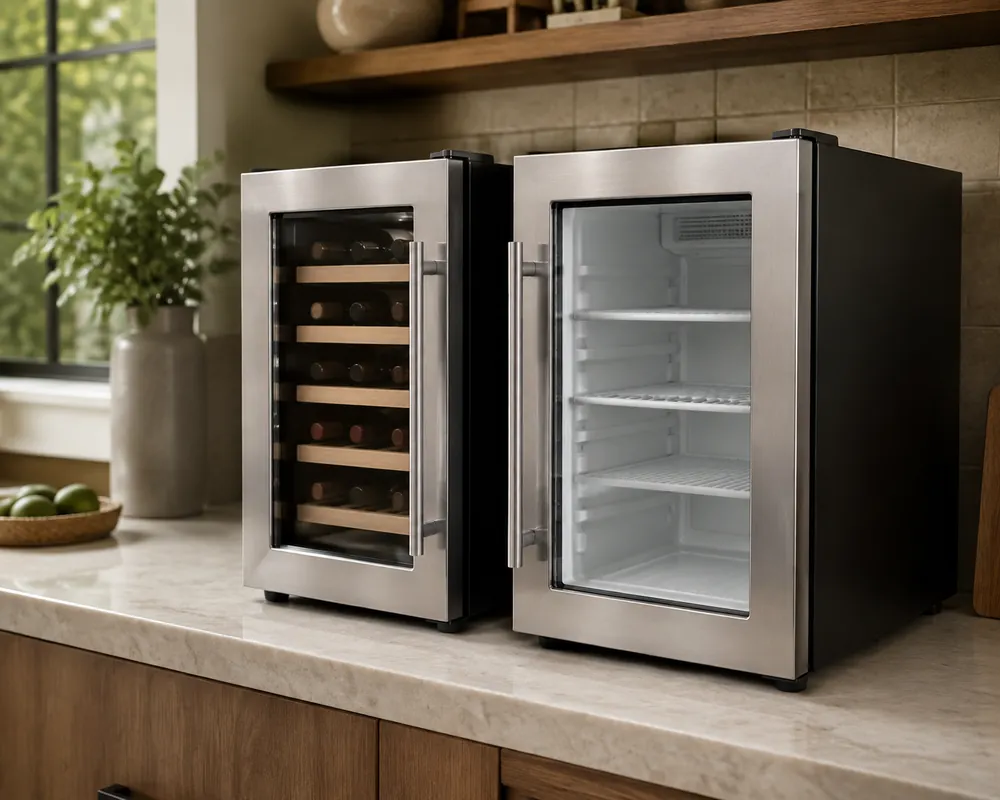
A wine cooler usually uses racks shaped for bottles, helping keep corks oriented and labels visible. A mini fridge uses flat shelves, door bins, and layouts meant for cans, leftovers, and condiments.
Humidity and vibration create another divide. Many wine coolers emphasize lower vibration and wine-friendly conditions. Mini fridges rarely make wine preservation the central design goal, even when they can hold bottles.
What that means for actual wine storage
- Choose a wine cooler for bottles kept longer than casual weekend use, especially reds, whites, and mixed collections.
- Choose a mini fridge for canned drinks, mixers, snacks, and occasional short-term wine chilling.
- Check the published temperature range before buying, because the lowest and highest settings matter more than the product name.
- Check interior dimensions if storing Champagne, Pinot Noir, or wider Burgundy-style bottles.
The core difference is purpose. A wine cooler manages bottles for wine storage, while a mini fridge prioritizes general refrigeration. For wine quality, purpose-built design is the reason to compare specifications before choosing.
Temperature Control and Why Wine Needs a Narrower Range
Wine needs tighter temperature control because sustained heat or cold can change flavor, aroma, and cork condition.
Published specifications show the difference.
| Appliance category | Common temperature range | Best fit |
| Wine cooler | About 40°F-65°F | Red, white, and sparkling wine storage |
| Mini fridge | About 32°F-50°F | Cans, snacks, leftovers, and short-term chilling |
A mini fridge may chill whites but miss warmer red-wine ranges.
Wine benefits from steadier temperatures and fewer compact-fridge swings.
| Wine type or use | Typical target range | Why it matters |
| Longer-term wine storage | About 50°F-59°F | Supports slower aging and steadier cork conditions |
| White and sparkling service | About 40°F-50°F | Keeps acidity crisp without over-chilling every bottle |
| Red wine service | About 55°F-65°F | Preserves aroma and texture better than refrigerator-cold storage |
Controls differ: wine coolers target bottles; mini fridges use broader dials.
- Choose a wine cooler for bottles you plan to keep, age, or serve across red and white temperature ranges.
- Choose a mini fridge for mixed drinks and casual chilling where exact wine temperature matters less.
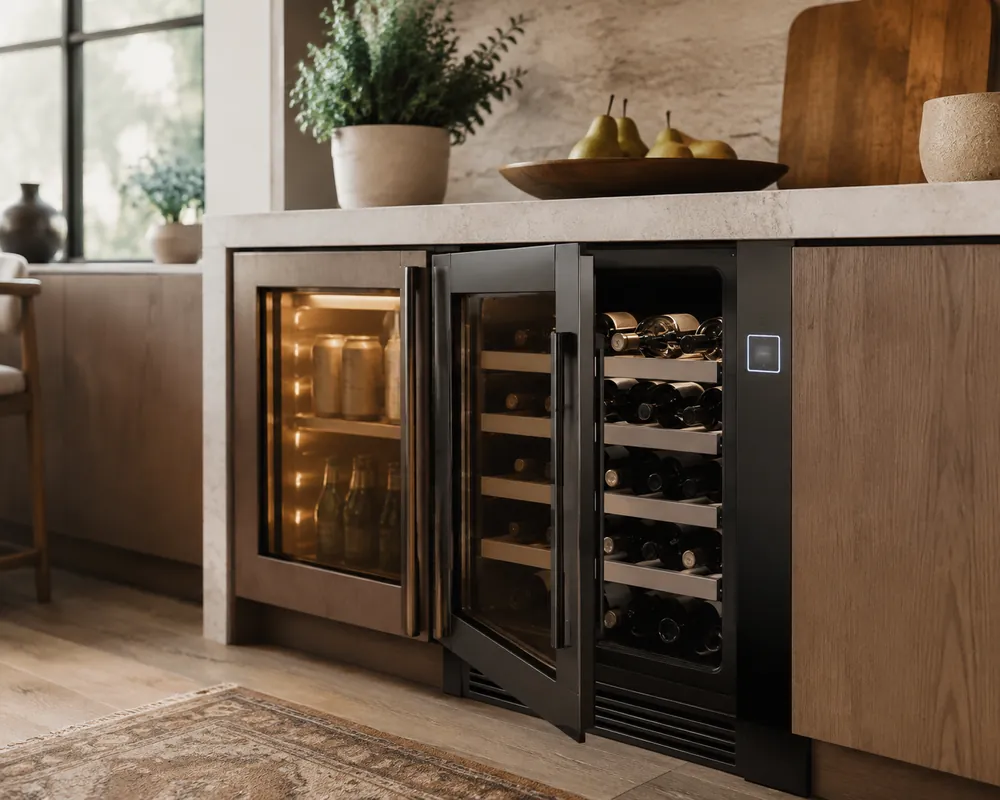
Humidity, Corks, and Long-Term Bottle Condition
Humidity control matters because corks can dry, shrink, or let oxygen reach the wine. A wine cooler is built for bottle storage, while a mini fridge is built for chilled food and drinks.
Published specifications rarely list exact humidity performance. That makes construction, airflow, and temperature range more useful than marketing language.
| Appliance type | Common temperature range | Humidity and cork impact |
|---|---|---|
| Wine cooler | About 40°F-65°F | Warmer, steadier storage helps reduce cork stress compared with very cold refrigeration. |
| Mini fridge | About 32°F-50°F | Colder air and stronger food-style cooling can dry corks faster during longer storage. |
Long-term bottle condition depends on avoiding extremes. Very cold storage can slow wine development, dry the cork area, and increase seepage risk after bottles warm back up.
Wine coolers tend to use shelving shaped for horizontal bottles. That keeps corks in contact with wine, helping preserve the seal over weeks or months.
| Feature | Wine cooler | Mini fridge |
|---|---|---|
| Typical compact capacity band | About 6-24 bottles | Often measured in cans, snacks, or cubic feet instead of wine bottles |
| Usual installation clearance | About 2-5 inches for freestanding units | About 2-5 inches for freestanding units |
Mini fridges work for short-term chilling, especially screw-cap bottles or wine served soon. They are less ideal for cork-finished bottles held longer.
- Choose a wine cooler for corked bottles, mixed reds and whites, or storage beyond casual short-term chilling.
- Choose a mini fridge for beer, soda, leftovers, and a few bottles meant to be opened soon.
- Check the manual for temperature range, ventilation clearance, and whether the unit is freestanding or built-in.
For wine storage, humidity is less about a visible setting and more about avoiding dry, cold food-fridge conditions. Published specs favor the wine cooler when cork condition matters.
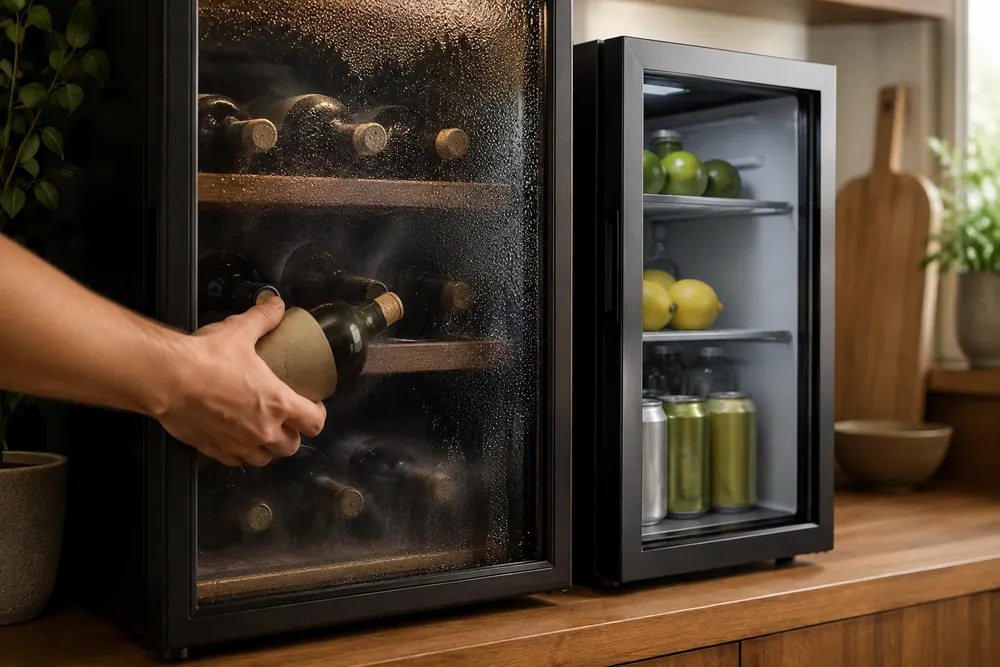
Vibration, Noise, and How Each Appliance Handles Stillness
Vibration matters because wine ages best when bottles stay still. A wine cooler is built around that priority, while a mini fridge is built for general cold storage and convenience.
Published specs often reveal design intent.
Wine coolers usually advertise temperature stability, compressor isolation, or thermoelectric operation, while mini fridges focus on beverage cooling, freezer compartments, and compact sizing.
| Appliance type | Common temperature range | Common capacity band | Typical clearance guidance |
| Wine cooler | 40°F-65°F | 6-50 bottles | 2-5 inches around freestanding units |
| Mini fridge | 32°F-50°F | 1.6-4.5 cubic feet | 2-4 inches around freestanding units |
Noise differs from vibration, but shoppers often notice both together. Compressor wine coolers can hum during cooling cycles, while thermoelectric models tend to run quieter but need a stable room temperature.
Mini fridges may create more bottle movement because the compressor, fan, and sometimes a small freezer section share the same cabinet. Door bins and wire shelves can let bottles rattle unless packed carefully.
What to compare in published specifications
- Cooling system: Compressor units usually cool better in warm rooms, but may cycle with more vibration.
- Shelving: Scalloped or fixed wine racks hold bottles steadier than flat mini-fridge shelves.
- Noise notes: Look for owner reports mentioning humming, clicking, fan noise, or rattling bottles.
- Installation type: Built-in units need front ventilation; freestanding units need side and rear space.
Choose a wine cooler when stillness matters. Choose a mini fridge only for short-term chilling, especially for casual bottles opened soon.
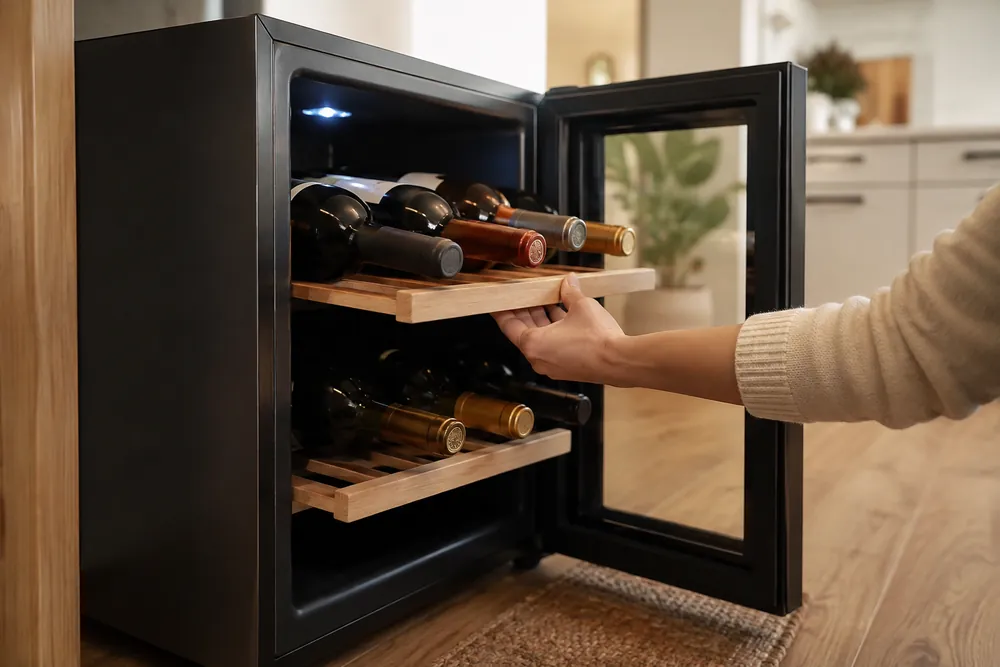
Storage Layout, Bottle Fit, and Everyday Convenience
Bottle geometry creates the biggest daily difference. Wine coolers favor horizontal bottle storage, while mini fridges suit cans, snacks, and upright containers.
Wine cooler shelves are shaped to cradle standard bottles, keep labels visible, and store cork-finished bottles sideways. Larger Burgundy, Champagne, or wide bottles may fit poorly.
A mini fridge offers flexible open space for mixers, cans, and food, but wine bottles often stand upright or diagonally, reducing usable volume.
| Category | Typical storage layout | Common fit trade-off |
| Wine cooler | Horizontal racks for wine bottles | Efficient for standard bottles, tighter for oversized shapes |
| Mini fridge | Flat shelves and door bins | Flexible for mixed items, less organized for wine |
Wine cooler capacities are listed as bottle counts, often 6-18 for countertop models and 24-50 for larger units, assuming standard 750 ml bottles.
Mini fridge capacity is listed in cubic feet, commonly 1.6-4.5 cubic feet, which does not translate cleanly into wine bottle storage.
| Spec type | Wine cooler category range | Mini fridge category range |
| Storage rating | About 6-50 standard 750 ml bottles | About 1.6-4.5 cubic feet |
| Temperature setting | Often about 40-65°F | Often about 32-50°F |
| Ventilation clearance | Often about 1-5 inches for freestanding units | Often about 1-4 inches for compact units |
Everyday convenience depends on what shares the appliance. A dedicated wine cooler reduces shelf rearranging, door clutter, and access guesswork.
A mini fridge works better when wine is only one use. It can hold cans, leftovers, garnishes, or sealed snacks, but mixed storage can mean more vibration and less organization.
- Choose a wine cooler for label visibility, horizontal storage, and predictable bottle access.
- Choose a mini fridge for mixed beverages, upright containers, and flexible household use.
- Check bottle assumptions because published capacity may shrink with Champagne, Pinot Noir, or tall dessert-wine bottles.
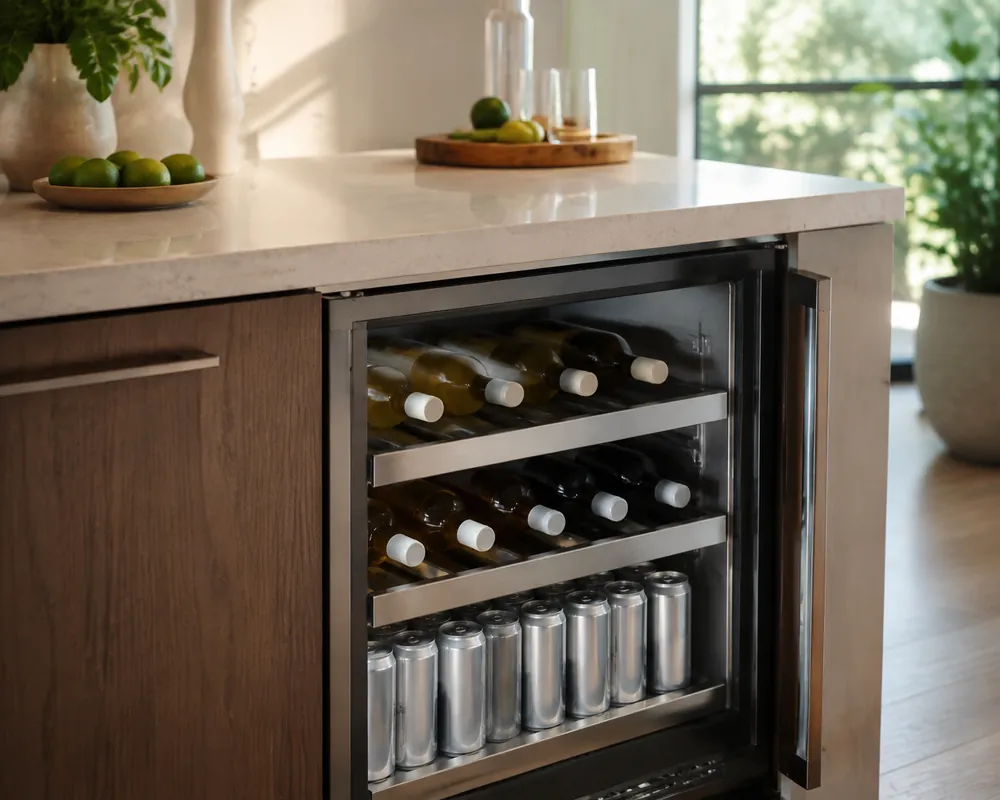
Energy Use, Heat Output, and Placement in the Home
Energy use separates a wine cooler from a mini fridge because they have different temperature targets. Published specifications usually show wine coolers running warmer, while mini fridges are built for colder food-safe storage.
That warmer set point can reduce compressor strain, but it does not make every wine cooler cheaper to run. Size, insulation, door glass, ambient room temperature, and compressor type affect utility cost.
| Category | Typical temperature range | Common capacity band | Typical rear or side clearance |
| Wine cooler | 40°F-65°F | 6-50 bottles | 2-5 inches |
| Mini fridge | 32°F-40°F | 1.7-4.5 cubic feet | 2-4 inches |
Heat output matters because both appliances move heat out of the cabinet and into the room. A wine cooler in a tight pantry, closet, or under-counter space without clearance may cycle more often and run louder.
Mini fridges can reject more heat during heavy cooling because they target colder internal temperatures. That helps drinks and snacks, but it can be too cold for long-term wine storage, especially reds.
Placement trade-offs
- Kitchen counter: convenient for small collections, but check door swing, vibration, and sun exposure.
- Dining room or bar area: better for serving access, especially with a quieter compressor wine cooler.
- Garage: risky unless the appliance is rated for wider ambient temperatures.
- Built-in cabinet: use only models specified for built-in or front-venting installation.
For published energy labels, compare appliances by annual kWh, not size alone. A compact wine cooler with a glass door may use more energy than expected, while a basic mini fridge may be efficient but poor for proper wine temperature.
Choose placement before choosing the appliance. The better option matches the room temperature, ventilation space, noise tolerance, and storage target shown in the specifications.
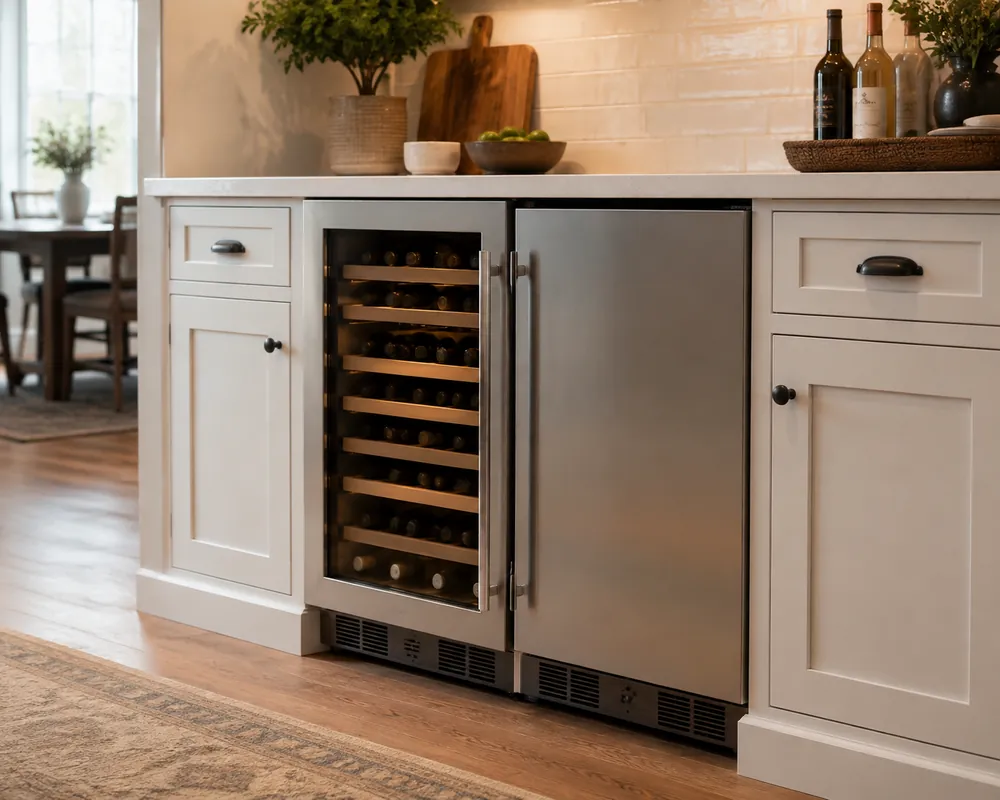
What Owners Report After Six Months
Six-month owner feedback separates wine coolers from mini fridges on temperature behavior, noise, and wear.
Manufacturer documentation explains part of the gap: wine coolers target narrower wine-serving ranges, while mini fridges are general cold-storage boxes.
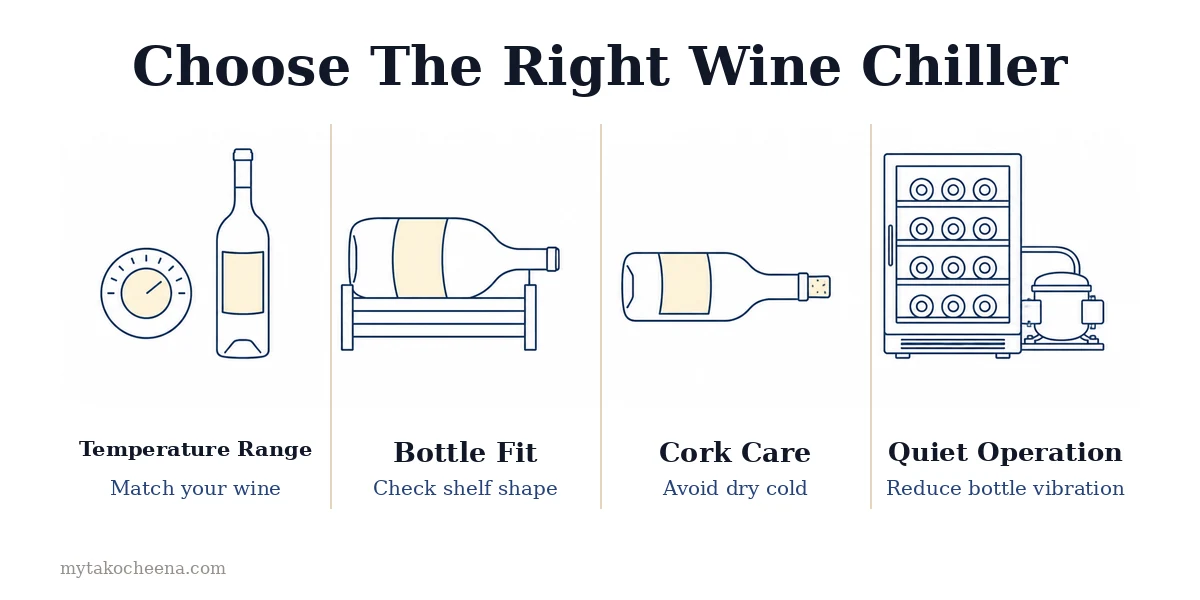
The recurring complaint is temperature swing. Mini fridge owners report bottles getting too cold near the back wall, while wine cooler owners mention cycling noise, fan hum, or warm upper zones in freestanding units.
| Appliance type | Typical temperature range | Common capacity band |
|---|---|---|
| Wine cooler | About 40°F-65°F | About 6-50 bottles |
| Mini fridge | About 32°F-50°F | About 1.7-4.5 cu. ft. |
The basic sealed cabinet holds up best. Owner reports praise simple door gaskets, fixed shelving, and analog controls because there is less to configure or damage during daily use.
Small convenience hardware tends to fail early. Common complaints include cracked plastic shelves, loose light switches, rattling drip trays, and doors that need careful leveling before the gasket seals evenly.
- Wine coolers: owners like bottle racks, stable presentation, and warmer storage for reds, but complain about fan noise and tight spacing for wider bottles.
- Mini fridges: owners like lower prices and flexible storage, but complain about freezing spots, vibration, and shelves that do not fit standard wine bottles cleanly.
Manufacturer placement guidance matters. Freestanding units commonly require side or rear clearance, and ignoring it appears often in complaints about heat buildup and louder compressor cycling.
| Specification | Typical published range |
|---|---|
| Freestanding ventilation clearance | About 2-5 inches |
| Undercounter cabinet opening width | About 15-24 inches |
For six-month ownership, the trade-off is clear. Wine coolers better match wine storage habits, while mini fridges suit mixed drinks and snacks but require more compromise on bottle temperature and fit.
When a Mini Fridge Is Good Enough for Wine
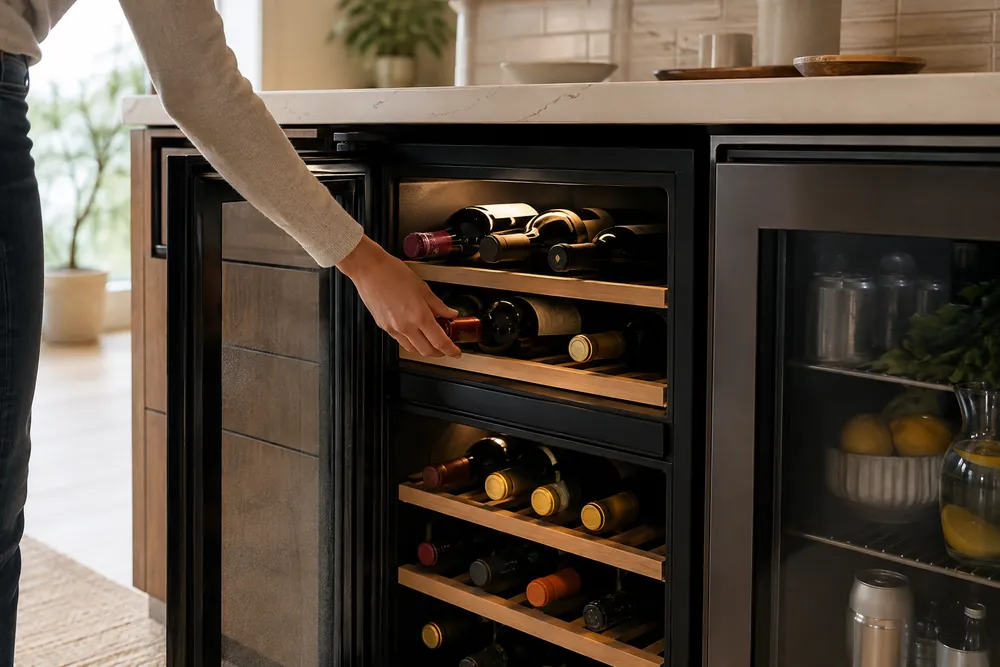
Casual wine storage is where a mini fridge can make sense. It suits short holds, inexpensive bottles, and drink-now wine rather than bottles meant to age.
A mini fridge prioritizes food and beverage chilling, not cellar conditions. That trade-off works when convenience matters more than preservation.
| Appliance type | Common published temperature range | Best fit for wine |
| Mini fridge | About 32°F-50°F | Short-term chilling before serving |
| Wine cooler | About 40°F-65°F | Serving temperature and longer storage |
Red wine is the harder fit. Many mini fridges suit soda and beer but may run colder than ideal for reds, especially lighter bottles.
White, rosé, and sparkling wine are more forgiving. A mini fridge works when the bottle will be opened soon and allowed to warm slightly before serving.
Good Mini Fridge Use Cases
- Short-term storage: Holding bottles for a party, weekend, or regular weeknight use.
- Serving prep: Chilling whites, rosé, sparkling wine, and dessert wine before opening.
- Small spaces: Dorms, apartments, offices, guest rooms, and bar carts with limited floor area.
- Mixed storage: Keeping cans, snacks, mixers, and a few bottles in one appliance.
| Spec category | Typical range | Why it matters |
| Interior capacity | About 1.6-4.5 cu ft | Fits a few bottles, often with shelves adjusted or removed |
| Rear and side clearance | About 1-3 inches | Helps heat escape and supports steadier operation |
Check the shelf layout before buying. Standard wine bottles are longer than cans, so fixed shelves, door bins, and freezer compartments can reduce usable space.
A mini fridge is good enough when turnover is fast and expectations are realistic. Choose a wine cooler for stability, red wine range, display racks, or bottles worth preserving.
Questions Worth Answering First
Wine cooler or mini fridge? This FAQ compares key trade-offs for wine, drinks, and overflow food storage.
Is a wine cooler better than a mini fridge for wine?
Yes, for bottles kept more than a few days. Wine coolers hold steadier, warmer temperatures; mini fridges are built for colder food storage.
| Appliance type | Typical published temperature range |
| Wine cooler | About 40°F to 65°F |
| Mini fridge | About 32°F to 50°F |
Can I store red wine in a mini fridge?
Short term, yes. Long-term storage is less ideal because many mini fridges run colder than red wine targets.
Can I store white wine in a wine cooler?
Yes. Wine coolers hold serving-friendly temperatures, and dual-zone models help if you store both reds and whites.
What size wine cooler do I need for an apartment?
Match bottle count, floor space, and ventilation needs. Wider bottles reduce published capacity.
| Category | Typical bottle range |
| Compact countertop or small freestanding | About 6 to 18 bottles |
| Mid-size freestanding | About 20 to 50 bottles |
| Large freestanding or built-in | About 50 to 150 bottles |
Does a mini fridge use less space than a wine cooler?
Often, yes. Cube-style mini fridges are compact, while wine coolers need depth for horizontal bottles and proper clearance.
| Installation type | Common specification range |
| Freestanding rear or side clearance | About 2 to 5 inches |
| Undercounter cabinet width | About 15 to 24 inches |
Is a wine cooler quiet enough for a bedroom?
Check noise ratings and owner reviews. Compressors may hum; thermoelectric models can produce fan noise.
Can a mini fridge replace a wine cooler?
For casual chilling, yes. For warmer settings, bottle position, rack layout, and presentation, choose a wine cooler.