Short version: Wine cooler size depends on three factors working together: how many bottles you plan to store, the physical space you have for the unit, and whether you need separate temperature zones for reds and whites.
Manufacturer bottle counts often assume slim Bordeaux-shaped bottles, so real capacity can be lower. Measure your space carefully, add room for ventilation, and buy slightly larger than your current collection to allow for growth.
Why Wine Cooler Size Is More Than a Number
Bottle capacity printed on a box rarely tells the full story. Actual usable space depends on bottle shape, shelf configuration, and the clearance your installation demands.
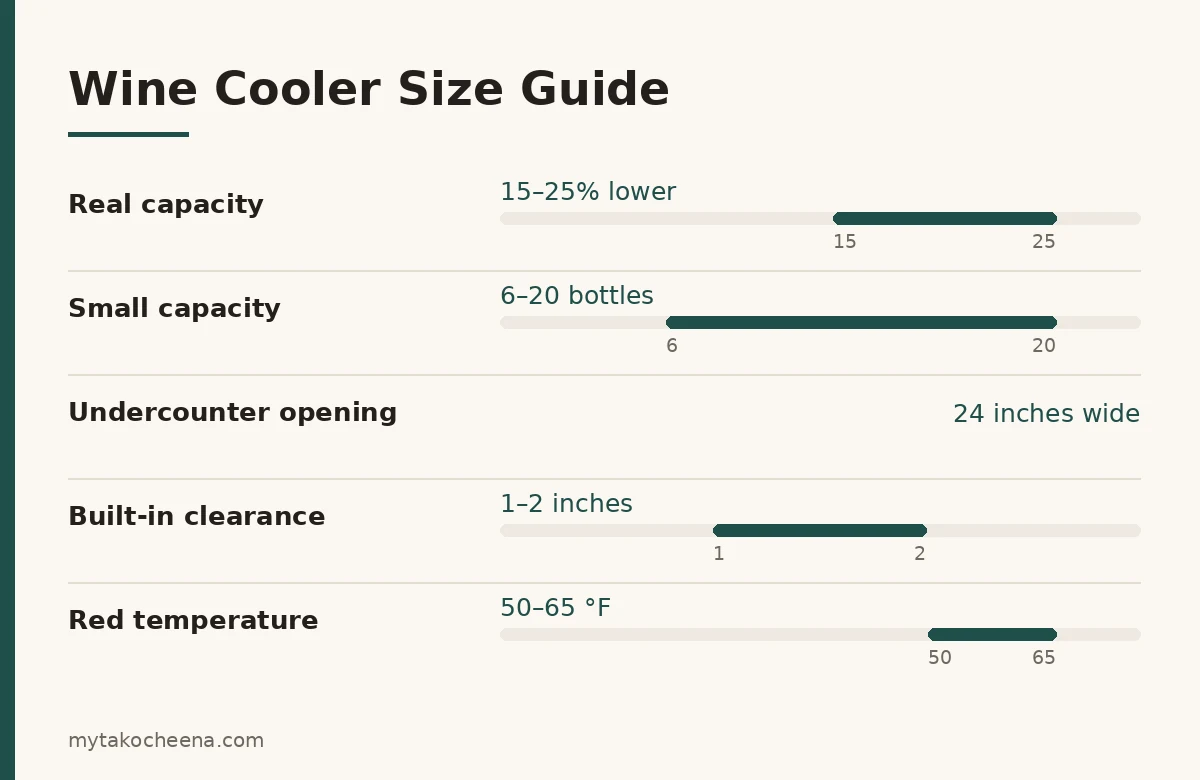
Manufacturers typically rate capacity using standard Bordeaux bottles. Burgundy, Champagne, and Pinot Noir bottles are wider and taller, which can cut real-world storage by 15–25% compared to the listed number.
Common Capacity Bands
| Capacity Band | Typical Width | Typical Height | Best Fit |
| 6–20 bottles | 10–15 in. | 20–34 in. | Countertop or small bar |
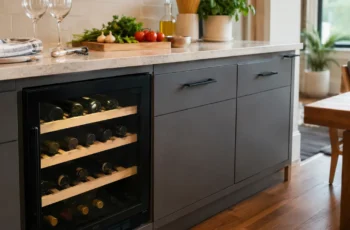
| 21–50 bottles | 15–24 in. | 34–52 in. | Under-counter built-in |
| 51–100+ bottles | 24–30 in. | 50–72 in. | Freestanding or cellar room |
Built-In Clearance Matters
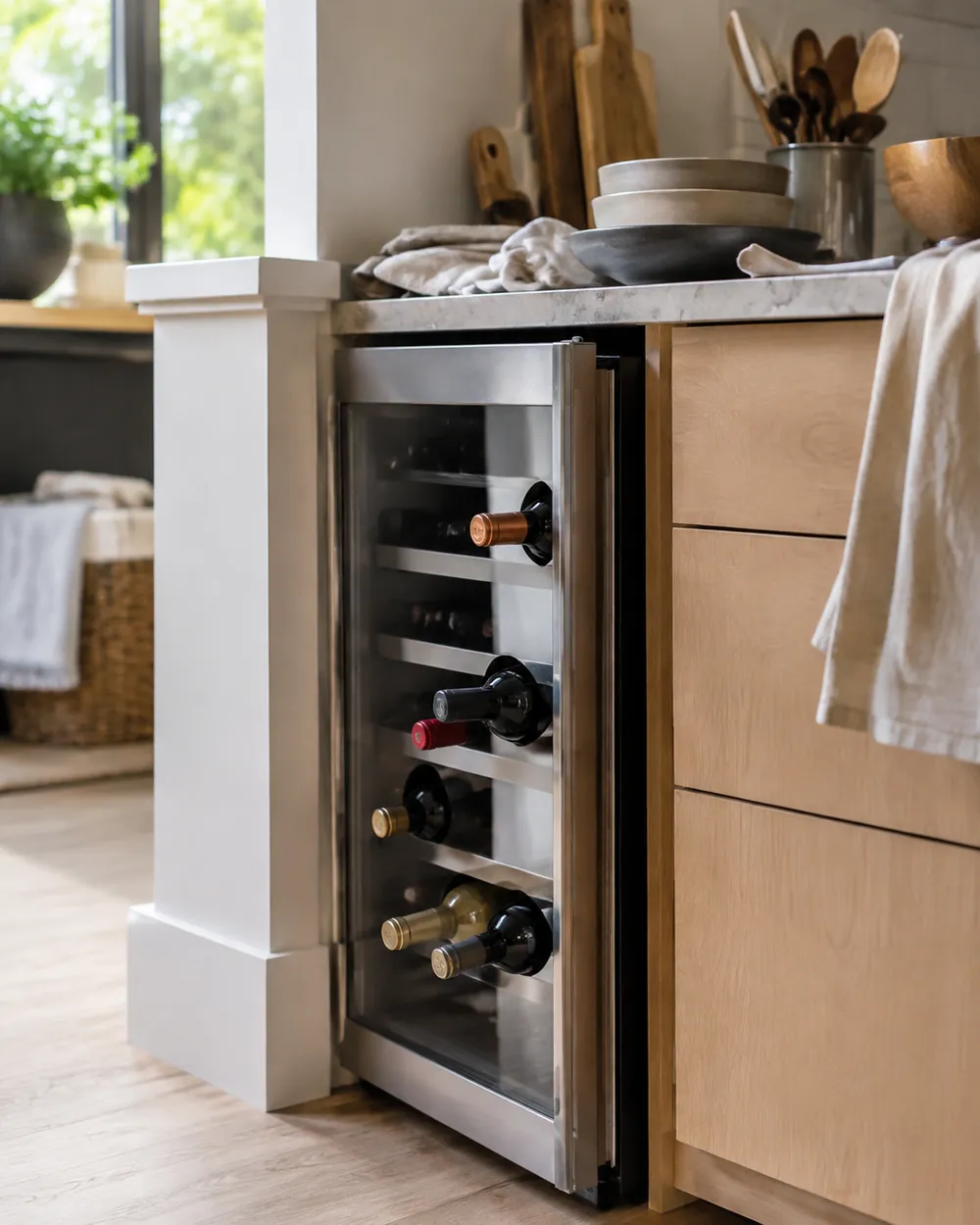
Under-counter units need 1–2 inches of clearance on the sides and 2–4 inches behind the unit for proper ventilation. Skipping this step risks overworking the compressor and shortening the cooler’s life.
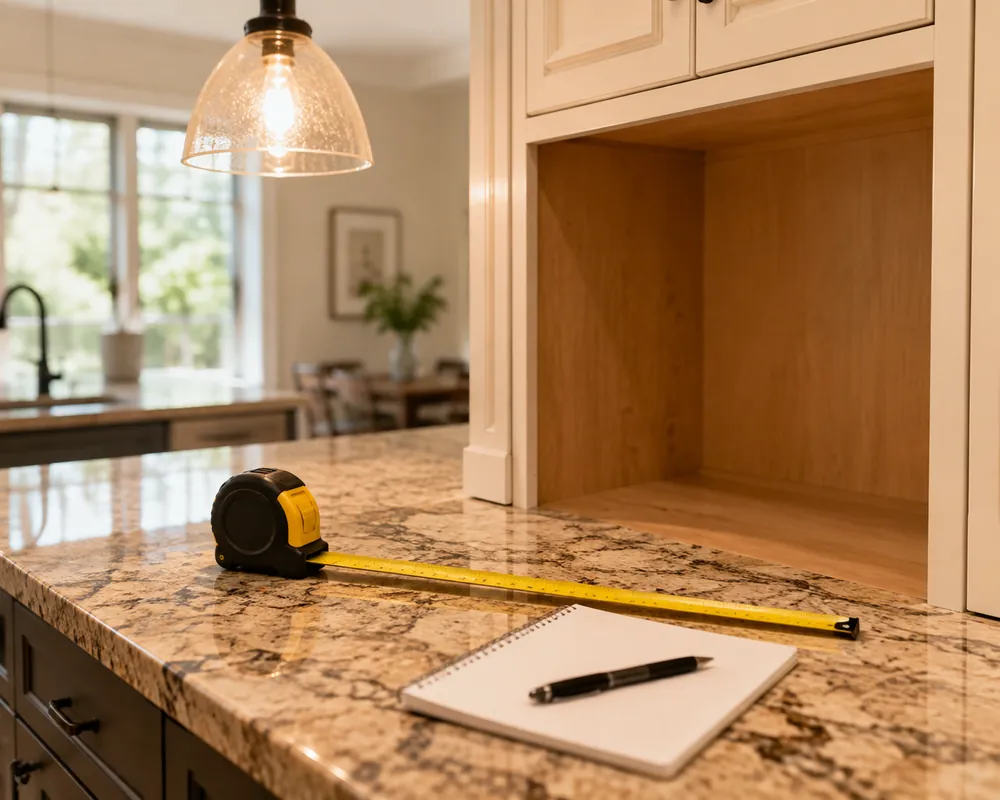
Standard undercounter cabinet openings run 24 inches wide by 34 inches tall. A cooler rated at 24 inches may actually measure 23.5 inches, but always verify the spec sheet against your cutout before ordering.
Key Factors Beyond Bottle Count
- Shelf type: Rolling wooden shelves hold irregular bottles better than fixed wire racks.
- Zone count: Dual-zone models split storage into separate temperature ranges—typically 40–50 °F for whites and 50–65 °F for reds.
- Door swing: French-door and reversible-hinge designs save space in tight kitchens.
Matching a cooler to your space and collection mix prevents costly returns. Measure twice, compare published specs side by side, and account for the bottles you actually drink—not just the ones on the label.
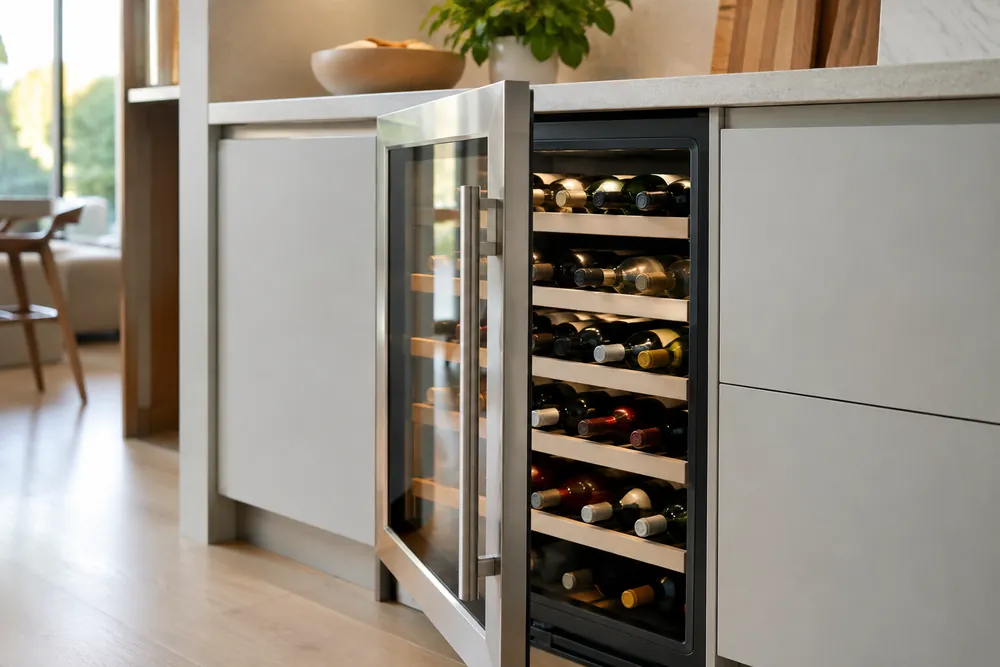
Bottle Capacity Ratings vs. Real-World Fit
Advertised bottle counts almost always assume standard Bordeaux-shaped bottles lined up perfectly on every shelf. Burgundy, Pinot Noir, and Champagne bottles are wider, and that single difference can cut real-world capacity by 15–25%.
Why Published Numbers Mislead
Manufacturers measure capacity using a 750 ml Bordeaux bottle roughly 2.75 inches in diameter. Wider bottles—around 3.25–3.5 inches across—won’t sit flush in the same slots.
Sliding shelves help, but they rarely solve the problem entirely. Owners consistently report losing one or two bottles per shelf when mixing bottle shapes.
Common Capacity Bands and Actual Fit
| Rated Capacity Band | Typical Shelf Count | Realistic Mixed-Bottle Fit |
|---|---|---|
| 12–18 bottles | 3–5 shelves | 9–14 bottles |
| 24–34 bottles | 5–7 shelves | 18–27 bottles |
| 44–54 bottles | 7–10 shelves | 34–44 bottles |
These ranges reflect specification comparisons and reported owner feedback across freestanding and built-in units. Your actual count depends on how many oversized bottles you store.
What to Look For
- Shelf depth and spacing: Look for adjustable or removable shelves that accommodate bottles up to 3.5 inches in diameter.
- Interior width: Units in the 24-inch-wide cabinet opening range generally handle mixed collections better than compact 15-inch models.
- Shelf material: Wooden or rubberized shelves grip bottles more securely than bare wire racks, allowing slightly tighter placement.
Buy for the collection you actually own, not the headline number on the spec sheet. Count your wider bottles, subtract accordingly, and size up one capacity band if more than a third of your collection is Burgundy or Champagne shaped.
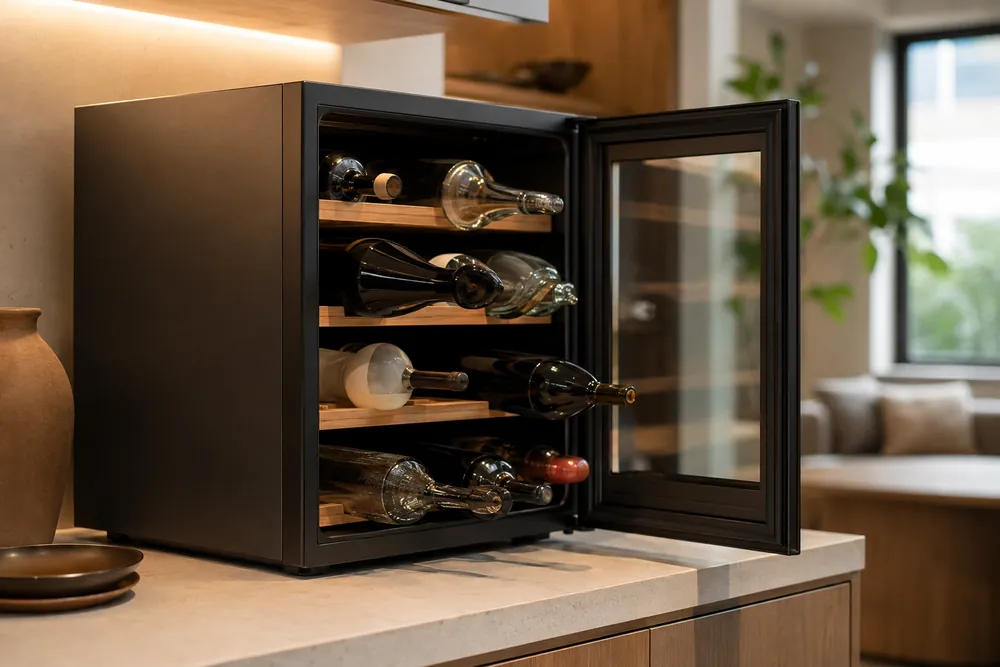
Matching Cooler Dimensions to Your Available Space
Available square footage dictates which wine cooler category fits your home. Measuring the exact space before shopping prevents costly returns and ensures proper airflow around the unit.
Standard Size Categories
Wine coolers fall into three broad footprint categories. Each targets a different installation scenario, from a countertop corner to a full kitchen remodel.
| Category | Width Range | Height Range | Typical Bottle Capacity |
|---|---|---|---|
| Compact / Countertop | 10–15 inches | 17–20 inches | 6–18 bottles |
| Mid-Size Freestanding | 15–24 inches | 32–34 inches | 20–50 bottles |
| Full-Size Built-In | 24–30 inches | 34–50 inches | 50–160+ bottles |
Clearance Requirements
Freestanding units typically need 2–5 inches of clearance behind and on each side for ventilation. Blocking airflow raises compressor temperatures and shortens the unit’s lifespan.
Built-in models vent through the front grille, so they can sit flush inside a standard 24-inch-deep cabinet cutout. Confirm the cutout height matches the cooler’s listed dimensions plus any trim kit.
Key Measurements to Take
- Width — measure wall-to-wall or cabinet-to-cabinet at the narrowest point.
- Height — account for countertop overhang or under-counter trim.
- Depth — include door swing; most doors add 2–4 inches when open at 90 degrees.
- Flooring — uneven surfaces can cause vibration, which disturbs sediment in aging wines.
Choosing Between Freestanding and Built-In
Freestanding coolers cost less upfront and relocate easily. Built-in units integrate seamlessly but demand precise cutout dimensions and front-venting design.
Spec sheets from the manufacturer list exact dimensions. Cross-reference those numbers against your measured space before ordering to avoid a mismatch.
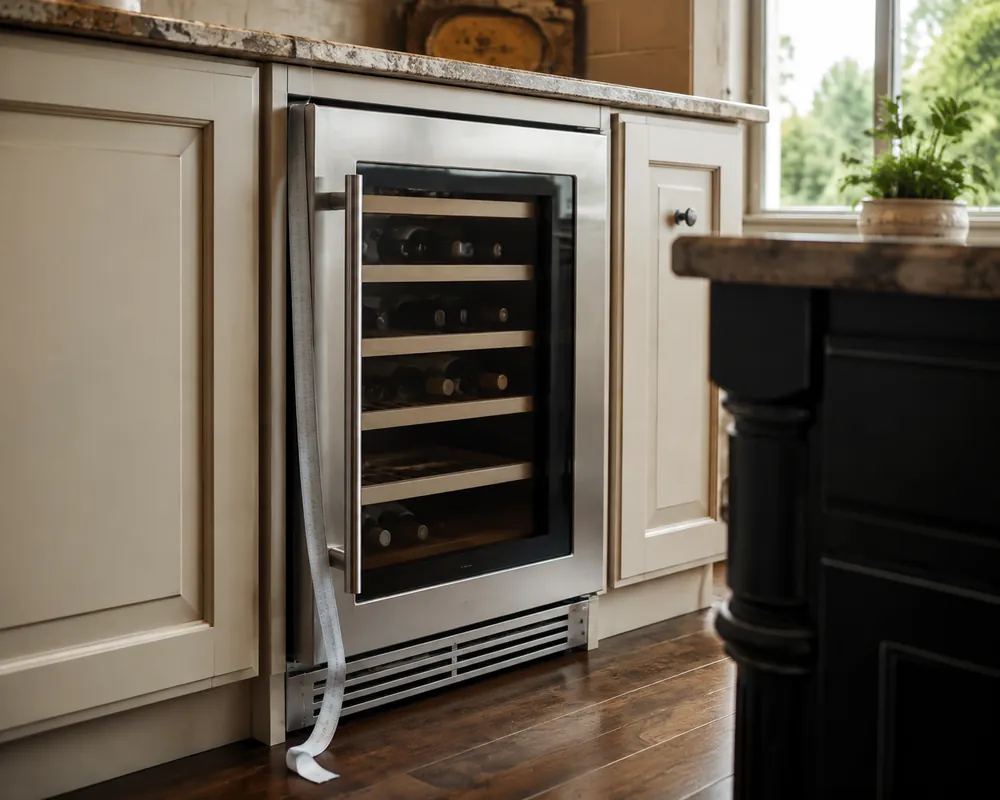
Single Zone vs. Dual Zone and How Size Plays In
Single zone wine coolers maintain one uniform temperature throughout the cabinet, while dual zone units split the interior into two independently controlled compartments.
This distinction directly affects the physical size you need and the bottles you can properly store.
How the Zones Work
A single zone cooler holds everything at one set point, typically adjustable across a range of 40°F–65°F. That works well for collectors who store only reds or only whites.
Dual zone models let you set each compartment independently. One section can chill whites at 45°F–50°F while the other holds reds at 55°F–65°F.
Size and Capacity Trade-Offs
Adding a second zone means adding a divider, extra insulation, and a second thermostat. All of that eats into usable interior space.
| Feature | Single Zone | Dual Zone |
|---|---|---|
| Common capacity range | 6–200+ bottles | 18–150+ bottles |
| Typical width (built-in) | 12″–24″ | 15″–24″ |
| Typical height (undercounter) | 32″–34″ | 32″–34″ |
| Required ventilation clearance | 1″–3″ on sides and back | 1″–3″ on sides and back |
At smaller capacities—around 18–28 bottles—a dual zone unit may feel cramped in each compartment. Fitting a meaningful number of bottles in both zones usually requires stepping up to at least a 30-bottle or larger model.
Choosing Based on Your Collection
- All one type: A single zone cooler maximizes bottle count per square inch of floor space.
- Mixed collection: A dual zone protects both reds and whites at their ideal serving temperatures without needing two separate units.
- Limited space: Measure the available cabinet opening before deciding; a 15″-wide dual zone fits standard undercounter cutouts but holds fewer bottles than a same-width single zone.
Spec sheets list interior capacity under ideal conditions using standard Bordeaux-shaped bottles. Larger Burgundy or Champagne bottles reduce real-world capacity by roughly 10%–20%, so factor bottle shape into your size decision.
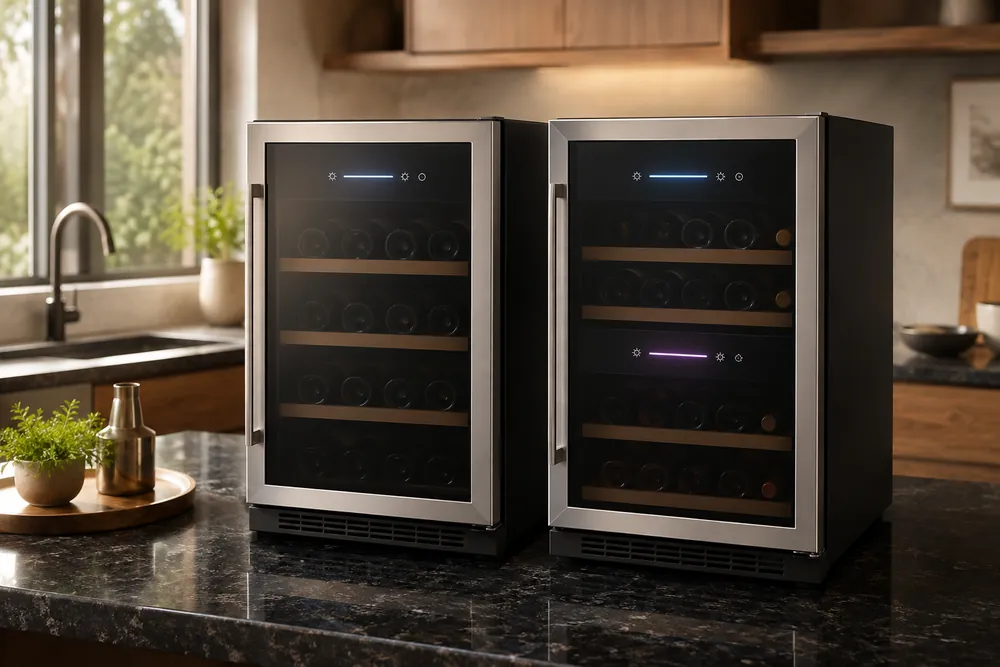
Freestanding, Built-In, and Countertop: Size Trade-Offs by Install Type
Installation type dictates how much floor space, counter space, or cabinetry you surrender—and how many bottles you can actually store.
Understanding the dimensional trade-offs between freestanding, built-in, and countertop wine coolers prevents costly mismatches with your kitchen layout.
Freestanding Wine Coolers
Freestanding units need open-air clearance on all sides—typically 2–4 inches at the back and 1–2 inches on each side. Ignoring this causes the compressor to overwork and shorten its lifespan.
Capacities commonly range from 12 bottles up to 50+ bottles. Larger freestanding models can reach 34 inches wide, making them impractical for tight galley kitchens.
Built-In Wine Coolers
Built-in models vent from the front, so they slide flush into standard cabinetry. Standard undercounter openings measure roughly 24 inches wide by 34 inches tall, which most built-in coolers are designed to match.
Capacity in this format typically falls between 18 and 46 bottles. Depth usually stays under 24 inches to sit flush with surrounding counters.
Countertop Wine Coolers
Countertop units sacrifice capacity for convenience, generally holding 6–18 bottles. They sit on existing counter surfaces, demanding zero floor space but consuming a footprint of roughly 10–20 inches wide.
Noise can feel more noticeable at ear level. Thermoelectric countertop models run quieter but struggle to cool below 50–54 °F in warm rooms.
Quick Size Comparison by Install Type
| Install Type | Common Width | Typical Capacity | Clearance Needed |
| Freestanding | 12–34 in. | 12–50+ bottles | 2–4 in. rear, 1–2 in. sides |
| Built-In | 15–24 in. | 18–46 bottles | Front-venting; minimal |
| Countertop | 10–20 in. | 6–18 bottles | 1–2 in. rear |
- Measure your space first—including any trim, molding, or handles that reduce the usable opening.
- Check ventilation requirements in the manufacturer’s spec sheet before committing to an install type.
- Consider future needs—a built-in unit is harder to swap out than a freestanding one if your collection grows.
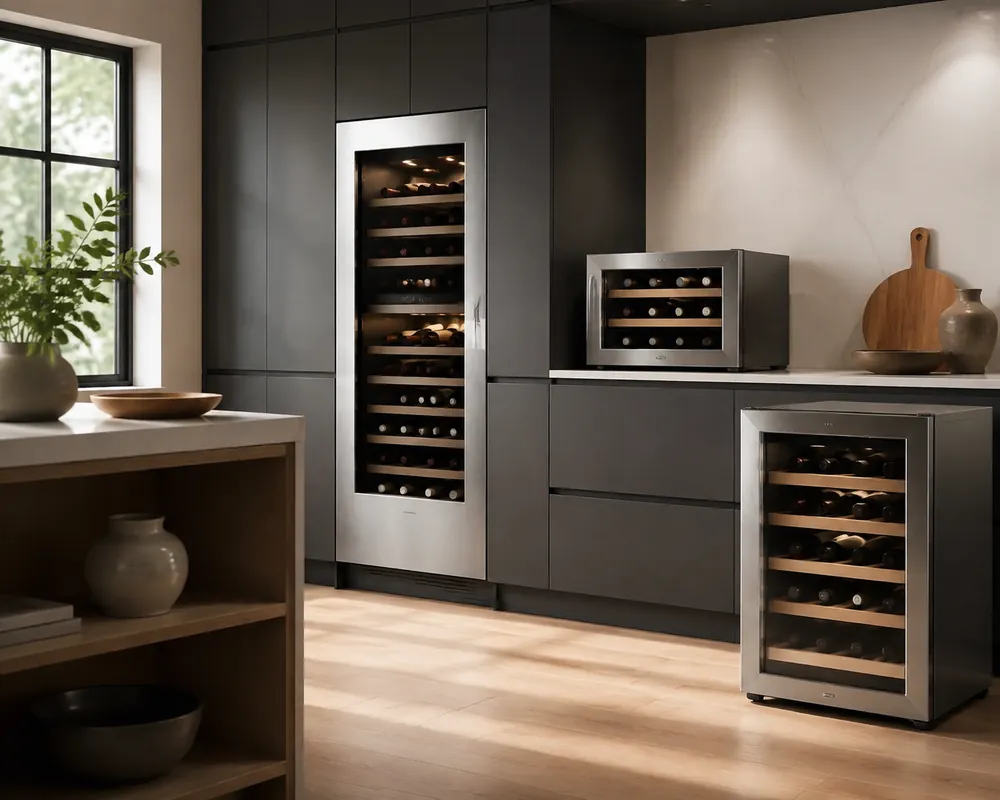
Collection Size Now and Where It’s Headed
Counting every bottle you own right now only tells half the story. A wine cooler should accommodate your collection as it grows, so sizing for where you’ll be in a few seasons matters more than matching today’s count exactly.
Common Capacity Bands
Freestanding and built-in wine coolers generally fall into a few standard capacity ranges. Knowing which band fits your habit prevents buying twice.
| Category | Bottle Range | Best For |
| Compact / Countertop | 6–20 bottles | Casual drinkers, small apartments |
| Mid-Size | 20–50 bottles | Regular entertaining, growing collections |
| Full-Size | 50–150 bottles | Dedicated collectors, dual-zone needs |
| Large / Commercial-Style | 150–300+ bottles | Serious cellaring, whole-room installations |
Plan for Growth
Owner feedback consistently shows that collections expand faster than expected. A common rule of thumb is to buy a cooler rated for roughly 25–50% more bottles than you currently store.
Standard under-counter cutouts run about 24 inches wide by 34 inches tall. Upgrading from a compact to a mid-size unit later often means ripping out cabinetry, so overshooting slightly at purchase saves money and hassle.
Bottle Shape Matters
Advertised capacities assume standard Bordeaux-shaped bottles. Wider Burgundy or Champagne bottles reduce real-world capacity by roughly 10–20%.
- Bordeaux bottles – slim profile, fit published specs closely.
- Burgundy / Pinot Noir bottles – broader shoulders, may not sit flush on every shelf.
- Champagne / sparkling bottles – taller and wider, often need a shelf removed entirely.
Adjustable or sliding shelves help accommodate mixed shapes. Check whether shelves can be repositioned or removed before committing to a unit.
Single-Zone vs. Dual-Zone Consideration
Collectors storing both reds and whites should factor dual-zone models into their size calculation.
Splitting capacity across two temperature compartments—typically 40–65 °F—means each zone holds fewer bottles than a single-zone unit of the same exterior dimensions.
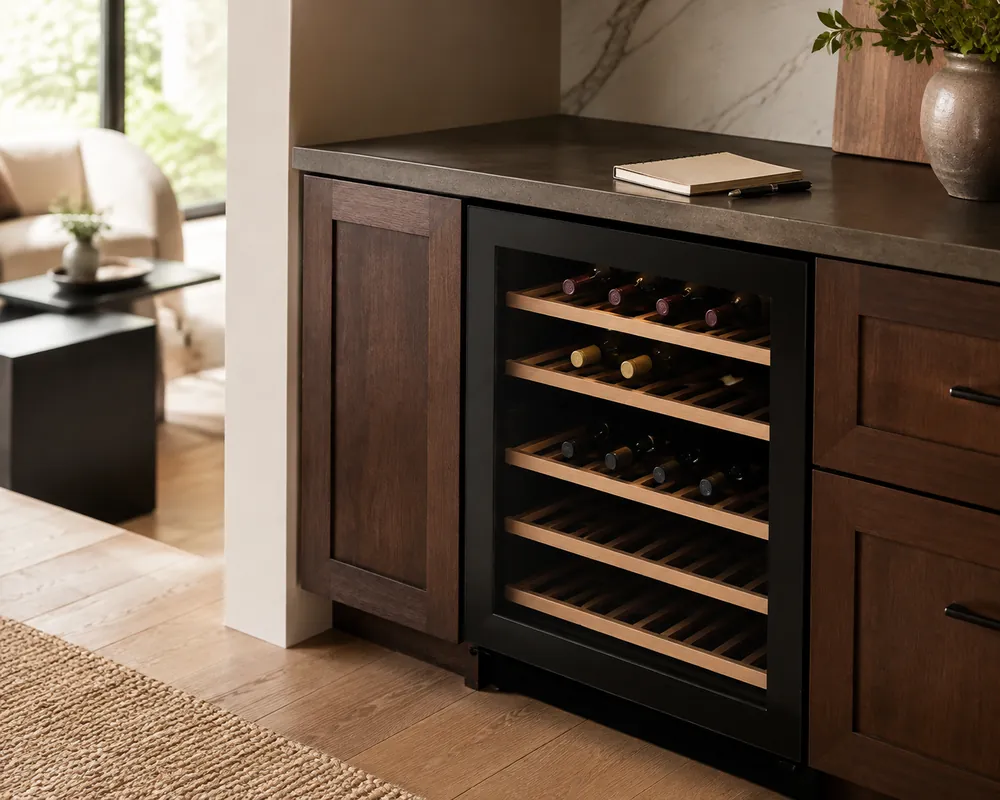
Where Owner Feedback Agrees and Where It Splits
Owner reports across freestanding and built-in wine coolers converge on one persistent complaint: temperature fluctuation inside units rated for 40–66 °F operating ranges.
Buyers consistently flag swings of 3–5 °F beyond the set point, especially in dual-zone models near the partition between zones.
What Holds Up
Compressor-based coolers in the 28–50 bottle capacity band earn repeated praise for long-term reliability.
Owners report multi-year service with minimal maintenance when clearance guidelines of 2–4 inches on sides and back are followed.
Wooden slide-out shelves draw consistent approval for vibration dampening. Stainless steel door frames also hold up well cosmetically, according to manufacturer documentation and owner feedback alike.
What Fails Early
Door seals and interior LED lighting rank as the two most frequently replaced components. Owners of thermoelectric units report seal degradation sooner than compressor-model owners.
| Component | Compressor Models | Thermoelectric Models |
| Door gasket lifespan | Longer reported durability | Earlier wear reported |
| Fan noise complaints | Moderate (35–45 dB range) | Lower initial, rising over time |
| Temperature consistency | Generally tighter control | More sensitive to ambient heat |
Where Opinions Split
Noise tolerance divides owners sharply. Units in the 35–45 dB range satisfy bedroom or library placements for some buyers but draw complaints from others in open-concept kitchens.
- Glass doors: praised for display, criticized for UV exposure in sunlit rooms
- Digital vs. analog controls: digital panels look modern but owners report more electronic failures
- Single-zone simplicity: fewer parts to fail, but limited flexibility for mixed collections
Checking manufacturer-stated operating ambient ranges before purchase prevents the most common disappointment owners report.
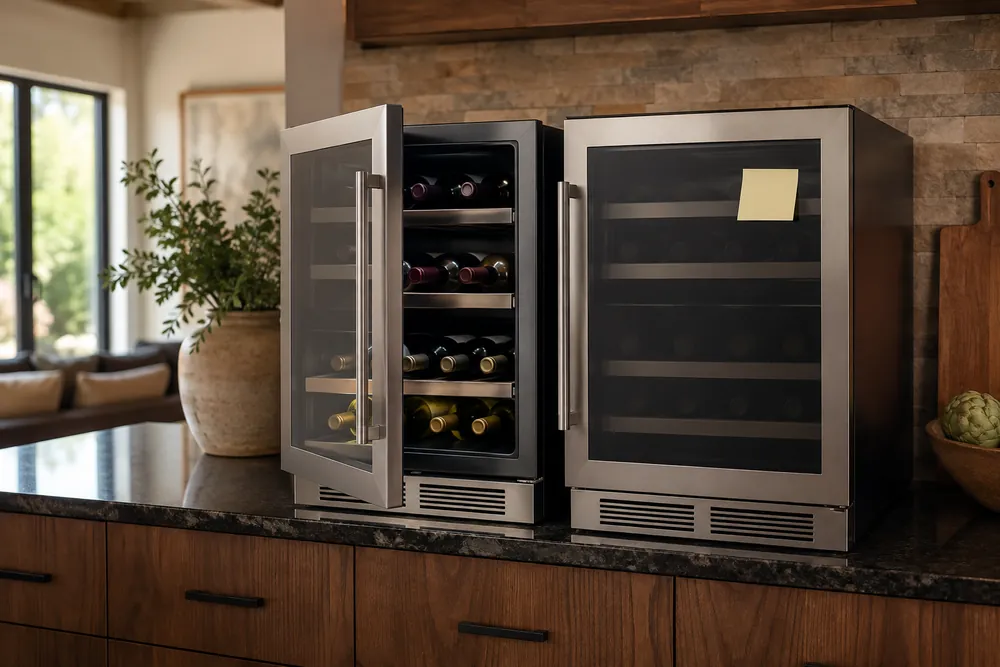
Common Sizing Mistakes and How to Dodge Them
Buying a wine cooler based on advertised bottle count alone leads to frustration more often than not. Understanding the gap between marketing claims and real-world storage helps you avoid the most expensive sizing errors.
Mistake #1: Trusting the Stated Bottle Capacity
Manufacturers calculate capacity using standard Bordeaux-shaped bottles. Wider Burgundy or Champagne bottles reduce usable space by roughly 20–30%.
A unit advertised as a 28-bottle cooler may realistically hold 20–22 bottles once you mix in different shapes. Always check shelf depth and spacing in the spec sheet.
Mistake #2: Ignoring Built-In Clearance Requirements
Freestanding units need 2–5 inches of clearance on the back and sides for proper ventilation. Skipping this causes the compressor to overwork and shortens the cooler’s life.
| Installation Type | Rear Clearance | Side Clearance |
|---|---|---|
| Freestanding | 2–5 inches | 2–3 inches |
| Built-in / Under-counter | 0–1 inch (front-venting) | 0–0.5 inch |
Standard under-counter cabinet openings run 24 inches wide by 34 inches tall. Measure your actual opening before ordering—older cabinetry can vary by an inch or more.
Mistake #3: Buying for Today Instead of Tomorrow
Owner feedback consistently shows that collections outgrow coolers within a few years. Sizing up by 25–50% over your current inventory is a common recommendation across buying guides.
Quick Checklist Before You Buy
- Measure the space — height, width, depth, and note any obstructions like hinges or trim.
- Count your odd-shaped bottles — subtract 20–30% from the listed capacity for a realistic number.
- Confirm ventilation type — front-venting for built-ins, rear-venting for freestanding.
- Plan for growth — choose a unit one capacity band above your current needs.
Questions Worth Answering First
Choosing the right wine cooler means matching the unit to your collection, your space, and your drinking habits. These are the questions buyers ask most often, answered with specification-level detail.
How many bottles does a wine cooler actually hold?
Manufacturers list capacities from 6 bottles up to 300+ bottles. Real-world fits run about 25% lower than the label claim because oversized Burgundy and Champagne bottles won’t sit in standard slots.
What size wine cooler fits under a standard counter?
Standard under-counter openings measure roughly 34–36 inches high by 24 inches wide. Built-in wine coolers designed for this space typically range from 15 to 24 inches wide.
Always confirm the cutout dimensions in the spec sheet before ordering.
Do I need a single-zone or dual-zone wine cooler?
Single-zone units hold everything at one temperature, usually adjustable between 40 °F and 65 °F. Dual-zone models split the cabinet so you can store reds at 55–65 °F and whites at 40–50 °F simultaneously.
How much clearance does a freestanding wine cooler need?
Freestanding models typically require 2–5 inches of clearance on the back and sides for ventilation. Built-in units vent through the front, so they need little to no rear clearance.
Are thermoelectric wine coolers quieter than compressor models?
Thermoelectric coolers run at roughly 25–35 dB, noticeably quieter than compressor units at 35–45 dB. The trade-off is weaker cooling power—thermoelectric models struggle in rooms above 77 °F.
How much electricity does a wine cooler use?
Small thermoelectric units draw around 70–100 watts. Compressor-based coolers in the 30–50 bottle range typically pull 85–150 watts.
Annual energy cost for most residential wine coolers falls between $30 and $75 at average US electricity rates.
Can I store wine in a regular refrigerator instead?
Kitchen refrigerators hold food at 35–38 °F, well below ideal wine storage temperatures. The constant vibration from a standard compressor can also disturb sediment over time.
A dedicated cooler maintains steadier humidity and temperature.
What features actually matter in a wine cooler?
- UV-protected glass door – shields wine from light damage
- Slide-out wooden shelves – reduce vibration and ease access
- Digital thermostat – allows precise zone control
- Door lock – useful for households with children
- Interior LED lighting – generates less heat than incandescent bulbs