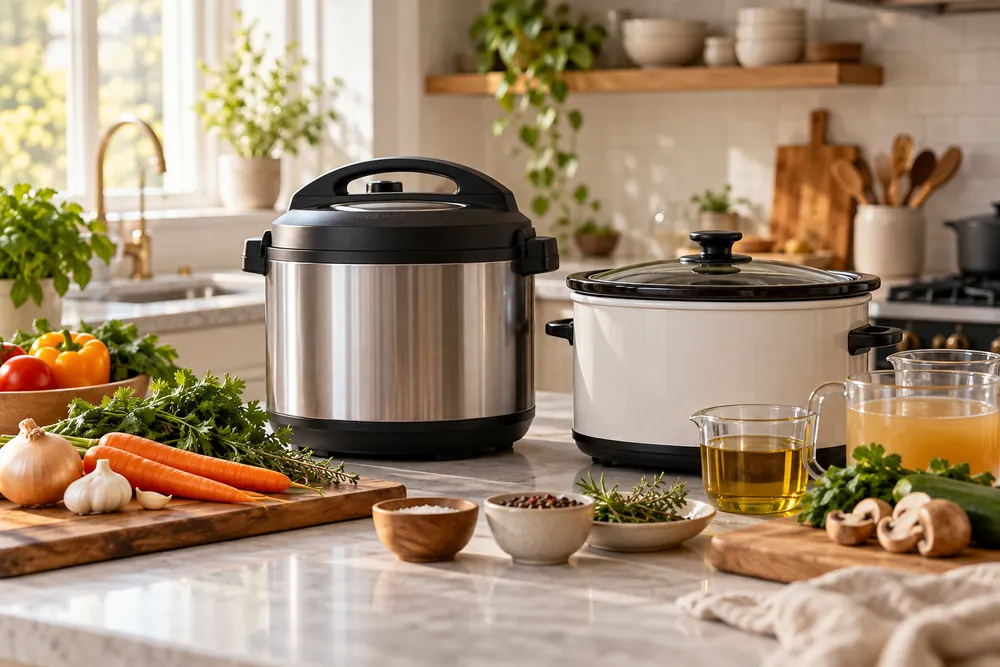
The short answer: An Instant Pot is an electric pressure cooker with additional cooking modes, while a slow cooker cooks food gently over several hours.
Choose an Instant Pot for faster meals, pressure-cooked staples, and broader functionality. Choose a slow cooker for simple hands-off cooking, meal planning, and tender dishes that benefit from a long, low-temperature cook.
Instant Pot vs Slow Cooker: Which to Buy
Instant Pot-style electric pressure cookers and slow cookers address different schedules.
Choose pressure cooking for speed, versatility, and compact preparation; choose slow cooking for simple controls, gentle heat, and food that can hold for serving.
Compare the published specifications
Capacity varies by size, but category specifications show the difference: pressure cookers draw more power to heat quickly and maintain pressure, while slow cookers use lower heat longer.
| Specification | Electric pressure cooker | Slow cooker |
| Common capacity band | 3–8 quarts | 3–8 quarts |
| Typical power range | 700–1,500 watts | 150–300 watts |
Pressure cooking shortens recipes for beans, tough cuts, grains, and stock. It may also provide sautéing, steaming, rice, and yogurt functions, depending on controls and included accessories.
Slow cookers have a narrower role, but their simplicity helps: add ingredients, select a setting, and cook without pressure release, specialized timing, or much intervention.
Heat, timing, and everyday control
Pressure cooking uses a sealed, elevated-heat environment, so recipes require attention to liquid, fill limits, sealing, and release instructions. Natural and quick release affect texture, serving time, and kitchen steam.
| Cooking method | Common reported range | Practical effect |
| Electric pressure cooking | 230–250°F | Fast tenderizing under pressure |
| Slow cooker, low setting | 190–210°F | Gentle, extended cooking |
| Slow cooker, high setting | 280–300°F | Quicker slow-cooking cycle |
Slow cookers suit stews, pulled meat, soups, and casseroles that benefit from gradual cooking. They operate quietly and forgive minor lapses, though results vary with volume, lid lifting, and heating pattern.
Which appliance fits your kitchen?
- Buy an electric pressure cooker if weeknight speed, multifunction cooking, and reduced use of separate pans matter most.
- Buy a slow cooker if advance preparation, straightforward operation, and hands-off meals matter more than rapid results.
- Choose both if you regularly prepare quick staples and long-cooking family meals, provided storage and counter space allow it.
For one appliance, match the choice to your habits rather than the longest feature list. Specifications explain capacity, power, and programs; owner reports reveal cleanup, controls, and everyday fit.
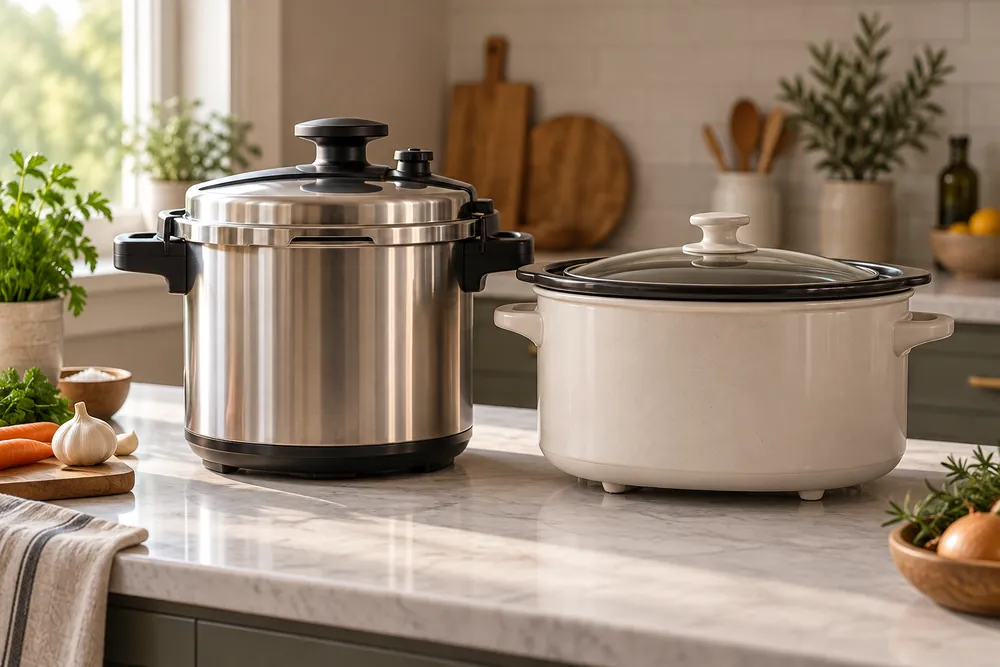
How Instant Pots and Slow Cookers Work
Instant Pots combine electric heating, a sealed chamber, and programmable controls. Slow cookers use steady, indirect heat in a covered crock, allowing ingredients to cook gradually without pressure.
Pressure is the central difference. An Instant Pot traps steam, raises internal pressure, and increases water’s boiling point, helping food cook faster. A slow cooker vents moisture and relies on extended, low-temperature cooking.
How the cooking methods compare
| Specification | Electric pressure cooker | Slow cooker |
| Common capacity band | 3 to 8 quarts | 1.5 to 8 quarts |
| Typical power band | 700 to 1,200 watts | 150 to 400 watts |
| Approximate cooking-temperature range | 230 to 250°F under pressure | 180 to 300°F, depending on setting |
| Pressure behavior | Sealed chamber builds pressure | No pressure buildup; steam vents |
Pressure cooking suits beans, grains, tough cuts, and stock when speed matters. The appliance still needs time to heat, pressurize, and release pressure, so total cooking time exceeds the programmed period.
Slow cooking suits stews, braises, shredded meat, and dishes that benefit from gradual blending. It takes longer but generally requires less monitoring after ingredients are added.
Controls, moisture, and texture
Instant Pots can sauté ingredients before pressure cooking and offer programs for steaming, rice, yogurt, or slow cooking. Their sealed environment retains liquid, so recipes need less added water and careful measurements.
Slow cookers have simpler controls, commonly offering low, high, and warm functions. Loose-fitting lids allow limited evaporation, concentrating sauces but making lid removal more disruptive.
Both appliances need a stable, heat-resistant surface and clearance around vents, handles, and controls. Check manufacturer guidance, especially for overhead cabinets and steam released during operation.
Choose an Instant Pot for faster cooking and broader functions. Choose a slow cooker for straightforward batch meals, gentle braising, and a simpler set-and-monitor routine.
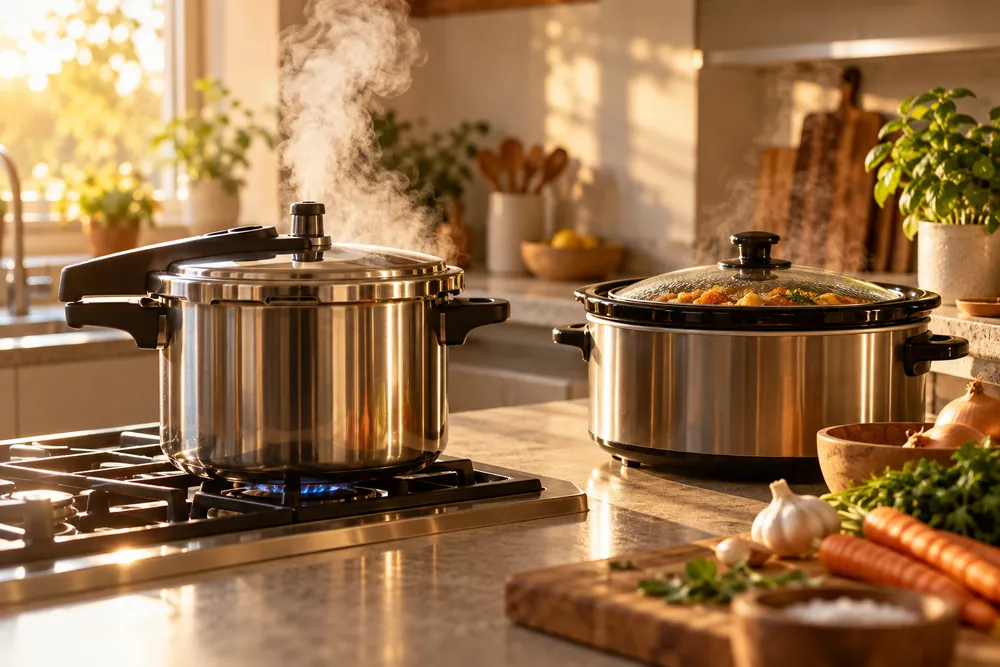
Instant Pot vs Slow Cooker: Key Differences
Cooking speed, pressure, and hands-off convenience distinguish an Instant Pot from a slow cooker. Both produce tender meals, but their controls, energy demands, and best uses differ.
An Instant Pot uses sealed pressure to shorten cooking for beans, grains, tough meat, and stews. A slow cooker uses gentle, extended heat for gradual flavor development and meals that cook while you are away.
| Specification | Electric pressure cooker | Slow cooker |
| Common capacity band | 3–8 quarts | 3–8 quarts |
| Typical wattage band | 700–1,500 watts | 150–300 watts |
| Approximate cooking-temperature range | 230–250°F under pressure | 180–300°F, depending on setting |
Speed: Pressure cooking generally wins for dishes requiring hours of simmering. Allow extra time for heating and pressure release, so the advertised cooking time is not the complete meal time.
Convenience: Slow cookers offer simpler operation: add ingredients, choose a setting, and leave the lid closed. Instant Pots provide more programs, but their controls and pressure-release process require closer attention.
Texture: Pressure cooking preserves moisture while quickly tenderizing dense ingredients. Slow cooking can create softer meat and deeper savory flavor, although delicate vegetables may become overly soft.
Cleanup: Both appliances typically have removable cooking vessels and lids. Pressure-cooker lids include sealing components and valves requiring inspection, while slow-cooker cleanup is usually simpler.
- Choose an Instant Pot for faster weeknight meals, beans, rice, steaming, and multi-function flexibility.
- Choose a slow cooker for batch cooking, low-effort meal scheduling, and recipes designed for gradual simmering.
- Check cabinet and counter clearance before buying, especially for pressure-cooker lids that open vertically.
When you are choosing a spot, measure the appliance’s footprint, then leave room to open the lid without hitting cabinets, shelves, or a backsplash.
An Instant Pot may also need clear space around its steam-release area during operation.
Check the height beneath upper cabinets, especially if the cooker will live on the counter rather than in storage. A compact footprint does not help if lifting the lid, adding ingredients, or removing the inner pot feels cramped.
Think about your normal cooking sequence. If dinner preparation happens in short bursts, programmable cooking may fit your routine.
If you prefer loading the appliance before work and serving later, a slow cooker may create less interruption.
Storage matters too. Measure a cabinet shelf or pantry opening, including the path through which you will lift the appliance.
Account for the lid, inner pot, cord, and accessories, so the appliance remains easy to retrieve instead of becoming counter clutter.
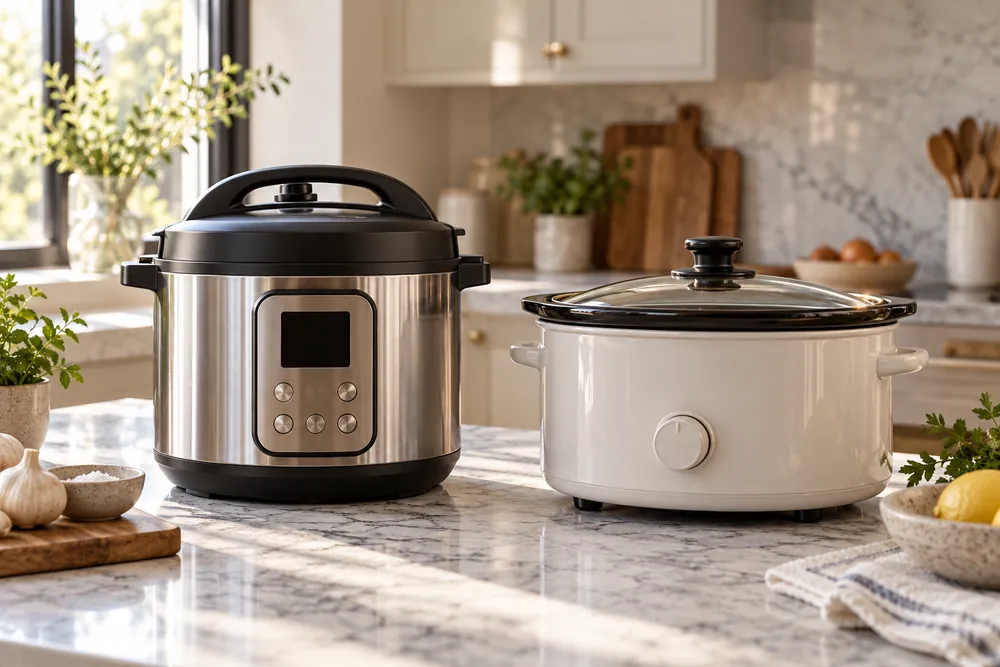
Which Foods Suit Each Appliance
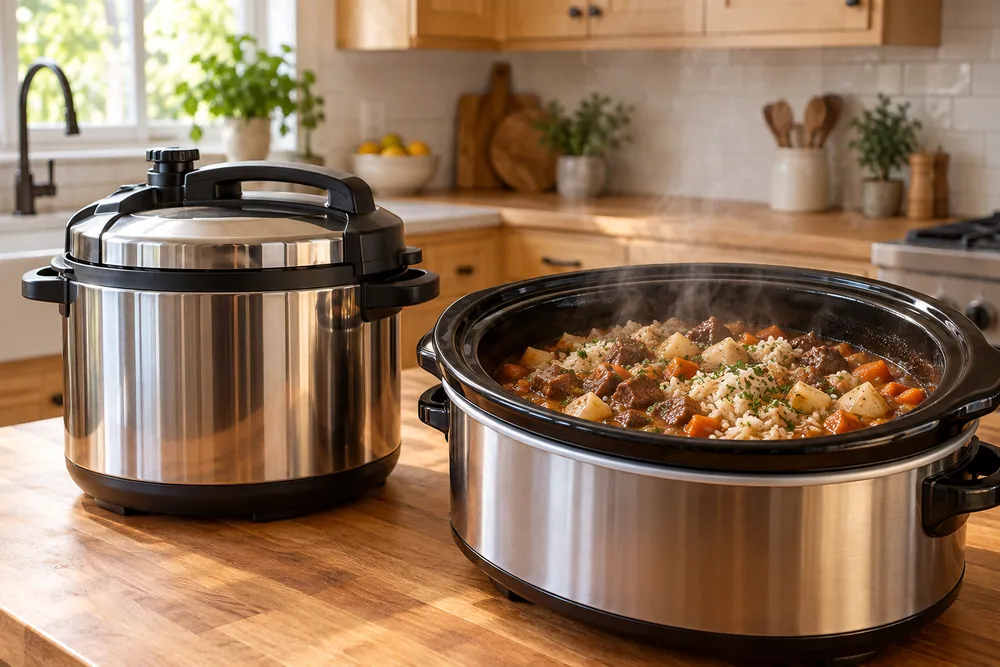
Food choice separates an electric pressure multicooker from a slow cooker.
Pressure cooking favors speed, firm ingredients, and dishes that benefit from trapped moisture, while slow cooking favors gradual flavor development and forgiving preparation.
Pressure multicookers suit weeknight meals built around beans, grains, tough meat, and broth. Their sealed environment softens dense ingredients quickly, and many models also offer sautéing, steaming, rice, and yogurt functions.
| Category | Common capacity range | Typical wattage range |
| Electric pressure multicooker | 3–8 quarts | 700–1,500 watts |
| Electric slow cooker | 3–8 quarts | 150–350 watts |
That higher power does not automatically make pressure cooking better. It supports rapid heating and shorter cooking cycles, but the appliance usually needs ingredient preparation, liquid measurement, and a release step before serving.
Slow cookers work well for shredded pork, pot roast, chili, stews, pulled chicken, and bean dishes. Their low-and-slow approach gives connective tissue time to break down and lets sauces develop without constant supervision.
- Choose pressure cooking for dried beans, risotto, hard-boiled eggs, braises, and meals needed on a tight schedule.
- Choose slow cooking for large cuts, make-ahead dinners, dips, and recipes that can cook while you are away.
- Choose either for soups, stock, grains, and tender meat, depending on whether speed or gradual cooking matters more.
Capacity affects food suitability as much as cooking method. A smaller vessel fits compact households and modest batches, while a larger one handles meal prep, entertaining, and bulky cuts more comfortably.
Texture is another deciding factor.
Pressure cooking can preserve structure when timing is controlled, but delicate vegetables may become soft; slow cooking creates tender results yet can dull fresh herbs, crisp vegetables, and seafood.
For the broadest routine use, a pressure multicooker offers more cooking modes. For simple, forgiving dinners, a slow cooker remains easier to load, start, and serve.
Cooking Time, Planning, and Convenience
Pressure multicookers shorten active cooking, but meal time includes preparation, pressurization, release, and cleanup. Slow cookers require advance planning but less daytime attention.
Published specifications reflect different routines. Pressure cooking suits beans, grains, tough meats, and stews when decisions happen late; slow cooking suits meals assembled earlier and left unattended.
| Category | Published cooking range | Planning trade-off |
| Pressure multicooker | About 5–60 minutes under pressure | Add time for heat-up and pressure release |
| Slow cooker | About 4–10 hours on a cooking cycle | Requires earlier preparation |
Which routine fits better?
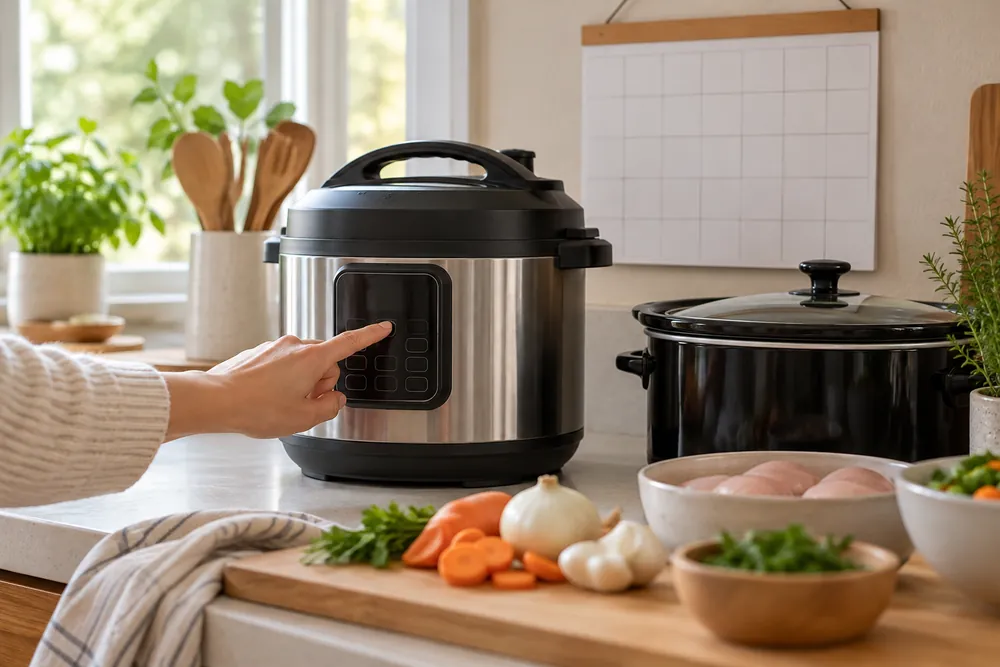
Choose pressure cooking when flexibility matters. Ingredients can go straight into the pot, and many units sauté, steam, cook rice, and slow-cook, reducing the need for multiple appliances.
Choose a slow cooker when convenience means minimal intervention. Simple controls are approachable, and the removable crock moves from preparation to serving, though recipes may need liquid adjustments and careful timing.
- Pressure multicooker: Better for spontaneous meals, batch cooking, and recipes that normally require long simmering.
- Slow cooker: Better for planned dinners, hands-off cooking, and households that prefer a straightforward appliance.
- Storage: Check the appliance footprint, lid design, and cord storage before buying; counter convenience can disappear when cleanup and cabinet storage are considered.
| Category | Common capacity band | Typical low-to-high cooking range |
| Pressure multicooker | About 3–8 quarts | Roughly 190–250°F for nonpressure modes |
| Slow cooker | About 3–8 quarts | Roughly 190–300°F, depending on setting and design |
Compare cycle controls, delay-start options, keep-warm settings, and cleanup instructions alongside headline cooking times. These details determine whether the appliance simplifies a busy schedule.
Costs, Cleanup, and Counter Space
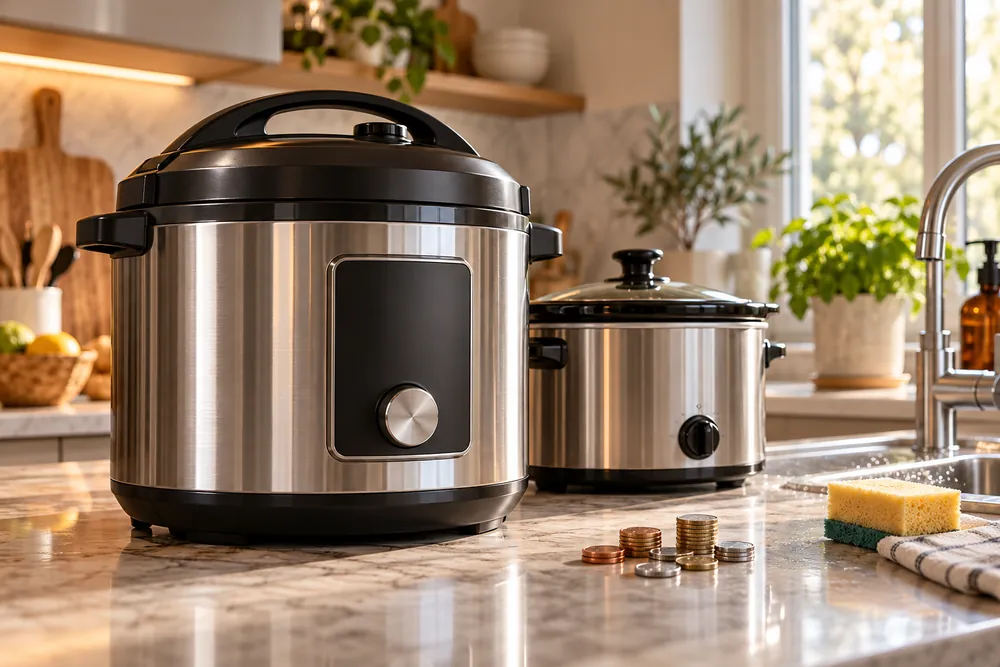
Purchase price is only part of the ownership cost. An Instant Pot-style multicooker can replace several tools, while a slow cooker usually costs less to operate.
Budget for the appliance, sealing rings, replacement lids or inserts, and storage containers. Multicookers may need periodic replacement parts, especially silicone seals, while slow cookers generally have fewer consumable components.
Specification ranges to compare
| Specification | Electric multicooker | Slow cooker |
|---|---|---|
| Typical cooking capacity | 3–8 quarts | 3–8 quarts |
| Typical power draw | 700–1,500 watts | 150–350 watts |
| Typical footprint width | 11–15 inches | 9–14 inches |
These ranges show the trade-off. A multicooker commonly draws more power during active cooking, but its shorter cycles can offset some of that difference.
A slow cooker uses less power at a given moment, though it may run for many hours.
Cleanup favors the slow cooker for uncomplicated meals. Its removable vessel and lid usually cover the essential washing, whereas a multicooker may add a sealing ring, steam-release parts, condensation collector, and inner lid.
- Slow cooker: fewer pieces and no pressure-related components to maintain.
- Multicooker: more parts, but one vessel can handle pressure cooking, sautéing, steaming, and other functions.
- Either option: check whether the cooking insert and lid are dishwasher-safe before buying.
Counter space depends on more than width. A multicooker often has a taller lid and hinged or removable components, while a slow cooker may need extra room around handles and above the lid for lifting.
| Planning factor | Useful category range | Why it matters |
|---|---|---|
| Overhead clearance | 6–12 inches | Allows lid removal and steam release |
| Stored appliance depth | 12–18 inches | May determine cabinet or pantry fit |
| Common cabinet opening width | 12–18 inches | Helps assess shelf access |
Steam management can affect placement. A multicooker may vent hot moisture upward, so it should not sit beneath delicate cabinets or directly beside electronics.
A slow cooker also releases heat and moisture, but its lid is simpler to remove.
Choose the slow cooker for low-maintenance ownership and predictable storage. Choose the multicooker when replacing multiple appliances justifies additional cleanup and a larger storage footprint.
What Owners Change After the First Month
Counter space and cleanup drive routine changes after owners live with either appliance.
Owner reports and manufacturer documentation show the trade-off: pressure cookers shorten active cooking time, while slow cookers simplify long, unattended cooking.
The most common complaint is bulk. Owners find multicookers harder to store, especially with the lid, sealing ring, steam-release parts, and inner pot separated.
Slow cookers need less vertical space but remain awkward because the ceramic crock is heavy.
What owners keep using
Pressure cooking earns repeat use for beans, braises, grains, and tough cuts.
Owners appreciate programmable controls and browning in the same vessel, although manufacturer instructions require enough liquid and careful release procedures.
Slow cookers remain popular for soups, shredded meat, dips, and meals prepared before work.
Owners value quiet operation and forgiving schedules, but reports mention weaker browning and thinner sauces unless ingredients are prepared separately.
| Appliance category | Common published range |
|---|---|
| Slow cooker, low setting | Approximately 170–200°F |
| Slow cooker, high setting | Approximately 280–300°F |
| Electric pressure cooker, high-pressure cooking environment | Approximately 239–250°F |
Early owner-reported failures usually involve accessories, not the heating base. Sealing rings retain odors or lose their seal, removable valves collect residue, and ceramic crocks may crack after thermal shock.
Manufacturer care guidance recommends inspection, specified hand-cleaning, and replacing worn seals.
Changes worth making
- Store the pressure cooker with its sealing parts ventilated and accessible.
- Reserve the slow cooker for recipes that benefit from steady, extended heat.
- Use separate browning equipment when texture matters more than convenience.
- Check cabinet clearance and lifting weight before choosing a larger capacity.
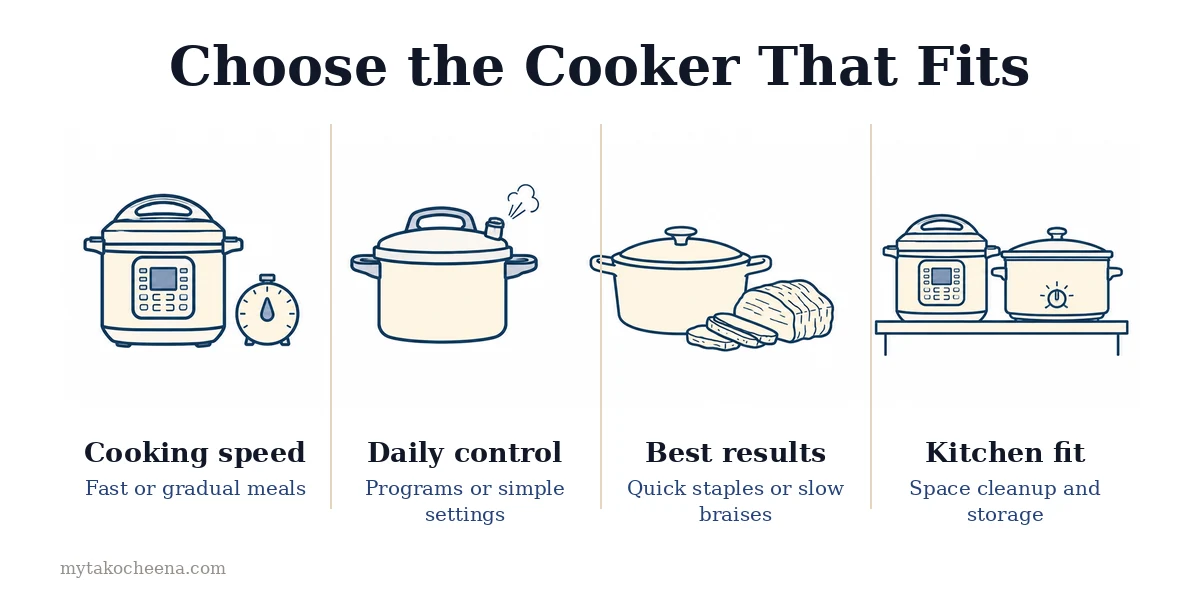
After the first month, owners rarely abandon either category; they narrow its role. Choose the pressure cooker for speed and versatility, or the slow cooker for simpler scheduling and fewer moving parts.
Common Questions Before You Buy
Instant Pot and slow cooker specifications differ in speed, automation, capacity, and control.
Is an Instant Pot faster than a slow cooker?
Yes. Pressure cooking generally finishes beans, grains, braises, and tough cuts faster, though heating and pressure release add time.
Which appliance is better for meal prep?
A slow cooker suits unattended batches; an Instant Pot offers more modes for varied weekly meals.
What capacity should I buy for my household?
Choose based on portions, leftovers, and storage space:
| Specification | Common range | Buying implication |
| Cooking capacity | 3 to 8 quarts | Smaller batches versus family portions |
| Electrical draw | 700 to 1,500 watts | Higher draw can shorten heating time |
Larger vessels support meal prep but require more storage space.
Does an Instant Pot replace a slow cooker?
It handles some slow-cooking tasks, but a dedicated slow cooker offers a broader vessel and steadier low heat.
Is pressure cooking hotter than slow cooking?
Pressure cooking raises the boiling point; slow cooking uses gentler heat:
| Cooking method | Common temperature range | Typical use |
| Slow-cooker low setting | 180 to 205°F | Long braises and tenderizing |
| Pressure cooking | 230 to 250°F | Faster cooking under pressure |
Actual temperatures vary by setting, recipe, altitude, and design.
Which appliance is easier to clean?
A slow cooker has fewer parts; an Instant Pot adds a sealing ring, steam components, and pressure lid.
How much counter space does each appliance need?
Compare dimensions, lid movement, storage height, and required clearance. Keep appliances away from cabinets during venting.