TL;DR: A mini food processor is a compact tool for small chopping, mixing, pureeing, and sauce tasks, while a full-size food processor is built for larger batches and broader prep.
Choose the mini for one or two people, limited storage, and quick cleanup. Choose the full-size model for batch cooking, slicing, shredding, dough, and family-size portions.
Mini Food Processor vs Full Size: The Core Difference
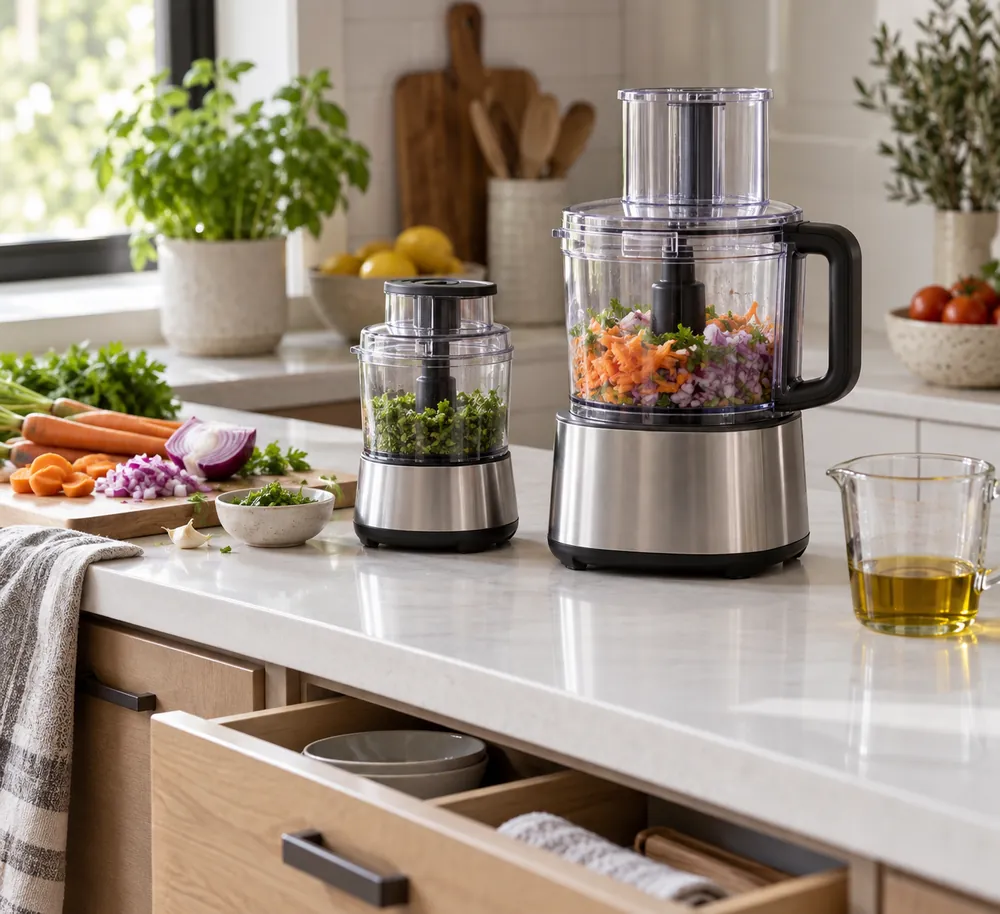
Bowl capacity creates the main divide between a mini food processor and a full-size food processor.
A mini model is not simply a cheaper full-size machine. It is a compact tool designed for short prep jobs, while a full-size processor handles larger quantities and more attachments.
Capacity determines the workload
Mini food processors suit ingredients that would look lost in a large bowl. Small amounts of garlic, herbs, nuts, cooked vegetables, or dressing ingredients stay closer to the blade, producing more even results with less scraping.
| Category | Common bowl capacity range | Best fit |
| Mini food processor | About 1.5 to 5 cups | Herbs, dips, sauces, baby food, breadcrumbs, single-meal prep |
| Full-size food processor | About 7 to 14 cups | Slaw, pastry, dough, shredded cheese, family-size chopping |
A full-size bowl becomes more useful as the ingredient pile grows. Larger batches of vegetables, hummus, salsa, pastry dough, or shredded cheese require fewer processing cycles and less transferring between containers.
Capacity also affects workflow. Filling a mini bowl repeatedly may be manageable for one sauce, but repetitive for meal preparation. A larger bowl reduces loading, scraping, and washing between batches.
Power and counter space change the trade-off
Published wattage offers a useful category clue, although blade geometry, gearing, pulse control, and bowl design also influence performance.
Higher wattage does not guarantee better results, especially when a mini bowl keeps small ingredients concentrated around the blade.
| Category | Usual wattage band | Typical width range |
| Mini food processor | About 100 to 350 watts | About 5 to 8 inches |
| Full-size food processor | About 450 to 1,200 watts | About 7 to 11 inches |
Mini units are easier to lift, store, and rinse. They suit apartments, dorm kitchens, crowded counters, and cooks who prefer keeping an appliance in a cabinet rather than leaving it assembled.
Full-size machines need more room for the base, bowl, lid, feed tube, pusher, blades, and discs. Check counter width and vertical clearance before buying; typical upper-cabinet clearance can fall within roughly 15 to 18 inches.
Function matters as much as size
Mini processors generally focus on chopping, mixing, pureeing, and simple emulsions. They work well for pesto, salsa, dressings, breadcrumbs, aromatics, small nut mixtures, and quick spreads.
Full-size processors often add slicing and shredding discs, larger feed tubes, dough capability, and more stable handling during extended prep.
Those features matter for frequent vegetable preparation, pastry, coleslaw, and batch cooking.
- Choose a mini processor for small portions, limited storage, and fast everyday prep.
- Choose a full-size processor for batch cooking, frequent vegetable work, dough, and attachment-based versatility.
- Choose based on repeated workload rather than occasional maximum capacity.
When a Mini Food Processor Makes More Sense
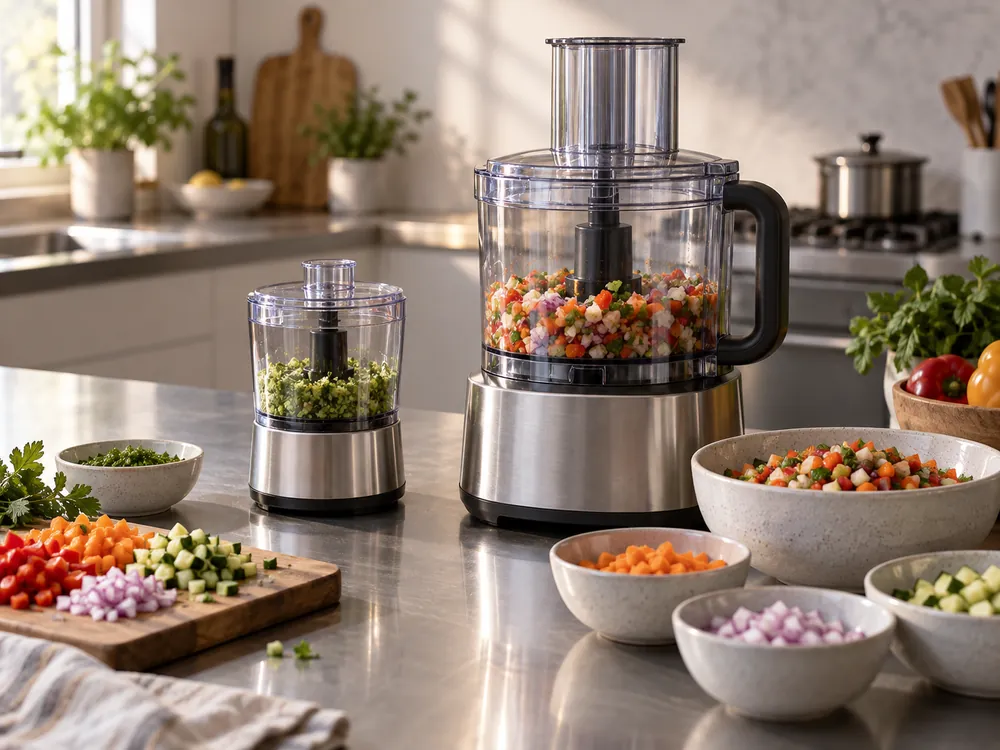
A mini food processor suits cooks who prepare modest quantities and want a tool that is quick to store, load, and clean.
Its smaller bowl keeps limited ingredients near the blade, making it practical for sauces, chopped aromatics, and single-meal preparation.
Capacity should match how you cook, not the largest recipe you might make occasionally. A mini model earns its space when repeated small tasks matter more than batch cooking or extensive slicing and shredding.
Small portions are easier to control
Small work bowls can process a few garlic cloves, herbs, nuts, or onion pieces without spreading ingredients across a wide base. Closer contact often means fewer pauses to scrape the sides and less food left unprocessed.
This advantage helps with pesto, salsa, hummus, vinaigrette, breadcrumbs, baby food, and small batches of dip. A full-size bowl can handle these jobs, but its larger interior may leave small quantities scattered around the blade.
| Category | Typical published bowl capacity | Practical fit |
| Mini food processor | About 1.5 to 5 cups | Single-meal prep, sauces, herbs, nuts, and small dips |
| Full-size food processor | About 7 to 14 cups | Family portions, shredded vegetables, pastry, and batch cooking |
Limited counter and cabinet space favor a mini
A compact appliance is easier to keep accessible in an apartment, dorm-style kitchen, or crowded cabinet. Lower weight also makes it easier to move between storage and the counter, encouraging quick prep.
Measure the storage location before buying. The machine must fit with its bowl, lid, cord, and blade accessories stored safely. Counter placement may also require clearance beneath upper cabinets.
| Category | Common wattage band | Typical width range |
| Mini food processor | About 100 to 350 watts | About 5 to 8 inches |
| Full-size food processor | About 450 to 1,200 watts | About 7 to 11 inches |
Convenience matters more than maximum versatility
Mini processors typically handle chopping, blending, pureeing, and simple emulsions. They suit cooks who rarely make dough, process large vegetable loads, or use slicing and shredding discs.
- Choose a mini model for quick aromatics, dressings, pesto, salsa, breadcrumbs, and small dips.
- Choose a full-size model for meal prep, large slaws, pastry, dough, and repeated vegetable processing.
- Check whether the bowl, lid, and blade are easy to rinse and store before prioritizing extra power.
Choose the mini format when speed, access, and small-batch control define your routine. A full-size processor is better when larger recipes or broader attachments outweigh its storage and cleaning demands.
When a Full-Size Food Processor Is Worth It
A full-size food processor earns its counter space when food preparation involves volume, repetition, or several techniques in the same week.
Its larger bowl and broader accessory set reduce the need to work in batches, which can matter more than the appliance’s larger footprint.
Capacity is the clearest reason to move beyond a mini food processor. Category specifications commonly fall into these ranges:
| Category | Typical bowl capacity | Practical advantage |
| Mini food processor | About 1.5 to 5 cups | Small sauces, herbs, crumbs, and single-meal portions |
| Full-size food processor | About 7 to 14 cups | Family-size prep, batch sauces, slaw, and dough |
A larger bowl is useful when ingredients must circulate without overflowing. It also lets you prepare a weeknight base, dip, or vegetable mixture in one session instead of stopping to empty the bowl and reload it.
Batch preparation is where the difference becomes obvious
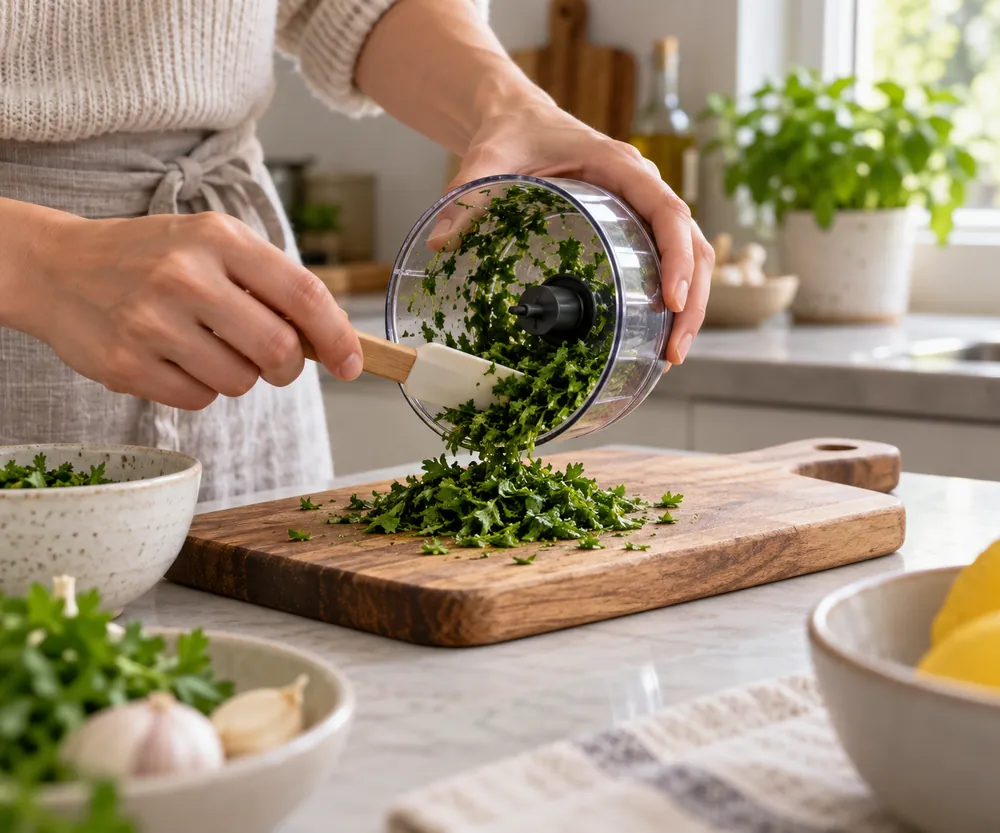
Full-size models suit cooks who regularly chop several vegetables, shred cheese for multiple meals, or make large batches of hummus, pesto, salsa, or soup base.
A wider work area can help ingredients move across the blade, while a larger feed tube may reduce the amount of cutting required before loading.
That advantage is less important for a small amount of garlic or herbs. Mini bowls often keep small ingredients close to the blade, so they can produce more consistent results without scraping the sides repeatedly.
- Choose full-size for: meal prep, large slaws, pastry dough, grated vegetables, and repeated entertaining.
- Choose mini for: quick aromatics, small dips, breadcrumbs, baby food, and compact storage.
Versatility can justify the extra storage
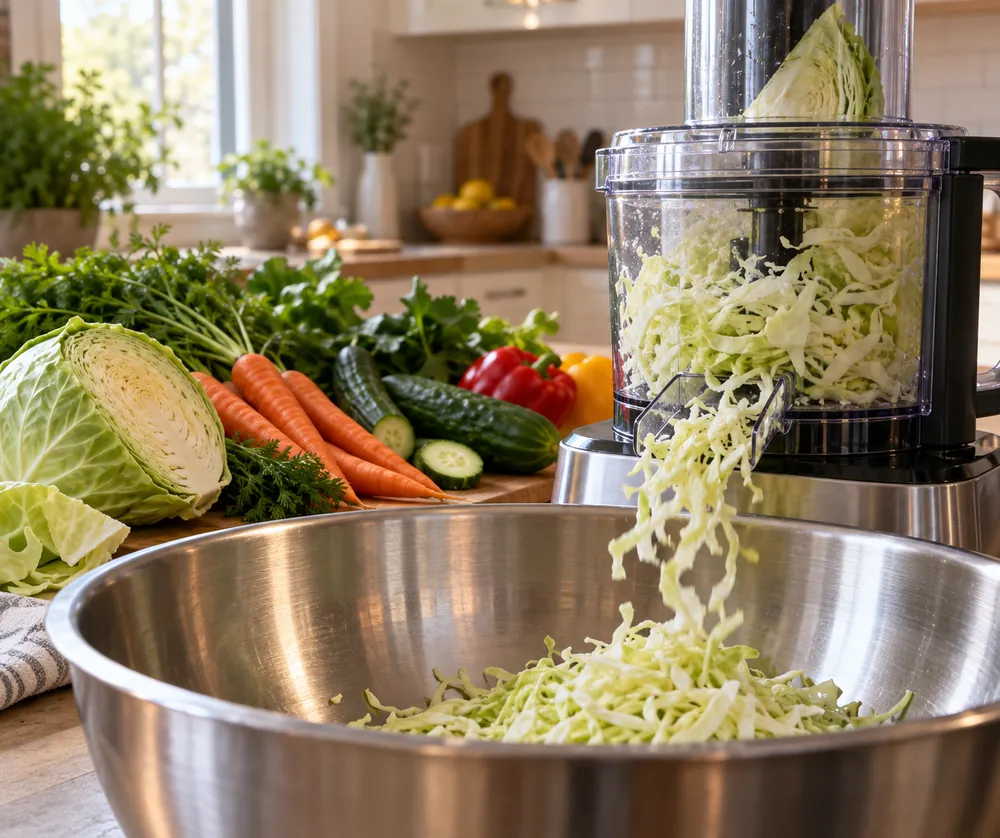
Full-size food processors commonly support slicing and shredding discs in addition to a chopping blade.
Those attachments can replace several manual prep steps when you process potatoes, cabbage, carrots, cucumbers, or cheese in quantity.
They are also better suited to dough and dense mixtures, although performance still depends on motor design, blade geometry, and recommended operating limits.
Published wattage provides a useful category clue rather than a guarantee of results.
| Category | Usual wattage band | Typical counter width |
| Mini food processor | About 100 to 350 watts | About 5 to 8 inches |
| Full-size food processor | About 450 to 1,200 watts | About 7 to 11 inches |
Before buying, measure the storage shelf, counter depth, and overhead clearance.
A full-size unit is worth it when its capacity and attachments will be used often; otherwise, its heavier base, separate parts, and larger cleaning load may become wasted space.
Key Buying Factors: Capacity, Storage, Cleanup, and Prep Style
Capacity should guide the choice between a mini food processor and a full-size food processor, but bowl volume is only part of the decision.
Storage space, cleanup effort, and the way you prepare food determine which format feels convenient every day. Choose the tool that matches your normal portions rather than occasional ambitious recipes.
A mini processor keeps small amounts close to the blade, so garlic, herbs, nuts, dressings, salsa, and baby food can process evenly without repeated scraping.
Its smaller bowl also limits batch cooking, shredded vegetables, pastry, and dough, where ingredients need room to circulate.
| Category | Typical bowl capacity | Best suited to |
| Mini food processor | About 1.5–5 cups | Small sauces, aromatics, dips, and single-meal prep |
| Full-size food processor | About 7–14 cups | Slaw, dough, pastry, shredded cheese, and family batches |
A full-size bowl earns its counter space when you regularly process several ingredients at once.
Wider feed tubes and slicing or shredding discs can reduce repeated loading, especially for meal prep, while a mini unit is faster to grab for one small task.
Storage can outweigh capacity in a compact kitchen. Compare the base footprint, lid height, cord storage, and the space required for pushers, discs, and blades before assuming an appliance will fit.
| Category | Common width range | Typical storage concern |
| Mini food processor | About 5–8 inches | Usually easier to store assembled or in a cabinet |
| Full-size food processor | About 7–11 inches | Needs room for a taller bowl, lid, pusher, and attachments |
Cleanup favors the mini format for quick jobs because fewer parts need washing and the bowl is easier to rinse. Full-size models may have dishwasher-safe components, but more attachments create more pieces to organize and dry.
Choose a mini processor for frequent small-batch chopping and blending. Choose full-size when batch volume, vegetable prep, dough, or attachment versatility matters more than quick access and compact storage.
assuming an appliance will fit. Measure the shelf or cabinet opening, then account for the processor’s working height with the lid, feed tube, and pusher attached.
A base that fits beneath a cabinet may still need to move forward before you can add ingredients safely.
Measure the counter depth from the wall to the edge, not only the width available between appliances. Leave enough room to place a bowl nearby and to lift the work bowl from its base.
If the processor must be stored after every use, check whether that extra handling will discourage regular use.
Open the cabinet or pantry where you expect to keep the parts. Measure the usable height between shelves, including the door frame and any fixed hinges.
Then check the diagonal clearance for the bowl and lid, since a tall assembly may fit only when tilted.
Cleanup affects the practical footprint too. A full-size processor may have more removable parts, and discs or blades need a dry, protected place between uses.
A mini processor can simplify a small job, but its compact bowl may require several rounds when preparing ingredients for multiple people.
Consider how you move through a typical recipe. If ingredients are chopped separately and added directly to a pan, a mini processor may stay within reach without monopolizing the counter.
If you prep vegetables, cheese, or dough in one session, keeping a full-size unit accessible can save repeated transfers.
Before buying, mark the appliance’s estimated footprint on the counter with removable tape. Place a cutting board, mixing bowl, and storage container beside it to see whether the setup still leaves a workable landing zone.
This reveals congestion that product dimensions alone cannot show.
The better choice is the processor you can store, assemble, and clean without rearranging the kitchen.
Match the measured space to your most frequent prep pattern, then treat occasional large recipes as a reason to use another method rather than automatically choosing the larger machine.
How Owners Describe It a Year In
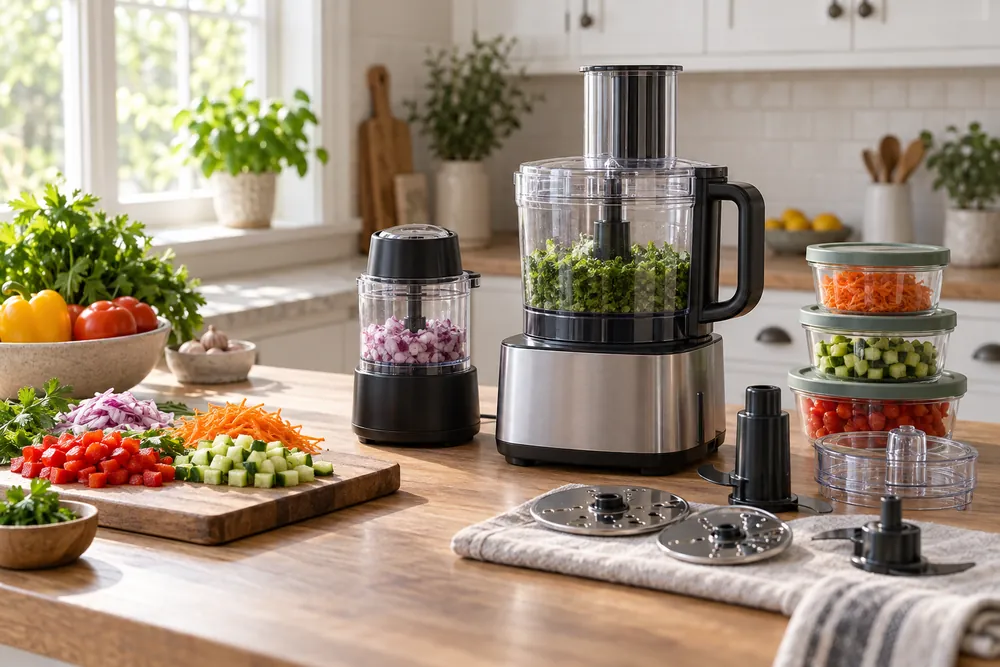
Owner reports converge on one lesson: the better choice matches the amount of food prepared most often.
Mini processors earn praise for quick, low-mess jobs, while full-size machines receive stronger approval from cooks who regularly prepare several portions.
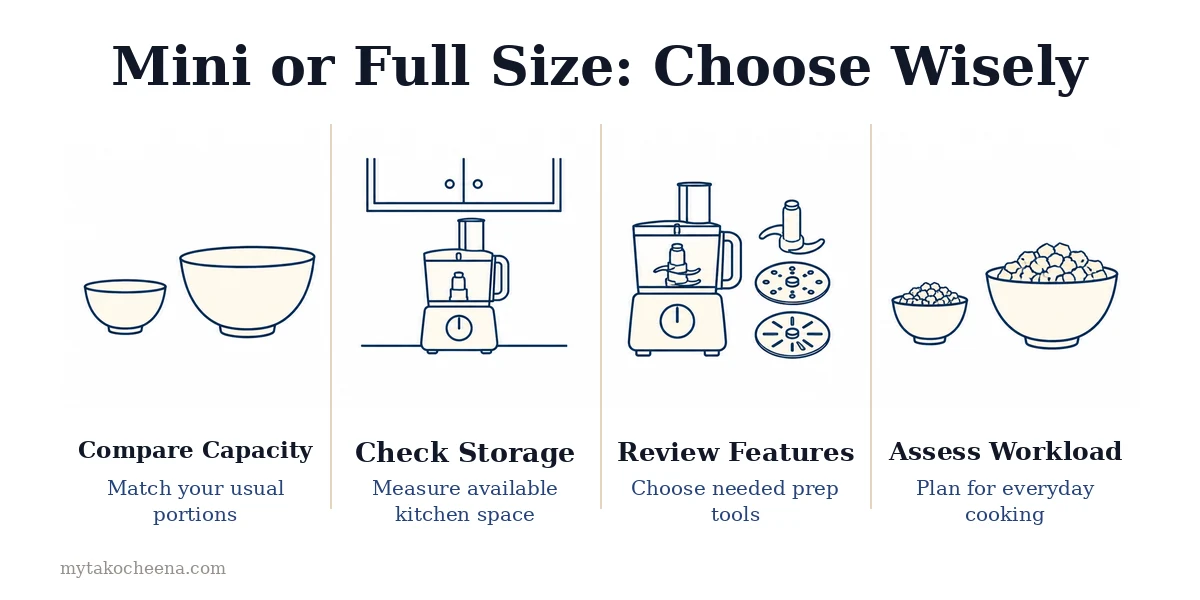
The most common mini-model complaint is limited capacity. Owners need batches for chopping vegetables, making salsa, processing nuts, or preparing dough-like mixtures, reducing the convenience they expected.
Full-size owners report the opposite frustration: the appliance feels excessive for small amounts. Food may spread beneath the blade, requiring scraping or a second pass, while the bowl, lid, pusher, and discs occupy cabinet space.
What owners say holds up
Simple mini processors usually age well when used as intended. Owners praise the uncomplicated bowl-and-blade setup, quick rinsing, and low storage burden.
Manufacturer documentation typically recommends short pulses and staying below the marked fill line.
Full-size machines retain value through versatility. Owners who slice, shred, chop, puree, and make pastry regularly say the wider bowl and accessory discs justify the larger footprint.
| Category | Mini food processor | Full-size food processor |
| Published bowl capacity | About 1.5 to 5 cups | About 7 to 14 cups |
| Typical wattage band | About 100 to 350 watts | About 450 to 1,200 watts |
| Typical width | About 5 to 8 inches | About 7 to 11 inches |
What may fail early
Mini-appliance complaints often involve the lid, locking tabs, motor strain, or scratches from rough handling.
Manufacturers commonly caution against overfilling, continuously processing hard ingredients, or washing components contrary to care instructions.
Full-size complaints more often concern accessories than the motor. Discs can be misplaced, plastic pushers can crack, and seals may retain residue. More parts also create opportunities for staining, odour, and incomplete cleaning.
Noise and heat become more noticeable when either category exceeds its usual workload. Reports describe a warm motor housing or temporary stops after repeated heavy processing.
Manufacturer guidance generally treats pauses between demanding cycles as normal protection.
Long-term satisfaction depends less on maximum power than routine fit.
A mini suits owners who value fast small-batch prep and easy storage; a full-size unit suits households trading cabinet space and cleanup for fewer batches and broader options.
- Choose mini when most jobs involve herbs, sauces, aromatics, breadcrumbs, or one-meal portions.
- Choose full-size when batch cooking, shredding, slicing, pastry, or family portions are regular tasks.
- Check care instructions, replacement-part availability, and storage space before treating convenience as the deciding factor.
Questions Still Worth Raising
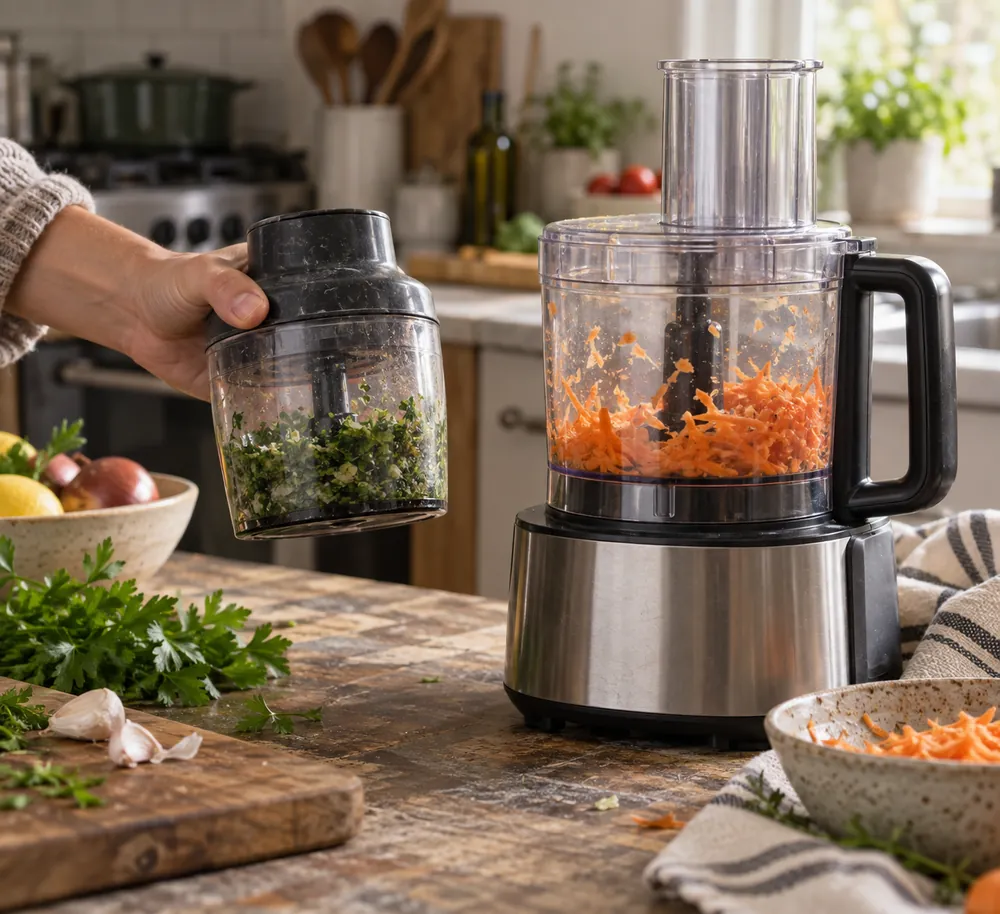
Bowl capacity, storage space, and prep habits determine whether a mini or full-size food processor earns its place. The right choice depends on how much food you prepare and which tasks you repeat.
What size food processor do I need for everyday cooking?
A mini processor suits garlic, herbs, dressings, dips, breadcrumbs, baby food, and small portions.
A full-size model works better for family meals, batch cooking, shredded vegetables, pastry, and recipes needing room for ingredients to circulate.
| Category | Typical bowl capacity | Best suited to |
| Mini food processor | About 1.5 to 5 cups | Small portions and sauces |
| Full-size food processor | About 7 to 14 cups | Batch preparation and family meals |
Is a mini food processor powerful enough for my recipes?
Mini models handle chopping, pureeing, mixing, and simple emulsions when the bowl is not overloaded. They may struggle with dense dough, large quantities of raw vegetables, or extended processing.
Compare wattage, blade design, and motor controls. Higher published wattage does not guarantee better results, but full-size processors generally offer more reserve for demanding jobs.
| Category | Common wattage range | Typical workload |
| Mini food processor | About 100 to 350 watts | Light chopping and blending |
| Full-size food processor | About 450 to 1,200 watts | Heavier and longer processing |
Will a mini food processor save enough counter space?
Mini units are easier to store in a crowded cabinet and move with one hand. Full-size machines need space for the base, bowl, lid, pusher, blades, and discs, so measure the complete stored setup.
Typical countertop footprints run about 5 to 8 inches wide for mini processors and 7 to 11 inches for full-size models. Cabinet clearance commonly falls around 15 to 18 inches; confirm your opening before buying.
Can a mini food processor make dough?
Some mini processors can mix small amounts of soft dough, but their bowls and motors are not intended for regular bread or pastry batches. Overloading can cause uneven mixing and strain the motor.
Choose a full-size processor when dough is a recurring task. Check the manufacturer’s guidance for maximum ingredient amounts, because capacity alone does not establish a safe dough limit.
Which food processor is easier to clean?
A mini processor usually has fewer parts and a smaller bowl, making quick rinsing easier. A full-size model may require cleaning several discs, a feed tube, a pusher, and a larger work bowl.
- Check whether removable parts are dishwasher-safe.
- Look for blade areas that are reachable without trapping food.
- Confirm that replacement bowls and lids are available.
Is a full-size food processor worth it for one person?
A full-size model can be worthwhile for frequent vegetable prep, freezer cooking, entertaining, or multiple attachments. For occasional single-serving tasks, its storage and cleanup may outweigh its extra capacity.
Consider how often you would use slicing and shredding discs. A mini processor is usually better when recipes involve only a few ingredients and one or two servings.
Should I buy a mini and full-size food processor?
Owning both makes sense only when their jobs remain distinct. A mini can handle quick sauces and aromatics, while a full-size machine manages weekly batch preparation.
Compare storage, duplicate accessories, and cleaning time before buying two appliances. For many kitchens, one processor matched to usual portion sizes offers better value and less clutter.