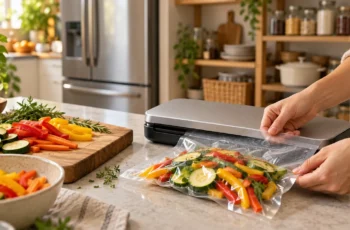
Quick Answer: Food processor bowl size is the amount of food the work bowl can hold, although usable capacity varies by task. Small bowls suit herbs, sauces, dips, and baby food. Mid-size bowls handle everyday family prep.
Large bowls are better for dough, shredding, meal prep, and entertaining. Compare working capacity, dimensions, attachments, and cleanup needs rather than cup count alone.
Why Food Processor Bowl Size Matters
Food processor bowl size determines how much food you can chop, slice, shred, puree, mix, or knead in one cycle. The right capacity reduces spills, uneven results, repeated batches, and unnecessary cleanup.
Published capacity usually describes the bowl’s total volume, not its practical working capacity.
Ingredients need room to circulate, and liquids, dough, and dry vegetables behave differently, so a bowl that looks large on paper may handle less than expected for a particular task.
| Size band | Typical capacity | Suitable tasks |
| Mini chopper | 2–4 cups | Herbs, garlic, dips, small sauces |
| Compact processor | 5–8 cups | Everyday prep for smaller households |
| Full-size processor | 9–14 cups | Slicing, shredding, dough, family meals |
| Large-capacity processor | 15–16 cups | Batch cooking and frequent entertaining |
Smaller bowls are easier to lift, wash, and store, and their blades often reach small amounts more effectively.
Their limitation appears during bulky preparation: cabbage, potatoes, shredded cheese, cookie dough, and meal-prep vegetables can require several cycles.
Larger bowls provide more room for ingredients to move, which may improve chopping consistency and reduce overflow.
They can be inefficient for a small amount of food, however, because ingredients may remain below the blade’s most effective path or smear around the walls.
| Specification | Common range | Why it matters |
| Assembled height | 15–18 inches | Confirms under-cabinet clearance |
| Motor power category | 250–1,200 watts | Provides context for light prep versus heavier dough work |
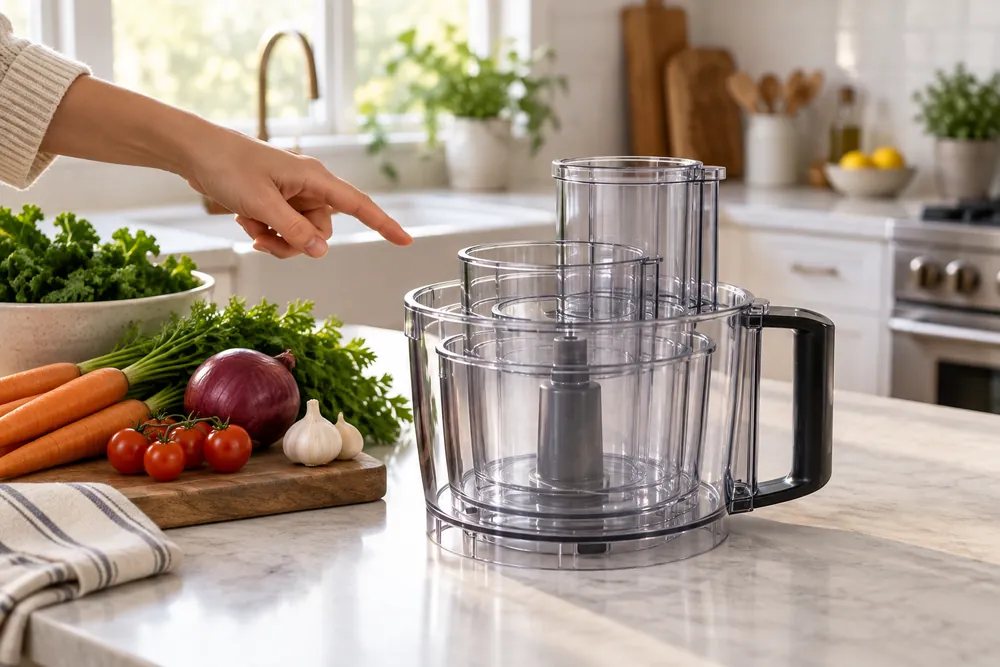
Capacity also affects attachments. A wide feed tube and large slicing disc are useful for high-volume preparation, while an included small work bowl can make a full-size machine more versatile.
- Choose a smaller bowl for sauces, baby food, herbs, and limited storage.
- Choose a mid-size bowl for routine chopping, shredding, and meal preparation.
- Choose a larger bowl for dough, batch cooking, and entertaining.
Compare capacity, dimensions, included bowls, and reported owner feedback together. The best bowl size matches recurring tasks, available storage, and acceptable cleanup rather than the largest published cup figure.
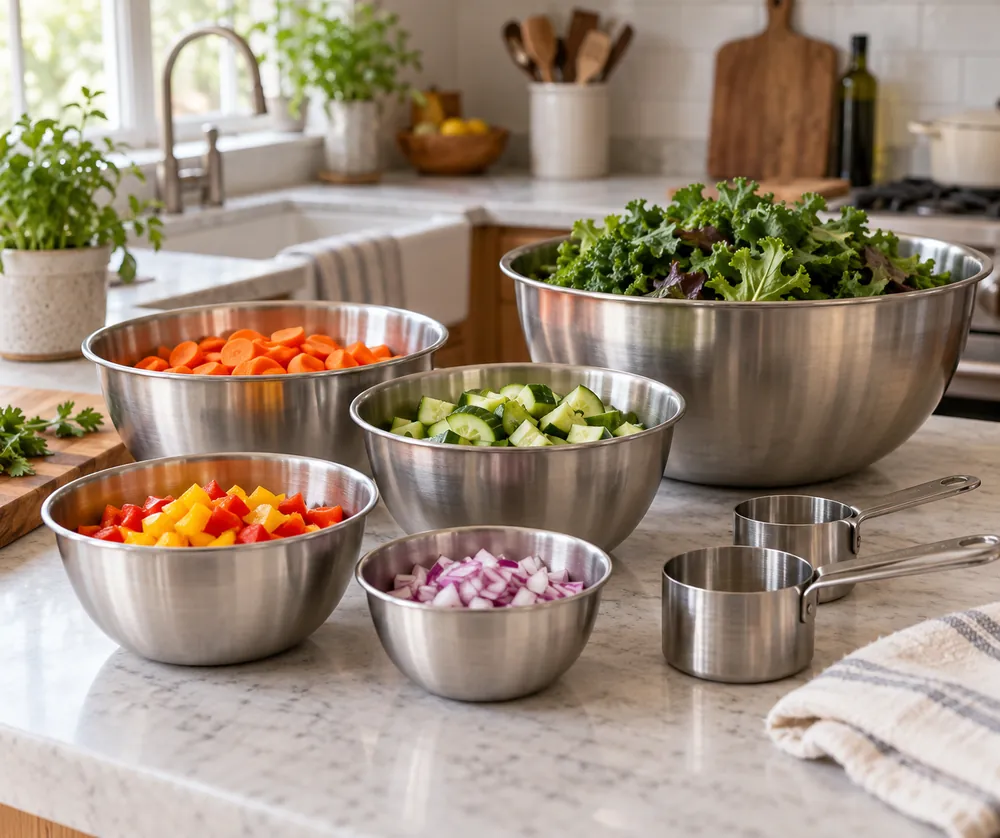
How Food Processor Capacity Is Usually Measured
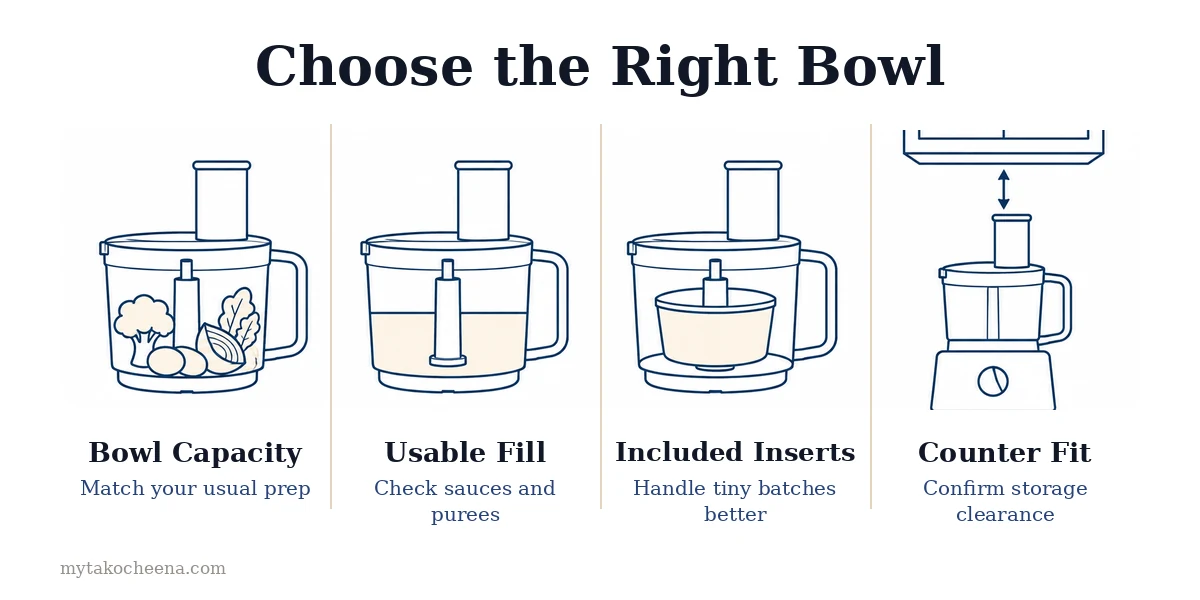
Food processor capacity usually means the total bowl volume printed in the product specifications, not the amount you can safely chop, knead, or puree.
Published bowl size helps compare machines, but it is only a starting point because working capacity changes with the food, blade, and attachment.
US manufacturers generally describe bowl size in cups.
This figure may represent the space available up to the bowl rim or a marked fill line, rather than the maximum amount that can move safely without splashing, leaking, or pressing against the lid.
| Capacity band | Typical published size | Common role |
| Mini chopper | 2–4 cups | Herbs, garlic, dips, and small sauces |
| Compact processor | 5–8 cups | Everyday prep for smaller households |
| Full-size processor | 9–14 cups | Slicing, shredding, chopping, and dough |
| Large-capacity processor | 15–16 cups | Batch cooking and entertaining |
Usable capacity is usually lower than the advertised total, especially for liquids, hot mixtures, and foods that expand or climb the blade.
A processor may hold its published volume in the bowl, yet require extra headspace for the lid, feed tube, or safe circulation.
Different tasks also consume bowl space differently. Sliced vegetables may pile upward, shredded cheese can compact quickly, and dough needs room to gather and turn instead of riding around the bowl.
- Dry chopping: Ingredients need enough room to move between pulses, so an oversized bowl can perform poorly with a tiny portion.
- Pureeing: A smaller load may sit below the blade or smear around the sides, making a smaller work bowl more effective.
- Dough mixing: Dense dough places more strain on the motor and may require a lower working limit than light vegetables.
- Slicing and shredding: The bowl can fill quickly beneath a disc, particularly with cabbage, potatoes, or firm cheese.
Read capacity alongside the manufacturer’s maximum-fill marks, attachment guidance, and included bowl sizes.
A removable mini bowl can make a large machine more versatile, while a wide bowl may improve batch preparation but take more cabinet space.
For a practical comparison, also check assembled height and storage clearance. Common countertop clearance needs fall around 15–18 inches, but the lid, feed tube, and pusher may determine whether the processor fits beneath a cabinet.
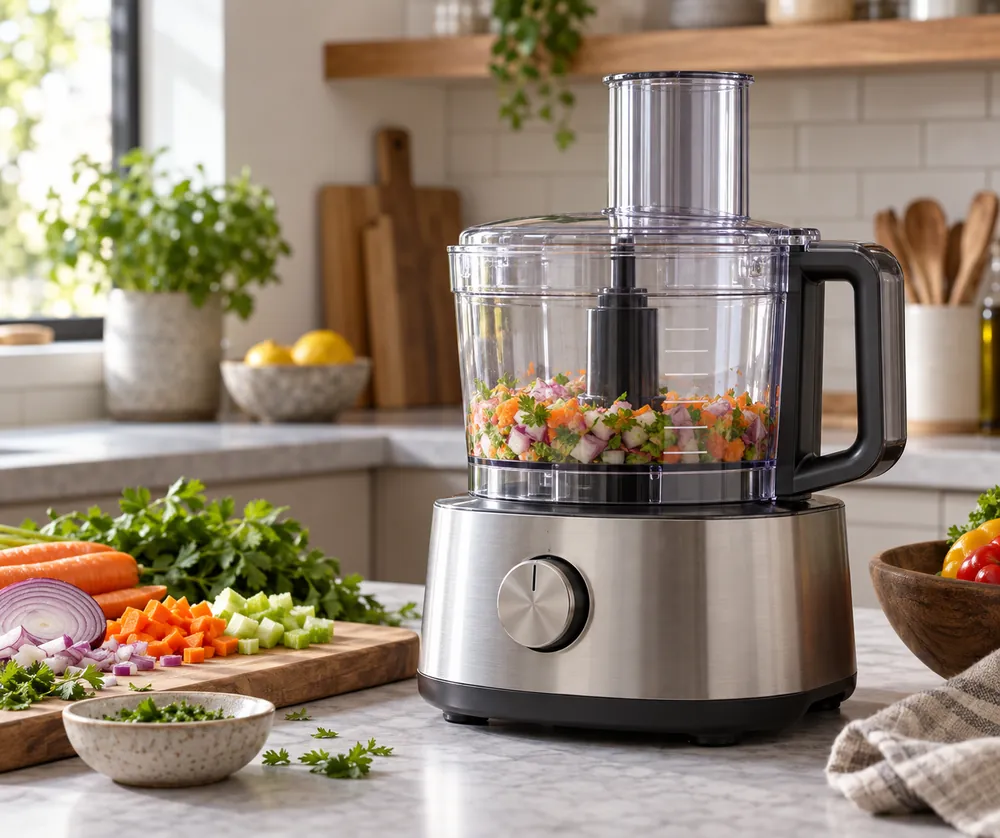
Small Bowls for Chopping, Sauces, and Baby Food
Small food processor bowls suit tasks that involve limited ingredients, quick preparation, and frequent cleanup.
They are especially useful for chopping herbs, making sauces, blending baby food, and preparing dips without running a large bowl nearly empty.
A compact bowl keeps ingredients closer to the blade, which can improve consistency when processing garlic, onions, nuts, cooked vegetables, or soft fruit. It also reduces the need to scrape down wide sidewalls during small-batch work.
What small bowls handle well
- Chopping aromatics: Process garlic, ginger, shallots, chilies, and herbs for a single recipe.
- Sauces and dips: Make pesto, salsa, hummus, mayonnaise, pesto-style spreads, and salad dressings in manageable portions.
- Baby food: Puree cooked vegetables, fruit, grains, or tender meat while controlling texture and portion size.
- Small toppings: Chop nuts, breadcrumbs, grated cheese, or seeds without using a full-size work bowl.
Published capacity still needs careful interpretation. A bowl’s total volume is not the same as its safe working capacity, especially for liquids, hot ingredients, or mixtures that expand while processing.
| Capacity band | Best suited to | Main trade-off |
| 2–4 cups | Herbs, garlic, dips, baby-food portions | Limited batch size |
| 5–8 cups | Small households and everyday prep | Uses more storage space |
Storage can determine whether a compact processor remains convenient. Compare the assembled height with the available cabinet opening, particularly when the lid or feed tube stays attached between uses.
| Measurement | Common range | Why it matters |
| Under-cabinet clearance | 15–18 inches | Confirms countertop storage fit |
| Light-duty motor range | 250–600 watts | Provides context for chopping and pureeing |
Small bowls become less practical for dense dough, large quantities of shredded vegetables, or family-size meal preparation.
Choose one for speed and easy washing, then consider a larger main bowl if routine recipes regularly require multiple batches.
For a buyer comparing countertop space, bowl size is only one measurement. Record the processor’s full footprint, including the motor base, bowl, lid, feed tube, and any handle that extends beyond the main body.
Leave enough clearance to set the bowl down beside the machine. If ingredients are usually staged on a cutting board, measure that working area too. A processor that fits tightly may become inconvenient to use regularly.
Measure cabinet height before choosing a model that will be stored assembled. The lid, feed tube, pusher, and handle can make the stored height greater than the motor base suggests.
Check whether the bowl can be lifted straight up or must be twisted before removal. A nearby wall, backsplash, shelf, or appliance can interfere with that motion even when the processor’s base fits.
Keep the bowl’s shape in mind when comparing compact designs. A wider, lower bowl may be easier to fill and scrape, while a taller, narrower bowl can occupy less counter width but need more vertical clearance.
Storage space also includes the accessories used with small-batch work. Blades, discs, lids, pushers, and smaller inserts should have a defined location so they do not remain loose on the counter.
For buyers considering My Tako Cheena, the useful question is not simply whether a small bowl sounds convenient.
Match the bowl and base dimensions to the recipes prepared most often, the available storage, and the clearance around the chosen work area.
Measure the counter from front to back, then compare that figure with the processor’s deepest point rather than its shortest side. Account for cords, controls, and the space needed to reach the bowl comfortably.
If the processor will stay near a wall, check lid and pusher clearance with the bowl installed. Some layouts allow the base to fit but make loading, scraping, or removing the lid awkward.
Finally, consider how much food is usually made at one time. A compact setup may save space and cleanup, but repeated batches can offset that convenience when preparing meals for several people.
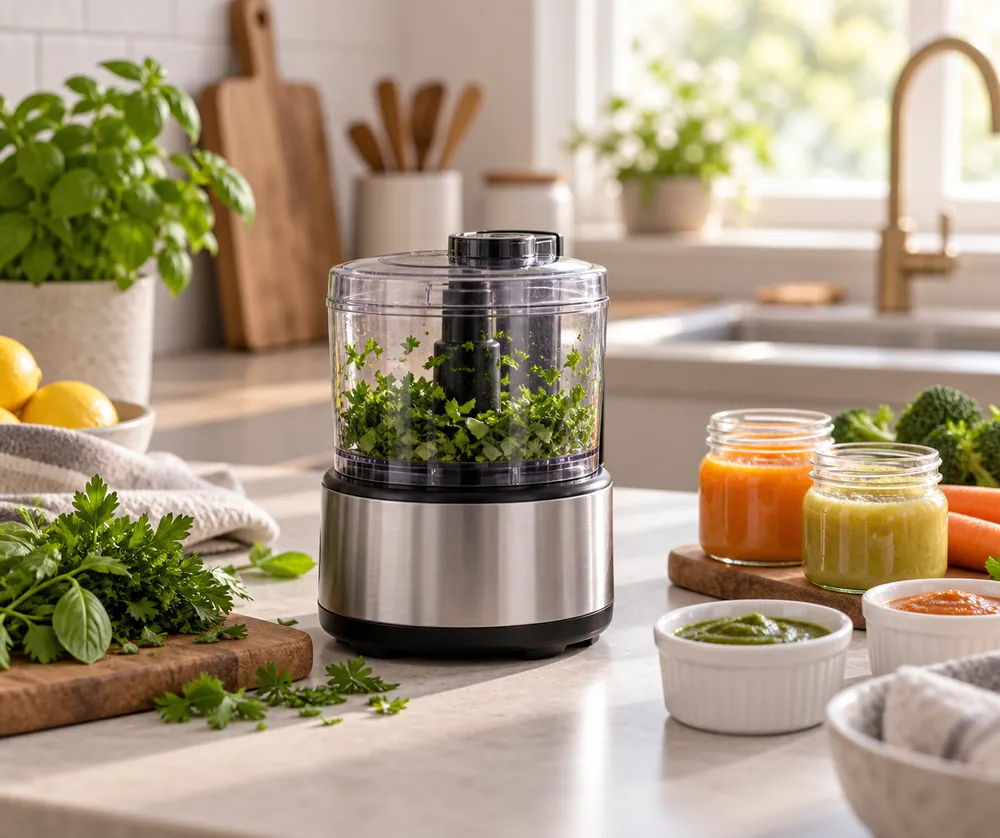
Mid-Size Bowls for Everyday Family Prep
Mid-size food processor bowls balance useful capacity with manageable storage, making them a practical choice for routine family cooking.
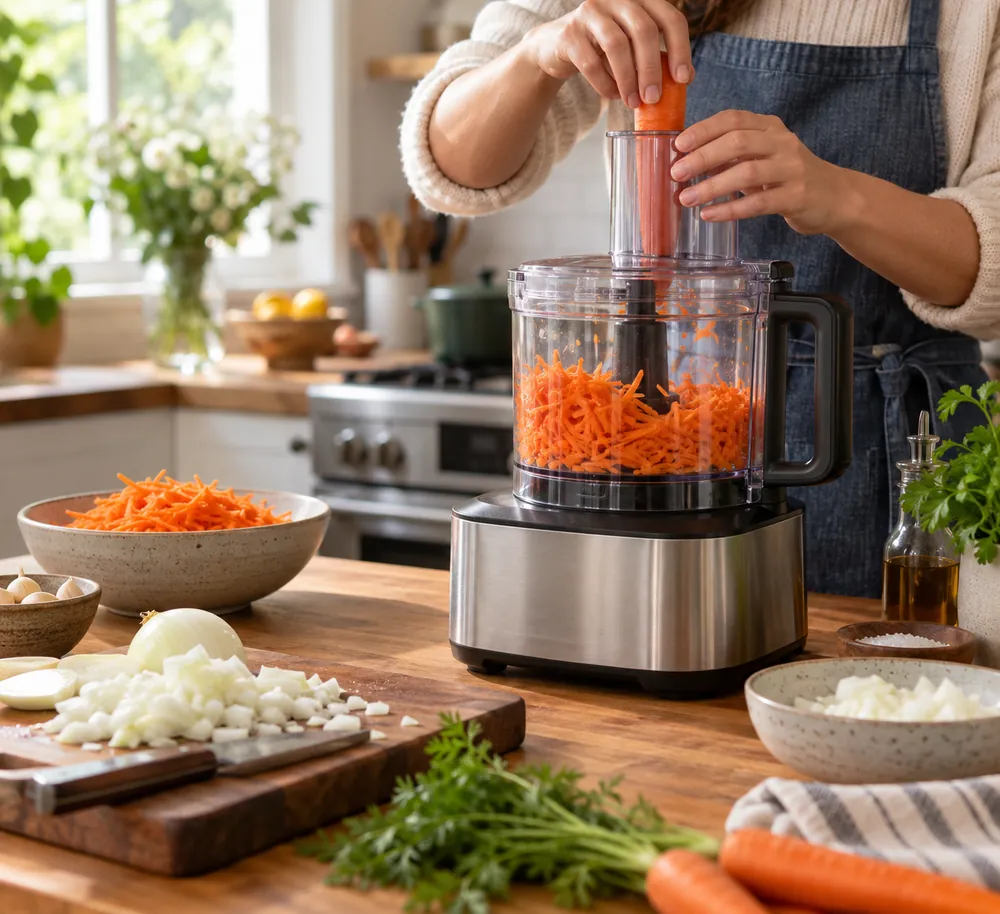
They handle vegetables, cheese, herbs, sauces, and dough in quantities that suit regular meals without the counter space and cleanup demands of a full-size machine.
This category generally suits households preparing food for a small family, especially when the processor replaces several manual prep steps.
It provides more room than a compact chopper while remaining easier to lift, wash, and store than a large-capacity bowl.
What a mid-size bowl handles well
- Chopping onions, carrots, celery, nuts, and herbs for everyday recipes.
- Slicing potatoes, cucumbers, and other vegetables when the feed tube and disc support the ingredients.
- Shredding cheese or vegetables for salads, casseroles, slaws, and toppings.
- Blending dips, pesto, hummus, and sauces without needing a separate small appliance.
- Mixing modest amounts of pastry or bread dough, provided the manufacturer allows that use.
| Bowl category | Typical published capacity | Best match |
| Compact processor | 5–8 cups | Small households and limited storage |
| Mid-size processor | 9–12 cups | Routine family preparation |
| Large-capacity processor | 13–16 cups | Batch cooking and frequent entertaining |
A bowl that is too small forces repeated batches, which can make shredding cabbage, slicing potatoes, or preparing meal-prep vegetables inefficient.
A bowl that is too large may leave small amounts below the blade’s most effective path, producing uneven chopping or requiring frequent scraping.
Storage deserves equal attention. Compare the assembled height with available cabinet clearance, and check whether the bowl, lid, discs, and blade can be stored together without crowding other appliances.
| Specification | Common range | Why it matters |
| Under-cabinet clearance | 15–18 inches | Confirms countertop fit |
| Motor power band | 250–1200 watts | Provides context for light prep versus heavier mixing |
Choose the mid-size range when daily tasks vary and storage is limited, but avoid treating published cup capacity as usable capacity for every job.
Review the included work bowls, feed tube, discs, dishwasher guidance, and owner reports before deciding.
Large Bowls for Dough, Shredding, and Batch Cooking
Large food processor bowls suit cooks who prepare bread dough, shredded vegetables, grated cheese, or several meals in one session.
Extra capacity reduces repeated batches, but it also demands more storage space and may perform poorly with very small portions.
Compare usable working capacity rather than the headline bowl volume alone. Dough, liquids, and bulky vegetables each need room to move, so a bowl should not be filled to its published maximum.
| Capacity band | Best suited to | Main trade-off |
| 9–12 cups | Family meals, shredding, slicing, and moderate dough batches | Easier storage and better flexibility for everyday work |
| 13–16 cups | Batch cooking, entertaining, large vegetables, and frequent dough preparation | More counter and cabinet space, with weaker performance on tiny portions |
Dough preparation benefits from a wide bowl and a sturdy dough blade. Space allows flour and liquid to combine without climbing over the rim, although dense dough can still challenge a lighter motor or cause the machine to move.
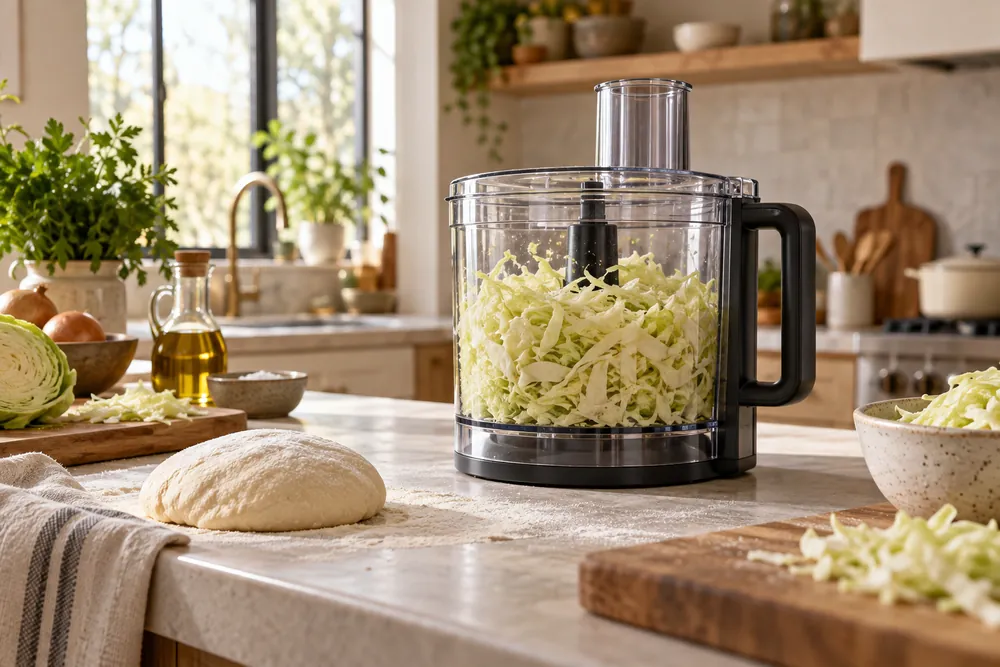
Shredding and slicing are where a large bowl saves the most time. Cabbage, potatoes, carrots, and cheese can be processed in fewer rounds, especially when the feed tube accepts larger pieces.
Check assembled dimensions before choosing a high-capacity model. Typical countertop clearance needs fall around the range shown below, but feed-tube height, lid shape, and storage for discs may require additional room.
| Specification | Common range to check | Why it matters |
| Under-cabinet clearance | 15–18 inches | Confirms whether the assembled processor fits beneath cabinets |
| Storage footprint | About 8–12 inches wide | Helps plan shelf or countertop space for the base and bowl |
- Choose a large bowl for regular batch cooking or entertaining.
- Choose a mid-size bowl if daily portions are small.
- Look for a smaller insert when one appliance must handle both large and small tasks.
Start with the processor’s footprint, then add room to open the lid, lock the bowl, and remove the pusher. A unit that fits beneath cabinets when closed may still be awkward if the lid rises into a shelf or light fixture.
Measure the counter depth from the wall to the front edge, including space needed to place a platter or mixing bowl nearby. Leave a clear path around the feed tube so long vegetables can enter without hitting a backsplash or cabinet.
Check where the bowl, lid, blades, and discs will live when they are not assembled.
A large processor may fit on the counter but overwhelm a cabinet shelf, especially if accessories must be stored upright or kept together to avoid losing small parts.
For a compact kitchen, prioritize the capacity you will use most often rather than the largest option available.
Mark the appliance’s footprint with tape, then verify door swings, outlet access, and lifting space before committing to the bigger bowl.
Matching Bowl Size to Storage, Counter Space, and Cleanup
Bowl size affects more than the amount of food processed in one batch. It determines where the appliance can live, how easily it can be lifted and washed, and whether everyday prep feels efficient or unnecessarily bulky.
Storage is often the deciding factor in smaller kitchens. Measure the assembled processor, its bowl, lid, feed tube, discs, and blade case rather than judging the motor base alone.
| Specification | Common range | Why it matters |
| Under-cabinet clearance | 15–18 inches | Shows whether the assembled unit can remain on the counter |
| Compact bowl capacity | 5–8 cups | Balances daily prep with easier cabinet storage |
| Full-size bowl capacity | 9–14 cups | Provides room for larger batches but needs more shelf space |
| Large-capacity bowl | 15–16 cups | Fits batch cooking but can be cumbersome to store and handle |
Counter depth also matters because a large feed tube, rear cord outlet, or hinged lid can extend beyond the base.
Leave enough working room to add ingredients, remove the bowl, and carry it to the sink without knocking into nearby appliances.
Match cleanup effort to cooking habits
A smaller bowl usually washes faster and is easier to rinse under a faucet. It can still create extra work if regular recipes exceed its usable capacity and require repeated chopping, scraping, or transferring.
A larger bowl reduces batch repetition but adds surface area, heavier parts, and more attachments to clean. Check whether the lid, pusher, discs, and bowl are dishwasher-safe, and look for crevices around seals where food can collect.
- Choose a compact bowl for sauces, herbs, small dips, and limited storage.
- Choose a mid-size bowl for routine chopping, shredding, and meals for smaller households.
- Choose a large bowl for dough, meal prep, entertaining, and frequent batch cooking.
Consider the smallest amount you prepare as carefully as the largest. An oversized bowl may leave small portions below the blade’s most effective path, while an undersized bowl encourages overflow and repeated batches.
What Owners Wish They Had Checked First
Usable bowl capacity, storage clearance, and attachment design are the details owners most often wish they had checked before buying.
Owner reports repeatedly mention bowls that feel too small for everyday batches, while manufacturer documentation clarifies that published capacity does not always equal the safe working volume.
The recurring complaint: capacity feels smaller than expected
Owners commonly report needing several batches for shredded vegetables, sliced potatoes, dough, or meal preparation.
A bowl may hold its advertised volume, yet ingredients can spill, pack tightly, or process unevenly before that capacity is practical.
| Capacity band | Typical fit | Common owner trade-off |
|---|---|---|
| 2–4 cups | Herbs, dips, garlic, small sauces | Limited for family-size preparation |
| 5–8 cups | Daily prep for smaller households | May require batches for shredding |
| 9–14 cups | Vegetables, cheese, dough, family meals | Needs more storage space |
| 15–16 cups | Batch cooking and entertaining | Less convenient for small quantities |
What tends to hold up
Owners generally value sturdy bowls, secure lids, clear measurement markings, and wide feed tubes.
Manufacturer documentation also emphasizes correct assembly, maximum-fill indicators, and using the appropriate blade or disc, which can reduce strain and improve consistency.
What often fails early
Reported early problems include cracked work bowls, worn lid locks, leaking seals, and attachments that are difficult to store.
These complaints are more consequential when replacement parts are unavailable or when the bowl and lid are proprietary.
| Specification | Common range | Why owners check it |
|---|---|---|
| Under-cabinet clearance | 15–18 inches | Confirms assembled storage or operating fit |
| Motor power band | 250–1200 watts | Provides context for light prep versus heavier work |
| Included work bowls | 1–2 bowls | Shows whether small batches need a separate appliance |
Before choosing, compare the usable capacity guidance, dimensions, replacement-parts policy, included attachments, and cleaning instructions. Those details often matter more after purchase than the headline cup figure.
Common Questions Before You Buy
Food processor bowl size affects batch size, chopping consistency, storage, cleanup, and attachment performance. The best choice depends on how much food you prepare regularly, rather than the largest capacity printed on the box.
What size food processor bowl is best for everyday use?
A mid-size bowl usually suits routine chopping, slicing, shredding, sauces, and meal preparation for smaller households.
It offers more working room than a mini chopper without taking up as much counter and cabinet space as a full-size model.
| Bowl type | Published capacity | Typical use |
| Mini chopper | 2–4 cups | Herbs, garlic, dips, small sauces |
| Compact processor | 5–8 cups | Daily prep for smaller households |
| Full-size processor | 9–14 cups | Shredding, slicing, dough, family meals |
| Large-capacity processor | 15–16 cups | Batch cooking and entertaining |
Is a bigger food processor bowl always better?
A larger bowl helps with cabbage, potatoes, shredded cheese, dough, and batch cooking because ingredients have more room to circulate.
It can perform poorly with tiny portions, however, because food may remain below the blade or spread along the sides.
What size food processor do I need for one or two people?
A compact processor or small bowl is often enough for sauces, herbs, vegetables, nuts, and modest meal preparation.
Choose a larger bowl if you regularly shred several ingredients, prepare freezer portions, or want to avoid repeated batches.
Can a food processor bowl be filled to its listed capacity?
Published capacity describes the bowl’s overall volume, not always its safe working capacity.
Liquids, dough, and foods that expand or move forcefully may require extra headroom, so check the manufacturer’s maximum fill guidance before processing.
What food processor bowl size is best for dough?
Dough benefits from a roomy bowl and a motor designed for heavier mixing. A full-size processor generally gives dough more space to gather, while a small bowl may overload quickly or require several batches.
How much cabinet space does a food processor need?
Measure the assembled processor, including the bowl, lid, feed tube, and pusher. Also check vertical clearance before choosing a larger model.
| Measurement | Typical range to compare | Why it matters |
| Under-cabinet clearance | 15–18 inches | Confirms countertop fit |
| Motor power band | 250–1200 watts | Provides context for light or heavy tasks |
Should I choose a food processor with multiple bowls?
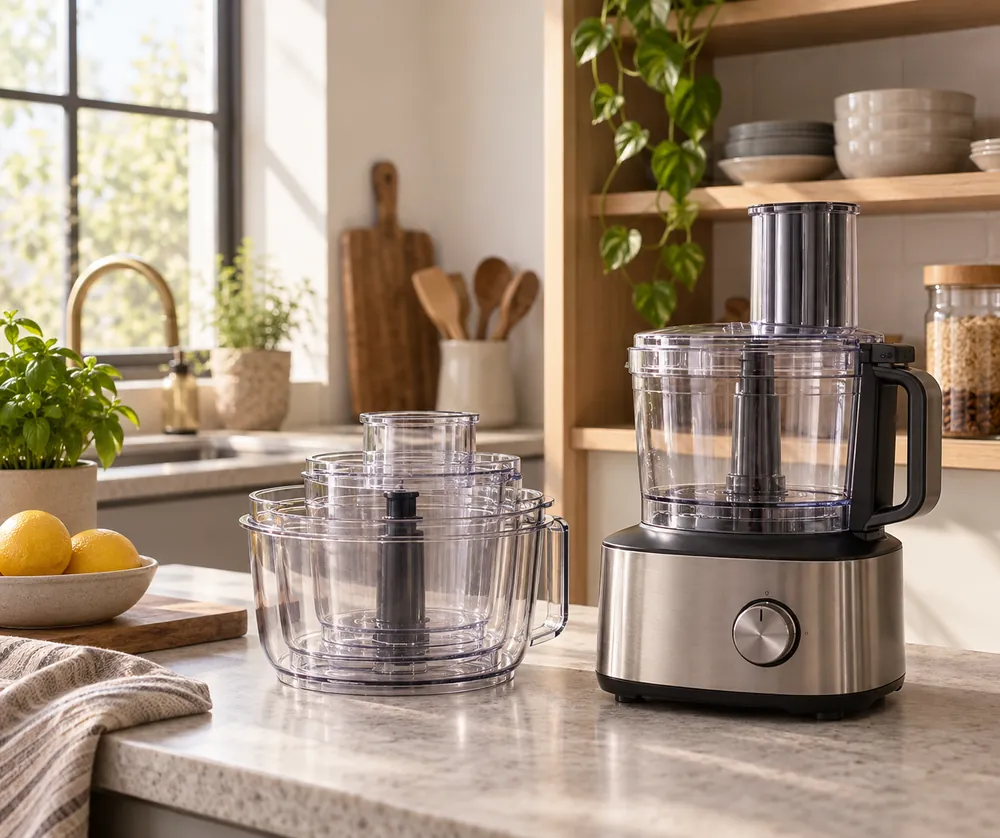
Multiple bowls can make one machine more versatile, especially when a full-size bowl includes a smaller insert.
Confirm that the extra bowl, blades, and discs store conveniently, because accessories can increase cleanup and storage demands.