Key takeaway: A stand mixer is usually the better baking appliance because it mixes, creams, whips, and kneads with less supervision.
A food processor is a chopping and cutting machine that can help with pastry, pie crust, nuts, crumbs, and some quick doughs, but it is less versatile for classic baking tasks. Frequent bakers should start with a stand mixer.
Food Processor vs Stand Mixer: The Core Difference
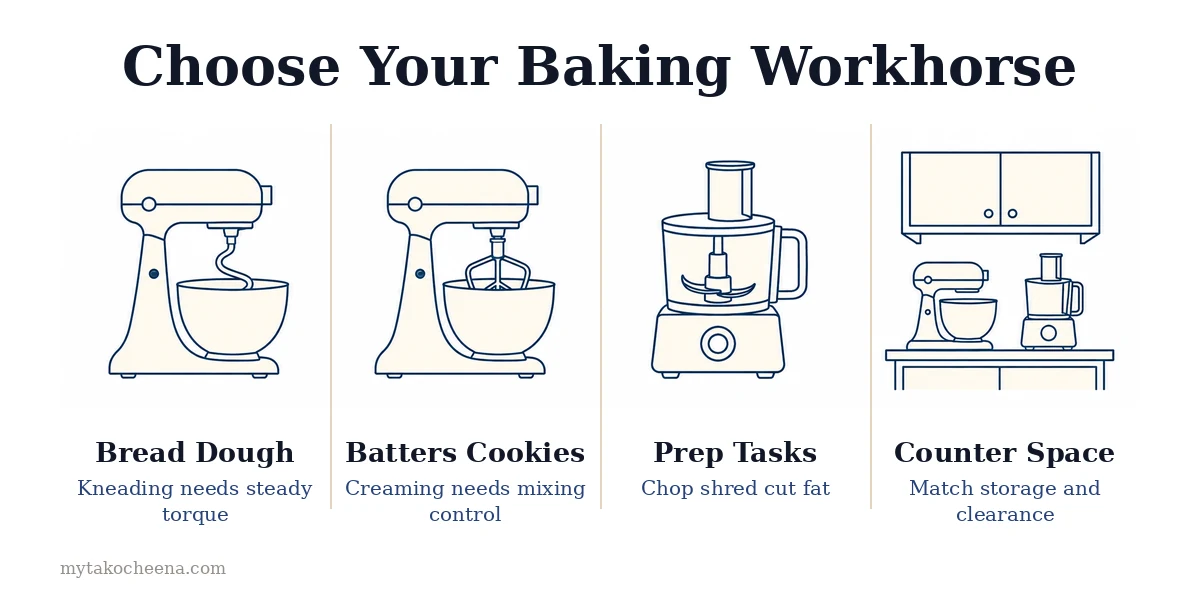
Food processors cut, chop, shred, and pulse with fast blades. Stand mixers rotate attachments through a bowl, building structure in doughs and batters instead of slicing through them.
For baking, that difference matters more than brand names. Published specs usually show a food processor as a prep machine, while a stand mixer is built around mixing capacity, dough handling, and attachment torque.
| Category | Food processor | Stand mixer |
| Common bowl capacity bands | About 7-14 cups for full-size home units | About 4.5-7 quarts for common home units |
| Usual motor power bands | About 400-1,200 watts, often optimized for blade speed | About 250-1,000 watts, often paired with gearing for mixing load |
| Typical counter clearance needed | About 15-18 inches with feed tube and lid | About 14-18 inches, more if the head tilts upward |
A food processor is stronger for pie crust, biscuit dough, chopped nuts, grated cheese, and vegetables folded into savory bakes. Its blade can cut cold butter into flour quickly, but it can overwork gluten fast.
A stand mixer is stronger for bread dough, cookie dough, cake batter, meringue, frosting, and whipped cream. Its paddle, whisk, and dough hook move ingredients repeatedly without turning everything into paste.
- Choose a food processor when prep speed, slicing, shredding, and short pastry work matter most.
- Choose a stand mixer when kneading, creaming, whipping, and repeat baking batches matter most.
- Consider both if your baking routine includes bread plus frequent ingredient prep.
The core trade-off is blade speed versus mixing control. Food processors excel before ingredients become a dough or batter, while stand mixers take over once structure, aeration, and consistency matter.
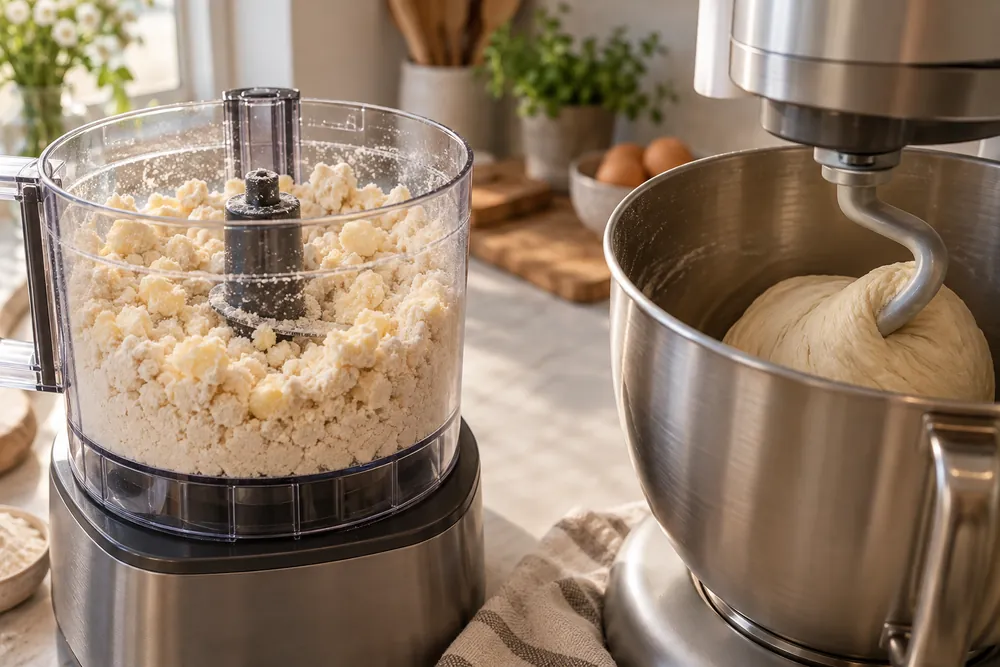
Which Is Better for Bread Dough?
Bread dough favors a stand mixer because gluten development needs steady torque, bowl clearance, and repeated kneading cycles.
A food processor can mix dough fast, but published specs and owner reports usually point to shorter runs and smaller batches.
| Category | Food processor | Stand mixer |
| Common bowl capacity band | 7 to 14 cups | 4.5 to 7 quarts |
| Usual motor rating band | 450 to 1,200 watts | 250 to 600 watts |
| Typical dough batch comfort zone | Small pizza or single loaf batches | Single to multiple loaf batches |
A food processor uses a blade or dough blade that works quickly. That speed is useful for pie crust, biscuit dough, and short mixing jobs, but it can warm dough and crowd the bowl before gluten is fully developed.
A stand mixer uses a dough hook that stretches and folds more slowly. Published capacity charts often separate total bowl size from flour capacity, so the safer comparison is not quarts alone but the manufacturer’s dough guidance.
Where the stand mixer wins
- Better kneading action: The hook mimics folding and stretching instead of chopping through the mass.
- Longer mixing sessions: Stand mixers are generally built around repeated mixing tasks, including enriched doughs.
- Cleaner scaling: Larger bowls give sticky dough more room to climb, fold, and release.
Where the food processor still makes sense
- Speed: It can bring lean dough together quickly before hand kneading.
- Small kitchens: One appliance can chop, shred, puree, and mix occasional dough.
- Short doughs: Crusts, crackers, and flatbreads often benefit from brief processing.
Choose a stand mixer if bread is a weekly habit or you make heavier doughs like bagels, brioche, or whole-wheat loaves. Choose a food processor if bread is occasional and countertop space matters more than kneading endurance.
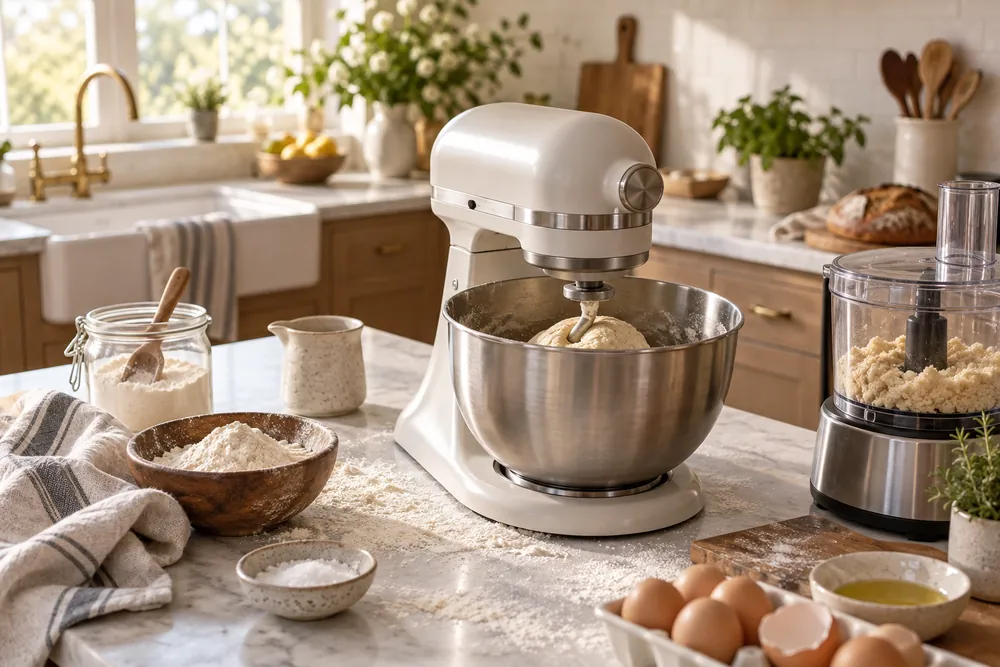
Which Is Better for Cakes, Cookies, and Frosting?
Cake batter rewards steady mixing more than sharp chopping. A stand mixer is usually the better default for baking, while a food processor helps with crusts, nuts, crumbs, and some dense doughs.
For cakes, the stand mixer has the advantage because it creams butter and sugar, folds batter, and keeps air in the mixture. A food processor can overwork batter quickly because its blade cuts instead of paddling.
| Category | Food processor | Stand mixer |
| Common bowl capacity bands | 7–14 cups | 4.5–7 quarts |
| Usual motor power bands | 400–1,200 watts | 250–600 watts |
| Typical counter clearance needed | 14–18 inches | 16–19 inches |
Cookies are closer, but the stand mixer still wins for repeated batches. It handles creaming, add-ins, and thick dough without needing the stop-scrape-pulse rhythm common with processors.
A food processor is useful for shortbread-style doughs, graham cracker crumbs, pie crust, and chopped chocolate. It is less ideal for chewy cookies because fast blade action can warm fat and tighten dough.
Best choice by baking task
- Cakes: choose a stand mixer for aeration, even mixing, and better control.
- Cookies: choose a stand mixer for creamed doughs and repeated batches.
- Frosting: choose a stand mixer for smooth texture and longer whipping.
- Crusts and crumbs: choose a food processor for speed and uniform chopping.
Frosting strongly favors the stand mixer. Buttercream, whipped cream, and cream cheese frosting need sustained beating, while a processor tends to make smaller, denser batches with less volume.
Pick the stand mixer if baking is the main job. Pick the food processor if prep work matters more and baking is limited to crusts, crumbs, and occasional simple doughs.
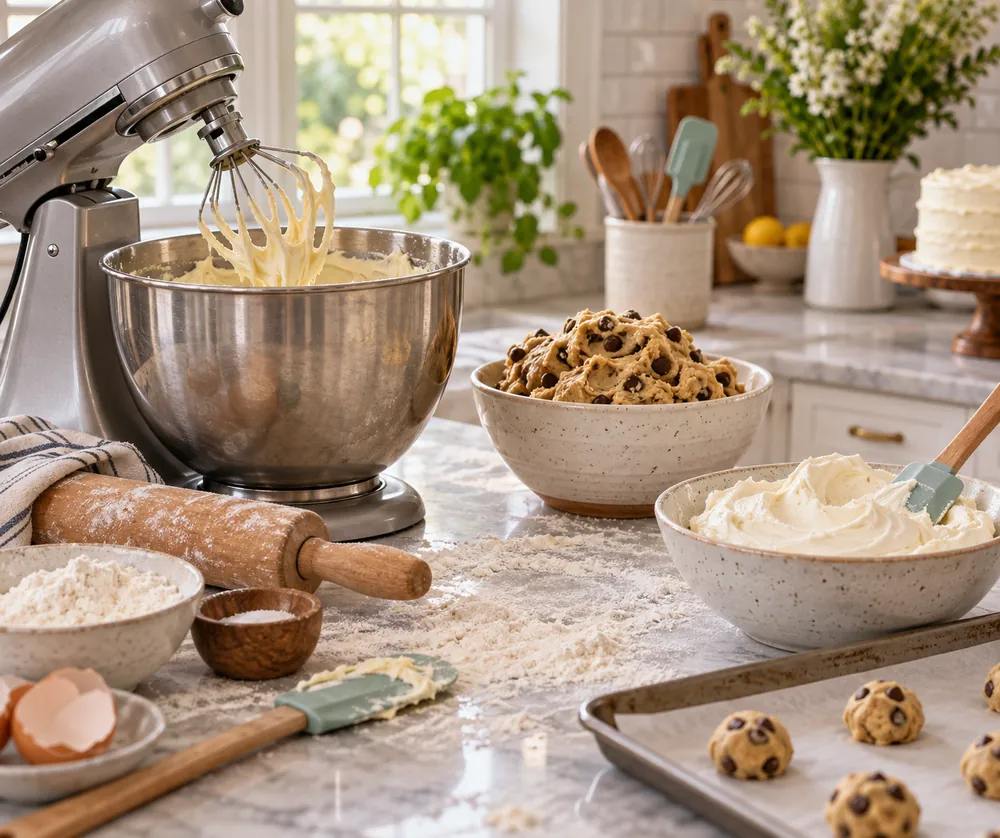
Where a Food Processor Helps in Baking
Food processors earn their spot in baking prep by cutting fat, chopping add-ins, and mixing short doughs quickly. They are strongest before gluten development matters, so they complement a stand mixer rather than replacing it.
A processor’s blade moves through ingredients fast, which is useful for pie crust, biscuit dough, crumble topping, graham cracker crust, and nut flour.
Published specs usually emphasize bowl size, motor power, and included discs, not kneading performance.
| Category spec | Typical published range | Baking relevance |
| Work bowl capacity | 7 to 14 cups | Small batches, crusts, streusel, chopped nuts |
| Motor power band | 400 to 1,200 watts | Dense dough pulses, nut chopping, firm butter |
| Counter clearance | 15 to 18 inches | Fits under many upper cabinets |
| Storage footprint width | 7 to 11 inches | Matters for small kitchens and appliance garages |
Short pulses are the advantage. Cold butter can be cut into flour before it warms, and nuts or chocolate can be chopped without dragging out a knife and board.
- Pie dough: Pulsing helps keep visible butter pieces for flaky layers.
- Cookie prep: It quickly chops nuts, oats, dried fruit, or chocolate.
- Crumb crusts: Crackers and cookies break down evenly before butter is added.
- Quick toppings: Streusel and crumble mixtures come together with less hand rubbing.
Food processors are weaker once a dough needs sustained mixing. Bread dough, brioche, and large cookie batches usually suit a stand mixer better because the bowl shape and attachments are built for continuous agitation.
| Task | Food processor fit | Stand mixer fit |
| Pie crust and biscuits | Strong | Moderate |
| Bread kneading | Limited | Strong |
| Whipped cream or meringue | Limited | Strong |
| Chopping baking add-ins | Strong | Limited |
For buyers comparing specifications, a food processor is the better baking helper for cutting, chopping, and coarse mixing.
Choose it for prep speed, then choose a stand mixer when aeration, kneading, or long mixing time drives the recipe.
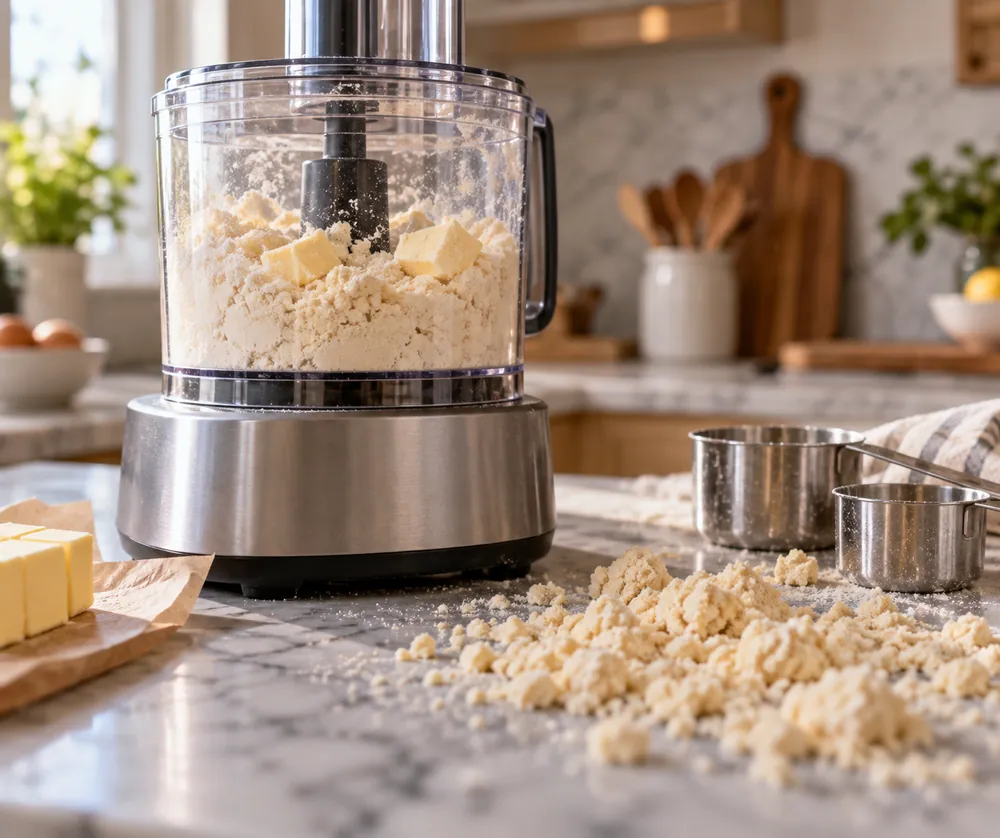
Where a Stand Mixer Helps in Baking
Stand-mixer strength is steady mixing under load, especially doughs, buttercream, meringue, and repeated batches.
A food processor can cut fat or pulse dough quickly, but a stand mixer keeps ingredients moving while you adjust texture, scrape, or add liquids gradually.
For baking, the main advantage is sustained action. Published specs usually show bowl size, motor rating, speed count, and included attachments, which help compare how much work the machine is meant to handle.
| Specification | Typical category range | Why it matters |
| Bowl capacity | 3.5-7 quarts | Smaller bowls suit cookies and frosting; larger bowls give dough room to climb the hook. |
| Motor rating | 250-600 watts | Higher published wattage can indicate more reserve, but gearing and design also matter. |
| Counter clearance | 14-18 inches | Tilt-head and bowl-lift designs need enough space under cabinets. |
| Common speed range | 6-12 settings | More settings can make it easier to move from slow flour mixing to whipping. |
Jobs where the stand mixer usually wins
- Bread dough: A dough hook kneads continuously without the heat and blade action of a food processor.
- Cookie dough: A paddle can cream butter and sugar, then fold in flour and chips with less over-processing.
- Whipped cream and meringue: A whisk attachment adds air while you watch peaks form.
- Buttercream: Longer mixing smooths texture and incorporates powdered sugar in stages.
Stand mixers also help when a recipe needs timed mixing. Many cake, frosting, and dough formulas call for several minutes at low, medium, or high speed, and a fixed bowl makes that easier to follow.
The trade-off is size. A stand mixer takes counter or cabinet space and can be awkward to move, while a food processor is often faster for chopping, shredding, and short pastry tasks.
Choose the stand mixer side of the comparison when your baking depends on kneading, creaming, whipping, or repeat batches.
Choose based on published bowl capacity, attachment set, height, and reported owner experience rather than one headline spec.
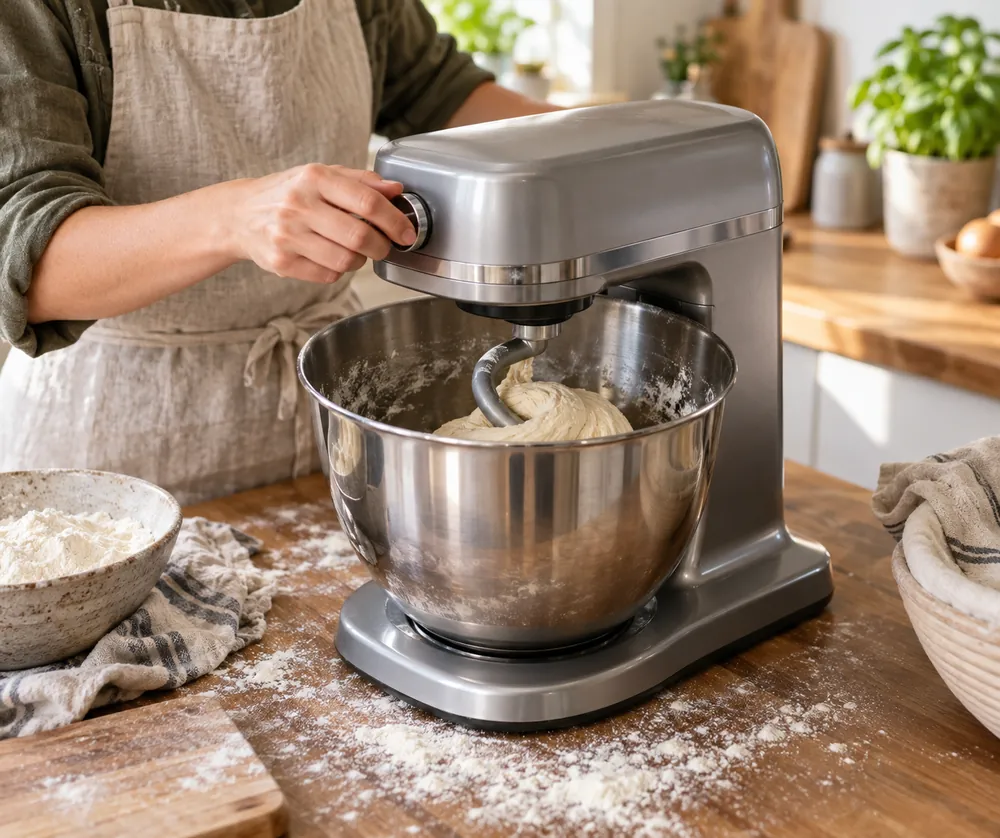
Space, Cleanup, and Everyday Convenience
Counter space matters because both machines can become permanent residents once baking turns routine. A food processor stores wide and low, while a stand mixer usually needs more vertical clearance and a dedicated landing spot.
Published dimensions vary by brand and bowl size, so compare the appliance footprint with your cabinet openings before buying.
For many US kitchens, the practical question is whether the machine can stay out without blocking prep space.
| Category | Common published range | Convenience trade-off |
| Food processor bowls | 7-14 cups | Compact storage, but dough batch size is limited. |
| Stand mixer bowls | 4.5-7 quarts | Larger batches, but more counter and cabinet space needed. |
| Upper cabinet clearance | 15-18 inches | Tilt-head mixers may need open headroom under cabinets. |
| Typical countertop depth | 24-25 inches | Either appliance can crowd a prep zone when left out. |
Cleanup is different, not automatically easier
A food processor usually has more separate parts: bowl, lid, pusher, blade, and sometimes discs. Many parts are listed as dishwasher-safe, but sharp blades and tight lid channels still need careful rinsing.
A stand mixer has fewer core pieces after a baking task: bowl, attachment, and splash guard if used. Sticky dough can cling to a dough hook, but there are fewer crevices than on a processor lid assembly.
- Choose a food processor if you want fast pastry cutting, nut grinding, shredding, and short dough prep in one appliance.
- Choose a stand mixer if you bake yeasted breads, cookies, cakes, and frostings often enough to leave the machine accessible.
- Check dishwasher guidance in the manual, because heat-dry cycles can affect plastic bowls, lids, and seals over time.
Everyday convenience depends on what you repeat. For pie crusts and quick ingredient prep, the food processor earns its space; for longer mixing, kneading, and creaming, the stand mixer is easier to live with.
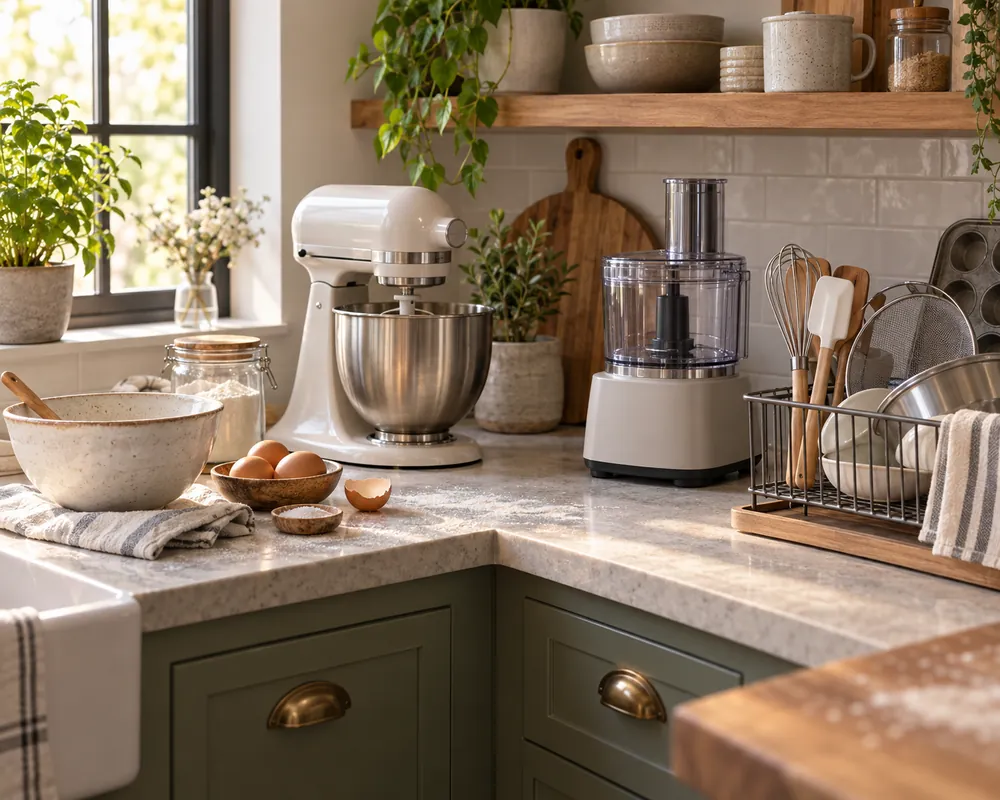
Cost, Attachments, and Long-Term Value
Cost matters because a food processor and a stand mixer solve different baking problems. Published specs usually show the processor as the prep tool, while the mixer carries more value for dough, batters, and repeat baking.
A food processor often costs less upfront, especially in compact or mid-size categories. Its long-term value comes from slicing, shredding, chopping, and making pastry dough quickly, not from sustained kneading.
| Category | Food processor | Stand mixer |
|---|---|---|
| Common capacity bands | 7-14 cups | 4.5-7 quarts |
| Usual wattage bands | 400-1,200 watts | 250-800 watts |
| Typical counter clearance needed | 15-18 inches | 16-19 inches |
Attachments change the math. A processor may include slicing discs, shredding discs, and a dough blade, while a mixer usually starts with a paddle, whisk, and dough hook.
- Choose a food processor if you value vegetable prep, pie crust, biscuit dough, nut chopping, and small-batch baking support.
- Choose a stand mixer if you bake bread, cookies, cakes, frosting, meringue, or enriched dough often.
- Budget for extras because specialty discs, pasta rollers, grinders, and replacement bowls can change the real ownership cost.
Stand mixers usually win on long-term baking value because their motors, bowls, and attachments are built around repeated mixing. They also tend to have broader accessory ecosystems, which can extend usefulness beyond baking.
Food processors still offer strong value for smaller kitchens. They handle many non-baking tasks, store more easily in some cabinets, and can reduce prep time before baking begins.
For My Tako Cheena readers comparing specifications, the better buy is the appliance that matches the work you repeat. Pay for capacity, attachment support, and storage fit before paying for features you may rarely use.
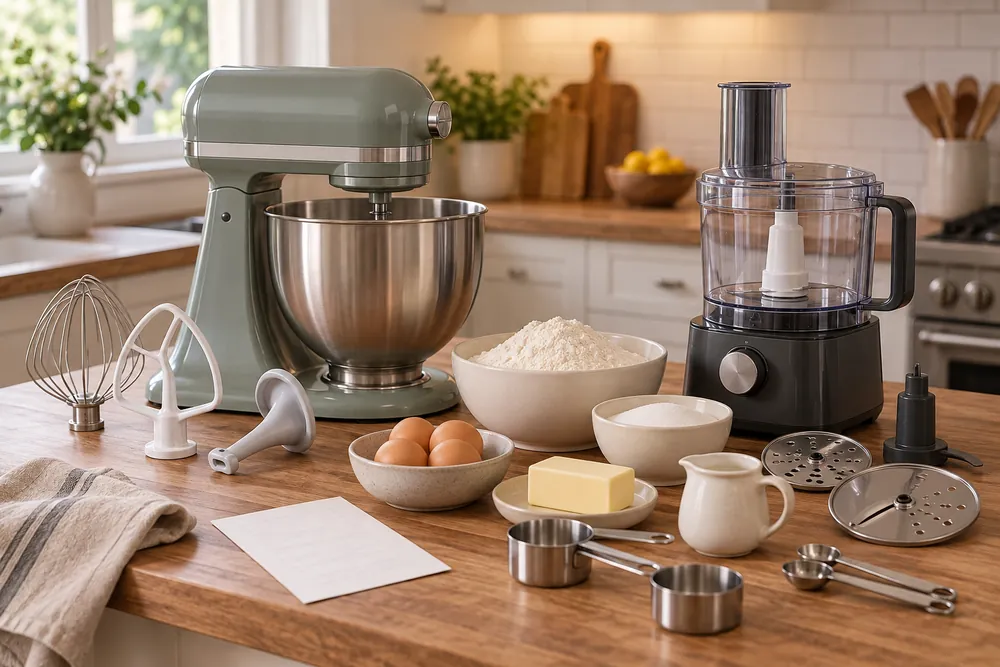
What Long-Term Owners Say
Owner reports repeatedly split the story by task: food processors earn praise for prep speed, while stand mixers keep loyalty for dough and batter.
Manufacturer documentation supports that divide through different bowl shapes, blade systems, attachments, and duty-cycle guidance.
Recurring complaints are practical rather than surprising. Food processor owners mention leaking lids, cracked work bowls, and fussy locking tabs.
Stand mixer owners more often report head wobble, gear noise, or strain with dense dough.
| Appliance category | Common capacity band | Usual motor power band |
| Food processor | 7 to 14 cups | 400 to 1,200 watts |
| Stand mixer | 4.5 to 7 quarts | 250 to 1,000 watts |
What holds up best also differs. Owner reports commonly praise metal stand mixer bowls, coated flat beaters, and basic tilt-head or bowl-lift frames.
For food processors, stainless blades and simple feed tubes tend to age better than complex lid assemblies.
Early failures cluster around plastic and overload points. Food processor complaints often involve bowls, lids, seals, and safety interlocks.
Stand mixer complaints more often involve stripped gears, loose hinge pins, or overheated motors after repeated heavy dough batches.
- For frequent bread bakers: owner feedback favors a stand mixer because the bowl, hook, and drive system are built around kneading.
- For pastry, chopping, and shredding: food processor owners value speed, but warn that replacement bowls and lids can be expensive.
- For small kitchens: published dimensions matter because many full-size appliances need roughly 15 to 18 inches of counter clearance under wall cabinets.
Long-term value depends on replaceable parts as much as headline power. Manufacturer parts diagrams, warranty terms, and owner reports are worth checking before buying, especially for bowls, lids, beaters, gears, and seals.
Frequently Asked Questions
Food processor versus stand mixer questions usually come down to dough texture, batch size, storage space, and cleanup.
Published specifications help compare bowl capacity, motor range, attachments, and countertop footprint before choosing a baking appliance.
Is a food processor or stand mixer better for bread dough?
A stand mixer is usually the better fit for repeated bread baking because the dough hook kneads longer with less heat buildup. A food processor can make dough quickly, but it is better for shorter mixing cycles and smaller batches.
| Appliance | Common bowl capacity band | Best baking use |
| Food processor | 7 to 14 cups | Pastry, biscuits, small dough batches |
| Stand mixer | 4.5 to 7 quarts | Bread, cookies, cakes, larger batters |
Can a food processor replace a stand mixer for baking?
A food processor can replace a stand mixer for some baking tasks, especially pie crust, biscuit dough, crumble toppings, and quick doughs.
It is less versatile for creaming butter and sugar, whipping egg whites, or kneading elastic bread dough.
Which is better for cakes and cookies?
A stand mixer is usually better for cakes and cookies because it handles creaming, beating, and folding more evenly. Food processors can overwork cookie dough or cut butter too finely for recipes that need aeration.
For dense bar cookies or crumb crusts, a food processor can still be practical. Match the appliance to the mixing method the recipe depends on.
How much counter space do I need for each appliance?
Stand mixers usually need more vertical clearance and often stay on the counter because they are heavy. Food processors are shorter, but their bowls, lids, blades, and discs need organized cabinet space.
| Appliance | Typical height range | Common storage issue |
| Food processor | 13 to 17 inches | Multiple blades and discs |
| Stand mixer | 13 to 18 inches | Under-cabinet head clearance |
Which appliance has more power for baking?
Published wattage ranges are not perfectly comparable because motor design, gearing, and load handling matter. Still, wattage bands can help shoppers screen basic home models from heavier-duty options.
| Appliance | Common wattage range | What it suggests |
| Food processor | 450 to 1,200 watts | Chopping, slicing, short dough mixing |
| Stand mixer | 250 to 1,000 watts | Beating, whipping, longer kneading |
Is cleanup easier with a food processor or stand mixer?
A stand mixer often has fewer parts to wash after baking: bowl, beater, whisk, or dough hook. A food processor may involve the bowl, lid, pusher, blade, and sometimes discs.
Dishwasher-safe parts vary by brand, so check the published care instructions. Blades also need careful handling because they are sharp.
Which one should I buy first for baking?
Buy a stand mixer first if you bake bread, cakes, cookies, meringue, or frosting often. Buy a food processor first if you make pie crust, scones, shredded ingredients, nut mixtures, or quick prep-heavy recipes.
- Choose a stand mixer for mixing performance and repeat baking.
- Choose a food processor for prep speed and pastry work.
- Choose both if you bake often and want fewer compromises.