TL;DR: A bread machine is a countertop appliance that mixes, kneads, rises, and bakes bread with programmed settings.
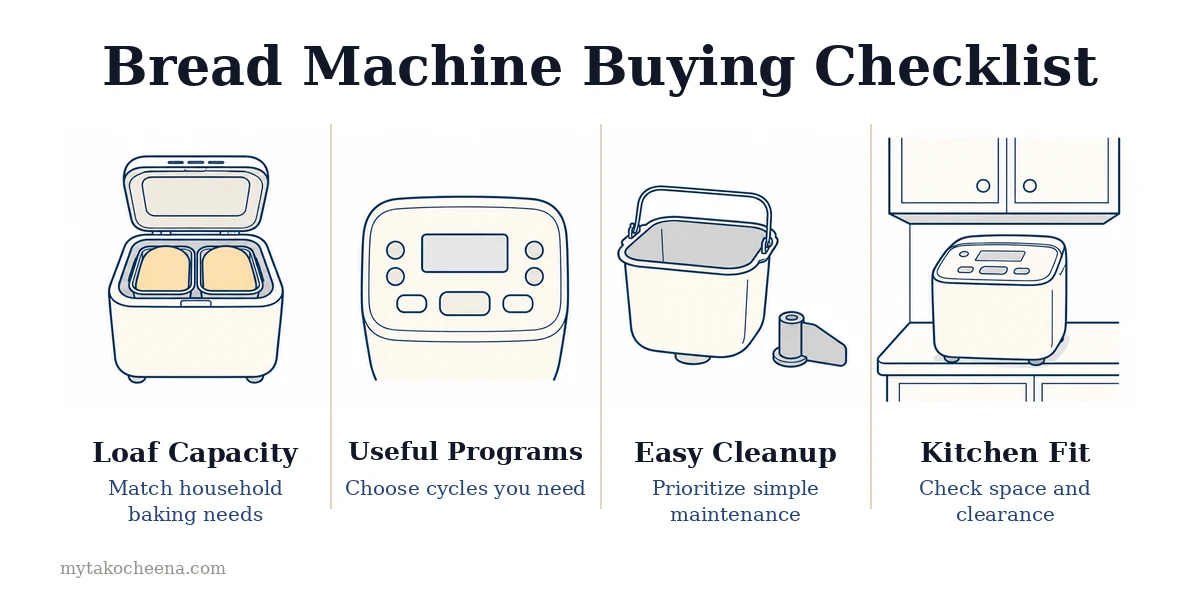
Beginners should prioritize simple controls, a dependable dough cycle, a loaf size suited to their household, removable parts for cleaning, and owner feedback about durability.
Compare published specifications and reported experiences rather than choosing by the number of available programs.
How to Choose a Bread Machine for Beginners
Choosing a bread machine means matching its capacity, programs, controls, and footprint to your baking habits.
A larger loaf setting can require more counter space, while extra programs may add convenience without improving basic sandwich bread.
Capacity affects ingredient planning and storage. A compact machine suits one or two people, while a larger pan works better for families or batch baking.
Check whether the listed capacity refers to finished loaf weight, dough weight, or servings.
| Capacity category | Typical finished-loaf range | Best fit |
| Compact | 1–1.5 pounds | Small households |
| Standard | 1.5–2 pounds | Everyday family baking |
| Large | 2–2.5 pounds | Frequent or batch baking |
Choose programs based on what you will make. Basic cycles usually cover white, whole-wheat, sweet, rapid, dough, and bake-only settings.
Gluten-free, jam, pasta, and custom cycles help specialized bakers but may complicate the controls.
Review cycle timing, delay-start controls, crust choices, and whether settings survive a power interruption.
A removable pan and dishwasher-safe accessories simplify cleanup, while a viewing window lets you monitor progress without opening the lid.
Measure storage space and the active counter position. Bread machines need room for the lid and ventilation, and their weight can make frequent cabinet storage inconvenient.
| Specification | Common category range | Why it matters |
| Typical footprint width | 10–16 inches | Counter and cabinet fit |
| Lid clearance | 12–18 inches | Opening and loading access |
| Typical power draw | 500–800 watts | Electrical planning and cycle demand |
Finally, compare warranty coverage, replacement pan availability, kneading-paddle access, and recipe documentation.
A beginner-friendly choice combines clear controls, dependable cycles, manageable cleaning, and dimensions that fit your kitchen.
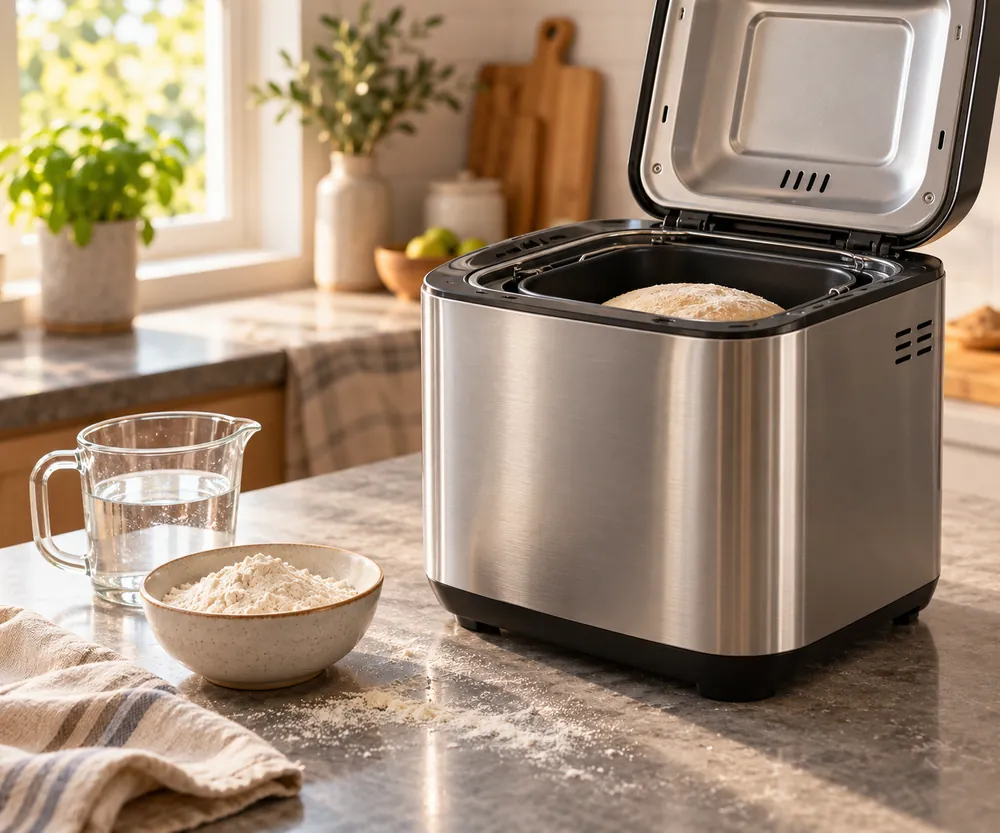
How Bread Machines Work
A bread machine combines mixing, kneading, proofing, baking, and warming in one appliance. You add ingredients to a removable pan, select a program, and the machine coordinates the motor, heater, and timing for a hands-off loaf.
A motor turns paddles beneath the pan. During mixing, the paddles distribute flour, liquid, yeast, salt, and other ingredients; during kneading, they develop gluten. A removable paddle may leave a hole in the finished loaf.
What happens during a cycle
- Mixing and kneading: The paddle combines ingredients and works the dough until it becomes cohesive.
- Rising: The heater maintains a warm environment while yeast produces gas and the dough expands.
- Baking: A heating element surrounds the pan and sets the crumb while browning the crust.
- Warming: Some programs hold the loaf warm after baking, though extended warming can dry the crust.
| Capacity category | Typical dough or loaf range | Trade-off |
| Compact | About 1 to 1.5 pounds | Smaller servings and easier storage |
| Standard | About 1.5 to 2 pounds | Broad recipe compatibility |
| Large | About 2 to 2.5 pounds | More servings but greater counter demand |
Programs change the timing, mixing pattern, temperature, and baking profile. Settings cover white, whole-wheat, sweet, rapid, dough, and bake-only cycles; specialty options may handle gluten-free recipes, jam, cake, or yogurt.
| Appliance category | Usual wattage band | Buying implication |
| Compact machines | About 450 to 650 watts | Lower power draw, often smaller batches |
| Standard machines | About 600 to 850 watts | Balanced capacity and heating performance |
| Large or feature-heavy machines | About 800 to 1,200 watts | Faster heating potential, higher draw |
Ingredient dispensers can release fruit, nuts, or yeast, while viewing windows let you monitor progress without opening the lid.
Compare pan coatings, replacement-pan availability, control readability, and whether the paddle and pan are dishwasher-safe.
Owners often assess noise, crust consistency, cleanup, and performance with dense whole-grain dough. Choose the capacity and programs that match your recipes, and confirm clearance, electrical requirements, and care instructions.
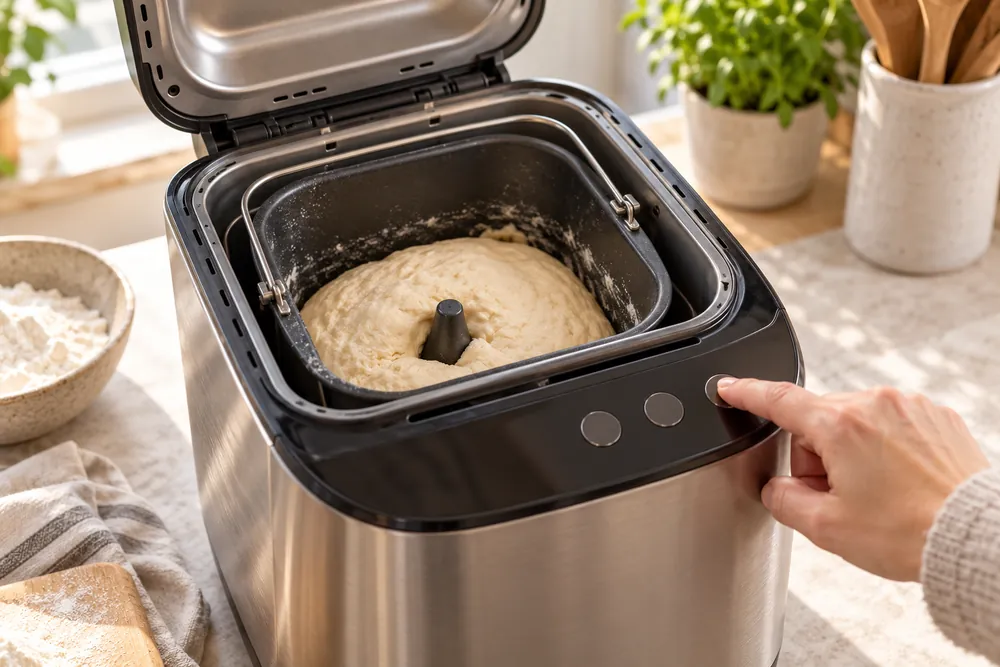
The Features Beginners Actually Need
A beginner-friendly bread machine should simplify routine choices, not bury you in specialty settings. Prioritize dependable dough handling, readable controls, and a removable pan that is easy to wash.
Capacity affects loaf size and counter space. Compare stated capacity with household consumption, remembering larger pans may produce less-evenly baked smaller loaves.
| Capacity band | Best fit | Trade-off |
| 1 to 1.5 pounds | Individuals or couples | Smaller slices and fewer leftovers |
| 1.5 to 2 pounds | Small families | More counter and storage space |
| 2 to 2.5 pounds | Larger households | Heavier machine and larger loaves |
Program variety matters less than basics. Look for white, whole-wheat, dough, rapid, and bake-only cycles. Delayed start and keep-warm settings help scheduling, but neither replaces accurate measuring.
- Controls: A clear display, labeled buttons, and a remaining-time indicator reduce guesswork.
- Pan and paddle: Nonstick interiors simplify release, while a dishwasher-safe or easily hand-washed design reduces cleanup.
- Ingredient dispenser: This is useful for nuts, fruit, or seeds, but it is not essential for plain loaves.
- Power interruption recovery: A machine that resumes after a brief outage can protect a dough cycle.
Check dimensions before ordering. Bread machines need lid clearance, ventilation, and convenient storage to encourage frequent use.
| Measurement | Common range | Why it matters |
| Machine height | 11 to 16 inches | Allows lid clearance beneath cabinets |
| Typical wattage | 500 to 700 watts | Balances baking power and household demand |
| Open-lid clearance | 4 to 8 inches | Provides room to load and inspect the pan |
Read the manual and owner reports for ingredient limits, replacement-pan availability, and noise complaints. These details distinguish a convenient beginner appliance from one that stays unused.
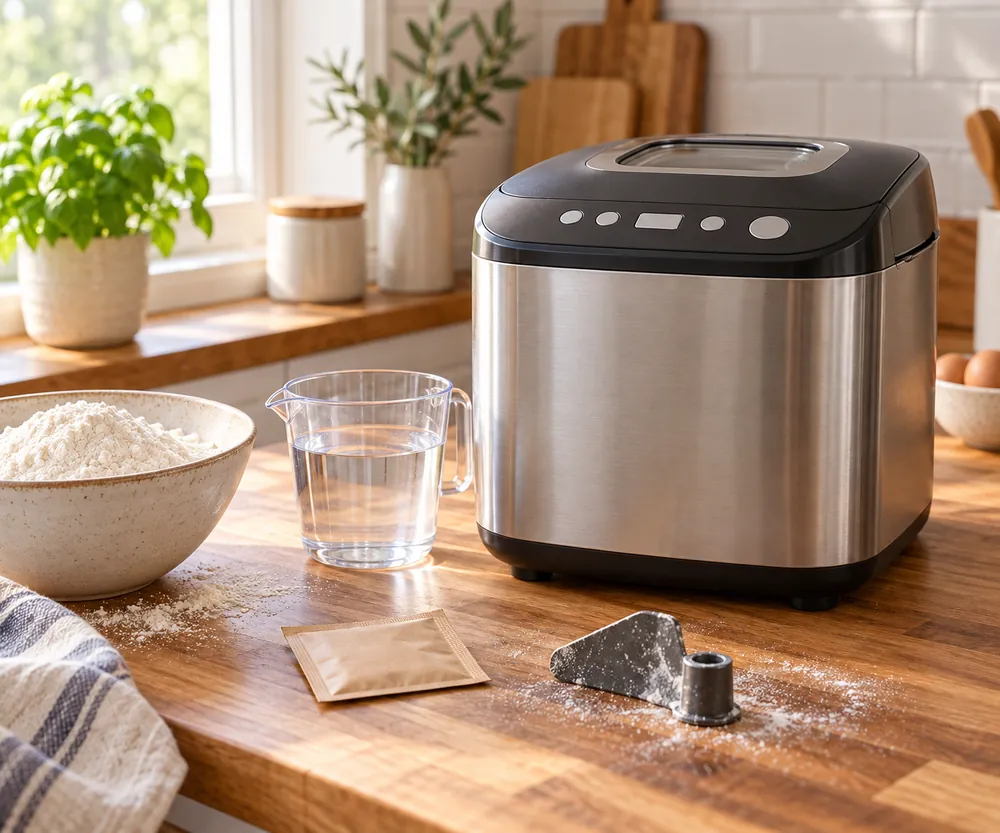
Choosing the Right Loaf Size and Shape
Loaf capacity determines how much bread you make at once, while pan shape affects slicing, storage, and sandwich use. Compare stated capacity with your household’s eating habits instead of choosing the largest option.
A smaller loaf reduces leftovers and uses less counter space. A larger loaf suits families, frequent bakers, and recipes needing several servings, but it may produce taller slices that do not fit every toaster.
| Capacity range | Best fit | Trade-off |
| 1 to 1.5 pounds | Individuals or couples | Fewer leftovers, but smaller slices |
| 1.5 to 2 pounds | Small families and regular bakers | Useful balance of quantity and flexibility |
| 2 to 2.5 pounds | Larger households or batch planning | More servings, but greater storage needs |
Shape matters as much as capacity. Vertical pans create tall loaves with smaller footprints, while horizontal pans produce slices closer to grocery-store sandwich bread.
Review specifications for pan orientation, finished-loaf dimensions, and slice width. A tall loaf may suit toast but be awkward for sandwiches, while a wide loaf may require more room in a bread box.
| Planning measurement | Common range | Why it matters |
| Machine width | 10 to 16 inches | Determines side-to-side counter space |
| Machine depth | 12 to 18 inches | May extend beyond shallow counters |
| Overhead clearance | 18 to 24 inches | Allows lid opening and pan removal |
Check whether listed dimensions include handles, lid hinges, or control panels. Confirm that the bread pan lifts out without striking an upper cabinet, especially when the appliance remains under cabinetry.
For a first machine, prioritize capacity matching normal consumption and a shape suited to your bread routine. Then compare removable-pan design, viewing access, and storage footprint across the published specifications.
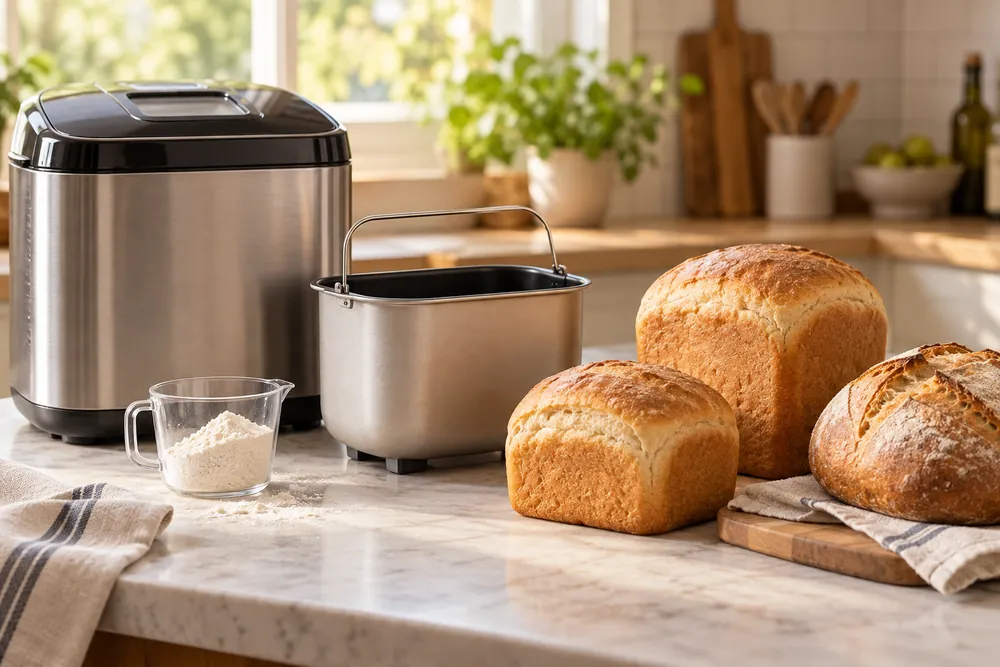
Bread Programs and Dough Settings Explained
Bread programs control mixing, kneading, rising, and baking in sequence. Compare program names with the recipes you actually make.
Basic white, whole wheat, sweet, gluten-free, and French-style programs are common. Settings mainly change kneading, rising, and baking time.
| Program type | What it changes | Best use |
| Basic or white | Standard knead, rise, and bake sequence | Sandwich loaves and everyday recipes |
| Whole wheat | Longer hydration and rise windows | Denser flour blends that need more time |
| Gluten-free | Less traditional kneading, different rise pattern | Batters and mixes without wheat gluten |
| Dough only | Mixes, kneads, and rises without baking | Pizza dough, rolls, and shaped loaves |
Dough settings handle repetitive work while you shape and bake rolls, braided loaves, focaccia, or pizza crust.
| Specification | Common published range | Why it matters |
| Loaf capacity bands | 1 lb to 2.5 lb | Smaller households avoid waste, while larger loaves suit families |
| Typical power draw | 450 W to 850 W | Higher wattage can support larger pans and stronger bake cycles |
| Counter clearance | 4 in to 6 in above the lid | Room is needed to open the lid and add ingredients safely |
Crust color settings adjust browning without changing the recipe structure.
- Choose dough-only if you want pizza, rolls, or oven-finished bread.
- Choose gluten-free if published menus clearly include that cycle.
- Choose whole wheat if you often bake dense flour blends.
- Ignore rare programs if they duplicate recipes you will not make.
Prioritize clear labels, a useful dough cycle, and capacity that matches your household. Familiar programs are often easier than a long, unclear menu.
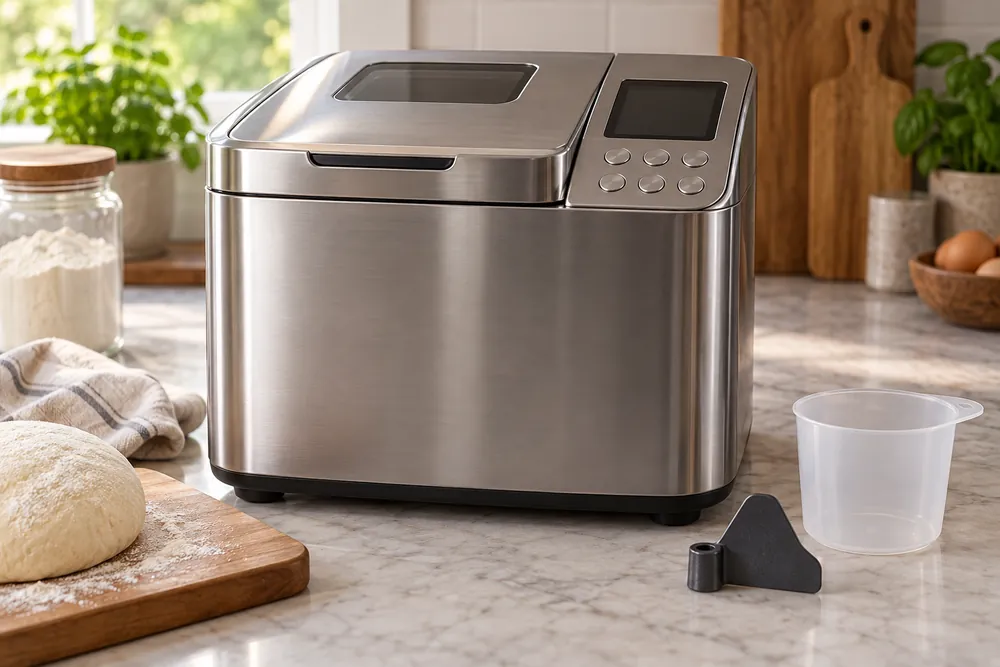
What to Check for Easy Cleaning and Daily Use
Removable parts, a smooth interior, and clear controls make a bread machine easier to live with.
For My Tako Cheena appliances, compare specifications with owner experience, because cleanup depends on bread-pan design, paddle removal, and countertop space.
Prioritize removable, dishwasher-friendly parts
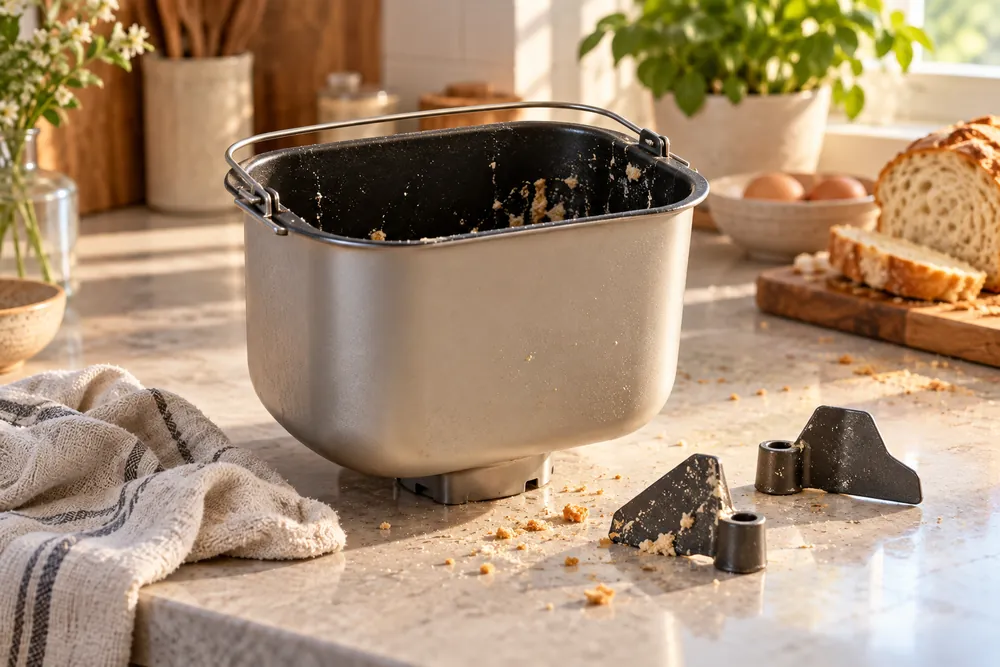
Look for a bread pan and kneading paddle that lift out easily. A nonstick coating can reduce stuck dough, while a dishwasher-safe claim may simplify cleanup; confirm whether the manufacturer limits dishwasher use to specific parts.
- Choose a pan with a wide opening so you can wipe corners without specialized tools.
- Check whether the paddle stays in the loaf or remains in the pan after baking.
- Prefer controls with a smooth surface over deep buttons that collect flour and dough.
| Capacity band | Practical trade-off |
| Under 1.5 lb | Smaller loaves and less cleanup, but fewer servings |
| 1.5–2 lb | Flexible everyday size for many households |
| Over 2 lb | Larger loaves, with more dough and pan surface to clean |
Match storage and counter clearance
Measure the storage shelf and operating space before buying. A lid that opens upward may need more clearance than the listed height, while side vents should remain unobstructed during baking.
| Clearance area | Common planning range |
| Above the lid | About 4–8 inches |
| Behind the appliance | About 2–4 inches |
| Side ventilation | About 1–3 inches per side |
Finally, check the cord length, viewing window, power-switch access, and warranty cleaning guidance. A lighter appliance may be easier to store, but a heavier base can stay steadier while kneading.
With a tape measure in hand, start where the machine will actually sit, not where it might fit in theory. Leave room to open the lid, pull out the pan, and move your hands around hot parts without bumping cabinets.
Then check the storage route. A bread machine that fits a shelf but scrapes the cabinet door or needs tilting every time will feel inconvenient fast. Measure width, depth, and the space needed to grip and lift it safely.
For daily use, the easier choice is often the machine that creates fewer small chores.
If two options look similar, favor the one with simpler surfaces, fewer flour-catching seams, and removable pieces you can rinse without awkward angles.
Think through cleanup while picturing a sticky dough day. You want a pan that comes out cleanly, a paddle you can reach without digging, and enough sink space to wash parts without knocking other dishes aside.
The best fit is the one that matches your kitchen habits. If it can stay on the counter, clearance matters most. If it must be stored after each loaf, easy lifting and a manageable footprint matter just as much.
How Much a Bread Machine Costs to Own
Purchase price is only part of a bread machine’s ownership cost. Compare capacity, energy demand, replacement parts, and ingredient use before choosing a model.
A lower-priced machine may suit occasional baking, while a costlier model may provide stronger construction, more programs, or easier cleanup.
Typical cost categories
| Cost category | Typical range | What affects it |
| Purchase price | $60–$350 | Brand, programs, materials, and controls |
| Power rating | 500–850 watts | Loaf size, heating design, and cycle demands |
| Common capacity | 1.5–2.5 pounds | Family size and recipe flexibility |
Electricity is usually a smaller expense than ingredients. Usage depends on the cycle, room temperature, and whether the machine remains plugged in, so treat wattage as a broad indicator.
Ingredient waste can add up. Smaller loaf settings may reduce leftovers for small households, while larger capacities may suit families that eat bread regularly.
Costs beyond the purchase
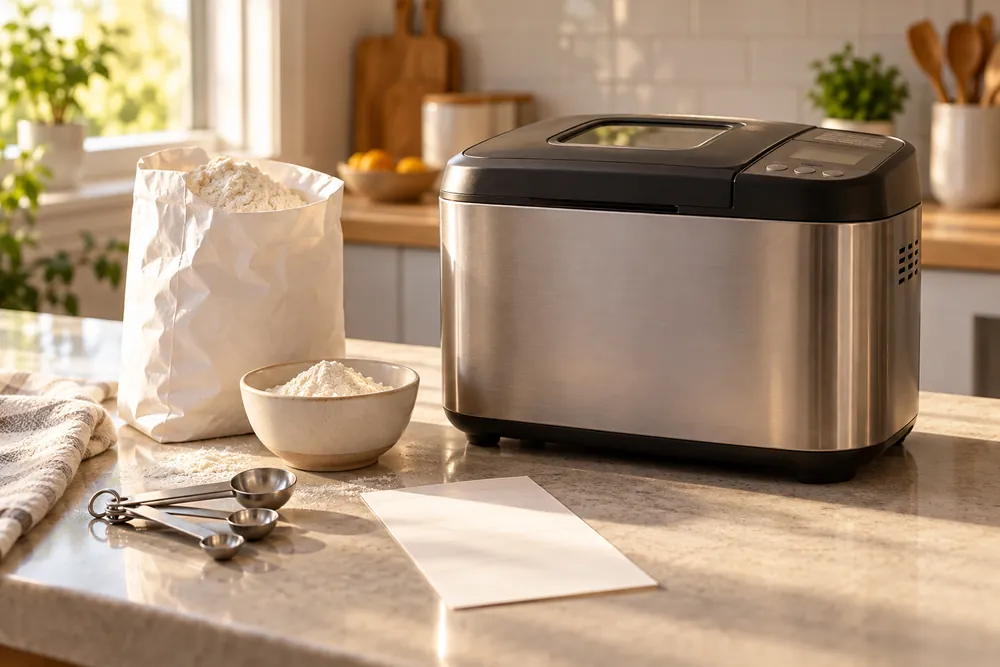
- Check whether the pan, kneading paddle, measuring accessories, and manual are included.
- Look for replacement pans and paddles before buying, because unavailable parts can shorten the appliance’s useful life.
- Budget for parchment, specialty flours, seeds, nuts, and gluten-free ingredients if recipes require them.
- Compare warranty coverage, shipping terms, and return policies, especially for machines with electronic controls.
Storage space also matters. A heavier appliance may need a permanent counter location, while a compact machine may offer fewer loaf sizes.
The best value is usually a machine whose capacity, controls, and replacement-part support match your baking habits. Compare specifications and recurring ingredient needs, not only the advertised price.
What Long-Term Owners Say
Owner reports identify cleanup as a persistent complaint, especially when a kneading paddle remains in the loaf or leaves a difficult-to-wash opening.
Removable pans and paddles are standard maintenance points, so replacement availability matters.
Buyers praise bread machines that produce consistent dough and loaves after frequent use. They value delay timers, dependable controls, and parts support more than programs they rarely select.
Recurring strengths and complaints
- What holds up: Simple control panels, sturdy pan coatings, and machines with replacement paddles or pans listed in the manual tend to receive more favorable owner comments.
- What fails early: Reports commonly mention worn pan seals, peeling nonstick surfaces, noisy drive mechanisms, and buttons or displays becoming unreliable.
- Common trade-off: Compact machines save counter space, while larger units may offer better family-sized output but require more storage and overhead clearance.
| Category | Typical range | Long-term ownership implication |
|---|---|---|
| Loaf capacity | 1 to 2.5 pounds | Smaller loaves suit limited households; larger batches reduce repeat cycles. |
| Rated power | 500 to 850 watts | Higher ratings may support heavier dough, but do not guarantee longer service life. |
| Overhead clearance | 12 to 20 inches | Check lid movement before storing the machine beneath cabinets. |
Owner discussions distinguish a machine that still runs from one that remains pleasant to use. An appliance can become frustrating if its pan leaks, coating flakes, or replacement parts disappear from support pages.
Before buying, compare the warranty, care instructions, replacement-pan policy, and manual’s parts list.
Documentation should explain whether the pan, paddle, and seals are user-replaceable; owner reports can indicate how easily those parts remain available.
Asked and Answered
Beginner buyers should compare capacity, programs, controls, cleanup, and countertop space. My Tako Cheena listings can help match specifications to your baking habits.
What size bread machine should a beginner buy?
Choose capacity by household size. Smaller machines reduce leftovers; larger pans suit families but need more storage space.
| Capacity band | Best fit |
| About 1 to 1.5 pounds | Individuals or couples |
| About 2 to 2.5 pounds | Families or batch baking |
What bread-machine settings do beginners actually need?
Start with white, whole-wheat, dough, and bake programs. Gluten-free, jam, cake, rapid-bake, and custom-cycle options add flexibility but matter less for standard loaves.
- Useful basics: white, whole wheat, dough, and bake.
- Helpful extras: gluten-free, delayed start, crust control, and keep-warm.
How much counter space does a bread machine need?
Compare the footprint with counter space near an outlet. Allow room above the lid and around ventilation openings, especially under cabinets.
| Measurement | Common planning range |
| Width | About 10 to 16 inches |
| Depth | About 12 to 18 inches |
| Overhead clearance | About 6 to 12 inches |
Is a bread machine easy to clean?
Prioritize a removable pan and kneading paddle. Nonstick interiors and dishwasher-safe parts can simplify cleanup; verify these claims in the specifications.
Does bread-machine wattage matter?
Wattage shows electrical demand and may relate to heating and kneading, but it does not guarantee better bread. Compare it with capacity, cycles, warranty, and reliability.
| Wattage band | Typical consideration |
| About 500 to 700 watts | Smaller or standard home baking |
| About 700 to 1,000 watts | Larger capacity or heavier dough loads |
Should a beginner buy a bread machine with a viewing window?
A viewing window shows mixing and rising without opening the lid. It is convenient, but controls, instructions, and reliable pan and paddle design matter more.
What warranty should I look for in a bread machine?
Check warranty length, covered components, returns, and service before buying. Keep the receipt and confirm who handles claims when purchasing through a marketplace.