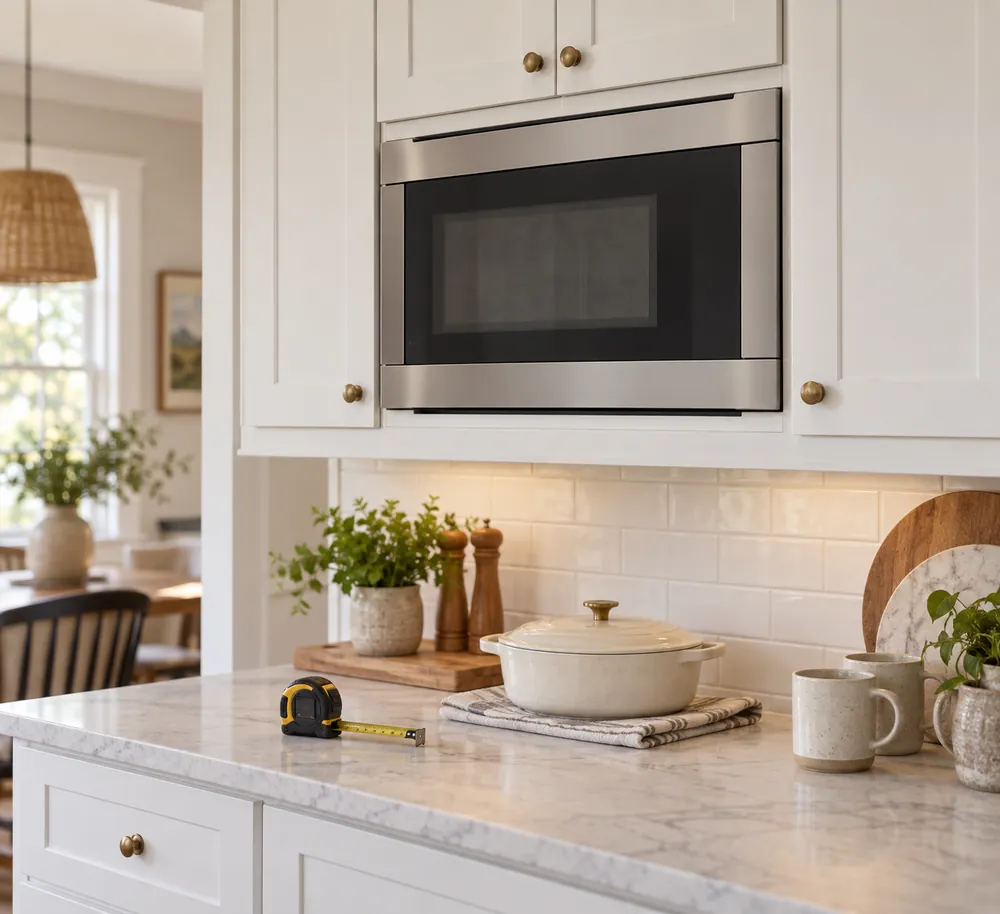
The gist: A convection microwave size is a balance between interior cooking room and the exterior space your kitchen can spare.
Choose a compact unit for reheating and small dishes, a mid-size unit for most households, and a larger unit only if you regularly cook full meals, use racks, or need room for wider cookware.
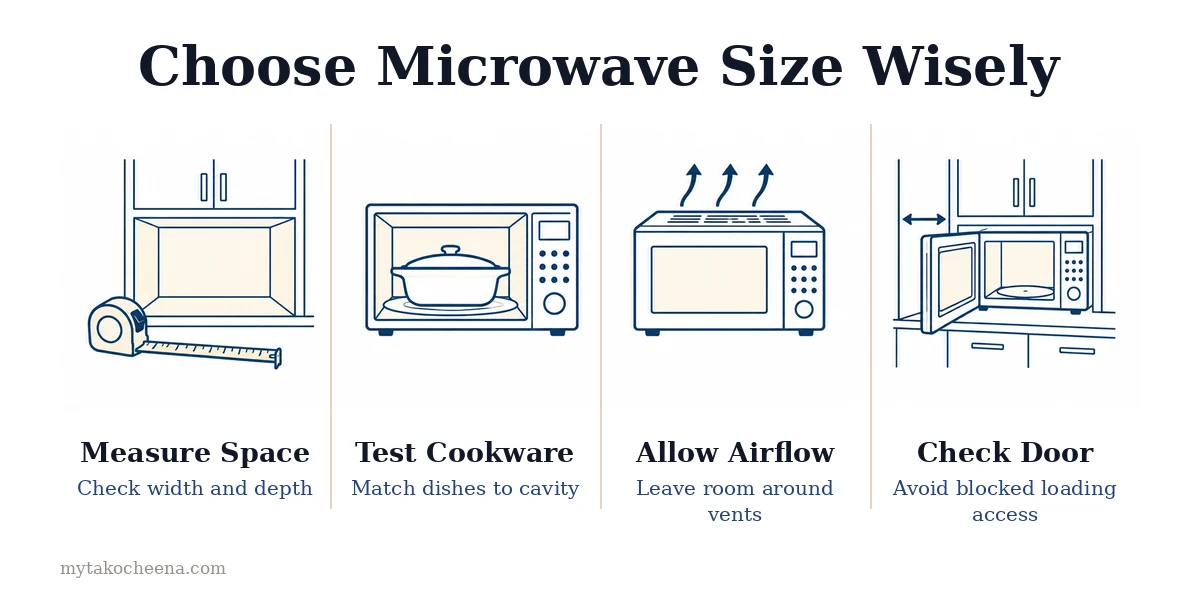
Measure width, height, depth, door swing, and ventilation clearance before comparing features.
Convection Microwave Sizes Explained
Convection microwave size has two meanings: exterior fit and usable cooking space.
Published specs usually separate cabinet dimensions, interior capacity, turntable size, and required clearance, so compare all of them before choosing a style.
Countertop units are easiest to place, but they still need breathing room. Built-in and over-the-range units depend more on cabinet openings, trim kits, and ventilation rules listed by the manufacturer.
| Category | Common published range | What it usually means |
| Compact countertop | About 0.7-1.0 cu. ft. | Best for reheating, mugs, small plates, and limited counter space. |
| Mid-size countertop | About 1.1-1.6 cu. ft. | Fits more dinner plates and small casserole dishes without dominating the counter. |
| Large countertop or built-in style | About 1.7-2.2 cu. ft. | Better for family portions, convection baking, and larger cookware. |
Capacity is not the same as usable cooking area. A rounded back wall, rack position, or low ceiling can make a higher-capacity cavity feel tighter than expected.
Check the largest cookware you use, then compare it with the published turntable or tray dimensions. For convection cooking, leave space around pans so hot air can circulate instead of blocking the fan path.
| Spec to check | Typical range | Why it matters |
| Countertop clearance | About 3-6 inches at sides, rear, or top | Helps heat escape during microwave and convection cycles. |
| Built-in cabinet opening width | About 24-30 inches | Must match the appliance body and approved trim kit. |
| Typical cooking temperature range | About 100-450°F | Shows whether the unit can handle warming, roasting, and baking tasks. |
How to read size specs
- Exterior dimensions: Use these for counter depth, shelf height, and cabinet planning.
- Interior capacity: Use this for portion size, but verify pan fit separately.
- Clearance requirements: Follow the manual because convection mode creates sustained heat.
- Door swing: Leave room for handles, nearby walls, and upper cabinets.
Choose the smallest size that fits your real cookware and installation space. Oversizing can waste counter area, while undersizing limits convection performance and makes everyday dishes harder to load.
Match Capacity to Your Household and Cooking Style
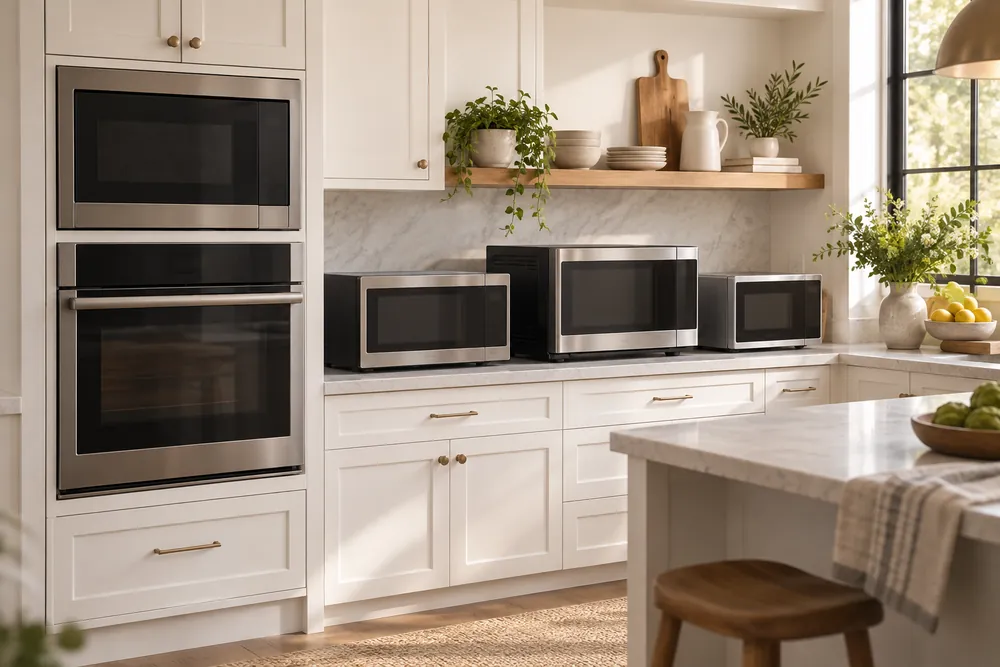
Capacity decides whether a convection microwave feels useful or frustrating. Compare the published cubic-foot rating with the cookware you use, the portions you cook, and the counter or cabinet space you can give up.
For a compact apartment, reheating, snacks, and frozen meals may matter more than fitting a roasting pan. For a family kitchen, interior height and turntable diameter can matter as much as the headline capacity.
| Capacity range | Best fit | Trade-off |
| 0.7-1.0 cu. ft. | Singles, dorm-style spaces, small apartments | Limited room for tall dishes or family-size cookware |
| 1.1-1.6 cu. ft. | Everyday reheating, small casseroles, mixed microwave and convection use | May still crowd larger baking pans |
| 1.7-2.2 cu. ft. | Families, batch cooking, larger plates, more oven-style use | Takes more counter, shelf, or cabinet space |
Published capacity is not the same as usable cooking space. A rounded back wall, low ceiling, rack position, or turntable hub can reduce what actually fits inside.
- Plate size: Check your largest dinner plate against the listed turntable or interior width.
- Pan shape: Rectangular pans often fit worse than round dishes in compact cavities.
- Rack use: Convection racks improve airflow but reduce vertical clearance.
- Door swing: A larger cavity still needs room for safe loading and unloading.
| Specification | Common range | Why it matters |
| Countertop clearance | 3-6 inches around vents | Helps heat and steam escape during convection cooking |
| Over-the-range cabinet opening width | 30-36 inches | Matches many US range and cabinet layouts |
| Convection temperature range | 150-450°F | Shows whether the unit can warm, bake, and brown flexibly |
Choose the smallest capacity that handles your regular cookware without forcing substitutions. Oversizing can waste space, while undersizing often pushes you back to a full oven for meals the microwave should handle.
Measure the Space Before You Shop
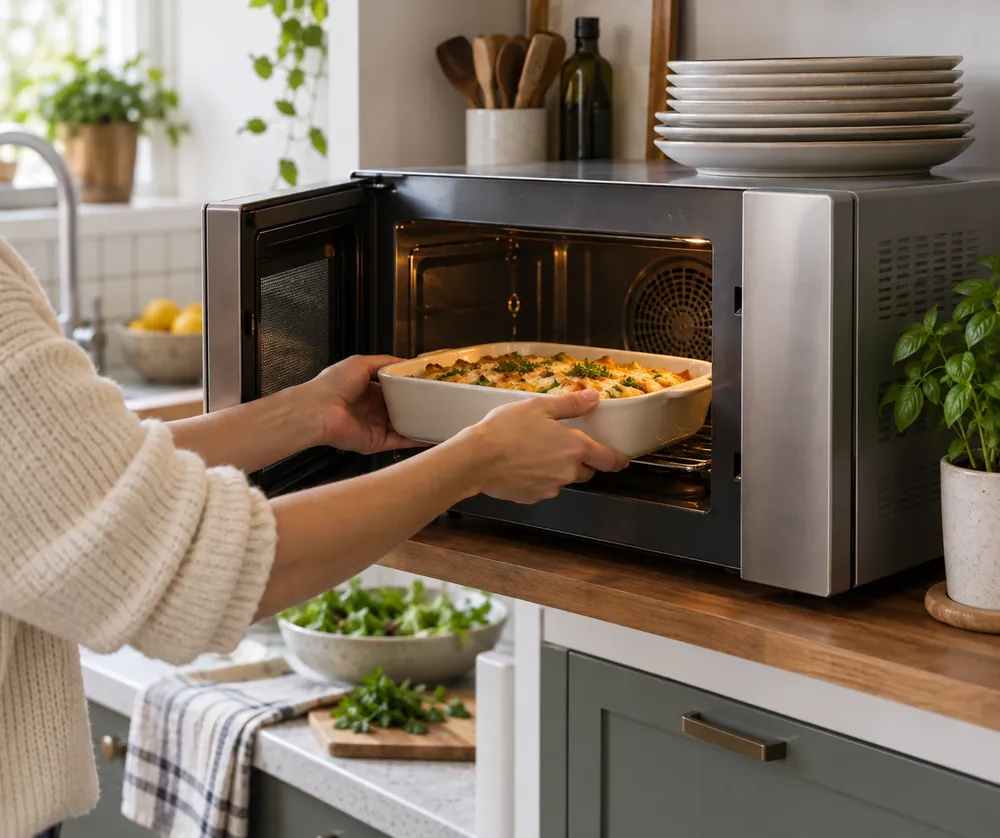
Cutout width, depth, and height decide which convection microwave sizes are realistic. Published dimensions often separate exterior size, interior capacity, and required clearance, so compare all three before choosing a style.
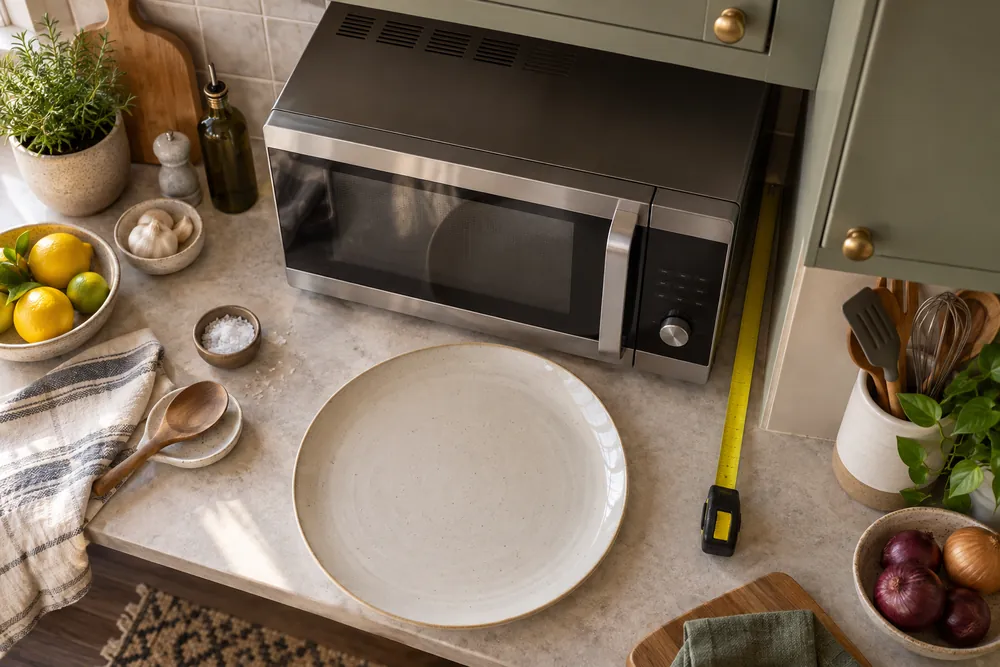
Measure the available space at the front, back, and both sides. Cabinets and walls are not always square, and trim kits can make a close fit look cleaner while reducing usable opening room.
| Spec to check | Typical published range | Why it matters |
| Countertop capacity | 0.7-2.2 cubic feet | Smaller units save counter space; larger units fit wider plates and baking dishes. |
| Over-the-range width | 29-30 inches | This range is designed to align with many standard range and cabinet widths. |
| Built-in cabinet opening width | 24-30 inches | Trim kits and cabinet cutouts must match the appliance family, not just the door width. |
| Typical rear or side clearance | 1-3 inches | Convection cooking needs airflow, especially during longer bake or roast cycles. |
Depth deserves extra attention because handles, rear vents, and power cords may not be included in the same way across brands. A microwave that technically fits can still block a cabinet door or sit proud of surrounding trim.
Measure more than the empty hole
- Door swing: Confirm the door can open without hitting a wall, backsplash, or nearby appliance handle.
- Vent path: Check whether the unit vents forward, upward, rearward, or through a ducted hood setup.
- Outlet location: Make sure the cord can reach without forcing the unit forward.
- Cookware fit: Compare interior turntable or tray dimensions with the dishes you use often.
Capacity is not the same as usable cooking space. A taller cavity may help with casserole dishes, while a wider floor may matter more for pizza pans or rectangular bakeware.
Use the installation guide as the final reference, not the product headline. Match the required opening, clearance, and ventilation notes before comparing features like sensor cooking, air fry modes, or presets.
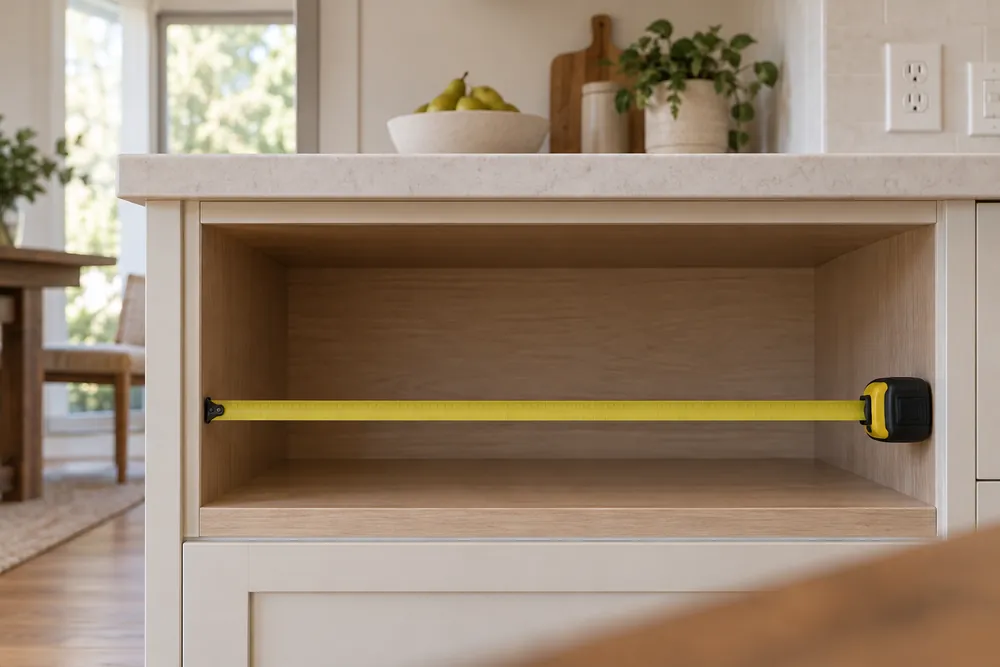
Countertop, Over-the-Range, and Built-In Size Differences
Countertop, over-the-range, and built-in convection microwaves mainly differ by installation envelope. Compare width, height, depth, capacity, and clearance before presets or finishes.
Countertop size profile
Countertop models need no cabinet cutout or wall mounting. The trade-off is lost work surface and required ventilation clearance.
| Type | Typical published width range | Common capacity band | Main space issue |
| Countertop | About 20 to 24 inches | About 0.9 to 2.2 cubic feet | Counter depth and side clearance |
| Over-the-range | About 29 to 30 inches | About 1.6 to 2.2 cubic feet | Cabinet width and cooktop clearance |
| Built-in | About 24 to 30 inches | About 1.2 to 2.2 cubic feet | Cutout dimensions and trim kit fit |
Capacity helps, but exterior depth often matters more. A large cavity can still be awkward if the door swing blocks nearby storage or counter zones.
Over-the-range size profile
Over-the-range convection microwaves usually replace a range hood. They save counter space but must align with upper cabinets and venting paths.
| Planning item | Common range to verify | Why it matters |
| Cabinet opening width | About 30 inches for many installations | Matches common range and upper-cabinet layouts |
| Cooktop-to-microwave clearance | Often about 13 to 18 inches, depending on instructions | Affects heat safety, pot access, and visibility |
| Upper cabinet depth | Often about 12 to 15 inches | Controls how far the unit projects forward |
Use the installation manual as the authority. “Over-the-range” does not guarantee the same bracket position, vent direction, or minimum clearance.
Built-in size profile
Built-in convection microwaves look integrated but are least forgiving. Appliance dimensions, air gaps, and trim kit openings must agree.
- Choose countertop when flexibility, lower installation effort, and easy replacement matter most.
- Choose over-the-range when counter space is limited and the cabinet span above the range already fits the category.
- Choose built-in when the kitchen design can support a fixed cutout, matching trim, and specified ventilation.
For spec-based comparison, filter by width first, depth second, and usable cavity height last. This avoids choosing a roomy model that cannot fit.
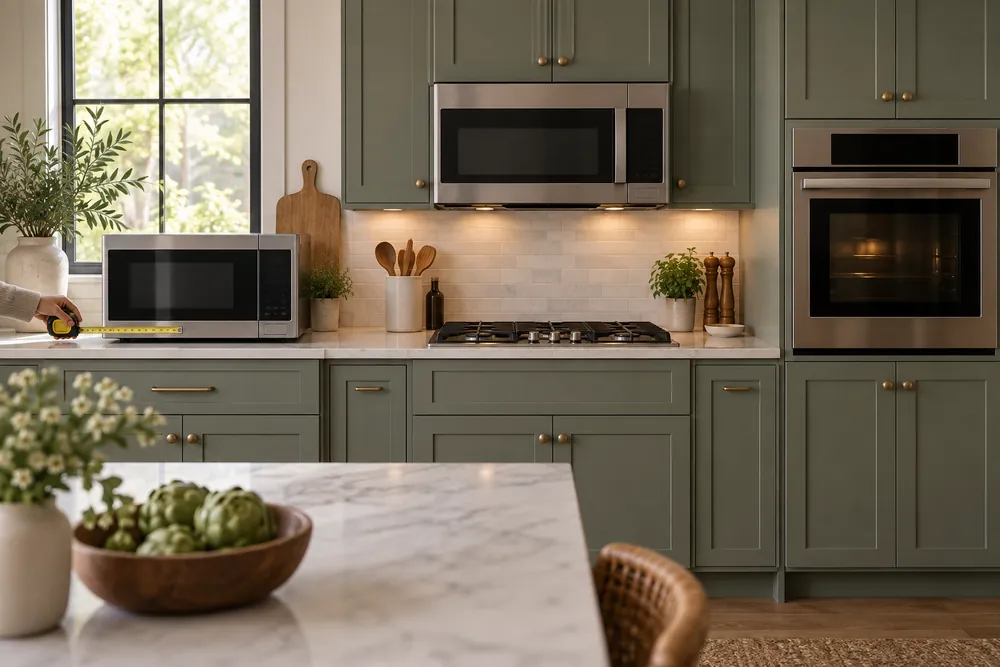
Turntable, Rack, and Interior Shape Matter
Turntable diameter, rack position, and cavity shape decide whether published capacity feels usable. A convection microwave can list a generous cubic-foot rating but still struggle with wide plates, tall mugs, or sheet-style cookware.
Compare the usable geometry, not only the headline capacity. Round turntables favor dinner plates and bowls, while racks create airflow space for convection cooking but reduce vertical clearance.
| Specification | Common range | Why it matters |
| Interior capacity | About 0.9-2.2 cu. ft. | Higher capacity helps with larger dishes, but shape controls what actually fits. |
| Turntable diameter | About 10-16 inches | A wider glass tray supports dinner plates, casserole dishes, and rotating containers. |
| Convection temperature setting range | About 100-450 degrees F | A broader range supports warming, baking, roasting, and crisping tasks. |
| Typical over-the-range cabinet opening width | About 30-36 inches | Built-in fit depends on the cutout, ventilation path, and door swing clearance. |
Why the rack changes the fit
A metal rack helps hot air circulate around food during convection cooking. It also steals headroom, so a bowl that fits on the turntable may not fit under the rack.
- Single rack: simpler storage, fewer height conflicts, and easier cleaning.
- Two-level rack system: more cooking surface, but tighter clearance between food and the oven ceiling.
- Removable rack: better flexibility for tall containers and microwave-only reheating.
Interior shape can beat raw capacity
Boxier interiors often accept rectangular pans better than curved cavities with similar cubic-foot ratings. Check published interior width, depth, and height when available, especially for convection baking.
Also compare door swing and handle depth against nearby walls or cabinets. A large cavity is less useful if the door cannot open wide enough to load cookware safely.
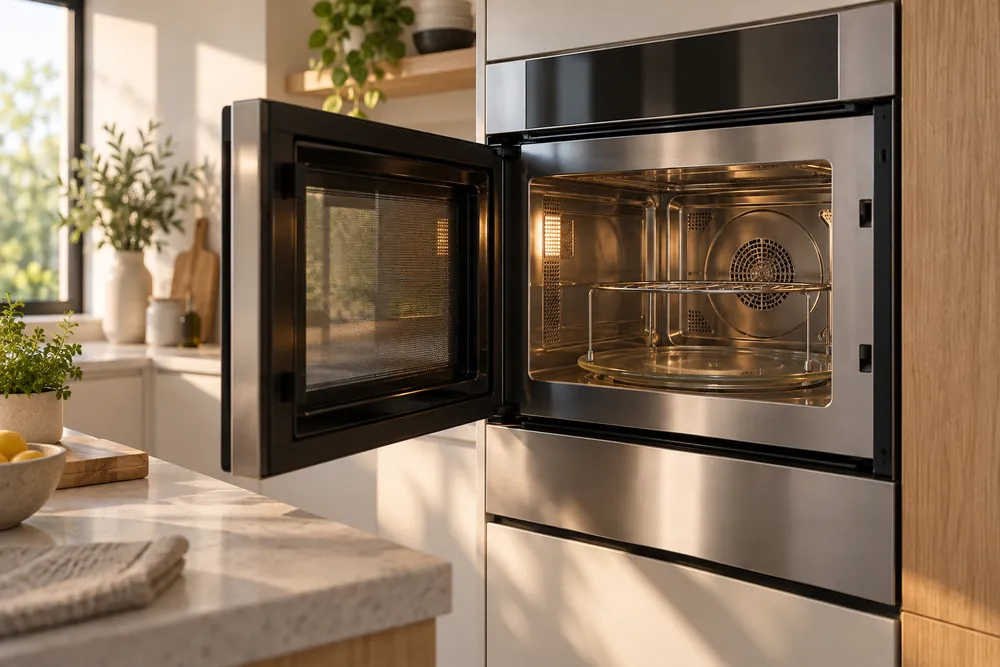
Door Swing, Vent Clearance, and Everyday Access
Door clearance decides whether a convection microwave feels easy or annoying every day. Published dimensions can look right on paper, but the handle, hinge side, vent path, and nearby walls affect real access.
Start by comparing the full product width, depth with handle, and door-open depth. A countertop unit may fit the shelf but still block a backsplash outlet, cabinet face, or coffee maker beside it.
| Fit item | Typical range | Why it matters |
| Countertop capacity band | About 0.9-2.2 cu. ft. | Larger cavities usually need more counter depth and door swing space. |
| Over-the-range cabinet opening width | About 30-36 inches | The appliance must match the cabinet span and mounting template. |
| Common side or rear breathing space | About 1-3 inches | Blocked vents can trap heat during convection cooking. |
Door style matters as much as size. A left-hinged side-swing door can be awkward against a right-side wall, while a drop-down door may need open space in front for safe loading.
- Check handle depth: Some spec sheets list body depth separately from total depth with handle.
- Check hinge clearance: A thick cabinet face can stop the door from opening fully.
- Check vent location: Rear, side, top, and front vents need different installation space.
Convection mode adds heat management to the sizing decision. Many combination microwaves publish cooking temperature ranges around 170-450°F, so clearance is more important than with simple reheating use.
For everyday access, compare the spec sheet against the path your hands take. Leave room to pull out hot trays, read the control panel, and open the door without moving another appliance first.
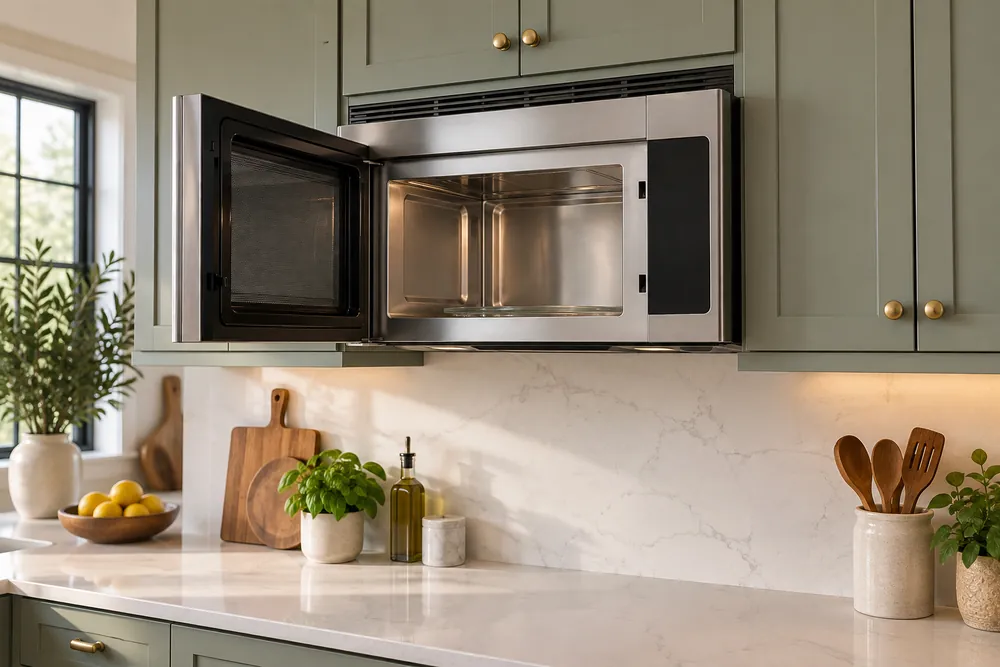
What Owners Report After Six Months
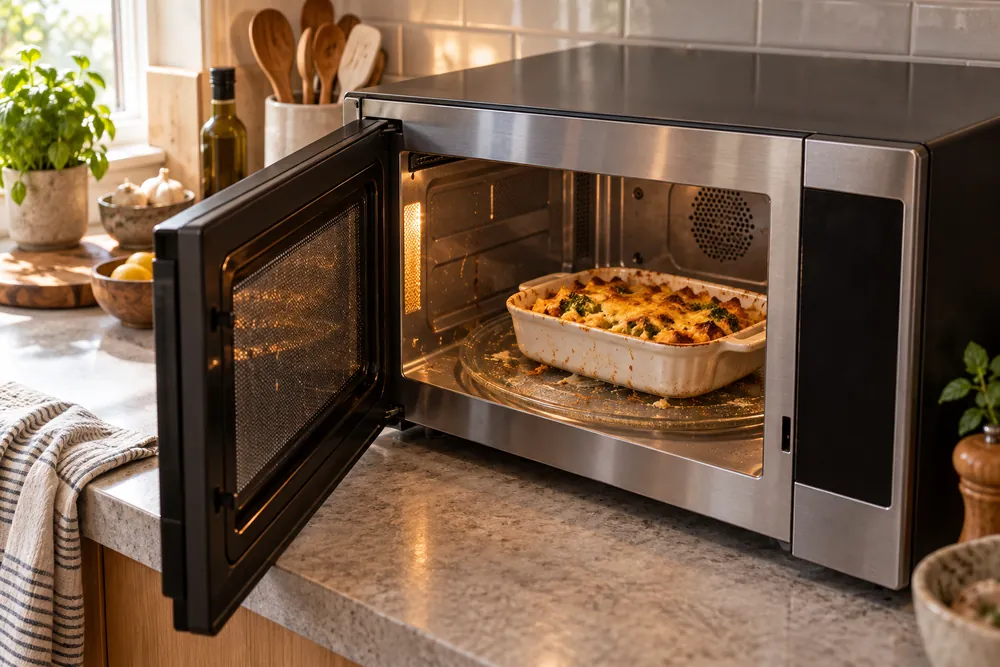
Owner reports after several months point to one recurring frustration: usable interior space feels smaller than the published capacity suggests.
Manufacturer documentation usually lists overall cavity volume, while buyers focus on whether everyday plates, mugs, and covered dishes rotate or fit without touching.
Repeated complaints center on size expectations, not basic heating.
Buyers often say a convection microwave looks large outside but loses practical room to the turntable, rack supports, fan housing, and required clearance around hot cookware.
| Specification category | Typical published range | Owner-reported trade-off |
|---|---|---|
| Countertop capacity band | 0.7-2.2 cu. ft. | Larger cavities handle dinner plates better but take more counter depth. |
| Over-the-range cabinet opening width | 30-36 inches | Fit depends on cabinet, vent path, and door swing, not width alone. |
| Typical cooking power band | 900-1,200 watts | Higher ratings help reheating speed but do not guarantee even convection browning. |
What holds up best, according to owner reports, is routine microwave use.
Reheating, defrosting, and short cook cycles draw fewer complaints than convection baking, which owners describe as more sensitive to rack position and food height.
Early failures tend to involve convenience parts rather than the whole appliance.
Reports commonly mention dim displays, sticky door switches, noisy fans, peeling interior coatings, cracked turntable parts, or control panels that become less responsive.
- Recurring complaint: published capacity does not always match usable dish clearance.
- What holds up: basic reheating and defrosting performance when used within documented limits.
- What fails early: door hardware, displays, fans, coatings, and turntable accessories appear most often in complaints.
Manufacturer documentation helps narrow the risk. Compare installation clearances, venting requirements, rack rules, and cookware limits before treating two similar capacities as equal.
Common Sizing Mistakes to Avoid
Capacity labels can mislead because interior volume does not tell you whether your cookware fits.
Compare published exterior dimensions, usable turntable space, cabinet requirements, and ventilation notes before choosing a convection microwave.
A common mistake is treating countertop, over-the-range, and built-in-ready units as interchangeable. They may share similar capacity bands, but their installation needs and airflow paths differ.
| Specification | Typical published range | Why it matters |
| Compact to mid-size capacity | About 0.7-1.5 cu. ft. | Fits smaller kitchens, but may limit dinner plates, casserole dishes, or taller containers. |
| Full-size capacity | About 1.6-2.2 cu. ft. | Offers more cooking room, but requires more counter, cabinet, or wall space. |
| Common built-in cabinet openings | About 24-30 inches wide | Trim kits and cutouts must match the appliance family, not just the visible width. |
| Typical ventilation clearance | About 1-3 inches | Convection heat needs airflow, especially around sides, rear, or top vents. |
| Usual microwave power bands | About 900-1,200 watts | Higher power can cook faster, but size, controls, and convection performance still matter. |
Another mistake is measuring only the front face. Door swing, handle depth, rear bump-outs, power cord location, and vent spacing can affect whether the appliance actually fits.
- Ignoring trim-kit compatibility: Built-in looks usually require a listed trim kit for that appliance line.
- Forgetting cookware clearance: Check turntable diameter or rack width, not only cubic feet.
- Blocking vents: A tight shelf can trap heat and shorten appliance life.
- Assuming bigger is better: Larger cavities take more room and may be awkward in a small kitchen.
Use the published installation guide as the final reference. Product pages are useful for comparison, but cutout diagrams and clearance notes decide whether the size works.
Frequently Asked Questions
Convection microwave size affects cabinet fit, usable cooking space, venting, and the cookware you can use. Use published dimensions first, then compare capacity, clearance, and installation type before choosing.
What size convection microwave do I need?
Match the appliance to how you cook. Smaller countertop units suit reheating and compact bakeware, while larger over-the-range or built-in styles fit wider dishes but need more cabinet planning.
| Capacity range | Typical fit |
| 0.7-1.2 cu. ft. | Small kitchens, reheating, compact cookware |
| 1.3-1.6 cu. ft. | Everyday family use and medium dishes |
| 1.7-2.2 cu. ft. | Larger plates, casseroles, over-the-range installs |
How do I measure for a convection microwave?
Measure width, height, and depth of the available space. For built-in and over-the-range units, compare those numbers with the published cutout, cabinet, and door-swing requirements.
What cabinet opening fits a built-in convection microwave?
Built-in sizing varies by trim kit, so do not use the appliance width alone. Compare the installation guide’s cutout range with your cabinet opening before buying.
| Installation type | Published opening range to check |
| Built-in with trim kit | 24-30 inches wide |
| Over-the-range | 30-36 inches wide |
| Countertop placement | Width plus ventilation space |
How much clearance does a convection microwave need?
Clearance protects airflow and helps prevent heat buildup. Many countertop listings call for about 3-6 inches around vents, while over-the-range models rely on the installation manual and upper-cabinet spacing.
Is a bigger convection microwave always better?
No. Bigger capacity can fit larger cookware, but it may reduce counter space, require stronger cabinetry, or need a deeper cutout. A compact model may be better if your cookware and dinner plates already fit.
What wattage range should I compare?
Use wattage as a category comparison, not the only decision point. Many convection microwaves publish microwave power around 900-1,200 watts, while convection elements vary by design and cooking mode.
Can a convection microwave replace a wall oven?
It can replace some oven tasks, especially reheating, browning, small-batch baking, and roasting. It is not always a full substitute for multiple racks, oversized pans, or long holiday cooking sessions.
What specs matter most before I buy?
Prioritize the specs that affect fit and daily use.
- Exterior dimensions: Confirms cabinet, counter, or range-space fit.
- Interior capacity: Shows usable cooking volume.
- Turntable or rack size: Determines cookware compatibility.
- Clearance requirements: Protects ventilation and installation safety.