The short answer: A wine cooler belongs in a level, temperature-stable spot that matches its venting design and published clearance requirements. Built-in models usually need front ventilation and a correctly sized cabinet opening.
Freestanding models need open air around the cabinet. Avoid direct sun, garages, heat sources, thick carpet, sealed cabinets, and any location that blocks the door, shelves, or plug.
Best Places to Put a Wine Cooler
Wine cooler placement starts with ventilation, floor support, and daily access. A good spot lets heat escape, keeps the door usable, and matches the installation type listed in the manual.
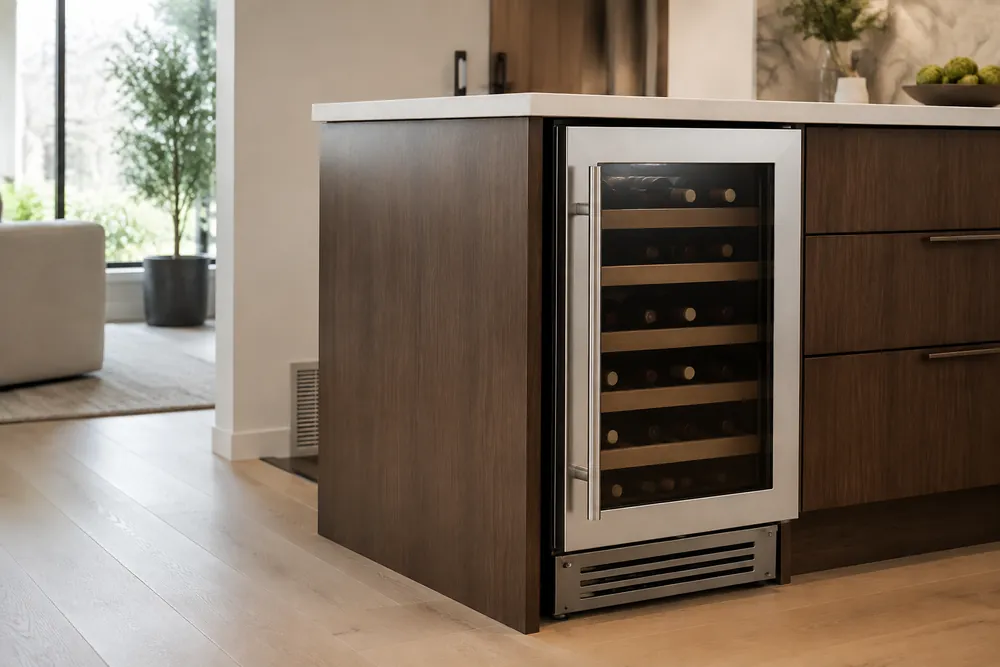
Built-in wine coolers usually belong under a counter, in an island, or inside a bar cabinet because they vent through the front. Freestanding wine coolers belong in open areas where air can move around the cabinet.
Under a Counter
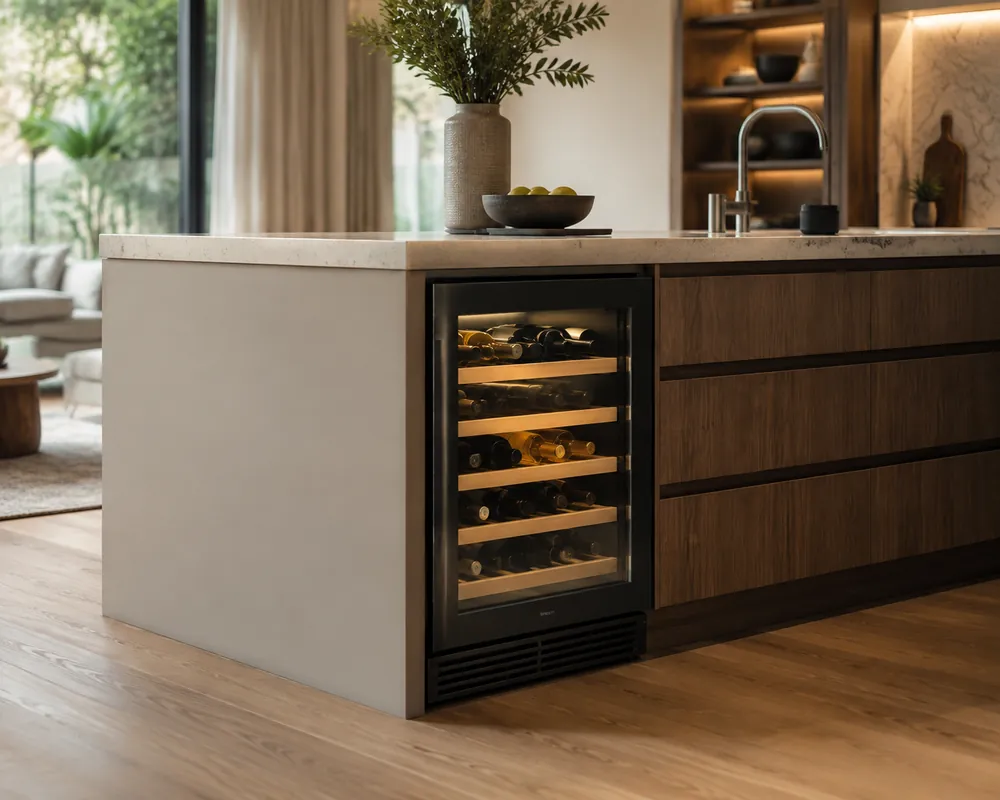
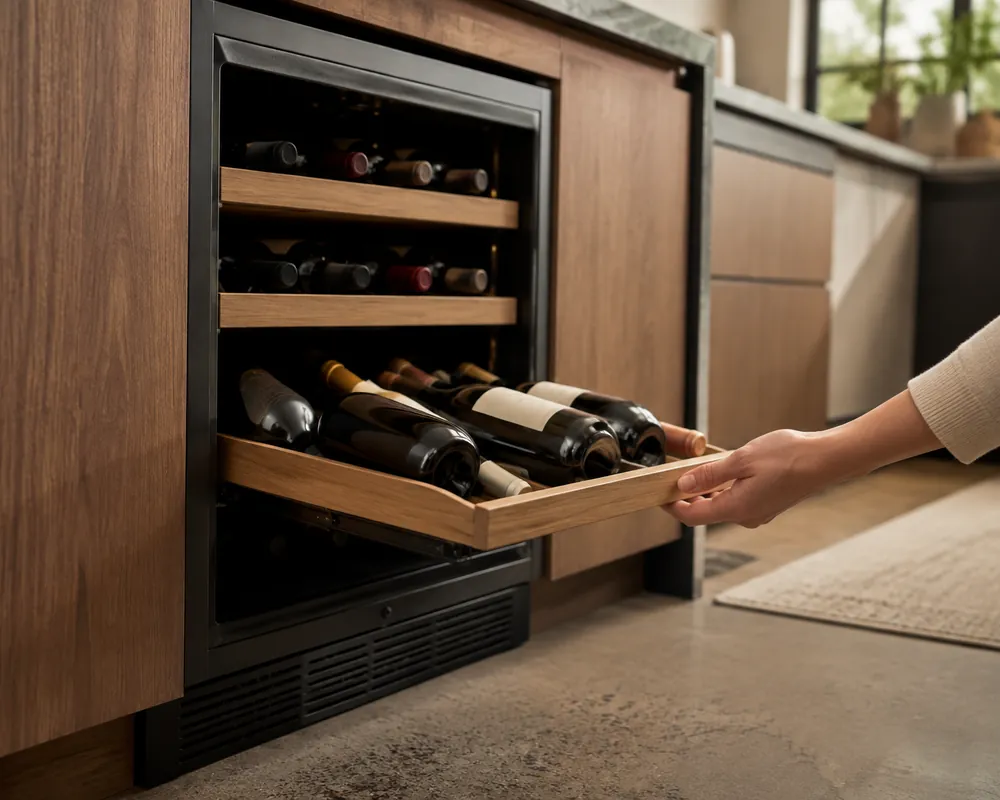
Under-counter placement gives a built-in wine cooler the cleanest kitchen look. It keeps bottles near prep space, glassware, or a dining pass-through without using extra floor area.
Use this location only for a cooler labeled built-in, under-counter, or front-venting. A freestanding unit can trap heat inside cabinetry, which may shorten compressor life and cause unstable storage temperatures.
| Placement | Best match | Main trade-off |
|---|---|---|
| Under counter | Built-in or front-venting cooler | Cabinet opening and toe-kick ventilation must match the manual |
| Kitchen wall edge | Freestanding cooler | Side, rear, and top airflow remain visible |
| Bar or dining area | Built-in or freestanding, depending on enclosure | Noise, vibration, and door swing matter more |
| Pantry or basement | Freestanding cooler | Serving access is less convenient |
Near a Bar or Dining Area
A bar nook, buffet wall, or dining room cabinet works well for entertaining. Bottles stay close to glasses, openers, and serving space, so guests do not crowd the main refrigerator.
Check reported owner experience for compressor sound and vibration before choosing a quiet dining room. Also confirm the door opens far enough for racks to slide out without hitting trim, walls, or adjacent cabinets.
In a Pantry or Basement
A pantry edge or finished basement can suit longer-term storage because these spaces often stay cooler and darker than a sunny kitchen. That reduces heat stress on the appliance and protects wine from direct light.
Avoid laundry rooms, furnace areas, damp corners, and outlets that are difficult to reach. Thick carpet can also create leveling problems and restrict airflow beneath some freestanding cabinets.
| Specification | Common range | Why it matters |
|---|---|---|
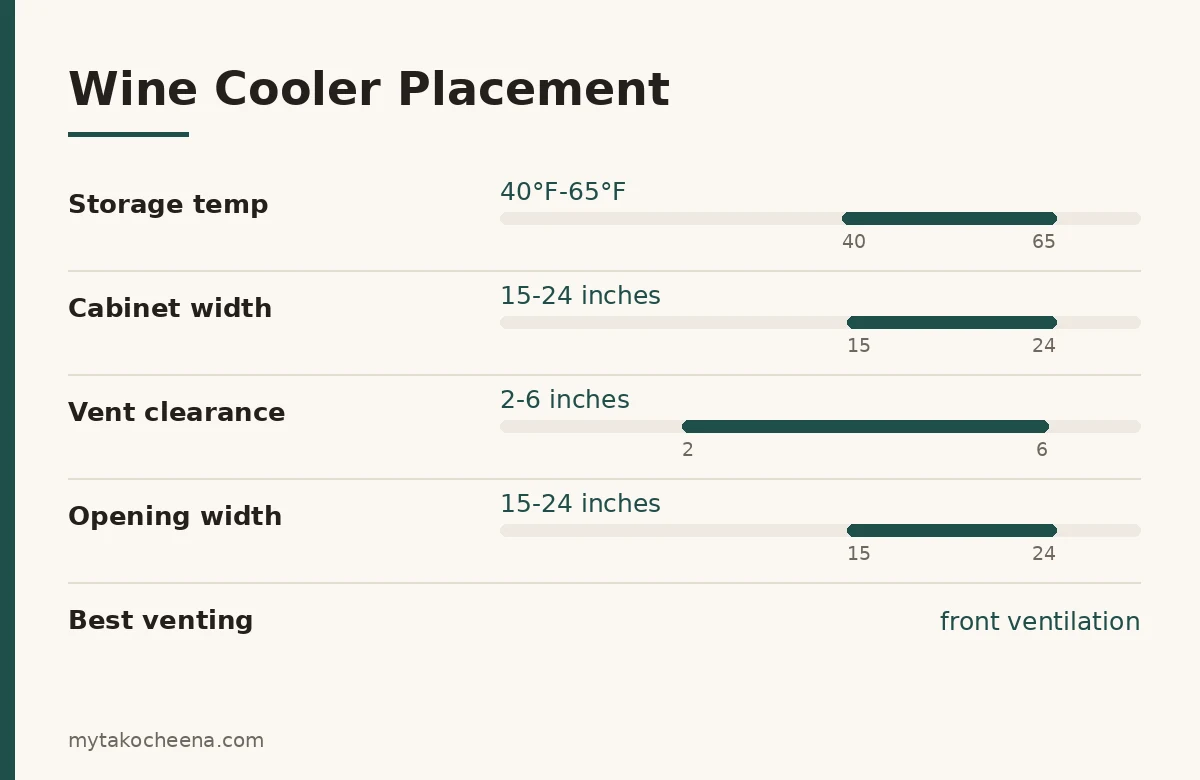
| Single-zone wine storage temperature | 40°F-65°F | Covers chilled whites through cellar-style red storage |
| Undercounter cabinet width | 15-24 inches | Matches many compact and full-width built-in openings |
| Freestanding ventilation clearance | 2-6 inches | Helps heat escape from the sides, rear, or top |
- Choose under counter for a built-in model with front ventilation.
- Choose open floor space for a freestanding model that needs air around the cabinet.
- Choose a bar area when serving convenience matters more than hidden placement.
- Choose a basement or pantry when stable temperature and darkness matter more than quick access.
Built-In vs Freestanding Placement
Built-in placement puts a wine cooler inside cabinetry, often under a counter or in a bar wall. Freestanding placement leaves the cabinet exposed so heat can escape around the body of the appliance.
This difference matters more than style. A cooler placed against its ventilation design can run hotter, cycle more often, make more noise, and shorten compressor life.
How Built-In Placement Works
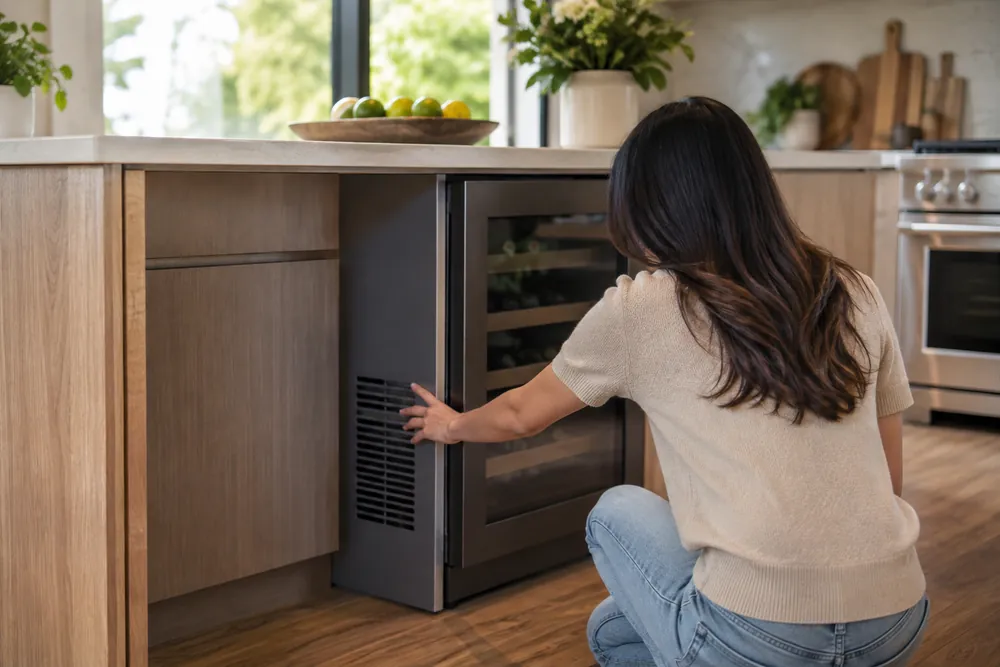
Built-in wine coolers are made for enclosed openings. They usually vent from the front, often through a grille near the toe kick, so warm air can leave without needing large open gaps on every side.
This is the right choice for an under-counter kitchen run, island, wet bar, or butler’s pantry cabinet.
The opening still needs to match the manual, because a tight fit can block airflow, pinch the cord, or stop the door from swinging fully.
| Category | Typical range | Why it matters |
|---|---|---|
| Undercounter opening width | 15-24 inches | Matches common built-in wine cooler cabinet sizes |
| Freestanding air clearance | 2-6 inches | Leaves space for heat to escape around the cabinet |
| Wine storage temperature setting | 40-65°F | Covers common chilled white, sparkling, and red wine storage settings |
Built-in does not mean zero clearance. Many units still need space at the rear, a clear front grille, and room for the hinge side of the door.
How Freestanding Placement Works
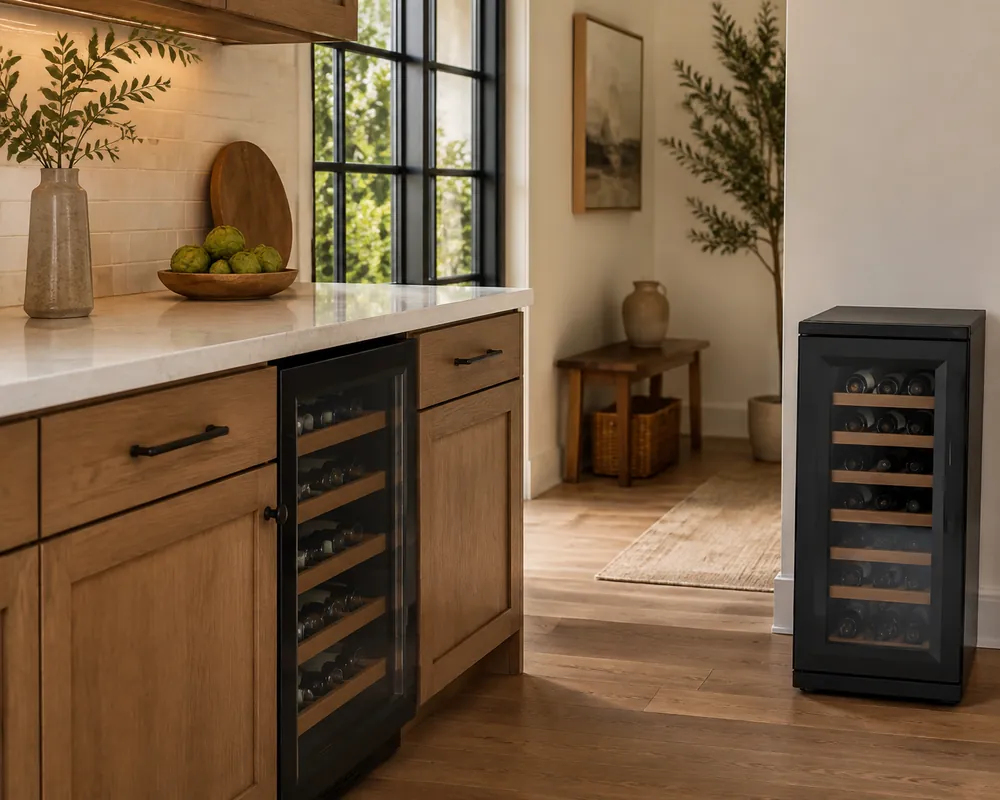
Freestanding wine coolers are designed to sit in open air. They often release heat through the back, sides, or top, so they should not be pushed into a sealed cabinet or framed tightly under a countertop.
Good freestanding locations include a kitchen wall edge, dining room corner, finished basement, pantry edge, or home bar area with open side space.
Avoid thick carpet, direct sun, radiator heat, oven sides, and laundry rooms with high humidity.
| Placement type | Best use | Main caution |
|---|---|---|
| Built-in | Cabinet runs, islands, under-counter bars | Needs front venting and a manual-matched opening |
| Freestanding | Open walls, dining spaces, pantry edges | Needs visible clearance around heat-release areas |
Do not treat a freestanding cooler as a cheaper built-in alternative. Even a neat cabinet opening can trap warm air if the appliance was not designed for front ventilation.
- Choose built-in for a flush kitchen look, under-counter placement, and permanent cabinetry integration.
- Choose freestanding for easier relocation, simpler setup, and open spaces where side and rear clearance are available.
- Check the manual before buying, because venting style controls placement more than product photos.
Door swing is part of placement too. Leave enough room for racks to slide out, bottles to clear the frame, and the plug to remain accessible without moving the cooler.
Venting, Clearance and Airflow Rules
Airflow is the placement rule that protects the compressor, cabinet, and wine temperature. A cooler that cannot release heat may run longer, sound louder, and struggle to hold its set range.
Start with the installation type. Built-in wine coolers are usually designed to exhaust warm air through the front grille, while freestanding coolers usually need open space around the back, sides, and top.
Front Venting vs Rear or Side Venting
Front-venting units can sit under a counter because heat leaves through the toe-kick or front grille. That grille must stay open, uncovered, and free of dust, rugs, trim pieces, or cabinet lips.
Rear-venting and side-venting units need more open air. Do not slide a freestanding cooler into a sealed cabinet unless the manual clearly allows built-in use.
| Cooler Type | Typical Clearance Range | Placement Trade-Off |
|---|---|---|
| Built-in, front-venting | About 0.25-1 inch at the sides and top, based on cabinet specs | Cleaner under-counter fit, but the front grille must remain open |
| Freestanding | About 2-6 inches at the back, sides, or top, depending on design | Easier placement, but less suitable for tight cabinetry |
| Dual-zone freestanding | About 3-6 inches of open space is commonly required | More temperature flexibility, but usually more heat to release |
Cabinet openings also matter. A built-in cooler should not be forced into a cutout that is too narrow, too shallow, or blocked at the rear by plumbing, outlets, or wall trim.
| Category | Common Range | What to Check |
|---|---|---|
| Under-counter width class | About 15-24 inches | Match cabinet opening width to the manual, not the product name |
| Typical wine storage setting | About 40-65°F | Confirm the room temperature will not push the cooler outside its range |
| Common compact capacity band | About 12-50 bottles | Leave room for airflow instead of choosing the tightest possible fit |
Airflow Mistakes to Avoid
Heat buildup often comes from small installation choices. A cooler can look correctly placed while still being starved of air behind the cabinet or along the grille.
- Do not block the front grille. Cabinet trim, baseboards, or thick mats can restrict exhaust on built-in units.
- Do not enclose a freestanding cooler. Open sides and rear space are part of its cooling system.
- Do not place it on thick carpet. Soft flooring can block bottom airflow and make leveling harder.
- Do not crowd the rear. Power cords, wall plates, and hoses can reduce the air gap.
- Do not ignore door swing. Shelves need clearance to slide out without hitting a wall or handle.
Leveling supports airflow and cooling performance too. A tilted cabinet can affect door sealing, vibration, and shelf movement, especially with heavier bottles loaded near the front.
Leave the plug accessible where possible. Wine coolers may need cleaning, filter access, or a reset after service, and a buried outlet can turn a simple maintenance step into cabinet removal.
Use the manual as the final rule. Category ranges help with planning, but the published clearance diagram decides whether a location is safe for that specific installation type.
How Temperature, Sunlight and Flooring Affect Placement
Room conditions decide how hard a wine cooler has to work after it is installed. A good spot stays steady, shaded, level, and firm enough to keep the cabinet from vibrating.
Wine coolers are designed to hold a narrow internal range, not fight a hot room all day. Many wine storage guides place reds, whites, and mixed collections in the general 45°F to 65°F range, depending on serving and storage goals.
| Condition | Common range or issue | Placement effect |
|---|---|---|
| Wine storage temperature | About 45°F to 65°F | Needs stable room conditions so the cooler cycles normally. |
| Typical freestanding clearance | About 2 inches to 6 inches, depending on the manual | Needs open air around the cabinet to release heat. |
| Common under-counter width class | About 15 inches to 24 inches | Requires a cabinet opening that matches the published cutout. |
Room temperature matters because compressor and thermoelectric systems both reject heat into the surrounding air.
A hot garage, laundry room, or sun-warmed alcove can cause longer run times, louder operation, and less stable bottle temperatures.
Sunlight is also a placement problem, not just a display issue. Direct sun can warm the cabinet, heat the door glass, and expose bottles to light that may affect wine quality over time.
- Avoid west-facing windows where late-day sun can hit the door.
- Keep distance from ovens and dishwashers because nearby heat can raise cabinet temperature.
- Use shaded bar walls or pantry edges when they still meet ventilation rules.
Flooring affects leveling, vibration, and airflow. Hard, flat surfaces such as tile, sealed concrete, vinyl, or wood usually support the appliance better than thick carpet.
Carpet can block lower vents, trap heat, and let the cabinet lean as the pile compresses. If the only available space is carpeted, check whether the manual allows it and consider a firm appliance platform.
Leveling is more than cosmetic. A tilted cooler can make the door seal poorly, cause shelves to slide unevenly, and increase vibration that may disturb sediment in bottles.
Choose the coolest practical location that still gives access to the outlet, door swing, and racks. Then compare that spot against the installation manual before cutting cabinetry or loading bottles.
How These Hold Up After a Year
Long-term owner reports point to one repeat issue: heat management matters more than styling.
Manufacturer documentation backs that up, because clearance, vent direction, room temperature, and installation type shape how hard the cooler has to work.
After extended use, buyers tend to praise steady temperature holding, simple shelving, and quiet cycling when the unit is placed correctly.
Complaints cluster around noise, frost or condensation, early fan problems, and units installed with too little air space.
What Owners Keep Liking
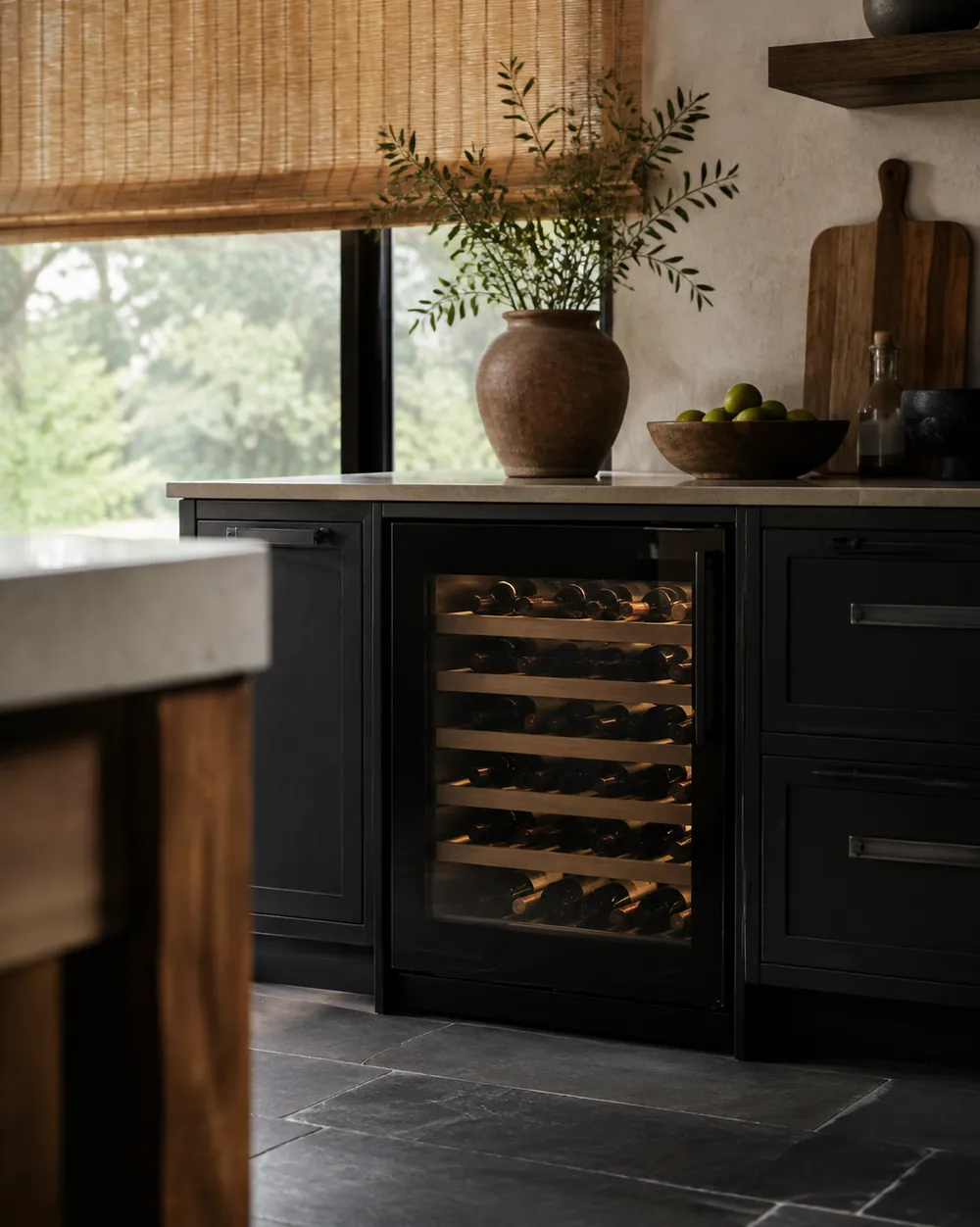
Wine coolers that age well are usually the ones matched to the right location. Built-in units do better in tight cabinet runs when their front vent stays open, while freestanding models last better with open space around the cabinet.
Owner reviews often stay positive when the cooler holds the selected storage range without constant cycling.
For wine storage, common published ranges are roughly 40°F–65°F, with dual-zone units often splitting colder white-wine storage from warmer red-wine storage.
| Category detail | Typical range to check | Why it matters |
|---|---|---|
| Wine storage temperature | About 40°F–65°F | Shows whether the cooler covers your serving and storage needs |
| Undercounter cabinet width | About 15–24 inches | Helps match the cooler body to common kitchen openings |
| Freestanding clearance | About 2–6 inches at the back, sides, or top | Reduces heat buildup around non-built-in cabinets |
| Common bottle capacity bands | About 12–50 bottles for many home units | Prevents overbuying a cabinet that will sit half empty or overcrowded |
The Complaint That Recurs Most
The most repeated complaint is not always cooling failure. It is noise that becomes more noticeable after the cooler is boxed in, placed on uneven flooring, or loaded so bottles and racks vibrate during compressor cycles.
Manufacturer manuals commonly warn against blocking vents or installing freestanding units inside sealed cabinetry.
Owner reports often describe the same pattern: acceptable sound in open placement, louder cycling or warmer cabinet walls after the unit is confined.
- Buzzing: often linked in owner reports to uneven floors, loose bottles, or shelves not fully seated.
- Fan noise: commonly reported when dust, poor ventilation, or a warm room makes the cooler run longer.
- Clicking: usually tied to normal compressor cycling, but repeated rapid cycling can suggest heat or clearance problems.
- Rattling: often improves when the cooler is leveled and bottles are kept from touching the inner walls.
What Fails Early
Early failures in owner reports usually involve fans, control boards, door seals, interior lights, or temperature sensors. These parts are more likely to draw complaints than the cabinet, glass door, or basic shelving.
Condensation complaints also show up, especially in humid rooms or near exterior doors. A weak seal, frequent opening, or a cooler set near the low end of its range can make moisture more visible on glass or inside surfaces.
Shelf complaints are common but less serious. Buyers report that advertised bottle counts often assume standard Bordeaux-style bottles, while wider Champagne or Pinot bottles reduce usable capacity and make racks feel tight.
What Usually Holds Up
Cabinet finish, door glass, handles, and basic racks tend to hold up well when the unit is not overloaded or forced into a poor opening.
Front-venting built-ins also receive better long-term comments when the toe-kick grille stays clean.
Temperature stability holds up best in rooms that stay within the manufacturer’s ambient operating range.
Garages, sunny windows, laundry rooms, and furnace-adjacent spaces appear more often in negative reports because the cooler runs harder there.
The practical takeaway is simple. Choose placement before choosing the cooler, then compare the manual’s clearance table, vent style, door swing, and bottle assumptions against the actual space.
Questions Buyers Ask Most
Wine cooler placement questions come down to heat, airflow, cabinet fit, and convenience.
Buyers should compare the installation label, clearance chart, and owner noise reports before choosing a kitchen, bar, pantry, or basement location.
Can I put a freestanding wine cooler under a counter?
Use a freestanding wine cooler under a counter only if the manual allows enclosed installation. Many freestanding cabinets release heat through the back, sides, or top, so boxing them in can trap heat and shorten compressor life.
A built-in or front-venting unit is safer under a counter. It exhausts warm air through the front grille, allowing cabinetry to surround the sides more closely.
How much clearance does a wine cooler need?
Clearance depends on venting style, not appearance. A sleek freestanding cooler may still need open air around the cabinet, while a built-in model may need a precise cutout and clear front grille.
| Installation type | Common clearance range to verify | Main reason |
| Freestanding | About 2–6 inches at rear, sides, or top | Allows heat to escape around the cabinet |
| Built-in or under-counter | About 0–1 inch at sides with front vent clear | Matches cabinet opening while venting forward |
| Island or bar cabinet | About 1–3 inches where the manual requires | Prevents warm air from being trapped inside millwork |
Can a wine cooler go in a garage?
A garage is risky unless the cooler is rated for that environment. Many wine coolers are designed for indoor, stable rooms and can struggle in hot summers, cold winters, or unconditioned spaces.
Temperature swings may cause poor cooling, compressor strain, or bottles outside the target range. A finished basement or interior pantry is usually easier on the appliance.
What temperature should a wine cooler be set to?
Set temperature by storage goal and wine type. Long-term storage usually favors a steady middle range, while serving temperatures vary by red, white, sparkling, or rosé.
| Use or wine type | Typical temperature range | Placement note |
| General wine storage | About 50–57°F | Best in stable rooms away from heat |
| White or sparkling serving | About 40–50°F | Works well near a bar or dining area |
| Red serving | About 55–65°F | Avoid sunny walls and warm appliances |
Can I put a wine cooler next to an oven or dishwasher?
Keep a wine cooler away from appliances that add heat or moisture. Ovens, ranges, dishwashers, and laundry equipment can make the cooler work harder and create unstable bottle temperatures.
Where separation is limited, check the manual for side-clearance rules and insulation requirements. A filler panel or different cabinet bay may be better than squeezing the cooler beside heat.
Is a wine cooler okay on carpet?
Thick carpet is a poor base for many wine coolers. It can block low vents, hold heat, and make the cabinet sit out of level, affecting door sealing and vibration.
Use a hard, level surface instead. Tile, wood, vinyl, concrete, or a stable appliance platform gives the feet better support and keeps airflow paths easier to maintain.
What size wine cooler fits under a kitchen counter?
Under-counter fit depends on the cabinet opening, hinge clearance, plug location, and door swing. Do not shop by bottle count alone, because racks, bottle shape, and handle depth affect usable space.
| Category | Typical range | Buyer trade-off |
| Narrow under-counter units | About 15–18 inches wide | Saves cabinet space but stores fewer bottles |
| Standard under-counter units | About 24 inches wide | Fits many appliance openings with higher capacity |
| Common capacity band | About 20–60 bottles | Varies with Bordeaux-style versus larger bottles |
Where should the outlet be for a wine cooler?
The outlet should be reachable without pulling the cooler completely apart from cabinetry. It should not force the plug or cord against the back panel, vent area, or leveling feet.
Follow the manufacturer’s electrical instructions and local code. Avoid extension cords unless the manual specifically permits them, because undersized cords can create voltage drop and safety problems.