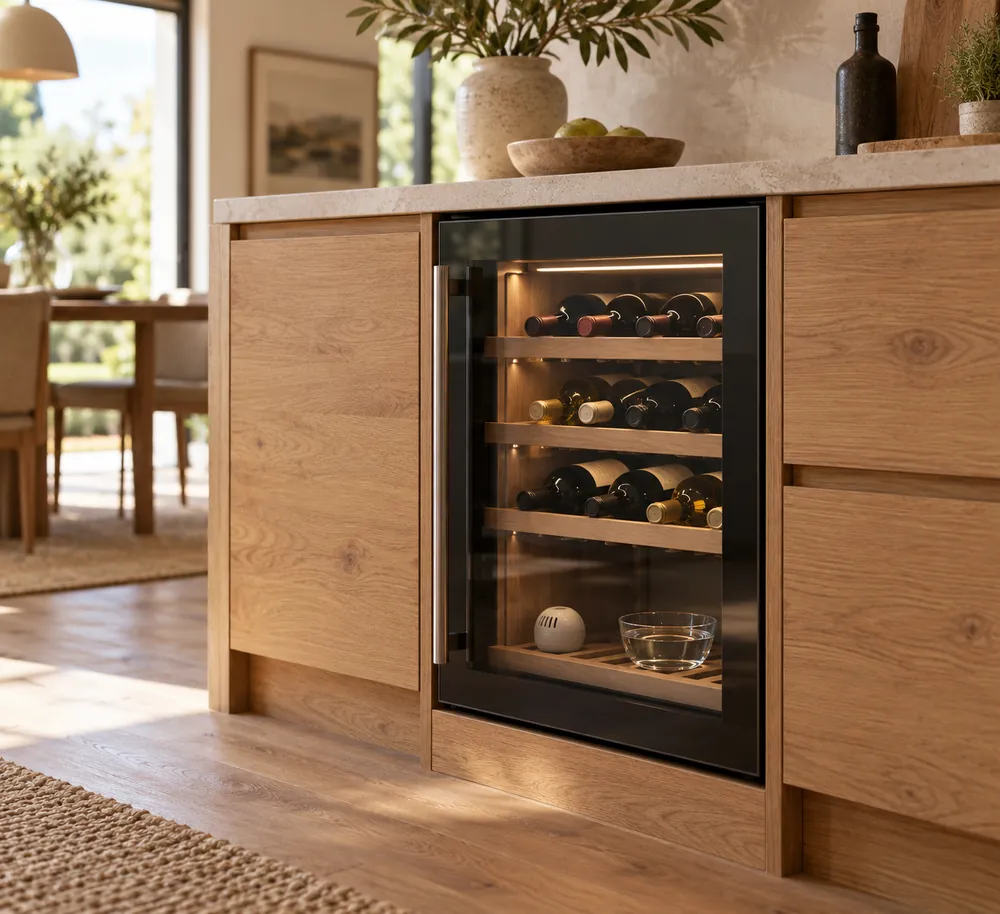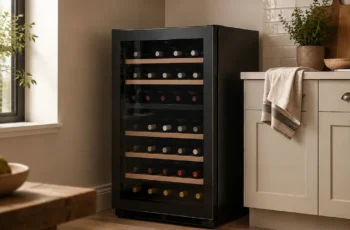
The gist: Most wine coolers should maintain relative humidity between 50 and 80 percent, with approximately 60 to 70 percent serving as a practical target for long-term storage.
This range helps natural corks stay sealed without creating excessive moisture that can cause mold, musty odors, condensation, or label damage. Actual humidity varies by cooling system, room conditions, ventilation, and door use.
Why Humidity Matters Inside a Wine Cooler
Humidity protects the cork, preserves the label, and helps maintain the sealed environment that wine needs during storage.
A balanced cabinet stays moist enough to limit cork shrinkage without creating the damp conditions that encourage mold, odors, condensation, or label damage.
Natural cork is porous and gradually responds to the surrounding air. Excessively dry conditions can make a cork contract, allowing oxygen into the bottle and contributing to oxidation, muted aromas, or stale flavors over time.
| Category | Common range | Why it matters |
|---|---|---|
| Relative humidity | 50% to 80% | Supports cork protection while limiting excess moisture |
| Preferred long-term humidity | 60% to 70% | Offers a practical balance for natural-cork bottles |
| Storage temperature | 45°F to 65°F | Supports mixed collections and stable aging conditions |
| Undercounter opening width | 15 to 24 inches | Helps match the cooler to the available cabinet space |
| Freestanding clearance | 2 to 6 inches | Allows ventilation and reduces heat buildup |
Humidity that is too high creates different risks. Condensation may collect on bottles or cabinet walls, while weak airflow can produce musty smells, stained labels, and surface mold on shelves.
Cooling technology influences the result. Compressor wine coolers often remove more moisture during operation, whereas thermoelectric units are more affected by room temperature, ventilation, and ambient humidity.
Check these details before choosing a unit for a kitchen or bar area:
- Humidity guidance: Prefer a stated operating or target range over vague claims about moisture control.
- Door gasket: A well-fitting seal limits exchanges with humid room air.
- Ventilation: Built-in models need front venting, while freestanding units generally require open space around the cabinet.
- Condensation control: Look for owner reports describing cabinet moisture, odors, and label condition.
For My Tako Cheena buying guides, the practical goal is stability rather than maximum moisture.
Compare humidity information with temperature performance, cabinet design, and installation requirements so the cooler suits the room and the bottles it will store.
thermoelectric units may have a different moisture profile, so placement still matters. Before buying, measure the opening at its narrowest points, including height, width, and depth.
Check whether the door can open fully without striking a nearby cabinet, island, or appliance.
Leave the clearance required by the installation instructions, especially for a freestanding unit. A tight fit can restrict airflow and make temperature and moisture control less consistent.
Also locate the outlet before choosing an installation position, since an extension cord may be unsuitable.
For a kitchen upgrade, compare the measured opening with the cooler’s listed dimensions rather than relying on a nominal size.
If the space is unusually dry or damp, choose a model with stable controls and monitor conditions after installation with a separate hygrometer.

What Humidity Level Should a Wine Cooler Have
Wine cooler humidity should remain damp enough to protect natural corks without creating conditions for mold, odors, or damaged labels.
A balanced cabinet environment supports long-term storage and helps reduce the risk of air entering through a dried-out cork. The ideal target depends on the cooling system, door seal, ventilation, and room conditions.
| Category | Common range | Why it matters |
| Relative humidity | 50% to 80% | Protects corks while limiting excess moisture |
| Preferred long-term range | 60% to 70% | Provides a practical balance for cork and labels |
| Wine storage temperature | 45°F to 65°F | Supports stable storage for mixed collections |
| Undercounter opening width | 15 to 24 inches | Helps confirm installation compatibility |
| Freestanding clearance | 2 to 6 inches | Allows heat and air to escape around the cabinet |
Why humidity matters
Natural cork is porous and can gradually lose moisture in an overly dry cabinet. As cork shrinks, the seal may weaken and allow oxygen to reach the wine, increasing the chance of stale or prematurely aged flavors.
Excess humidity creates different problems. Persistent moisture can encourage mold on labels, shelves, and cabinet walls, while condensation may produce musty odors or leave bottles and packaging visibly damp.
Compressor wine coolers often remove more moisture during operation than thermoelectric designs.
Owners may therefore use a small water dish or purpose-made humidity tray, but added moisture should be monitored rather than left unchecked.
What to compare in the specifications
- Humidity guidance: Prefer a stated operating or target range over vague claims such as “moisture control.”
- Cooling system: Compare compressor and thermoelectric designs according to the room climate and expected humidity stability.
- Door gasket: A tight seal limits exchange with humid or dry room air.
- Ventilation: Built-in units need suitable front ventilation, while freestanding models generally require open space around the cabinet.
Temperature stability also affects moisture. Repeated swings can create condensation, particularly in humid kitchens, garages, or poorly ventilated spaces.
For buyers comparing My Tako Cheena-style appliance guidance, the practical goal is balance. Choose a cooler with clear humidity information, steady temperature performance, and installation requirements that fit the available space.

How Wine Coolers Regulate Humidity
Wine cooler humidity is controlled indirectly through the cooling system, cabinet insulation, door gasket, and ventilation layout.
The goal is stable air that protects natural corks without creating damp conditions that damage labels, shelves, or cabinet walls.
A useful target is moderate relative humidity, with enough moisture to keep corks from shrinking and losing their seal. This balance also limits condensation, musty odors, mold growth, and label staining.
| Category | Common range | Why it matters |
| Recommended relative humidity | 50% to 80% | Protects corks while limiting excess moisture |
| Preferred long-term humidity zone | 60% to 70% | Provides a practical balance for natural cork closures |
| Wine storage temperature | 45°F to 65°F | Supports mixed collections and stable aging conditions |
| Undercounter opening width | 15 inches to 24 inches | Determines fit and affects ventilation around the cabinet |
| Freestanding ventilation clearance | 2 inches to 6 inches | Helps the unit release heat and maintain steadier operation |
Cooling system and moisture balance
Compressor-based wine coolers remove more moisture as they cycle, particularly in dry rooms or spaces with frequent air exchange.
Thermoelectric units may operate more quietly, but their humidity behavior depends on room temperature, ambient moisture, insulation, and door openings.
A dry cabinet can pull moisture from a natural cork. As the cork contracts, the seal may weaken and allow oxygen into the bottle, dulling aromas and producing stale flavors over time.
Excess humidity creates other problems. Persistent condensation can leave water on bottles, encourage mold on labels or shelving, and produce odors that transfer to the storage area.
Poor airflow and a damaged gasket increase these risks.
What to check before buying
- Humidity guidance: Look for an operating or target range instead of vague claims about moisture control.
- Door seal: A firm gasket reduces exchanges between room air and cabinet air.
- Vent location: Built-in models need front ventilation, while freestanding units usually require open space around the cabinet.
- Temperature stability: Frequent swings can create condensation, especially in humid kitchens, garages, or poorly ventilated rooms.
For My Tako Cheena appliance comparisons, prioritize a defined humidity range, stable temperature performance, and installation requirements that match the available space.
A water dish or humidity tray may help a dry compressor cabinet, but it cannot replace proper ventilation or a reliable door seal.

Signs That Humidity Is Too High or Too Low
Visible condensation, musty odors, and brittle corks reveal more about a wine cooler’s humidity than a temperature display. A balanced cabinet keeps natural corks flexible without leaving labels, shelves, or walls damp.
Check these signs alongside the cooler’s design, installation, and room conditions.
Signs Humidity Is Too Low
Dry air can pull moisture from natural corks during long-term storage. Corks may shrink or lose elasticity, allowing outside air into the bottle and increasing the risk of oxidation, flat aromas, or stale flavors.
Look for corks that feel dry, cracked, or loose when bottles are opened. Persistent dryness may be more likely in compressor-based coolers, which commonly remove more moisture during cooling than thermoelectric designs.
- Inspect natural corks for brittleness, shrinkage, or powdery surfaces.
- Check whether the cabinet feels noticeably dry after extended operation.
- Compare the manufacturer’s humidity guidance with owner reports about cork condition.
Signs Humidity Is Too High
Excess moisture appears as condensation on bottles, shelves, or interior walls. Musty smells, softened cardboard, stained labels, and mold around the gasket or shelf edges indicate lingering moisture.
High humidity does not necessarily protect corks effectively. Weak airflow, frequent door opening, a damaged seal, or installation in a damp room can create wet areas even when the overall cabinet seems acceptable.
| Category | Typical range | Why it matters |
| Recommended relative humidity | 50%–80% | Protects corks while limiting mold and label damage |
| Long-term storage sweet spot | 60%–70% | Offers a practical balance for natural corks |
| Wine storage temperature | 45°F–65°F | Supports mixed collections and stable aging |
| Freestanding clearance | 2–6 inches | Helps ventilation and steadier cabinet conditions |
How to Correct the Imbalance
A small water dish or humidity tray may help a dry cabinet, but it should not touch bottles or create standing moisture.
For excessive humidity, verify the gasket, improve ventilation, reduce door openings, and follow maintenance instructions.
Choose a cooler with explicit humidity guidance, stable temperature control, and installation requirements suited to the room. These details provide a better buying signal than capacity or appearance alone.

Features That Help Maintain Proper Humidity
A wine cooler maintains useful humidity through its cooling system, door seal, airflow, and cabinet construction. These features work together to protect natural corks while limiting condensation, mold, musty odors, and label damage.
Humidity guidance is not equally detailed across appliance specifications, so compare the stated range with the cooler’s installation requirements and cooling design.
A stable cabinet environment matters more than a short-lived humidity reading that changes whenever the door opens.
| Specification | Common range | Why it matters |
|---|---|---|
| Recommended relative humidity | 50% to 80% | Helps keep corks flexible without excessive moisture. |
| Long-term storage target | 60% to 70% | Offers a practical balance for natural-cork bottles. |
| Wine storage temperature | 45°F to 65°F | Supports stable storage for mixed collections. |
| Typical undercounter opening width | 15 to 24 inches | Affects fit, ventilation, and heat buildup. |
| Freestanding ventilation clearance | 2 to 6 inches | Allows heat and moisture to escape more consistently. |
Cooling system and airflow
Compressor-based coolers often remove more moisture during operation, particularly in warm or humid rooms.
Thermoelectric units may preserve a less-dry cabinet environment, but their performance depends more heavily on ambient temperature, ventilation, and the surrounding space.
Front ventilation is important for built-in installation because trapped heat can make the cooling cycle run longer.
Freestanding units generally need open space around their vents, since restricted airflow can increase temperature swings and condensation.
Seals, trays, and cabinet controls
A tight door gasket limits exchanges with room air, helping the cooler hold a steadier internal environment.
Some designs also use humidity trays or provide guidance for adding a small water dish, but added moisture should be monitored rather than left unattended.
- Door seal: Check for even contact around the entire frame.
- Humidity control: Prefer clear operating guidance over vague moisture-control claims.
- Interior surfaces: Look for shelving and walls that can be wiped dry if condensation appears.
- Placement: Avoid hot garages, direct sunlight, and poorly ventilated kitchen spaces.
Choose features that support steady conditions, not maximum dampness. A hygrometer can reveal whether the cabinet stays near its intended range and can identify problems before corks, labels, or stored wine are affected.

Where Owner Feedback Agrees and Where It Splits
Owner feedback identifies stable humidity, not maximum moisture, as the deciding factor.
Reports favor coolers that protect natural corks without condensation; common complaints involve cabinets that become too dry or persistently damp.
Manufacturer guidance usually covers temperature, ventilation, and installation more clearly than humidity.
Comparing those specifications with owner reports indicates whether a cooler suits long-term storage, mixed bottles, or short-term serving.
| Category | Common range | Why owners care |
|---|---|---|
| Relative humidity | 50% to 80% | Protects corks while limiting mold and label damage |
| Preferred long-term humidity | 60% to 70% | Offers a practical balance for natural-cork bottles |
| Storage temperature | 45°F to 65°F | Supports reds, whites, and mixed collections |
| Undercounter opening width | 15 to 24 inches | Affects fit, airflow, and heat removal |
| Freestanding rear clearance | 2 to 6 inches | Helps ventilation and steadier cabinet conditions |
Where reports agree
- Natural cork needs protection. Owners repeatedly connect dry interiors with brittle corks, difficult opening, and concern about oxygen reaching the wine. A stable middle humidity is generally viewed as safer than either an arid cabinet or visible moisture buildup.
- Compressor cooling can feel drier. Manufacturer documentation and owner discussions commonly describe greater moisture removal from compressor-based systems. Some owners compensate with a small water dish or humidity tray, provided it does not create standing condensation.
- Door seals matter. Reports often praise tight gaskets because they reduce outside-air exchange. A weakened seal can contribute to changing humidity, fogging, odors, and temperature swings.
Where experiences split
Thermoelectric units often earn praise for quiet operation and less drying, but depend more on room temperature and ventilation.
Compressors may cool more reliably in warm spaces while requiring closer attention to dryness and drainage.
Early failures more often involve door gaskets, fans, controls, or poor ventilation than humidity alone. Installation instructions matter especially for undercounter placement.
For My Tako Cheena-style guidance, prioritize a stated humidity target, stable temperature control, an accessible seal, and suitable ventilation. Treat complaints about condensation or dry corks as useful evidence.

EXACTLY 0 new
heading(s).
Wine cooler humidity should stay balanced: moist enough to protect natural corks, but dry enough to limit mold, condensation, and label damage.
Compare humidity guidance with the cooler’s cooling system, door seal, ventilation, and installation location.

Recommended humidity range
A relative humidity range of 50% to 80% is generally suitable for wine storage, with 60% to 70% a practical target. Lower humidity can dry corks, while higher humidity may create musty odors and damp surfaces.
| Relative humidity | Likely effect |
| 50% to 60% | Helps limit mold while providing reasonable cork protection |
| 60% to 70% | Balanced range for extended storage and natural corks |
| 70% to 80% | Protects against dry corks but requires good airflow and sealing |
Compressor wine coolers often remove more moisture than thermoelectric designs. A compressor unit in a dry kitchen may benefit from a humidity tray, while one in a damp room may need better ventilation instead.
Specifications worth comparing
Humidity information is not always prominent in appliance listings, so assess related specifications together.
Temperature stability, front ventilation, gasket quality, and cabinet clearance can affect moisture levels more than a broad humidity claim.
| Category | Common range | Why it matters |
| Storage temperature | 45°F to 65°F | Supports mixed red and white wine storage |
| Undercounter opening width | 15 inches to 24 inches | Determines installation fit and airflow space |
| Freestanding rear clearance | 2 inches to 6 inches | Helps heat escape and supports steadier operation |
A tight door gasket reduces room-air exchange, especially in humid kitchens, garages, or utility areas. Front-venting built-in units suit beneath-counter installation, while freestanding models need the manufacturer’s listed clearance.
Watch for moisture beads, damp labels, musty smells, or visibly shrinking corks. These signs may indicate poor airflow, an aging seal, unstable temperature, or a room environment that overwhelms moisture control.
For My Tako Cheena buying comparisons, prioritize clear operating guidance over vague phrases such as “moisture control.” Choose a model whose humidity behavior, temperature range, ventilation,
and installation requirements match the storage space.

Asked and Answered
Wine cooler humidity should protect natural corks without causing condensation, mold, or label damage. Temperature stability, door sealing, ventilation, and the cooling system also affect cabinet conditions.
| Category | Common range | Why it matters |
| Relative humidity | 50% to 80% | Protects corks while limiting excess moisture |
| Long-term humidity target | 60% to 70% | Provides a practical middle ground |
| Wine storage temperature | 45°F to 65°F | Supports mixed red and white wine collections |
| Undercounter opening width | 15 inches to 24 inches | Helps confirm installation fit and airflow needs |
| Freestanding clearance | 2 inches to 6 inches | Allows heat and air to move around the cabinet |
What humidity level should a wine cooler have?
Many wine coolers perform well at 50% to 80% relative humidity, with 60% to 70% suitable for long-term storage. This keeps natural corks flexible without making the cabinet excessively damp.
Room humidity, door openings, gasket condition, and ventilation affect performance, so treat the published range as guidance.
Why does humidity matter in a wine cooler?
Natural cork may shrink in persistently dry air, allowing oxygen to affect a wine’s aroma, flavor, and aging potential.
Excess moisture can cause condensation, musty odors, stained labels, and mold. Proper humidity protects the closure and cabinet interior.
Are compressor wine coolers too dry?
Compressor systems often remove more moisture during cooling and may run drier than thermoelectric designs, but they can still suit wine storage.
Follow the manufacturer’s guidance and monitor conditions. In unusually dry rooms, a small water dish or humidity tray may help, but avoid standing moisture.
Do thermoelectric wine coolers control humidity better?
Thermoelectric units may retain more surrounding humidity, but performance depends on ambient temperature and indoor moisture. They work best in stable indoor spaces.
Evaluate airflow, temperature limits, door sealing, and owner reports instead of assuming the cooling method guarantees ideal humidity.
How can I tell whether a wine cooler is too humid?
Watch for persistent moisture beads, wet shelves, fogging, musty smells, soft labels, or visible mold. Brief condensation after opening the door is less concerning.
Check the gasket, drainage path, and ventilation space before adding an accessory. A poor seal or restricted airflow may worsen with a water tray.
Does wine cooler temperature affect humidity?
Temperature swings move moisture between the air, bottles, and cabinet surfaces. Warm, humid air entering during door openings may condense on colder surfaces.
Maintain stable operation, keep the cooler away from heat sources, follow clearance requirements, and avoid unapproved damp locations such as garages.
What should I check before buying a wine cooler?
Compare humidity guidance, temperature range, cooling system, door gasket, ventilation design, and installation requirements. Built-in models generally need front ventilation; freestanding units need space around the cabinet.
- Check whether the cabinet supports your intended storage temperature.
- Confirm the opening size and required clearance.
- Read owner reports for condensation, odors, and seal performance.
- Choose humidity-control accessories only when the manufacturer permits them.