Key takeaway: Most wine coolers last about five to ten years before replacement becomes more practical than repair.
Small thermoelectric models often wear out sooner, while well-built compressor units can last longer with proper ventilation and stable placement.
Replace one when it cannot hold a steady temperature, becomes unusually loud, develops condensation problems, or needs repairs approaching the cost of a new cooler.
Typical Wine Cooler Lifespan by Type
Wine cooler type affects replacement timing because the cooling system, installation method, and daily workload create different stress points.
Compressor models generally tolerate warmer conditions better, while thermoelectric units depend more heavily on room temperature and clear airflow.
Specifications help explain expected durability, but reported owner experience adds practical clues, including cycling noise, fan wear, door-seal problems, condensation, and control-board faults.
A well-ventilated cooler can outlast a similar unit installed tightly against a heat-producing appliance.
Freestanding compressor coolers
Freestanding compressor coolers suit casual storage and larger home collections because they remove heat more effectively than thermoelectric designs.
They need open space around the cabinet, however, because restricted airflow makes the compressor run longer and raises stress on fans, electrical parts, and seals.
| Specification | Common range | Why it matters |
| Storage temperature | About 40°F to 65°F | Supports flexible wine storage across changing room conditions |
| Rear or side clearance | About 2 to 6 inches | Allows heat to escape and reduces extended compressor cycling |
| Typical capacity | Small countertop to mid-size collections | Smaller cabinets may face greater temperature swings when frequently opened |
These units often provide the best balance for US kitchens, especially where room temperatures vary.
Their main replacement risks are dirty condenser areas, blocked vents, unstable placement, and compressor or fan failures that cost enough to make replacement more practical.
Built-in and undercounter compressor coolers
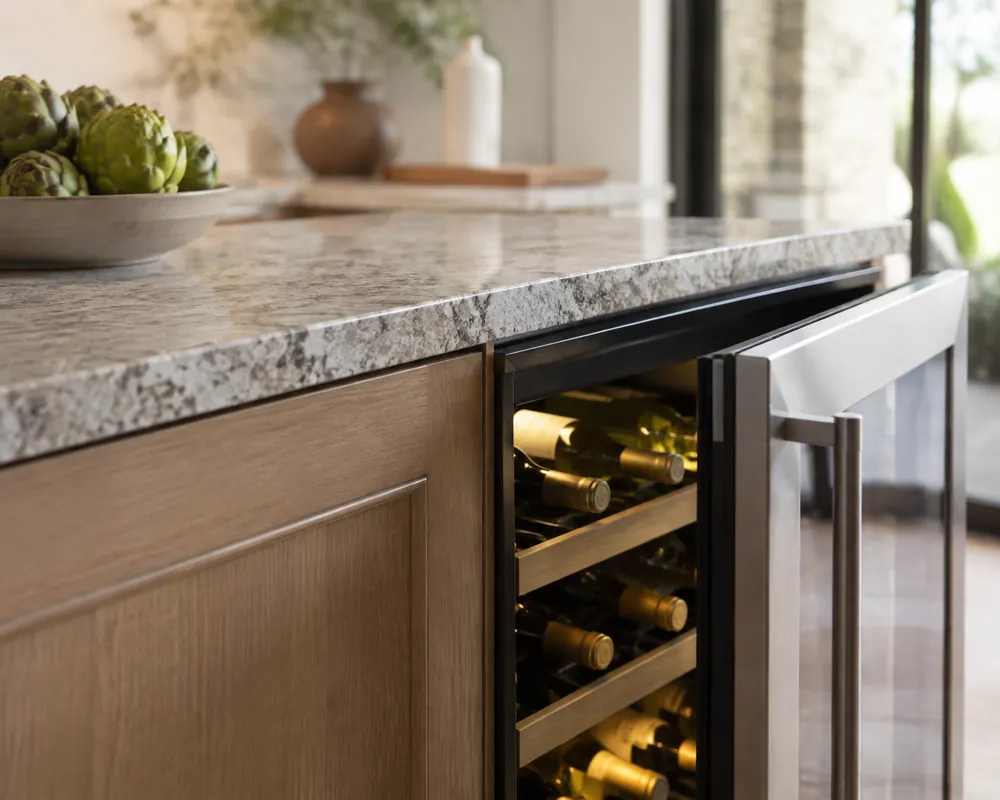
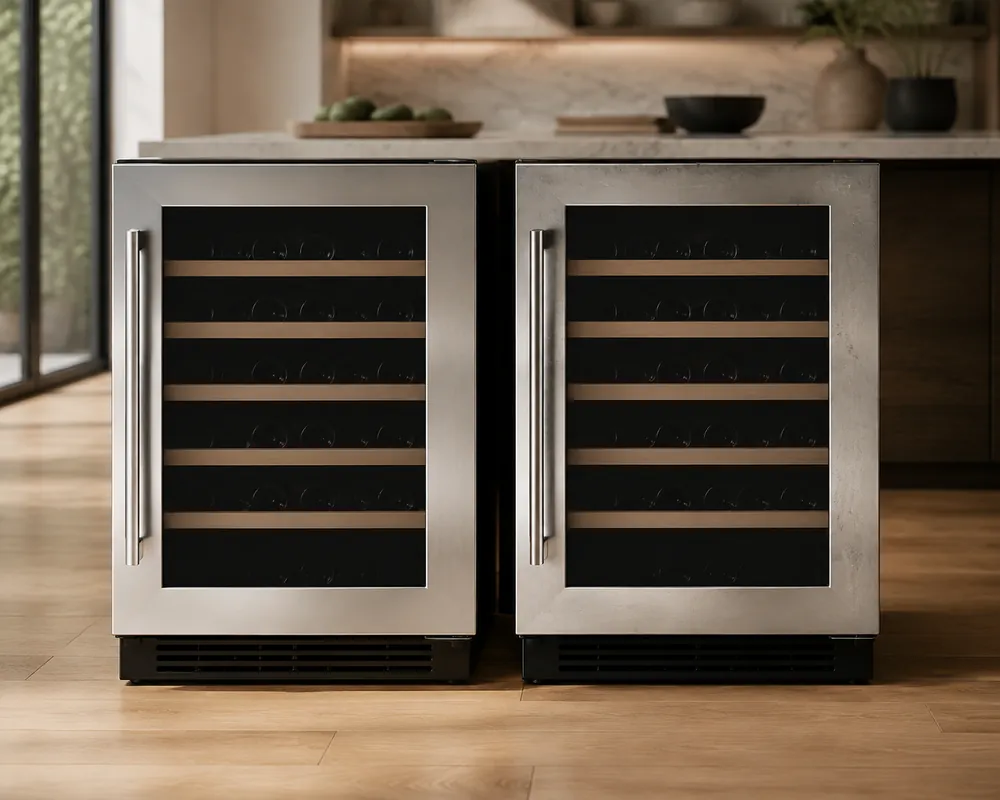
Built-in and undercounter models are designed to vent through the front grille, making them better suited to fitted cabinetry than ordinary freestanding appliances.
Correct cabinet dimensions and unobstructed ventilation matter more than appearance, because trapped heat can shorten compressor life even when the door and controls seem normal.
| Installation style | Common width range | Primary risk |
| Compact countertop or freestanding | About 10 to 18 inches | Limited airflow, fan noise, and weak cooling in warm rooms |
| Undercounter built-in | About 15 to 24 inches | Blocked front grille, poor alignment, or cabinet heat buildup |
| Larger built-in storage | About 24 to 36 inches | Higher workload and more expensive component repairs |
Installation mistakes can make a durable cooler appear defective. Check the front vent, cabinet opening, door seal, and leveling before deciding that an aging built-in unit needs replacement.
Thermoelectric and dual-zone designs
Thermoelectric wine coolers have fewer moving parts, so they are often quieter and less affected by vibration.
Their cooling performance depends strongly on ambient temperature, making them a better match for small collections in mild, stable rooms than for warm garages or busy kitchens.
| Cooler type | Common storage range | Durability trade-off |
| Thermoelectric | About 46°F to 66°F | Quiet operation, but weaker cooling during warm conditions |
| Compressor | About 40°F to 65°F | Stronger cooling, with more mechanical parts to service |
Dual-zone compressor coolers add flexibility for different wine styles, but separate controls, sensors, and fans create more potential repair points.
Replacement becomes more sensible when temperatures drift, noise increases, condensation persists, or repair costs approach the price of a comparable new unit.
What Usually Fails First
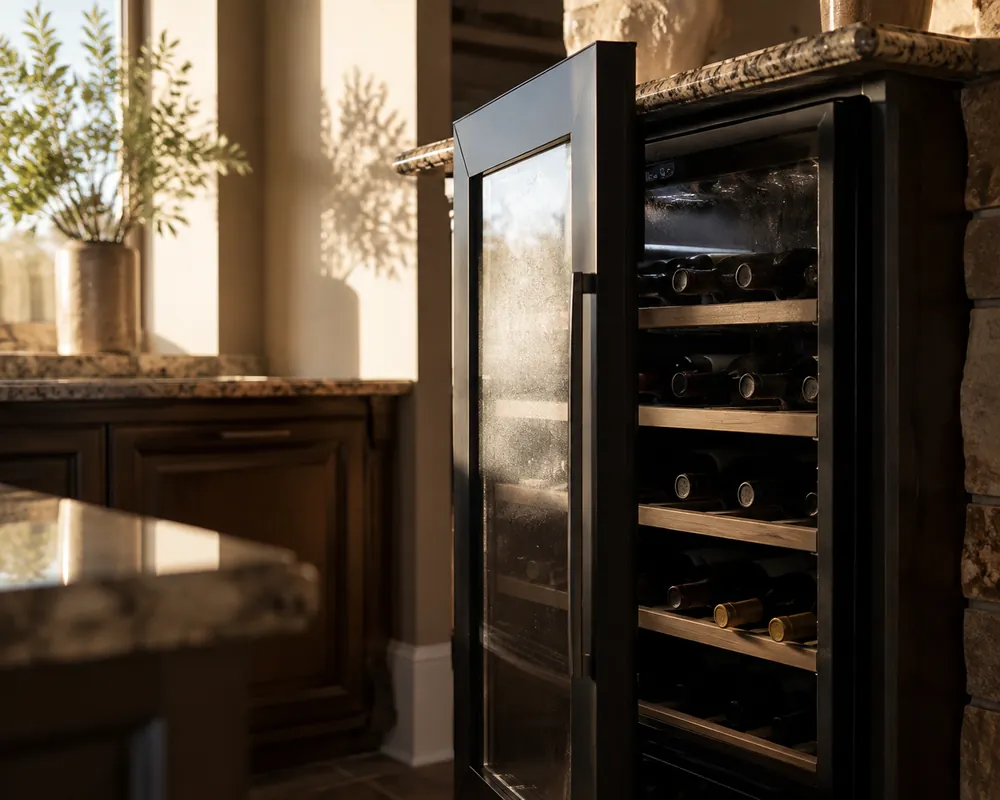
Cooling performance usually becomes unreliable before the cabinet or shelves show serious wear.
Unstable temperatures, louder operation, moisture around the door, and longer cooling cycles often point to a stressed fan, compressor, thermoelectric module, sensor, control board, or door seal.
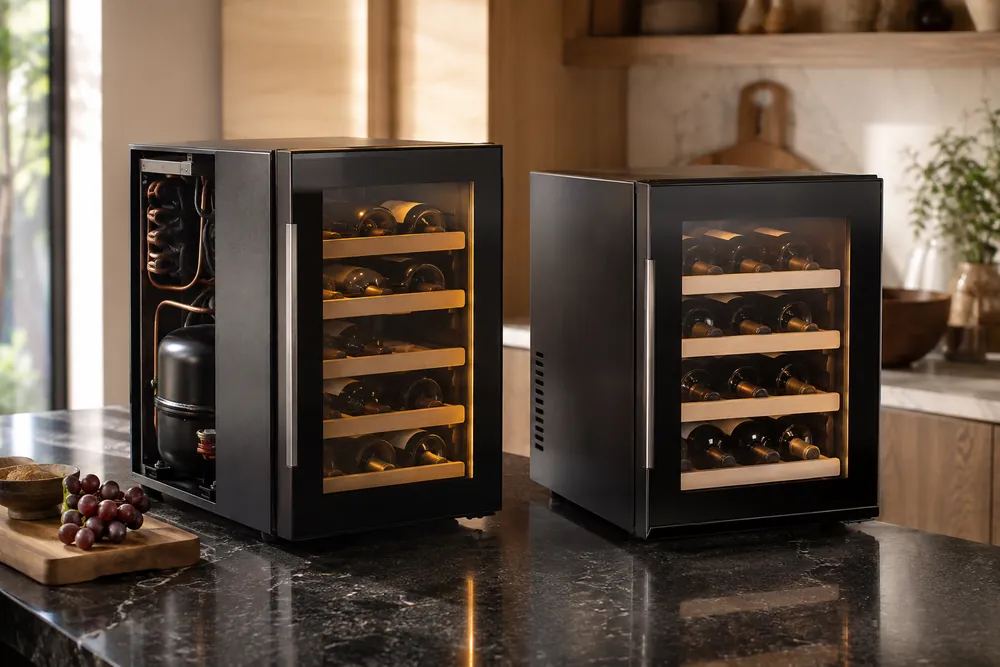
Failure patterns differ by cooling design. Compressor wine coolers can continue working for years while gradually developing fan noise, refrigerant-system problems, relay faults, or compressor strain.
Thermoelectric units have fewer moving parts, but their cooling module and heat-dissipation fan can struggle in warm rooms.
Temperature control is the clearest warning
A cooler that cannot hold its selected range may have a failing sensor, restricted airflow, damaged seal, or cooling system that is losing capacity.
Repeated temperature swings matter more than a single reading because wine storage depends on consistency rather than occasional short-term cooling.
| Cooler category | Common storage range | Warning sign |
| Compressor | About 40°F to 65°F | Long cycles, heat buildup, or inconsistent recovery |
| Thermoelectric | About 46°F to 66°F | Weak cooling in a warm room |
Loud operation often appears before complete cooling failure. A rattling fan may be obstructed or wearing out, while clicking can indicate repeated starting attempts or a control fault.
New vibration can also signal that the unit is no longer level or that a compressor mount has weakened.
Airflow and placement shorten component life
Restricted ventilation forces the cooling system to reject heat with less efficiency.
Freestanding units need usable space around their vents, while built-in models require a correctly designed front grille; placing a freestanding cooler inside cabinetry can accelerate fan and compressor wear.
| Installation type | Typical width | Clearance or fit concern |
| Compact countertop or freestanding | About 10 to 18 inches | Often about 2 to 5 inches for airflow |
| Undercounter built-in | About 15 to 24 inches | Front ventilation must remain unobstructed |
Door problems are another common early failure. A tired gasket, misaligned hinge, or overloaded shelf can leave a small air gap, causing condensation, frost, extended cycling, and rising electricity use.
Moisture near the frame deserves attention even when the interior still feels cold.
Repair value changes as failures accumulate
Simple issues such as a dirty vent, blocked fan, loose door, or worn gasket may justify repair.
Compressor, sealed-system, control-board, or cooling-module work is more consequential because diagnosis and labor can approach the cost of a replacement, especially on compact units.
- Check airflow, leveling, door closure, and visible dust before assuming the compressor has failed.
- Compare the repair estimate with the cooler’s age, noise, temperature stability, and remaining warranty.
- Replace sooner when several symptoms appear together or the unit cannot protect wine consistently.
Repair or Replace: How to Decide
Repair or replacement depends on the cooler’s age, failure pattern, cooling design, and expected repair cost.
A minor seal, fan, or thermostat problem may be worth fixing, while repeated temperature swings or compressor trouble can make a new unit the more dependable choice.
Start by checking whether the cooler still reaches and holds its intended storage range.
Use a separate thermometer for several hours, because a display can appear normal while bottles experience unstable temperatures, excessive cycling, or warm zones.
| Cooling type | Typical storage range | Repair decision clue |
| Compressor | About 40°F to 65°F | Persistent warming may indicate sealed-system or control trouble |
| Thermoelectric | About 46°F to 66°F | Weak performance in warm rooms may be an operating limitation |
Small repairs make sense when the cabinet, door, shelves, and controls remain in good condition.
A damaged gasket, clogged airflow path, failed fan, or loose door alignment can often restore performance without replacing the entire appliance.
Replacement becomes more reasonable when cooling remains unreliable after cleaning and basic airflow checks.
Loud compressor cycling, repeated shutdowns, heavy condensation, frost that returns quickly, or a cabinet that cannot maintain temperature points to deeper wear.
- Repair first: Inspect the door seal, clean accessible vents, confirm level placement, and remove nearby heat sources.
- Request a diagnosis: Use a qualified appliance technician for refrigerant, compressor, wiring, or control-board faults.
- Replace sooner: Consider replacement when the estimate approaches the cost of a comparable new cooler or when parts availability is uncertain.
| Installation type | Common width range | Primary concern |
| Compact freestanding | About 10 to 18 inches | Restricted airflow and fan noise |
| Undercounter built-in | About 15 to 24 inches | Blocked front vent or poor cabinet fit |
| Large freestanding | About 24 to 30 inches | Heat buildup and heavier compressor workload |
Keep a repairable unit in service when ventilation is correct and temperatures are stable. Replace it when failures recur, energy use or noise becomes disruptive, or the design no longer suits the kitchen installation.
Repair first: Inspect the door seal, hinges, vents, and power connection before assuming the cooling system has failed.
A cabinet that sits out of level or has blocked ventilation can behave like a defective appliance, especially when heat cannot escape from the rear or sides.
For a replacement, begin with the opening rather than the advertised bottle count. Measure width, height, and depth at several points, since trim, countertops, baseboards, and uneven walls can reduce the usable space.
Record the smallest measurement, not the largest.
Allow room for the door to open fully. A cooler may fit between cabinets but still prevent a nearby drawer from opening or make bottles difficult to remove.
Use a tape measure to map the door swing, handle projection, and the clearance needed to stand comfortably in front.
Check the installation instructions for required ventilation gaps before choosing a built-in location.
A unit designed for freestanding use may need open space around its cabinet, while an under-counter model may be intended to release heat through the front.
Depth deserves special attention. Measure from the wall to the front edge of the surrounding cabinets, then account for the plug, cord bend, door, and handle.
A cooler that technically fits may protrude far enough to narrow a walkway or interfere with a cabinet door.
Measure the route into the kitchen as well as the final opening. Compare the cooler’s packaged and unpackaged dimensions with hallways, stair turns, doorways, and elevator openings.
Remove obstacles before delivery rather than discovering that the appliance cannot reach the intended room.
Location also affects repair decisions. A cooler packed tightly beneath a counter is harder to pull out for service, while a freestanding unit can usually be inspected from more sides.
Leave a practical way to disconnect and move it without dismantling surrounding cabinetry.
Capacity claims can mislead when your bottles vary in shape. Measure the shelf spacing and consider the widest bottles you regularly store, along with room for labels, necks, and hands.
A smaller cabinet with usable spacing may serve better than a taller, crowded one.
Before replacing the appliance, compare its external footprint with the value of the repair.
If the existing cooler fits the space perfectly and has a sound cabinet, repairing a contained fault may avoid new clearance problems, delivery work, and cabinet adjustments.
Replacement is easier to justify when the unit is difficult to access, poorly ventilated, or mismatched to the space.
Take the measurements with you when shopping, and verify every clearance requirement before ordering rather than relying on a listed width alone.
How These Hold Up After a Year
Owner reports commonly identify temperature stability as the first concern, especially in warm kitchens, enclosed cabinets, and rooms with changing ambient conditions.
Manufacturer documentation points to ventilation, correct placement, door-seal care, and cleaning as the main factors separating routine aging from premature failure.
Many owners say the cabinet, shelves, lighting, and door remain usable while cooling performance becomes less consistent.
Compressor models generally hold temperatures more steadily, while thermoelectric units can struggle when room conditions approach the upper end of their operating range.
What owners report most often
- Temperature drift: Wine may stay acceptably cool at first, then fluctuate as the fan, sensor, or cooling system ages.
- Increasing noise: A louder fan, more frequent cycling, or new vibration can indicate dust buildup, restricted airflow, or a weakening compressor.
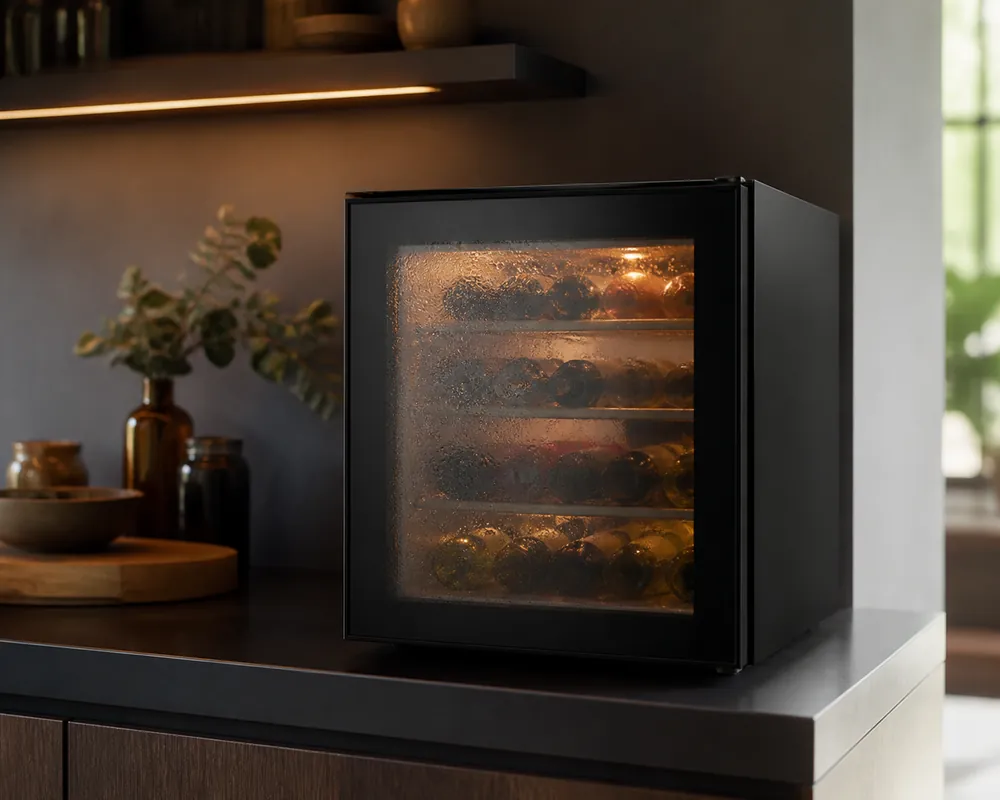
- Condensation: Moisture around the door or cabinet often relates to humid conditions, poor sealing, blocked airflow, or frequent opening.
- Control problems: Owners sometimes report inaccurate displays, unresponsive buttons, or zone-control faults before the cabinet stops cooling completely.
Manufacturer guidance commonly recommends keeping freestanding units away from ovens, radiators, direct sunlight, and tightly enclosed spaces.
Documentation also stresses that built-in models need an unobstructed front grille, because trapped heat can make the compressor run longer and shorten component life.
| Wine cooler category | Common temperature range | Typical clearance or fit |
|---|---|---|
| Freestanding compressor | About 40°F to 65°F | Often 2 to 6 inches around rear or sides |
| Built-in compressor | About 40°F to 65°F | Commonly designed for a 15 to 24-inch cabinet opening |
| Thermoelectric | About 46°F to 66°F | Often 2 to 5 inches for airflow |
Quiet operation can remain a strength of thermoelectric designs because they use fewer moving parts.
Owner feedback nevertheless shows that this advantage does not guarantee longer service, particularly when the room stays hot or the rear vents collect dust.
Compressor coolers usually offer stronger recovery and steadier cooling for larger collections, but their fans, relays, sensors, and compressors create more potential repair points.
Dual-zone designs add flexibility, although separate controls and airflow paths may introduce additional failure symptoms.
Replacement becomes easier to justify when cooling remains unreliable, wine temperatures swing repeatedly, or a repair approaches the cost of a comparable new unit.
Before deciding, owners should verify airflow, clean accessible vents, inspect the gasket, and compare the proposed repair with the appliance’s age, condition, and warranty coverage.
How to Make a Wine Cooler Last Longer
Ventilation, stable placement, and routine cleaning have the greatest effect on wine cooler longevity.
A well-maintained unit does not need to work as hard, so its compressor, fan, thermostat, seals, and control components face less heat and stress over time.
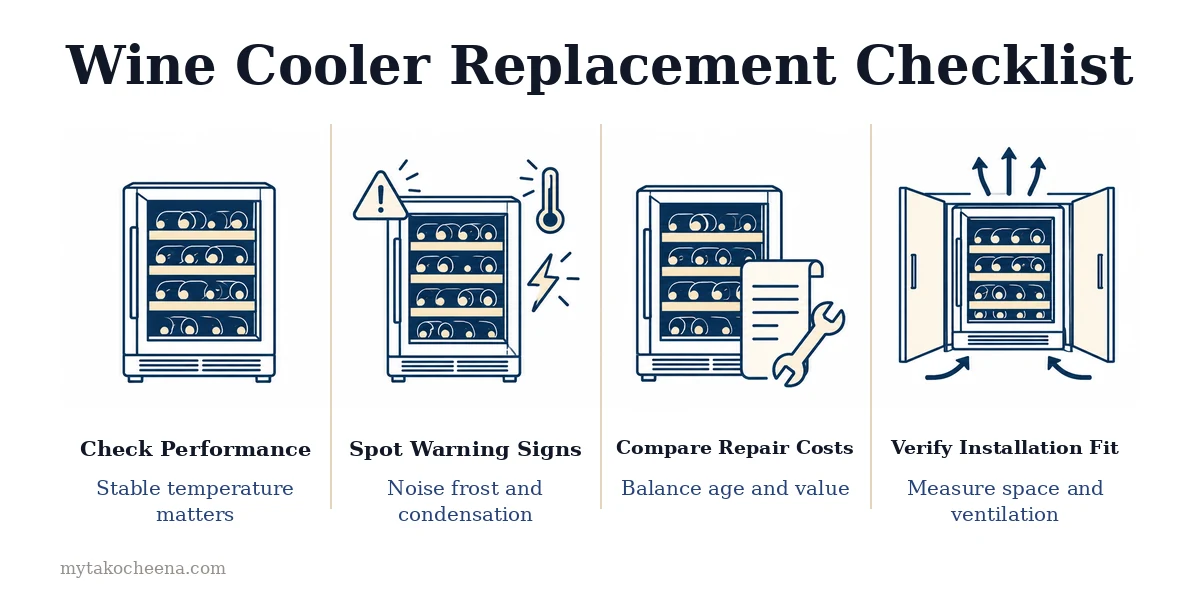
Start with the installation location. Freestanding compressor coolers need open space around the cabinet, while built-in models require an unobstructed front grille designed to release warm air.
Use the manufacturer’s clearance instructions rather than pushing a freestanding cooler tightly against a wall or cabinet.
| Placement type | Typical airflow space or opening | Main longevity concern |
| Compact freestanding | About 2 to 5 inches around the rear or sides | Heat buildup and restricted fan airflow |
| Larger freestanding | About 3 to 6 inches around the rear or sides | Compressor strain in tight spaces |
| Undercounter built-in | About 15 to 24 inches wide cabinet opening, depending on design | Blocked front vent or incorrect cabinet fit |
Keep the cooler away from ovens, dishwashers, radiators, direct sunlight, and unconditioned areas that exceed its stated ambient-temperature range.
Large room-temperature swings force the cooling system to cycle more often and can make a thermoelectric cooler struggle to reach its target.
Choose a storage setting within the unit’s intended range and avoid frequent adjustments.
A stable environment is easier on the controls than repeatedly moving between warm and cold settings, especially in dual-zone models with separate sensors, fans, and control circuits.
| Cooling design | Common storage range | Best operating conditions |
| Compressor | About 40°F to 65°F | Stable indoor temperatures and clear ventilation |
| Thermoelectric | About 46°F to 66°F | Cool rooms with limited ambient-temperature variation |
| Dual-zone compressor | About 40°F to 65°F across separate zones | Correct airflow and moderate loading |
Clean the condenser area and air vents regularly, following the care instructions for the appliance. Dust acts like insulation around heat-releasing parts, while blocked vents make fans run longer and increase operating noise.
Inspect the door gasket for gaps, cracking, looseness, or trapped debris. A weak seal allows cold air to escape, encourages condensation, and makes the cooler run continuously.
Level the cabinet and adjust the door when necessary so the gasket contacts evenly.
- Leave enough space between bottles for air to circulate through each zone.
- Do not overload shelves or cover interior vents.
- Use a surge protector when the manufacturer permits it.
- Investigate unusual noise, frost, water, or temperature swings early.
Prompt repairs can prevent a small airflow, fan, seal, or sensor problem from damaging other components.
Replacement becomes more sensible when cooling remains unstable, the compressor runs constantly, or repair costs approach the price of a comparable new unit.
Asked and Answered
Wine coolers usually become replacement candidates after several years of regular operation, but lifespan depends on the cooling system, ventilation, placement, and repair history.
A quiet unit with stable temperatures may remain useful longer, while repeated cooling faults can make replacement the more practical choice.
| Wine cooler type | Common lifespan range | Main trade-off |
| Thermoelectric | About 5 to 8 years | Quiet operation but weaker performance in warm rooms |
| Freestanding compressor | About 6 to 10 years | Stronger cooling but greater ventilation needs |
| Built-in compressor | About 7 to 12 years | Good cabinet integration when front airflow remains clear |
| Dual-zone compressor | About 6 to 10 years | Flexible storage but more controls and components |
How long do wine coolers usually last?
Most household wine coolers last about five to ten years. Build quality, operating temperature, cleaning, door-seal condition, and airflow can move a unit toward either end of that range.
Replacement becomes easier to justify when cooling performance declines repeatedly or a major component fails after years of service.
What temperature should a wine cooler maintain?
Common wine cooler specifications cover a storage range of about 40°F to 65°F, although thermoelectric models may begin at a warmer setting. Stable temperature matters more than chasing a precise setting.
| Category | Typical stated range | Practical consideration |
| Compressor cooler | About 40°F to 65°F | Usually steadier across changing room conditions |
| Thermoelectric cooler | About 46°F to 66°F | Performance depends heavily on ambient temperature |
Should I repair or replace my wine cooler?
Repair can make sense for a dirty condenser, worn door gasket, blocked vent, or failed fan. Replacement is more sensible when a sealed-system, compressor, or control-board repair approaches the cost of a comparable new unit.
- Repair minor airflow and sealing problems first.
- Compare the repair estimate with current replacement options.
- Replace a unit with repeated unrelated failures.
Why is my wine cooler not staying cold?
Blocked ventilation, a dirty condenser, a damaged gasket, excessive room heat, and overloaded shelves can all reduce cooling. Thermoelectric units are especially sensitive to warm surroundings.
Check the installation space, door seal, temperature setting, and vents before assuming the compressor has failed.
How much clearance does a freestanding wine cooler need?
Freestanding units commonly need about two to six inches of clearance around the rear or sides, depending on the design. Trapped heat forces longer cooling cycles and can shorten compressor and fan life.
Do not place a freestanding cooler tightly inside cabinetry unless its instructions specifically permit that installation.
Are built-in wine coolers more reliable than freestanding models?
Built-in models can perform reliably because they are designed to vent through the front.
Reliability still depends on an unobstructed grille, correct cabinet dimensions, level placement, and protection from nearby ovens or other heat sources.
What are the signs that a wine cooler needs replacing?
Warning signs include unstable temperatures, loud or continuous operation, water or condensation problems, frost that returns quickly, and a compressor that repeatedly struggles to start.
Replacement becomes particularly reasonable when these symptoms return after service or when the cooler no longer protects the collection consistently.