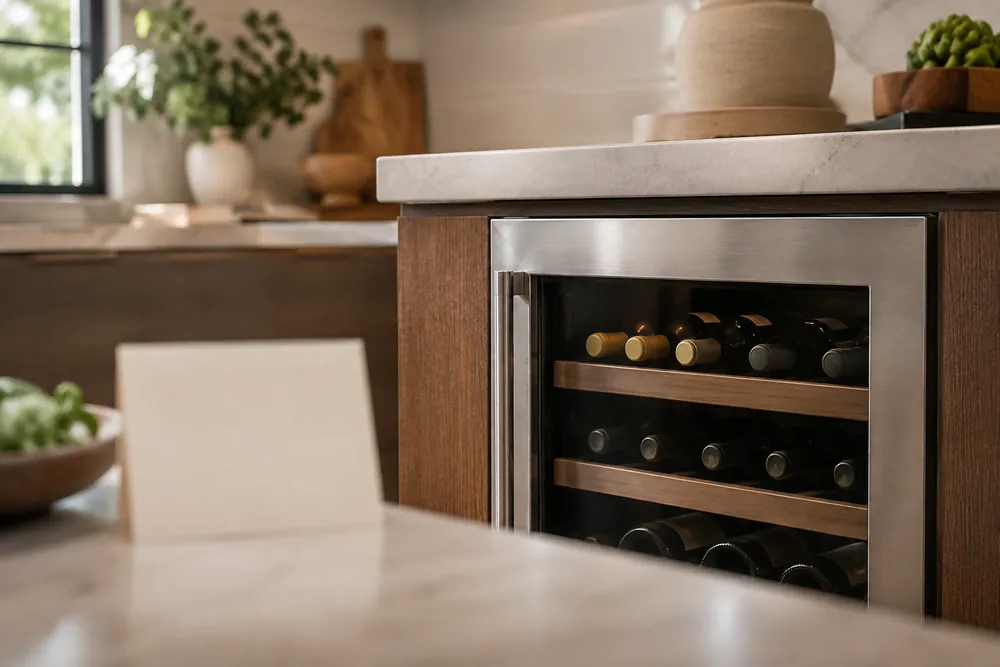
Key takeaway: A countertop wine cooler is a compact appliance that keeps bottles at steadier serving or short-term storage temperatures than a standard refrigerator.
It suits small collections, apartments, kitchens, and entertaining areas where space is limited.
Compare temperature range, bottle fit, zone design, ventilation clearance, noise reports, energy use, shelf layout, and owner feedback before buying.
What a Countertop Wine Cooler Does
A countertop wine cooler gives bottles a stable environment for serving and short-term storage. Its insulated cabinet, cooling system, thermostat, and racks fit kitchens, apartments, bars, offices, and small wine collections.
Unlike a full wine cellar, this appliance is not designed for long-term aging. It prioritizes accessible storage, serving temperature, and protection from refrigerator odors, door opening, and household temperature changes.
| Specification | Typical category range | Buying implication |
| Storage capacity | 6–18 bottles | Suitable for casual use and small collections |
| Temperature setting | 40–65 degrees F | Covers many sparkling, white, rosé, and red wine needs |
| Ventilation clearance | 2–5 inches | May be required around the rear or sides |
| Power draw | 50–100 watts | Varies with cooling method, cabinet size, and room conditions |
Published capacity usually assumes standard Bordeaux-style bottles. Champagne, Burgundy, and tapered bottles can reduce usable space because wider shoulders may prevent racks from sliding fully or bottles from fitting every position.
Single-zone units hold one general setting, making them practical for similar bottles and often leaving more rack space.
Dual-zone designs allow separate settings for different wine styles, but dividers and controls can reduce compact-cabinet capacity.
- Serving preparation: Brings bottles closer to a preferred drinking temperature before dinner or entertaining.
- Small-space organization: Uses a counter, bar cart, pantry shelf, or office area without occupying refrigerator shelves.
- Collection access: Keeps frequently served bottles visible and reachable instead of buried behind food.
Placement affects performance as much as the temperature range.
Check the manual’s clearance requirements, cabinet dimensions, shelf arrangement, ventilation direction, and operating noise before positioning a unit under shelving or beside seating.
A countertop cooler is a convenient serving and short-term storage appliance, not a replacement for a cellar built for aging, humidity management, and larger collections.
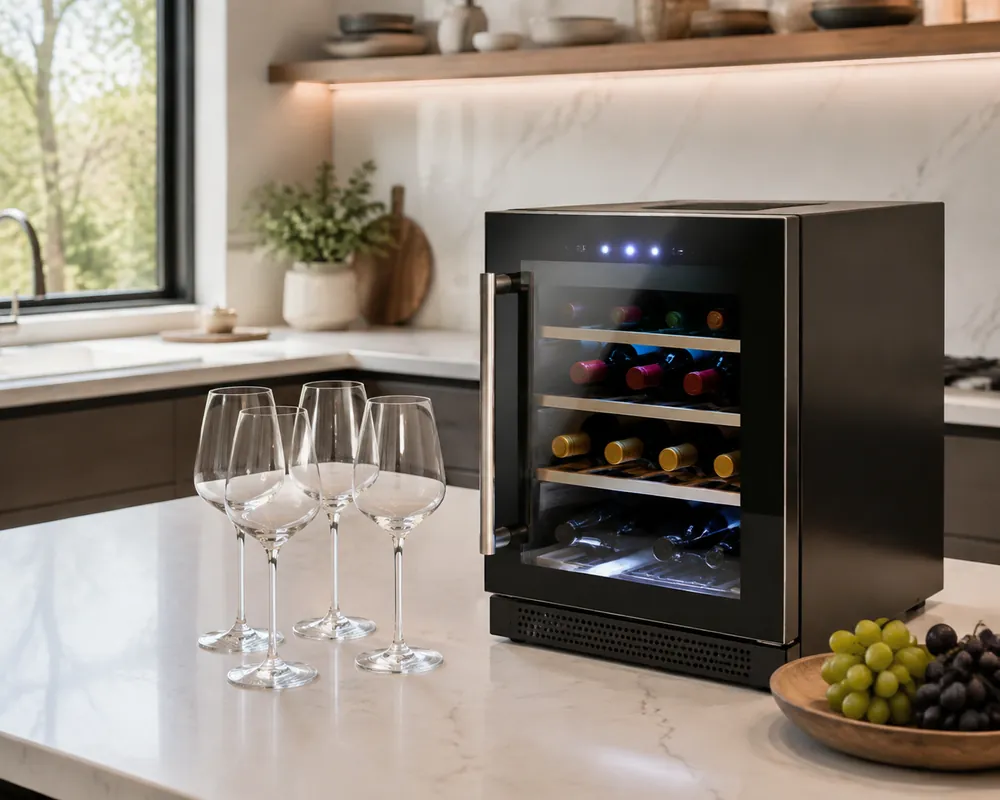
Who Should Buy a Countertop Wine Cooler
Countertop wine coolers suit buyers who want steadier serving temperatures without giving up cabinet space or remodeling.
They are useful for small collections, entertaining, apartments, home bars, and bottles needing short-term storage rather than cellar-style aging.
Choose one when the refrigerator is too cold, crowded, or inconsistent for wine. A dedicated cooler also protects bottles from food odors and temperature changes caused by opening the refrigerator door.
Best Fits for a Countertop Unit
- Small collections: Compact cabinets commonly hold a limited group of standard bottles, making them practical for casual drinkers rather than case storage.
- Entertaining: A cooler keeps serving bottles ready before dinner, parties, or weekend gatherings without taking over refrigerator shelves.
- Small homes: Apartments, offices, dorm-style kitchens, and bar areas can benefit when floor space and built-in installation options are limited.
- Style-specific storage: A single-zone unit works well when most bottles need a similar temperature. Dual-zone storage offers more flexibility but often sacrifices usable rack space.
| Specification | Common range | Why it matters |
| Typical capacity | 6–18 bottles | Enough for serving stock and small collections |
| Temperature settings | 40–65 degrees F | Covers many sparkling, white, rosé, and red wine needs |
| Clearance behind or beside unit | 2–5 inches | Allows heat to escape on many freestanding designs |
Confirm that the listed capacity matches your bottles. Standard Bordeaux-shaped bottles usually fit most easily, while wider Champagne or Burgundy bottles can reduce capacity and make racks harder to use.
Check ventilation instructions, counter depth, shelf clearance, door swing, outlet access, and operating noise before choosing a location.
A countertop cooler is less suitable for long-term aging, large collections, or spaces that cannot tolerate compressor noise and heat. Compare the manual, rack layout, temperature range, and owner feedback before buying.
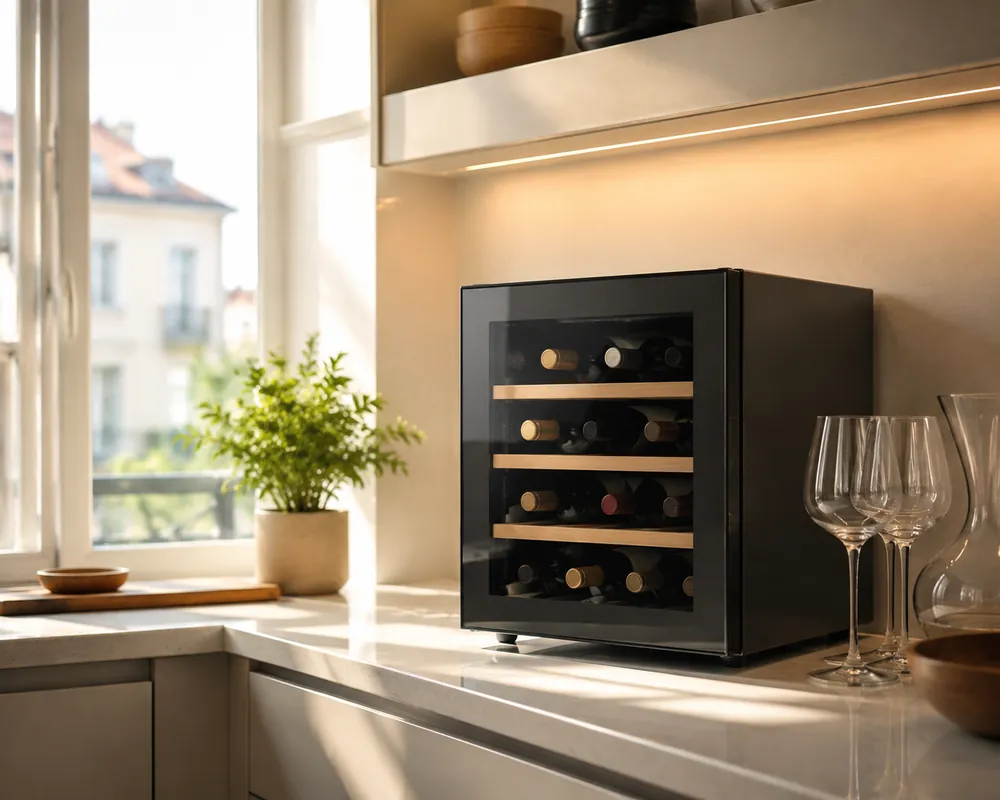
Key Features to Compare Before Buying
Temperature control, bottle fit, ventilation, noise, and shelf design determine whether a countertop wine cooler performs well.
Compare specifications with owner feedback, because compact cabinets can perform differently depending on room temperature, bottle shape, and airflow.
Temperature range and zone design
Check the usable temperature range rather than choosing a cooler based only on its lowest setting.
A single-zone cabinet suits bottles served within a similar range, while a dual-zone design offers separate settings for wines needing different treatment.
| Feature | Typical category range | Buying implication |
|---|---|---|
| Storage capacity | 6–18 bottles | Suitable for casual use and small collections |
| Temperature setting | 40–65°F | Covers sparkling, white, rosé, and many reds |
| Rear or side clearance | 2–5 inches | Allows heat to escape from freestanding units |
| Power draw | 50–100 watts | Varies with cabinet size, cooling system, and room conditions |
Bottle capacity and rack layout
Published capacity often assumes standard Bordeaux-style bottles. Champagne, Burgundy, and other wider shapes can reduce usable space, especially when racks are fixed or closely spaced.
Inspect whether shelves slide, lift out, or adjust. Removable racks make room for larger bottles, but removing them may reduce organization and increase the chance of bottles shifting.
Ventilation, noise, and placement
Read clearance instructions before placing a cooler against a wall, beneath open shelving, or inside a cabinet. Restricted airflow can make the unit work harder and affect temperature stability.
Noise matters in kitchens, offices, bedrooms, and entertaining areas.
Compressor-based units may produce cycling sounds, while thermoelectric designs can be quieter but may struggle in warm rooms; owner reports help reveal these trade-offs.
Controls and practical ownership
- Controls: Prefer clear temperature settings, readable displays, and a reliable interior light.
- Door design: Check hinge direction, handle clearance, and whether the door seals firmly.
- Owner feedback: Look for repeated comments about temperature consistency, fan noise, condensation, rack strength, and long-term reliability.
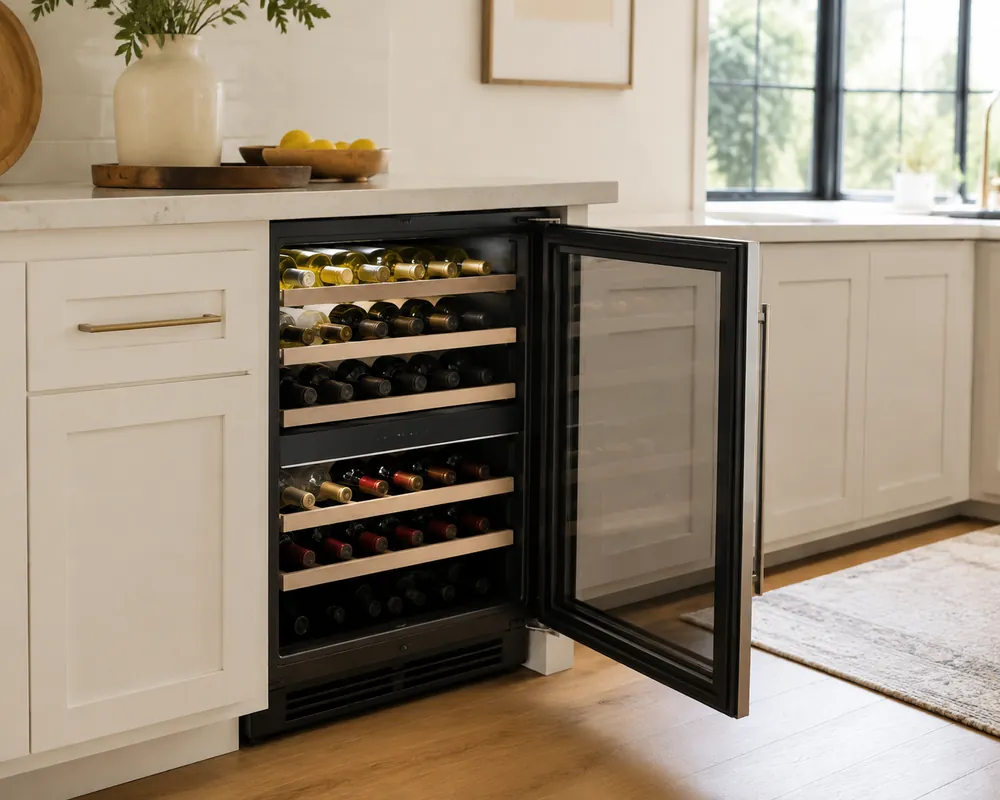
Single-Zone vs Dual-Zone Cooling
Single-zone and dual-zone countertop wine coolers suit different storage needs. Choose based on your wine styles, required rack space, and available ventilation clearance.
How the two designs differ
| Design | Best suited to | Main trade-off |
| Single-zone | Similar bottles, short-term chilling, compact collections | One temperature for the entire cabinet |
| Dual-zone | Separate red, white, rosé, or sparkling storage | More controls and often less usable interior space |
A single-zone cooler keeps all bottles at one setting. It is simple to operate, may offer more continuous rack space, and suits collections focused on one wine category.
Dual-zone models separate the cabinet into temperature areas. They suit whites or sparkling wines that need cooler storage than reds, though dividers, controls, and airflow can reduce practical capacity.
Temperature and capacity checks
| Specification | Typical category range | Buying implication |
| Temperature settings | 40–65°F | Check whether both zones cover your preferred serving range |
| Published capacity | 6–18 bottles | Wide bottles can reduce the real count |
| Clearance | 2–5 inches | Allow space for heat to escape |
Capacity claims usually assume standard Bordeaux-style bottles. Champagne, Burgundy, and heavier bottles may block slots, restrict shelf movement, or require removing a rack.
- Choose single-zone for simpler controls, similar bottles, and maximum usable space.
- Choose dual-zone when separate serving temperatures matter more than interior capacity.
- Check placement against the manual’s side and rear clearance instructions, plus owner reports about noise and heat.
Compare temperature range, rack layout, ventilation, and bottle shapes before buying. Dual-zone models offer flexibility; single-zone units often provide the simpler countertop solution.
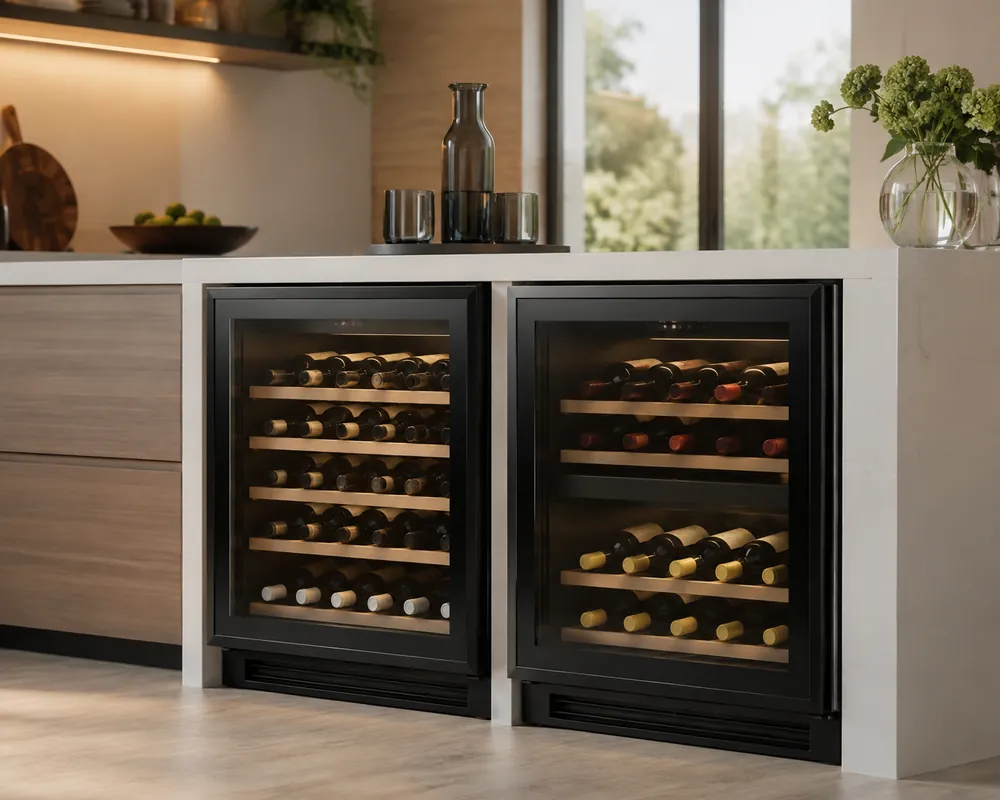
Size, Placement, and Ventilation
Measure the available surface, account for door swing, and check ventilation instructions before choosing a location.
Capacity usually assumes Bordeaux-style bottles; Champagne and Burgundy bottles may occupy more space or restrict rack movement.
| Specification | Typical category range | Why it matters |
| Storage capacity | 6–18 bottles | Suitable for serving stock and small collections |
| Rear or side clearance | 2–5 inches | Allows warm air to leave the cooling system |
| Operating temperature | 40–65 degrees F | Covers common serving needs for sparkling, white, rosé, and some red wines |
Choose a stable, ventilated surface
Use a level, weight-bearing countertop that stays dry, allows full door opening, and leaves vents clear. Freestanding units generally need rear or side space; front-venting models may allow tighter installation.
Follow the product manual.
- Measure the full footprint: Include depth, door clearance, power-cord routing, and room for removing shelves.
- Check the heat path: Keep vents clear of walls, curtains, appliances, and stored items.
- Consider the room: A hot kitchen or enclosed cabinet can make the cooler work harder and produce more noticeable noise.
- Protect the counter: Confirm that the surface can support the appliance and bottles without rocking.
Match placement to everyday use
Start by marking the cooler’s proposed footprint with painter’s tape. This reveals whether nearby appliances, cabinet handles, or backsplash edges interfere with the door, rather than relying on the appliance’s listed width alone.
Open the door through its full arc and imagine loading a bottle with both hands. A narrow gap may technically fit the unit but make everyday access awkward, especially when the counter meets a wall or another appliance.
Check the outlet before committing to a spot. The cord should reach without stretching across a sink, crossing a hot surface, or forcing the cooler away from the position you measured.
Think about bottle access, not only bottle count. If the cooler will hold wines for frequent serving, place it where you can remove a bottle without moving a kettle, coffee maker, or cutting board first.
When comparing locations, favor the one with the most consistent room temperature and the least direct sun. A cooler may fit beside a range, but heat and cooking activity can make that position less practical.
Account for cleaning and occasional moving. Leave enough access to wipe beneath and behind the appliance, inspect the cord, and retrieve anything that rolls underneath without dismantling the surrounding setup.
If the best location is inside cabinetry, verify that the specific unit is approved for that arrangement. A tight opening can trap heat, amplify operating sounds, or prevent the door and racks from working as intended.
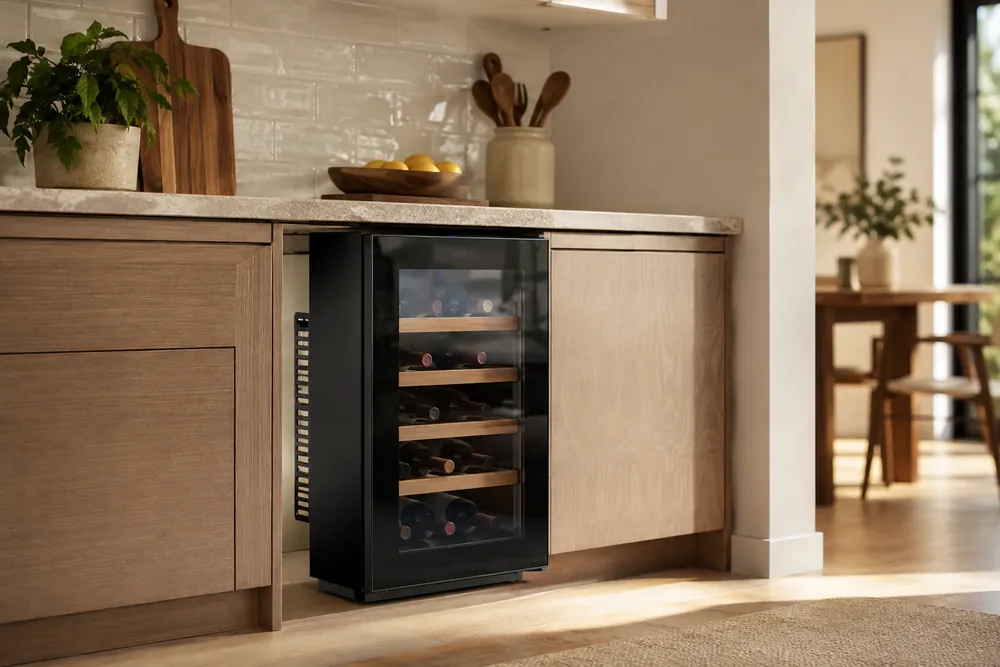
Noise, Energy Use, and Everyday Living
Noise, heat, and power use determine whether a countertop wine cooler feels convenient or becomes a daily annoyance.
A unit may fit the bottle count and temperature range yet still be a poor choice if its compressor runs near seating or its vents warm a workspace.
Compare published sound information with owner reports, since manufacturers describe noise differently.
Compressor models may make a start-up click, low hum, or occasional vibration, while thermoelectric units are often quieter but can struggle in warm rooms.
| Category | Typical range | Buyer implication |
| Storage capacity | 6-18 bottles | Enough for casual serving and small collections |
| Operating range | 40-65 degrees F | Supports chilled whites, sparkling wine, rose, and many reds |
| Ventilation clearance | 2-5 inches | Allows heat to escape around many freestanding units |
| Power draw | 50-100 watts | Varies with cooling design, cabinet size, and room temperature |
Energy use depends on more than the label. Frequent door openings, warm bottles, sunlight, blocked vents, and a hot kitchen make the cooling system run longer.
Good placement often matters more than small differences between comparable specifications.
Leave the manual’s required clearance on every ventilated side. Keep the unit away from ovens, dishwashers, radiators, and sunlight, with enough space to remove racks without striking nearby objects.
Noise matters most in open-plan kitchens, studio apartments, offices, and dining areas. Read owner feedback for vibration, cycling, and overnight sound, but look for repeated patterns rather than isolated complaints.
- Choose a quieter design for bedrooms, workspaces, or seating areas.
- Prioritize accessible ventilation over a slightly larger stated capacity.
- Check rack flexibility if bottles vary beyond standard Bordeaux shapes.
- Use a stable, level surface to reduce rattling and uneven vibration.
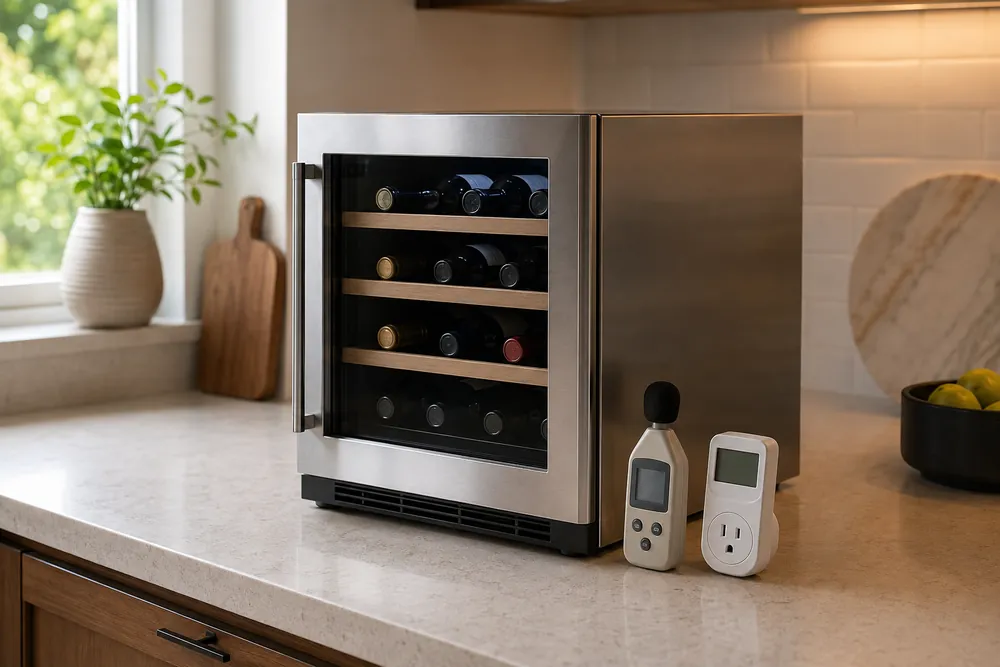
What Buyers Notice Once It Is Installed
Countertop wine coolers keep serving bottles separate from food odors and refrigerator traffic.
Owner reports show that the ownership experience depends less on appearance than on ventilation, bottle fit, compressor noise, and consistent temperature.
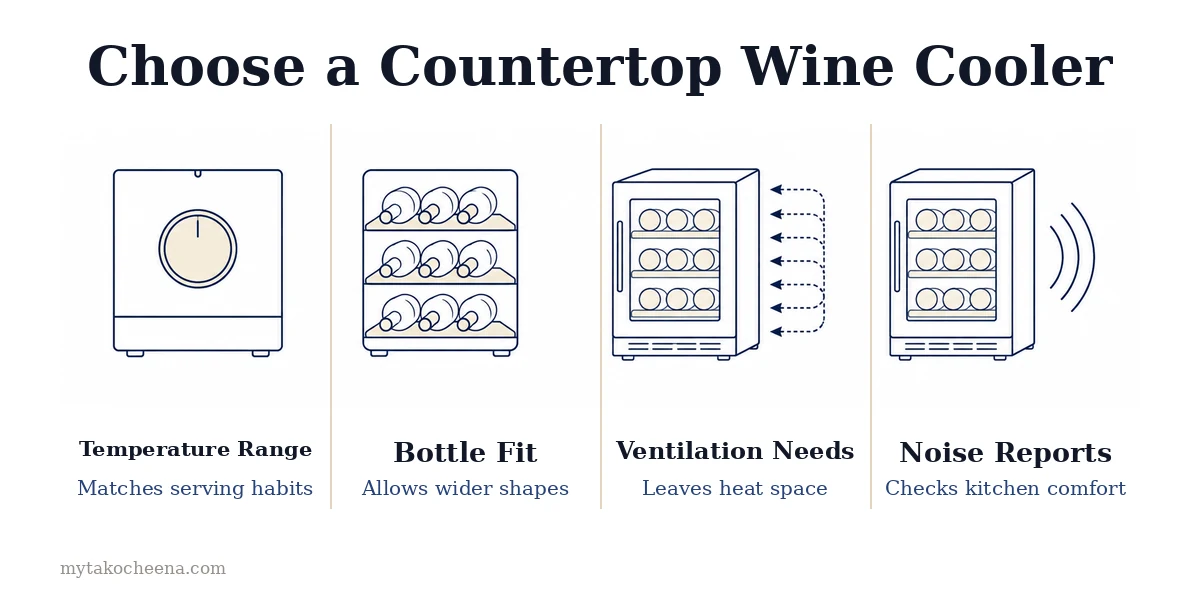
The most common complaint is noise. Owners describe compressor cycling, fan movement, or vibration as noticeable in quiet kitchens, bedrooms, offices, and open-plan living areas.
Manufacturer documentation typically warns that operating sounds and cabinet heat are normal.
| Detail | Typical category range | Why it matters |
| Capacity | 6–18 bottles | Actual fit can fall when bottles are wider than standard Bordeaux shapes. |
| Temperature setting | 40–65 degrees F | Covers common serving needs, but not every unit suits long-term aging. |
| Clearance | 2–5 inches | Freestanding cabinets may need open space around vents. |
| Power draw | 50–100 watts | Room temperature, cooling design, and cycling affect consumption. |
The basic convenience holds up well: a small collection stays organized, ready to serve, and visible without occupying refrigerator shelves.
Feedback is strongest for single-zone cabinets used with similarly styled bottles and placed where airflow remains unobstructed.
Early failures tend to involve cooling performance, fans, thermostats, displays, or door seals rather than racks.
Manufacturer support pages often connect poor performance with blocked ventilation, excessive room heat, unstable placement, or unsuitable extension cords, making installation conditions important before a warranty claim.
Rack layout matters more after installation than product photography suggests. Champagne, Burgundy, and other broad bottles can reduce capacity, hinder shelf movement, or require removing a rack.
Dual-zone dividers can further reduce flexible storage.
- Check the manual: Confirm rear and side ventilation requirements before choosing a counter or shelf.
- Check the room: Avoid enclosed cabinets unless the manufacturer explicitly permits that placement.
- Check owner reports: Look for repeated comments about noise, temperature recovery, bottle fit, and service response.
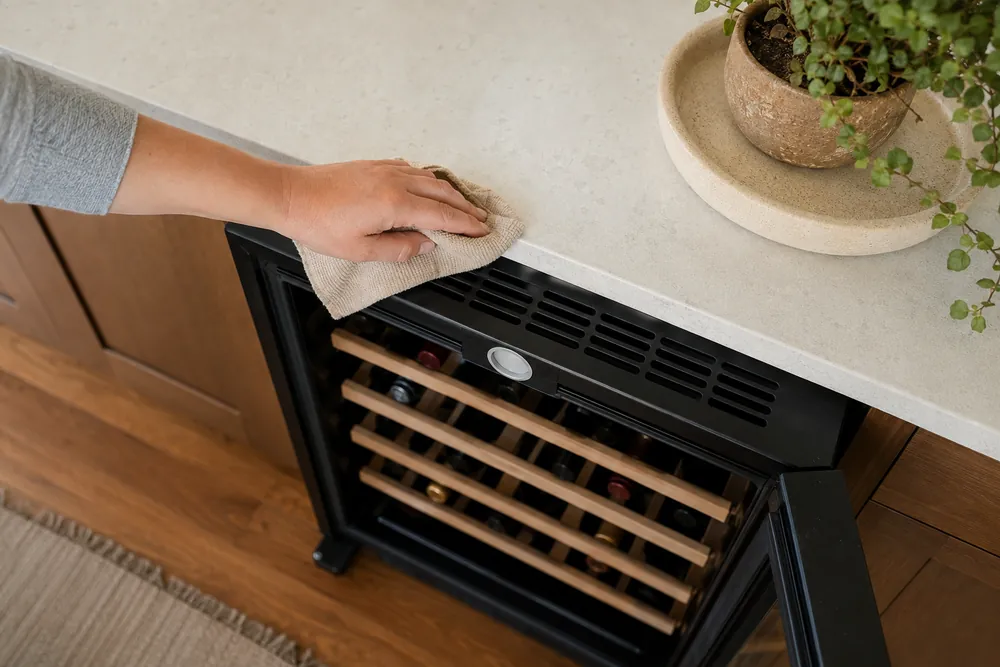
Frequently Asked Questions
Consider capacity, temperature control, ventilation, noise, and rack design. Countertop coolers suit serving and short-term storage, not long-term aging.
| Specification | Typical category range | Why it matters |
| Storage capacity | 6-18 bottles | Fits casual collections and serving bottles |
| Temperature settings | 40-65 degrees F | Covers sparkling, white, rose, and many reds |
| Required clearance | 2-5 inches | Allows heat to leave the cabinet |
| Power use | 50-100 watts | Varies with cooling system and room conditions |
Are countertop wine coolers worth buying?
They provide steadier serving temperatures and protect wine from food odors and frequent refrigerator access. They are less suitable for large collections or aging, so confirm available space and ventilation.
What temperature should a countertop wine cooler be set to?
Set the temperature for the style you serve most. Sparkling and white wines generally need cooler settings than reds. Single-zone models use one setting; dual-zone models separate temperatures but may reduce capacity.
Can a countertop wine cooler store all bottle types?
Published capacity usually assumes standard Bordeaux-style bottles. Wider bottles may require extra room, so check rack spacing, removability, and interior depth.
How much ventilation does a countertop wine cooler need?
Follow the manual’s clearance requirements. Measure space for airflow, door swing, and plug access; poor ventilation can reduce cooling consistency and increase noise.
Are countertop wine coolers noisy?
Noise depends on the cooling system, insulation, fan, compressor, and room temperature. Place the unit level and review feedback about humming, vibration, and cycling.
Should I choose a single-zone or dual-zone wine cooler?
| Design | Best for | Trade-off |
| Single-zone | Similar wines and simpler storage | One setting for every bottle |
| Dual-zone | Separate red and white storage | More controls and often less rack space |
Single-zone models maximize compact storage. Dual-zone models suit different wines served simultaneously.
Can I use a countertop wine cooler for long-term aging?
These coolers support serving temperature and short-term storage, but usually lack cellar-grade capacity, humidity control, vibration reduction, and stability. Choose cellar-oriented equipment for valuable wines or extended aging.