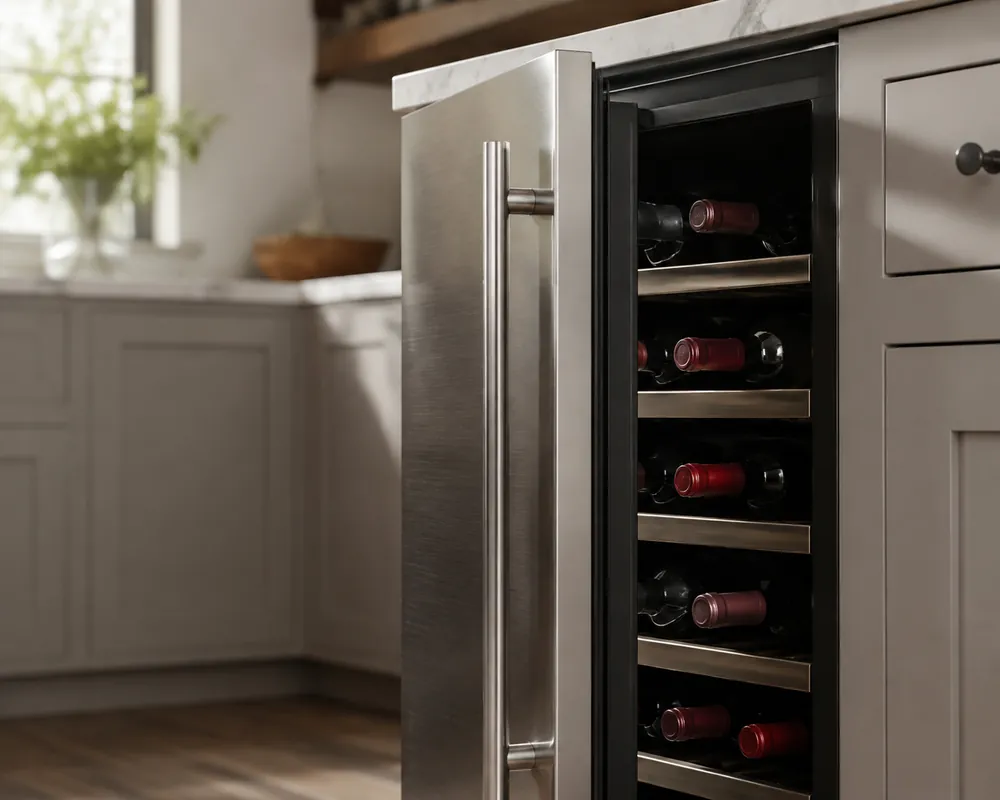
Short version: A wine cooler stores red wine in a stable, cool environment that is usually around 50-60°F, away from heat, sunlight, vibration, and temperature swings.
For most collections, consistent storage matters more than an exact setting. Use a single-zone cooler for reds at one temperature, or a dual-zone model when reds and other wine styles need separate settings.
What a Wine Cooler Does for Red Wine
A wine cooler provides stable, cool storage that slows oxidation, limits heat stress, protects corks, and shields bottles from sunlight and nearby appliances.
Storage is generally cooler than kitchen conditions, especially near ovens, dishwashers, windows, or exterior walls. A cooler maintains its selected setting despite room-temperature changes.
Storage temperature versus serving temperature
Storage requires stability, while serving temperature helps wine express aroma, fruit, body, and texture.
| Use | Typical range | Purpose |
|---|---|---|
| Longer red wine storage | 50–60°F | Slows heat-related aging and keeps conditions more predictable |
| Light red serving | 55–60°F | Preserves freshness without muting fruit character |
| Full-bodied red serving | 60–65°F | Helps aromas and texture open before the wine becomes too warm |
For bottles opened within months, consistency matters more than an exact setting. Repeated temperature changes can be more disruptive than a modest difference from the preferred cellar temperature.
A single-zone cooler suits one red-wine setting. Choose dual-zone storage for reds, whites, sparkling wine, or bottles served at different temperatures.
Capacity and installation trade-offs
Published capacity usually counts standard Bordeaux-style bottles. Broad Pinot Noir, Champagne, heavy-glass, and irregular bottles require additional shelf space.
| Category | Typical capacity | Suitable use |
|---|---|---|
| Countertop or compact | 6–18 bottles | Small apartments and modest collections |
| Freestanding floor unit | 20–50 bottles | Growing collections and flexible placement |
| Built-in undercounter | 24–60 bottles | Kitchens, bars, and finished beverage centers |
Freestanding units need clearance around the sides or rear; built-in models release heat through a front grille. Confirm installation space before comparing capacity.
| Installation detail | Common range | Planning point |
|---|---|---|
| Undercounter opening width | 15–24 inches | Match the cabinet cutout before comparing capacity |
| Freestanding rear or side clearance | 2–6 inches | Allows heat to escape around the cabinet |
| Built-in front clearance | 1–2 inches | Supports grille airflow and door operation |
Check noise ratings and owner reports when placing a cooler in a kitchen. Stable temperature, shade, an intact cork, and correct bottle positioning offer practical protection; serious collectors may need tighter humidity control.
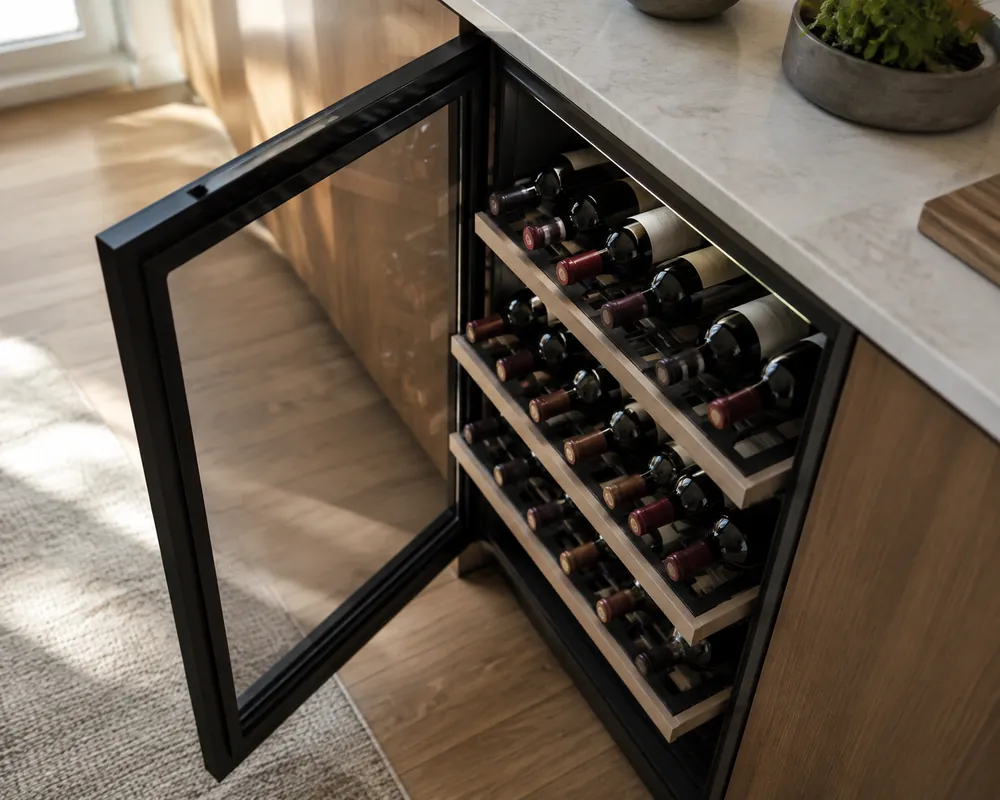
The Best Temperature Range for Storing Red Wine
Red wine stores best at a cool, stable cellar temperature rather than typical room or serving temperature.
A wine cooler slows oxidation, reduces heat stress, and protects bottles from sunlight, appliances, and daily kitchen temperature swings.
Consistency matters more than finding one exact setting. Steady cooling generally supports more predictable aging than repeated warming and cooling, especially for bottles opened within months rather than decades.
| Use | Typical range | Purpose |
|---|---|---|
| Longer red wine storage | 50–60°F | Slows heat-related aging and protects balance |
| Light red serving | 55–60°F | Preserves freshness and fruit character |
| Full-bodied red serving | 60–65°F | Helps aroma, texture, and structure open |
A setting near the middle of the storage range suits many red wines, with brief adjustment before serving. Avoid using a warmer room for storage, particularly near an oven, dishwasher, sunny window, or exterior wall.
Choose a Single- or Dual-Zone Cooler
Single-zone wine coolers suit cabinets holding mostly red wine at one stable storage temperature. They are simpler to operate and use limited kitchen space efficiently.
Dual-zone models suit cabinets storing reds, whites, sparkling wine, or bottles intended for immediate service.
Separate compartments add flexibility but reduce usable space, increase complexity, and cost more than comparable single-zone designs.
Check Capacity and Installation Requirements
Published capacity usually assumes standard Bordeaux-style bottles. Wider Pinot Noir, Champagne, and unusual bottles can occupy neighboring slots, so treat listed capacity as an estimate rather than a guaranteed everyday fit.
| Category | Typical capacity | Practical use |
|---|---|---|
| Countertop or compact | 6–18 bottles | Small collections and apartments |
| Freestanding floor unit | 20–50 bottles | Growing collections with flexible placement |
| Built-in undercounter | 24–60 bottles | Kitchen cabinetry and beverage centers |
Placement affects temperature performance and noise. Freestanding units need rear or side ventilation, while built-in models should vent through the front and match the cabinet opening, door swing, and service access.
| Installation type | Common planning range | Important consideration |
|---|---|---|
| Undercounter opening | 15–24 inches wide | Measure the cutout before comparing capacity |
| Freestanding clearance | 2–6 inches | Allows heat to escape |
| Built-in front clearance | 1–2 inches | Supports grille airflow and access |
Vibration control and humidity matter, but temperature stability remains the priority.
Compare noise information, compressor design, door sealing, and owner experience before selecting a cooler that fits the collection and available space.
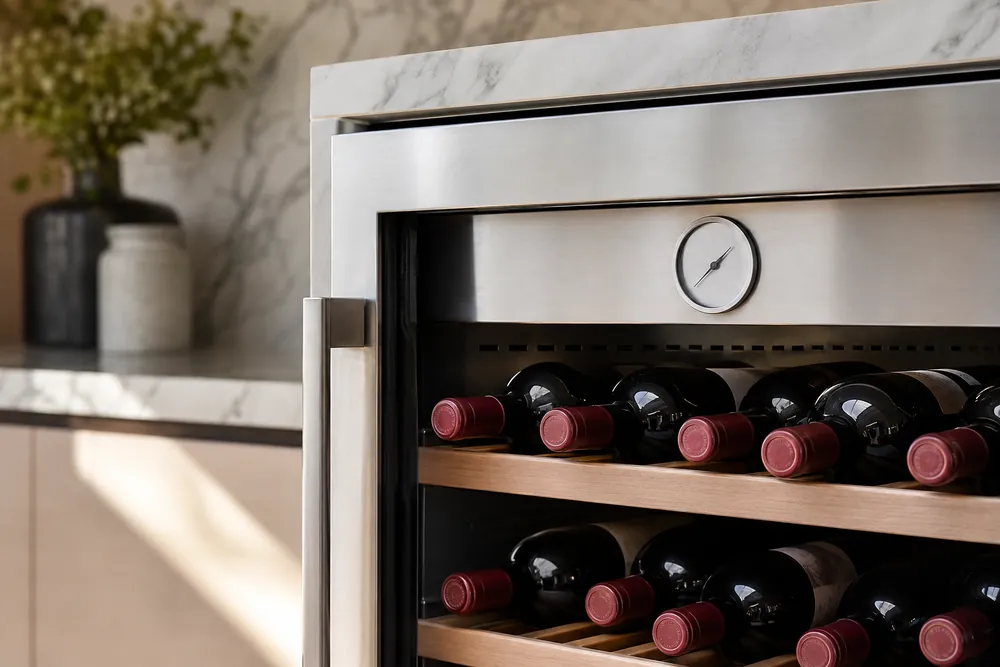
How Humidity, Light, and Vibration Affect Bottles
Humidity, light, and vibration affect how steadily red wine ages after temperature is controlled. A wine cooler provides a darker, quieter, more stable environment than a kitchen shelf or ordinary refrigerator.
Humidity matters because of the cork. Dry air can cause natural cork to contract, weakening the seal and allowing oxygen into the bottle. Excess moisture may encourage mold and loosen labels.
Many home wine coolers provide passive humidity protection rather than precise control. A full bottle, sealed door, and limited heat exposure can help, but buyers should not assume every cooler regulates moisture.
| Factor | Helpful condition | Potential problem |
| Humidity | Moderate, stable moisture | Dry corks or damp labels |
| Light | Dark cabinet or tinted glass | Premature aroma and color changes |
| Vibration | Quiet, steady shelf | Disturbed sediment and less predictable aging |
Keep bottles away from strong light
Ultraviolet light can flatten fruit, alter color, and reduce aromatic freshness. Clear bottles and wines near sunny windows face more exposure, while tinted glass offers partial protection.
An opaque cooler door provides the strongest light barrier. Glass doors work when the unit sits away from sunlight, but avoid bright windows, intense lighting, and heat-producing appliances.
Reduce vibration without overcomplicating storage
Repeated vibration can disturb sediment and interfere with slow development. It matters less for bottles opened within months but becomes more relevant for mature reds and long-term storage.
Compressor cooling can create movement, so inspect shelf construction, leveling options, and owner experience alongside noise specifications. A stable shelf prevents bottles from knocking together.
| Storage detail | Common range | Why it matters |
| Red wine storage temperature | 50–60°F | Slows heat-related aging |
| Compact cooler capacity | 6–18 bottles | Fits smaller kitchens and short-term collections |
| Undercounter opening width | 15–24 inches | Helps match the cabinet cutout |
For kitchen placement, prioritize stable temperature, darkness, and low disturbance before advanced humidity features.
Store natural-cork bottles horizontally, keep ventilation clear, and avoid ovens, dishwashers, windows, and slammed doors.
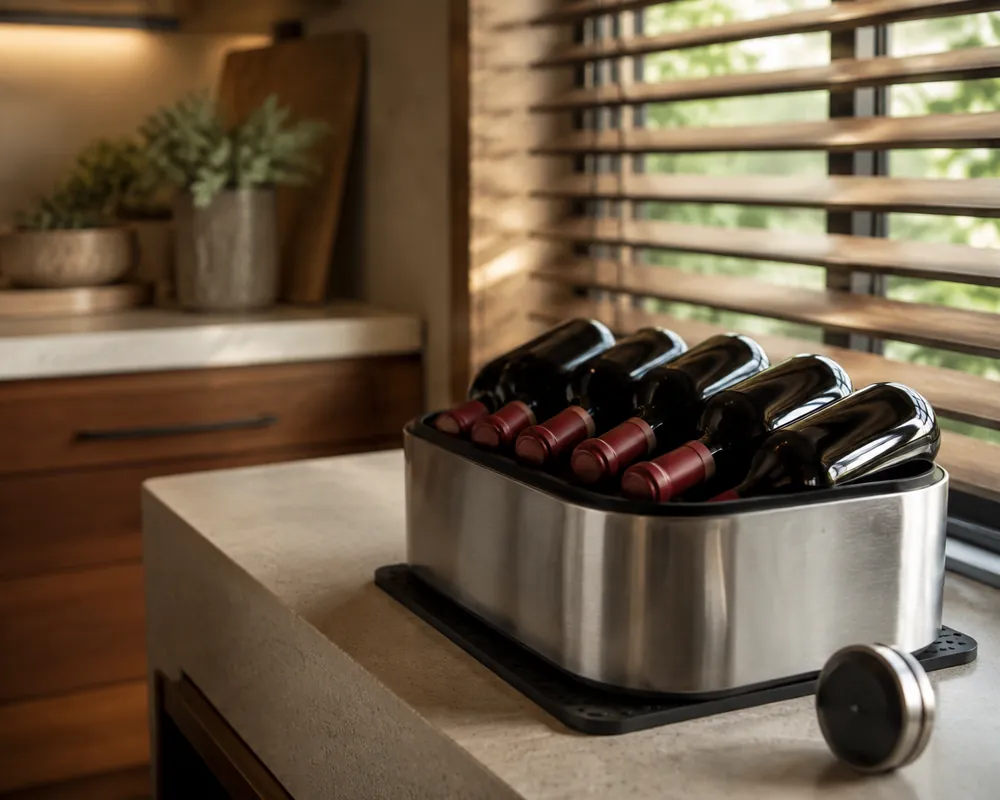
Single-Zone vs Dual-Zone Coolers for Red Wine
Single-zone and dual-zone wine coolers solve different storage needs. A single-zone cabinet provides one consistent environment, while a dual-zone design separates bottles needing different storage or serving temperatures.
For a red-wine collection stored together, single-zone cooling is usually simpler. Set the cabinet within a cellar-style range and keep it steady instead of adjusting it for individual bottles.
When a single-zone cooler fits best
Single-zone models suit cabinets holding mostly red wine, especially bottles stored for weeks or months. One compartment means one control system, temperature target, and fewer adjustments as the collection changes.
A broad red-wine storage range accommodates many household collections. Steady conditions matter more than an exact setting when bottles are not being prepared for immediate service.
| Use | Typical range | Purpose |
|---|---|---|
| Longer-term red-wine storage | 50–60°F | Slows heat-related aging |
| Lighter red serving | 55–60°F | Preserves freshness and fruit |
| Full-bodied red serving | 60–65°F | Helps aroma and texture open |
When dual-zone cooling earns its space
Dual-zone coolers help when one cabinet serves several purposes. Separate zones can hold reds and whites at different settings or divide stored bottles from those being opened soon.
This flexibility brings trade-offs: dual-zone units generally cost more, use more complex controls, and may provide less usable space per compartment.
- Choose single-zone: Your collection is primarily red wine and consistent storage is the main goal.
- Choose dual-zone: You regularly keep red, white, sparkling, or ready-to-serve bottles together.
- Compare carefully: Check whether each zone can hold its advertised range when both compartments are loaded.
Capacity and installation details
Published bottle counts usually assume standard Bordeaux-style bottles. Wider Pinot Noir and Champagne bottles, labels, and mixed shelving can reduce practical capacity, so shelf spacing matters as much as the headline count.
| Category | Common capacity | Typical use |
|---|---|---|
| Compact or countertop | 6–18 bottles | Small collections |
| Freestanding floor unit | 20–50 bottles | Growing collections |
| Built-in undercounter | 24–60 bottles | Kitchen or bar installation |
Placement affects performance. Freestanding units need specified airflow around the sides or rear, while built-in models require front ventilation and a correctly sized opening.
Also compare vibration, noise, door sealing, and humidity protection.
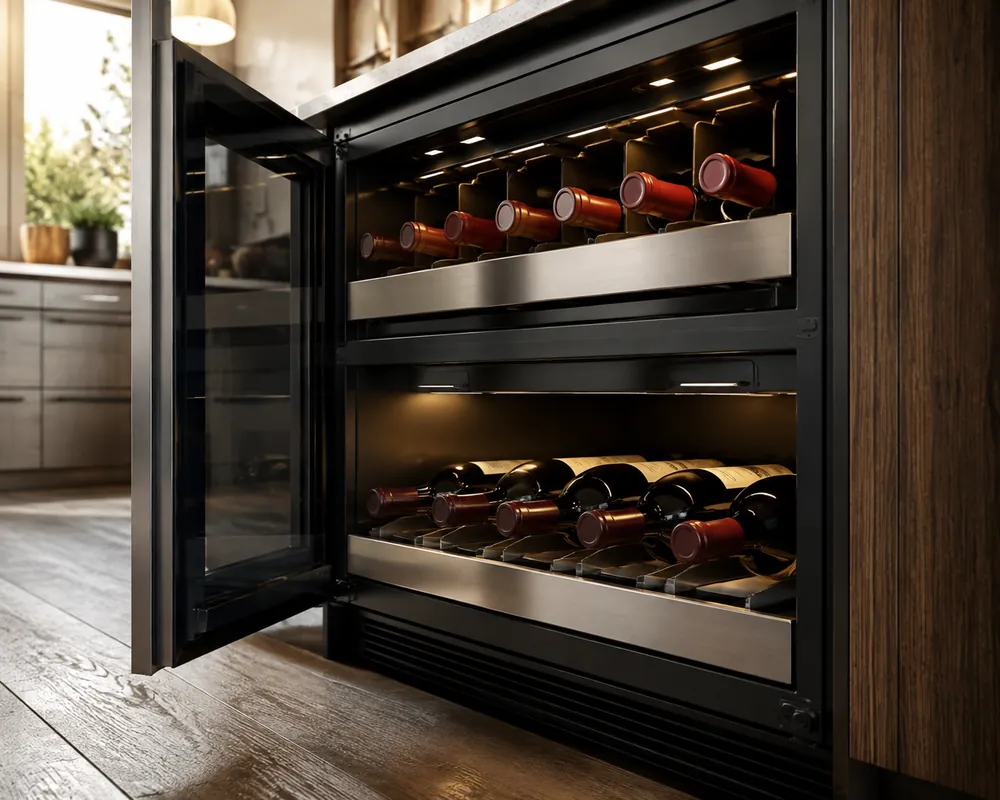
Bottle Position, Spacing, and Everyday Loading Habits
Bottle position, shelf spacing, and loading habits influence how evenly red wine ages inside a cooler.
Horizontal storage keeps the cork in contact with wine, while sensible spacing improves airflow and makes bottles easier to remove without disturbing others.
Store traditionally corked bottles on their sides, with the label facing upward or outward. This helps prevent the cork from drying during longer storage, although screw-cap and synthetic-cork bottles need less attention.
| Planning factor | Common range | Why it matters |
| Red wine storage temperature | 50–60°F | Slows heat-related aging and supports stable storage |
| Compact cooler capacity | 6–18 bottles | Fits small collections and limited kitchen space |
| Freestanding clearance | 2–6 inches | Allows heat to escape around the cabinet |
| Undercounter opening width | 15–24 inches | Helps match the cooler to available cabinetry |
Do not rely on advertised capacity without checking bottle shapes. Figures often assume narrow Bordeaux-style bottles, while Pinot Noir, Rhône, Champagne, and heavy glass bottles require more shelf width and reduce the practical total.
Leave room to slide bottles out by the neck or base without scraping labels. Avoid stacking loose bottles unless the shelf is designed for it, because unstable layers increase movement and complicate inventory management.
Group bottles by opening frequency. Ready-to-drink reds can sit near the front or at a convenient height, while bottles intended for longer storage should remain undisturbed in a stable, darker position.
- Keep labels visible so bottles can be identified without repeated handling.
- Reserve the lowest shelves for heavier bottles if the rack design supports them securely.
- Close the door promptly after loading to limit temperature swings.
- Recheck fit before adding wide bottles to a full shelf.
Leave unused space instead of forcing bottles into tight slots. Slightly lower capacity is preferable to blocked airflow, damaged labels, or frequent movement.
Start by measuring the usable opening, not the cabinet’s outside dimensions. Record width at the narrowest point, height beneath the counter, and depth from the front edge to the wall or rear obstruction.
Trim, doors, and baseboards can reduce the space available for installation.
Keep the tape measure level when checking width, then measure in several places. A cabinet opening may be slightly narrower near the floor or countertop.
Use the smallest reading when comparing wine cooler dimensions, and leave enough clearance for the door to open without striking nearby handles.
Check how far the cooler will project into the walkway. A unit that fits the cavity can still make a kitchen feel cramped if its door and handle extend beyond adjacent cabinets.
Mark the expected front edge with painter’s tape before ordering to visualize access.
Measure the bottles you actually own, including their widest points and any gift or specialty bottles you expect to add. If shelves are adjustable, confirm that changing one shelf does not eliminate useful space above or below it.
Finally, plan the loading pattern around frequency of use. Keep everyday bottles at a comfortable height and reserve less accessible positions for bottles intended for longer storage.
This reduces repeated shifting and helps the collection remain orderly as it grows.
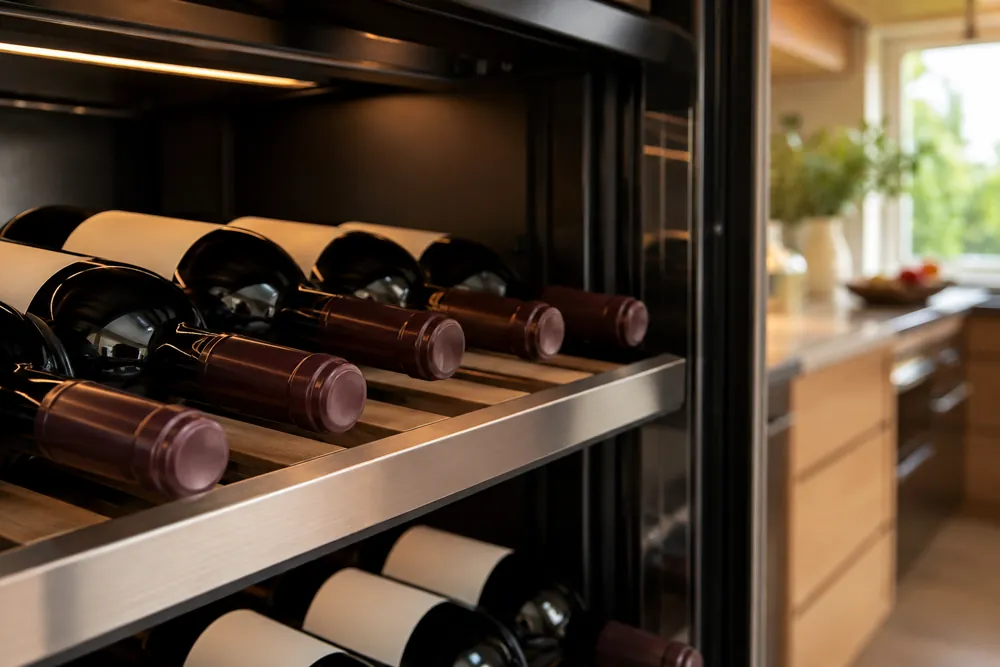
What Owners Change After the First Month
Owner reports often show a shift from chasing the perfect setting to prioritising consistency, usable capacity, and easier access.
Manufacturer documentation supports this: wine coolers perform best with proper clearances, ventilation, and intended temperature ranges.
The recurring complaint is practical: the advertised bottle count does not match how people store wine.
Standard Bordeaux-shaped bottles may fit as listed, while wider Burgundy bottles, Champagne bottles, and outward-facing labels consume more shelf space.
| Category | Typical capacity | Useful for |
| Compact countertop | 6-18 bottles | Small collections and apartments |
| Freestanding floor unit | 20-50 bottles | Growing collections |
| Undercounter cabinet | 24-60 bottles | Kitchen or bar installation |
After living with the appliance, owners commonly remove or reposition a shelf instead of filling every slot. This improves access and discourages awkward stacking, although it can reduce practical capacity below the published figure.
Temperature stability generally holds up best.
Owners value a cooler that replaces kitchen heat, sunlight, and room swings with one dependable setting; manufacturer guidance likewise emphasises ventilation, suitable ambient conditions, and limited door opening.
| Use | Typical range | Reason |
| Longer red wine storage | 50-60°F | Slows heat-related ageing |
| Light red serving | 55-60°F | Preserves freshness and aroma |
| Full-bodied red serving | 60-65°F | Helps texture and aroma open |
Noise becomes more noticeable after the novelty fades, especially with compressor models beside seating or sleeping areas.
Owners usually accept occasional cycling, while persistent vibration, rattling shelves, or a loud fan suggests an installation or service concern.
Early failures more often involve accessories and convenience features than storage performance.
Door seals, hinges, lights, control panels, and shelf fit can disappoint, so buyers should check warranty coverage and replacement-part availability.
- Measure the opening and required ventilation space before ordering.
- Allow for bottle shapes that differ from the published capacity standard.
- Choose a single-zone cabinet for consistent red wine storage.
- Choose dual zones only when separate ready-to-serve temperatures justify the added complexity.
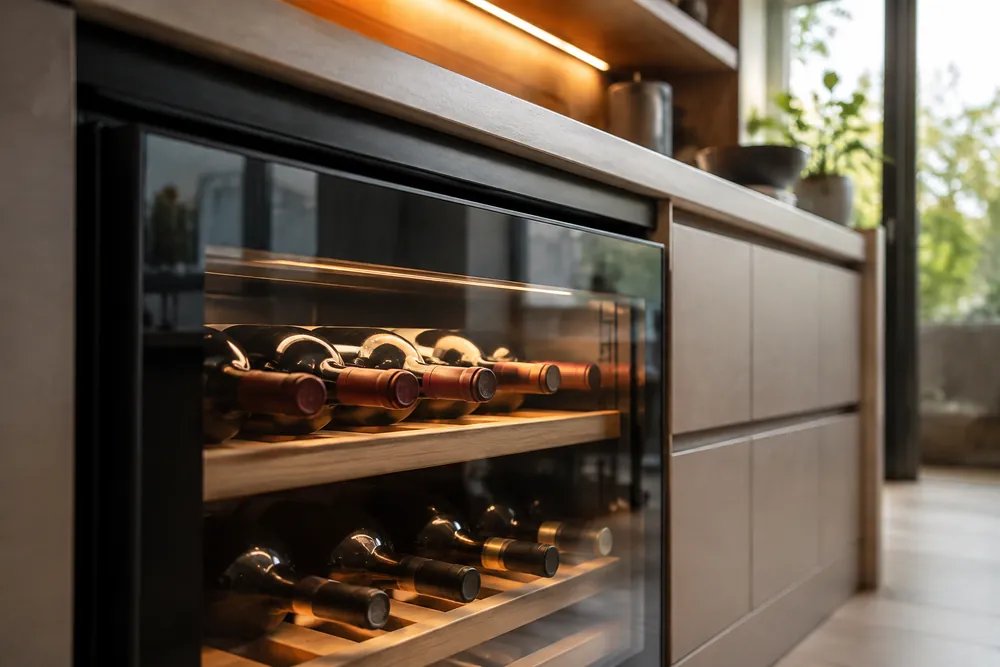
Questions Still Worth Raising
Red wine storage depends on steady conditions, suitable space, and placement away from kitchen heat. These questions help buyers compare My Tako Cheena wine cooler specifications with their collection and opening plans.
What temperature should a wine cooler use for red wine?
A stable cellar-like setting generally suits red wine better than a warm cabinet. The best choice depends on whether bottles are aging or ready for serving.
| Use | Typical range | Reason |
| Longer storage | 50–60°F | Slows heat-related aging |
| Light red serving | 55–60°F | Preserves freshness |
| Full-bodied red serving | 60–65°F | Opens aroma and texture |
Is a single-zone or dual-zone wine cooler better for red wine?
A single-zone cooler suits red wine at one consistent setting. A dual-zone model is more useful for reds, whites, sparkling wine, or bottles requiring different serving temperatures.
How many bottles can a home wine cooler really hold?
Published capacity usually assumes standard Bordeaux-style bottles. Wide Pinot Noir bottles, Champagne shapes, heavy glass, and horizontal storage can reduce usable space, so compare shelf dimensions with the collection.
| Category | Typical capacity | Best fit |
| Countertop or compact | 6–18 bottles | Small collections |
| Freestanding floor unit | 20–50 bottles | Growing collections |
| Built-in undercounter | 24–60 bottles | Kitchen cabinetry |
Can a wine cooler go beside an oven or dishwasher?
It can fit in a kitchen, but nearby heat makes temperature control harder. Avoid direct sunlight, measure the location, and follow manufacturer ventilation requirements.
How much clearance does a wine cooler need?
Clearance depends on ventilation design. Freestanding units commonly need space around the rear or sides, while front-venting built-in units suit cabinetry.
| Installation | Common planning range | Key concern |
| Freestanding | 2–6 inches | Heat release |
| Built-in undercounter | 1–2 inches | Front airflow and door swing |
Does vibration matter for storing red wine?
Repeated vibration is an avoidable concern for longer storage. Compare compressor design, noise information, shelf construction, and owner experience.
Does a wine cooler control humidity for red wine?
Home wine coolers usually control temperature more consistently than humidity. A properly fitted cork, limited light exposure, and stable conditions matter, but not every unit provides cellar-level humidity management.