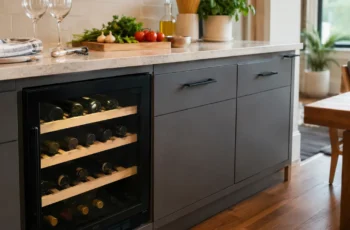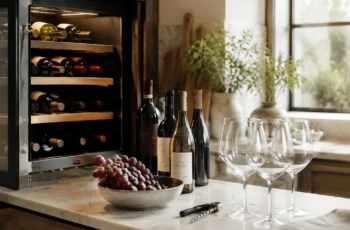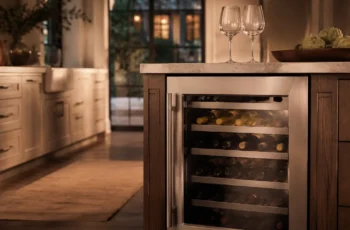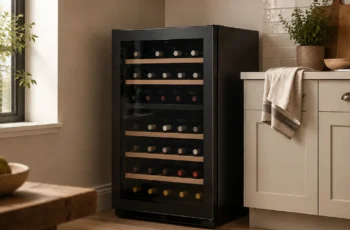
Quick Answer: A well-organized wine cooler groups bottles by type, drinking priority, and fit, while leaving enough space for airflow.
Store everyday bottles where they are easiest to reach, keep long-term bottles lower or farther back, and reserve awkward shelf positions for wider Champagne, Pinot, or Riesling bottles.
Avoid forcing bottles into tight rows if labels rub, shelves strain, or cooling vents are blocked.
Start With Bottle Types, Not Just Bottle Count
Bottle shape drives wine cooler organization more than published bottle count. Treat stated capacity as a best-case layout for standard Bordeaux-style bottles, then adjust for what you actually store.
Champagne, Pinot Noir, Riesling, and magnum bottles can force wider spacing, fewer stacked rows, or removed shelves. Many US product pages list capacity without showing how mixed collections change shelf fit.
| Planning point | Typical published range | Why it affects organization |
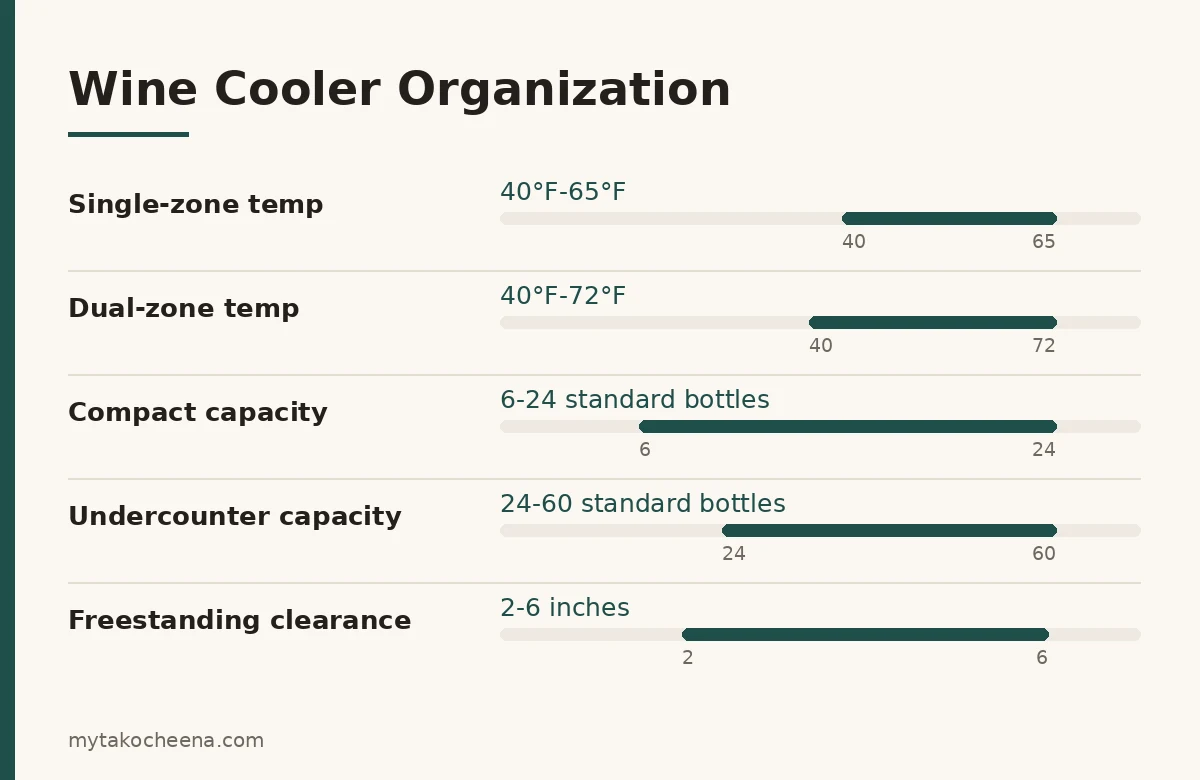
| Single-zone storage temperature | About 40°F-65°F | One compartment means bottle type and serving plan share the same space. |
| Dual-zone storage temperature | About 40°F-72°F across zones | Separate zones help split sparkling, white, and red bottles by serving preference. |
| Countertop or compact capacity bands | About 6-24 standard bottles | One oversized bottle can displace several standard slots. |
| Built-in undercounter capacity bands | About 24-60 standard bottles | Larger cabinets give more room for mixed shapes, but shelf geometry still limits stacking. |
Sort bottles into shape groups before loading the cooler. Put standard Bordeaux bottles in the densest rows, then reserve flexible shelves for wider Burgundy, sparkling, or dessert-wine bottles.
- Bordeaux bottles: Usually the easiest to stack and the basis for many capacity claims.
- Burgundy and Pinot Noir bottles: Wider shoulders can reduce side-by-side fit.
- Champagne bottles: Thicker glass and wider bases often need more vertical clearance.
- Riesling bottles: Taller profiles may work better on shelves with extra depth or angled display space.
Compare shelf spacing, removable racks, and zone layout before trusting the bottle total. A smaller cooler with adjustable shelving may organize a mixed collection better than a higher-capacity unit built around uniform bottles.
Leave open space for labels, airflow, and bottles you plan to chill soon. Published specifications help narrow choices, but bottle type decides whether the layout stays practical after the first grocery run.
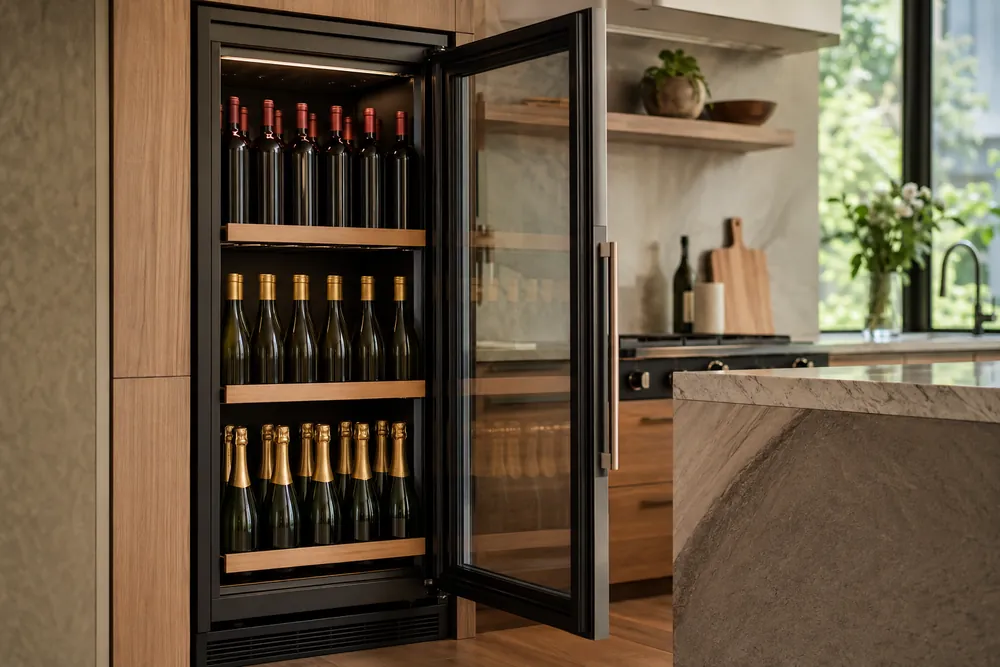
Set Zones by Drinking Order and Storage Time
Zone planning keeps daily bottles easy to grab and protects bottles meant to rest. Separate daily pours from longer storage by shelf access.
Single-zone wine coolers often list 40°F to 65°F, while dual-zone models split that range. Use warmer space for soon-opened reds and cooler space for whites, rosé, and sparkling.
| Zone purpose | Typical temperature range | Best bottle placement |
| Ready white, rosé, or sparkling | 40°F to 50°F | Cooler lower zone or rear shelf |
| Ready red | 55°F to 65°F | Warmer upper zone or front shelf |
| Short-term mixed storage | 50°F to 60°F | Middle shelves with fewer door openings |
Keep this week’s bottles near the front. Store later bottles toward the back, where temperature swings are smaller.
- Front shelves: everyday bottles, open-next reds, chilled whites, and host-ready sparkling wine.
- Middle shelves: mixed bottles that need steady access but not constant movement.
- Rear shelves: longer-hold bottles, special purchases, and wines you do not want disturbed.
Capacity affects zone discipline. Small coolers hold 6 to 30 bottles; larger undercounter or freestanding units often hold 40 to 150.
| Common capacity band | Zone approach | Trade-off |
| 6 to 30 bottles | Separate by front, middle, and rear access | Less room for strict red and white sections |
| 40 to 80 bottles | Assign shelves by drinking order and wine style | Requires consistent labeling or shelf habits |
| 90 to 150 bottles | Reserve sections for near-term, seasonal, and long-hold bottles | Harder to track without a simple inventory |
Place fragile or older bottles where they will not be moved. This protects labels, limits agitation, and supports daily use.
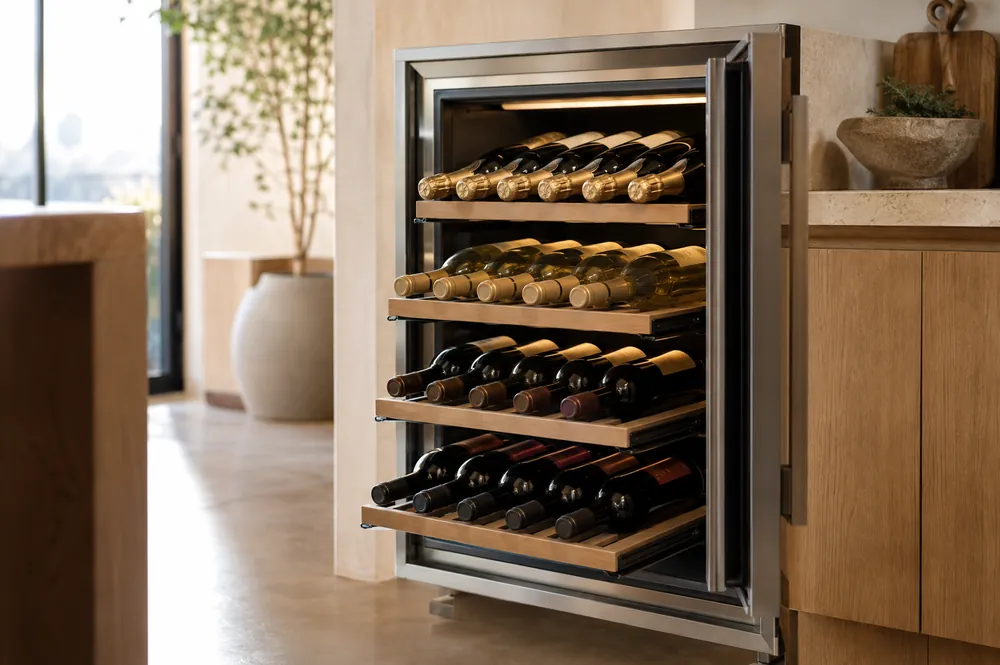
Use Shelf Layout to Prevent Label Damage and Rattling
Shelf layout controls how bottles touch wood, wire, glass, and each other. A good arrangement protects paper labels from scraping and limits vibration noise.
Compare the published shelf style before filling the cooler. Slide-out wood shelves usually protect labels better than bare wire, while fixed shelves can feel sturdier but need careful placement.
| Specification area | Typical published range | Why it matters |
| Storage temperature range | About 40°F-65°F | Covers common white, sparkling, and red storage settings. |
| Common capacity bands | About 12-50 bottles for compact and mid-size units | Higher counts often assume standard Bordeaux-style bottles. |
| Built-in cabinet opening width | About 15-24 inches | Wider openings usually allow broader shelves and easier spacing. |
| Typical rear or side clearance for freestanding units | About 2-6 inches | Better airflow can reduce heat buildup and compressor cycling. |
Capacity claims deserve attention. Published counts often assume slim, uniform bottles, so Burgundy, Champagne, and tall Riesling bottles may force shelf removal or alternating directions.
- Use the lowest shelf for heavier bottles. This reduces wobble when the door opens and keeps weight away from thinner upper racks.
- Alternate bottle directions only where labels stay clear. Neck-to-base storage can improve fit, but raised punts and foil capsules may rub adjacent labels.
- Leave a small gap around showcase bottles. Gift bottles, textured labels, and wax seals need more clearance than plain paper labels.
- Do not overload sliding shelves. Extra weight can make rails bind, which increases scraping during pullout.
Rattling usually starts where glass rests against metal, loose wood slats, or another bottle shoulder. Rearranging bottles by diameter often fixes it without aftermarket parts.
For mixed collections, treat published capacity as a best-case figure. Choose the shelf layout that fits your real bottles, then load labels facing up or outward for inspection.
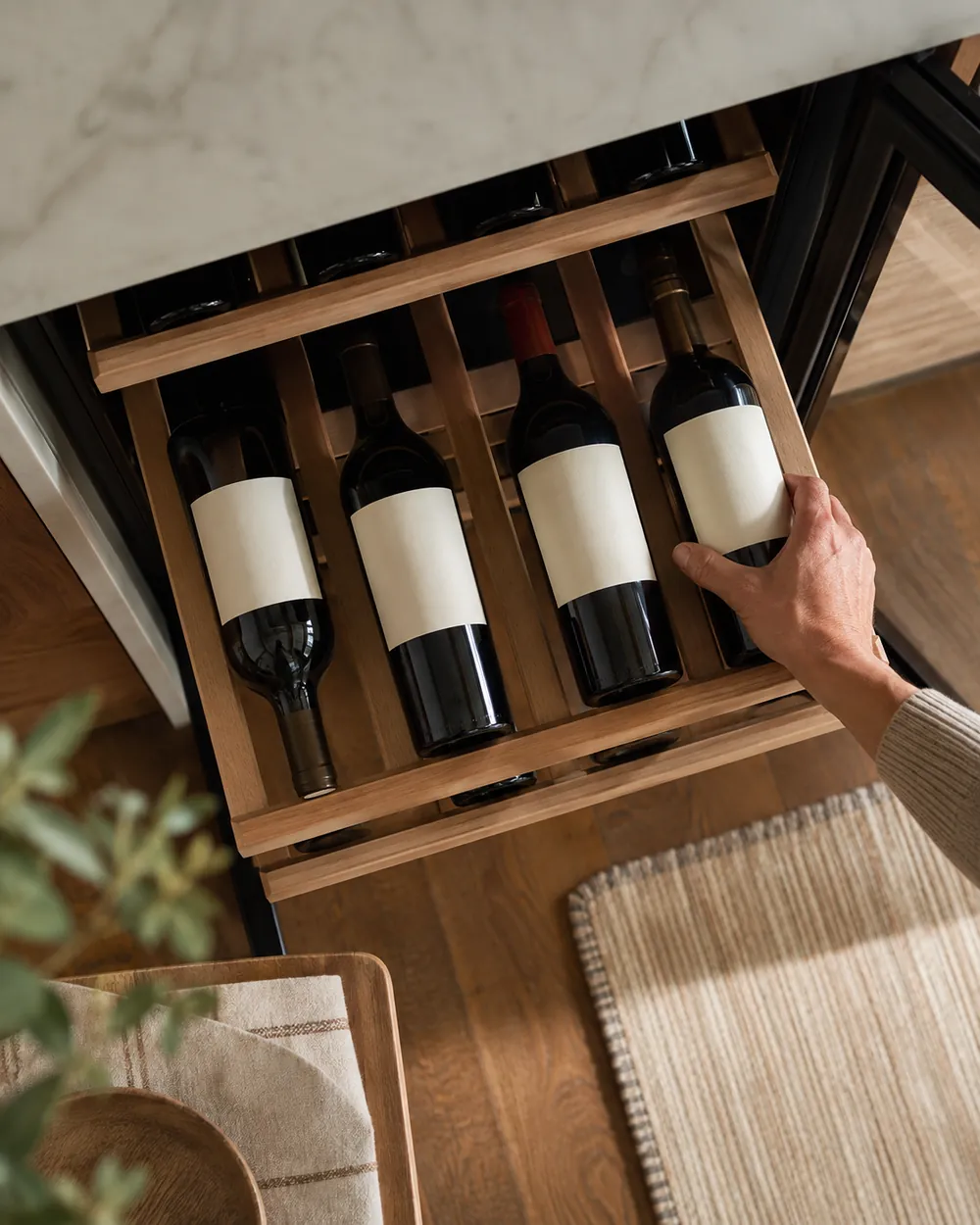
Separate Everyday Bottles From Special Bottles
Everyday bottles deserve easy reach, while special bottles need the most stable spot. This separation keeps weeknight choices simple.
Use front rows or upper shelves for wines you open often. Reserve lower, rear, or quiet shelves for anniversary bottles, gifts, and older vintages.
| Planning point | Everyday bottles | Special bottles |
| Typical serving temperature range | About 45-60°F, depending on white, rosé, sparkling, or lighter red styles | About 50-59°F for steadier cellar-style storage |
| Common cooler capacity bands | About 12-30 bottles for compact daily-use units | About 30-100+ bottles for larger collections or mixed storage |
| Typical built-in cabinet opening width | About 15-24 inches for undercounter access | About 24 inches or wider when collection size matters |
Labeling helps more than constant rearranging. A shelf tag such as “drink now,” “hold,” or “guest bottles” prevents special bottles from disappearing into casual use.
- Keep casual bottles visible: Put familiar reds, whites, and sparkling wines where you can grab them without moving other bottles.
- Protect long-hold bottles: Place collectible or sentimental bottles away from the door to limit light, vibration, and temperature swings.
- Group by purpose: Separate dinner wines, party bottles, gifts, and aging bottles instead of sorting only by color.
Dual-zone coolers make this easier, but single-zone coolers still work. Prioritize stability for special bottles, then use the remaining convenient space for everyday drinking.
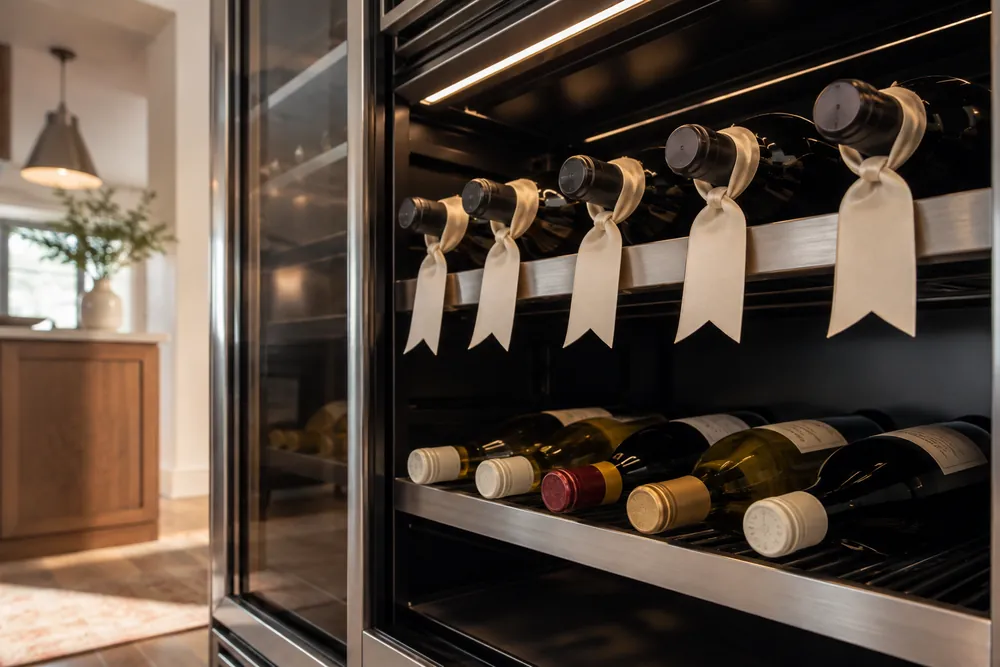
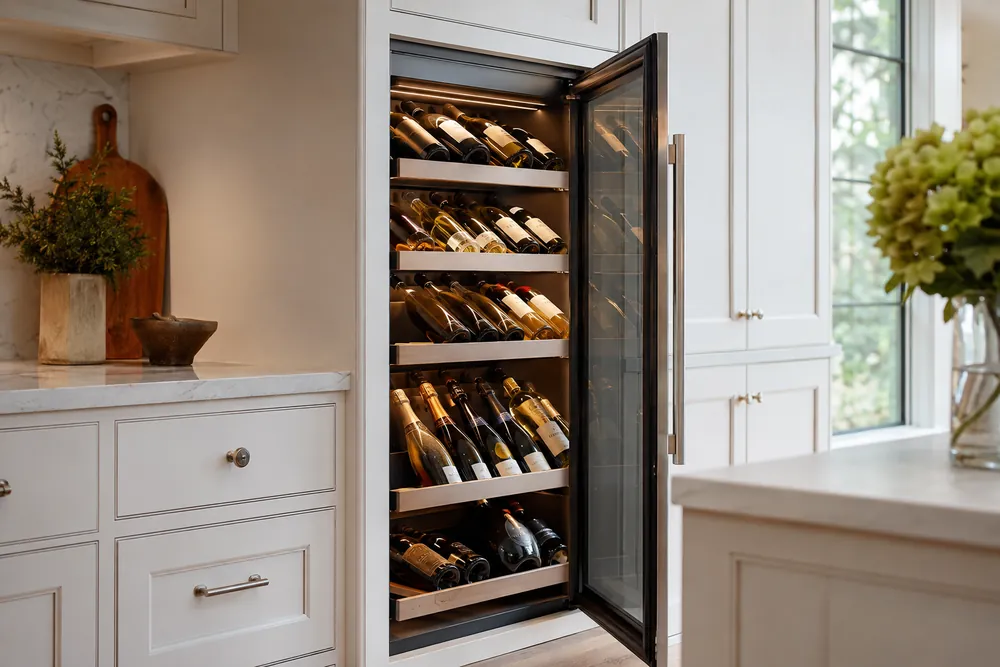
Handle Champagne, Pinot, Riesling, and Odd-Shaped Bottles
Champagne, Pinot Noir, Riesling, and dessert bottles can disrupt layouts. Check shelf spacing and owner reports before trusting capacity.
Ratings usually assume Bordeaux bottles. Wider shoulders, taller necks, and heavier glass reduce usable slots.
| Bottle type | Typical shape issue | Storage trade-off |
| Champagne and sparkling wine | Wider body and thicker glass | May need a lower shelf, display shelf, or removed rack |
| Pinot Noir and Burgundy | Sloped shoulders and broader base | Often reduces side-by-side loading density |
| Riesling and Alsace-style bottles | Taller, slimmer profile | May fit lengthwise but conflict with door clearance |
| Dessert and specialty bottles | Short, narrow, or irregular shapes | Best grouped in bins or on a flat shelf |
Published temperatures show broad storage bands. Dual-zone models help, but cabinet space and airflow still limit layouts.
| Specification | Common published range | Why it matters |
| Wine storage temperature range | 40°F to 65°F | Covers chilled whites through cellar-style red storage |
| Undercounter opening width range | 15 inches to 24 inches | Affects bottle depth, shelf width, and replacement fit |
| Typical rear or side clearance range | 1 inch to 3 inches | Helps ventilation and protects cooling performance |
| Common compact capacity band | 6 bottles to 18 bottles | Small coolers lose usable space quickly with oversized bottles |
Arrange irregular bottles by access, not symmetry
Keep everyday bottles on sliding shelves and move awkward shapes to fixed, bottom, or display positions.
- Place Champagne low: lower shelves usually handle weight and diameter better.
- Alternate Pinot bottles carefully: shoulder-to-shoulder layouts can save space but may pinch labels.
- Lay Riesling bottles front-to-back: confirm the door closes without pressing the neck.
- Reserve one flexible zone: leave a shelf gap or flat area for mixed shapes.
Treat advertised capacity as a best-case Bordeaux count. For mixed collections, choose extra room.
Avoid Overpacking and Airflow Problems
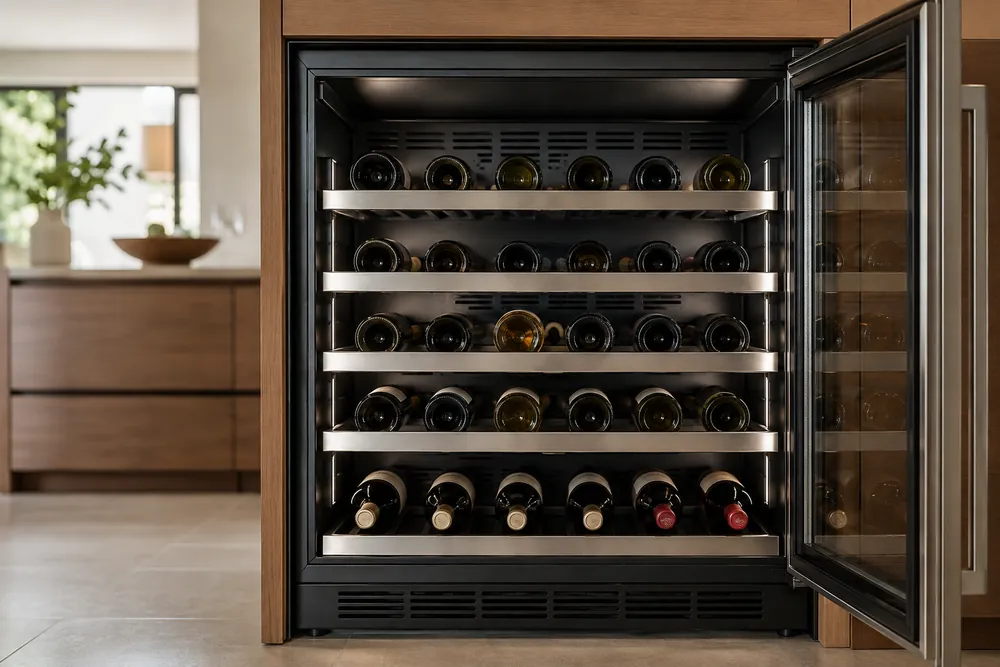
Crowded bottle layouts make a wine cooler work harder and cool less evenly. Published specifications list ideal bottle counts, but real storage changes once wider Pinot, Champagne, or odd-shaped bottles enter the cabinet.
Rated capacity usually assumes standard Bordeaux-style bottles in a specific pattern. Mixing bottle shapes can reduce usable space, block vents, or force shelves to sit unevenly.
| Specification | Typical category range | Why it matters |
| Storage temperature | 40°F-65°F | Covers common white, sparkling, and red wine storage settings. |
| Freestanding rear clearance | 2-6 inches | Helps heat leave the compressor area instead of recirculating. |
| Undercounter opening width | 15-24 inches | Affects shelf width, bottle count, and ventilation design. |
Airflow problems often start at the back wall and side vents. Leave visible gaps around internal vents, and avoid pushing bottle necks or labels against circulation openings.
- Load loosely first: fill shelves below the rated count, then add bottles only where air can still move.
- Group by shape: keep bulky sparkling bottles together so one shelf absorbs the space penalty.
- Watch shelf movement: remove or reposition bottles that stop a shelf from sliding cleanly.
Dual-zone coolers need extra care because overpacking can blur the temperature split between compartments. A packed upper zone may restrict return air and make the lower zone cycle longer.
Compare brand diagrams with owner photos before treating the advertised count as realistic. My Tako Cheena readers should use capacity as a planning number, not a promise for every bottle shape.
Where Owner Feedback Agrees and Where It Splits
Bottle fit draws the strongest agreement. Published capacity often assumes uniform shapes; owners report taller sparkling bottles and wide Pinot-style bottles reduce storage.
Temperature stability splits feedback.
Owners loading similar Bordeaux-style bottles and leaving vent space report steadier performance, while packed shelves and frequent door openings are linked to warmer upper zones or slower recovery.
| Specification area | Common published range | Owner feedback pattern |
|---|---|---|
| Wine storage temperature | About 40°F-65°F | Reported satisfaction rises when the set range matches red, white, or dual-zone use. |
| Common built-in cabinet width | About 15-24 inches | Fit complaints increase when trim, hinges, or handles are not checked against the opening. |
| Typical rear or side clearance | About 1-3 inches | Noise and heat complaints appear more often where ventilation is tight. |
Repeated owner comments say basic cooling holds up best for casual storage. Shelving, lighting, and digital controls satisfy buyers when expectations match the appliance class and installation follows the manual.
Negative reports focus less on sealed cooling systems and more on convenience hardware. Buyers cite rattly shelves, sticky slides, loose handles, gasket issues, and cheaper-feeling control panels.
- Consensus complaint: published bottle counts assume uniform bottle shapes.
- Reliable point: steady storage works better with partial loading and clear airflow.
- Split point: compressor noise depends heavily on room acoustics and installation.
- Early weak spots: shelves, hinges, gaskets, and touch controls receive the most repeat criticism.
Manufacturer documentation remains the best source for cutout, clearance, and temperature settings. Owner reports show whether those specifications stay practical with real bottles, cabinets, and daily access.
Simple Organization Systems That Stay Easy to Use
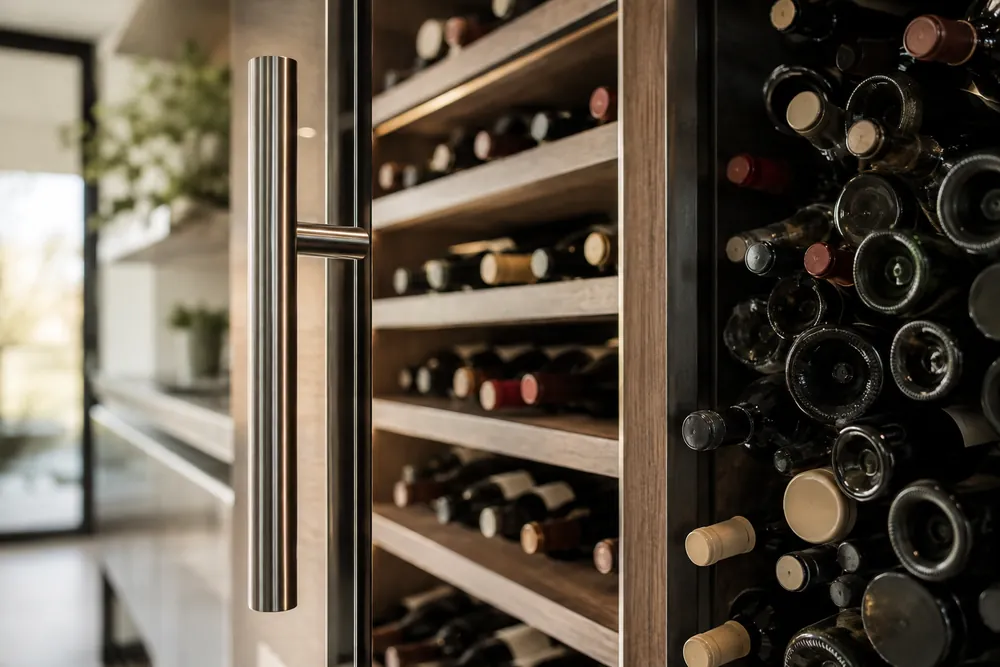
Bottle zones work best when they match how you drink. A simple plan keeps everyday bottles reachable, protects special bottles, and makes capacity claims easier to compare.
Separate bottles into use-based groups. Keep ready-to-open reds, whites, sparkling bottles, and long-hold bottles in consistent shelf areas so no one unloads the cooler to find one label.
| Specification | Typical category range | Organization impact |
| Single-zone temperature range | About 40°F to 65°F | Better for one main serving style or mixed storage compromise |
| Dual-zone temperature range | About 40°F to 55°F and 55°F to 65°F | Supports chilled whites above or below warmer reds, depending on layout |
| Common built-in opening width | About 15 inches to 24 inches | Affects shelf width, bottle stacking, and access space |
| Typical rear or side clearance | About 1 inch to 3 inches | Helps ventilation and prevents cramped installations |
Use labels that describe purpose instead of varietal alone. “Drink soon,” “weekday,” and “hold” are easier to maintain than a detailed cellar map that falls apart after one dinner.
- Top shelf: lighter bottles or bottles opened often.
- Middle shelves: standard bottles grouped by serving temperature.
- Bottom shelf: heavier sparkling bottles or less-used bottles, if shelf spacing allows.
- Door-adjacent area: bottles that tolerate small temperature swings better than long-term keepsakes.
Published bottle capacity usually assumes standard Bordeaux-style bottles. Wider Burgundy, Champagne, and tall bottles can reduce usable space, so leave one flexible shelf instead of filling every slot tightly.
For dual-zone units, avoid treating the divider as a hard cellar wall. Put fast-moving bottles near the front and long-hold bottles toward the back, because daily door openings affect convenience more than perfect sorting.
Recheck the system after grocery runs or club shipments. Keep the zones people follow, then simplify anything that requires moving multiple bottles to reach one choice.
Frequently Asked Questions
Bottle placement affects capacity, airflow, and label access. Leave room for Burgundy, Champagne, and odd-shaped bottles.
How should I arrange bottles in a wine cooler?
Place standard Bordeaux-style bottles on main racks first, alternating necks where possible. Keep everyday bottles near the front and aging bottles lower or toward the back.
Do not block vents. Airflow matters more than advertised maximum capacity.
Why does my wine cooler hold fewer bottles than advertised?
Published capacity usually assumes standard 750 ml Bordeaux bottles. Wider Pinot Noir, Chardonnay, sparkling wine, and dessert bottles reduce usable space.
| Bottle type | Typical impact on layout |
| Standard 750 ml Bordeaux | Best match for stated capacity |
| Wide Burgundy-style bottles | Often reduce shelf count or stacking room |
| Sparkling wine bottles | May need bottom storage or fewer bottles per shelf |
What temperature should I set a wine cooler for mixed bottles?
For mixed storage, many buyers use a middle setting. Wine cooler ranges commonly span about 40–65°F.
| Use | Typical range |
| White and sparkling serving | About 40–50°F |
| General wine storage | About 50–58°F |
| Red wine serving | About 55–65°F |
Can I stack bottles inside a wine cooler?
Stack only where the rack or bin is designed for it. Loose stacking can damage labels, scrape bottles, and reduce airflow.
For long-term cork-finished storage, horizontal placement is usually preferred. Screw-cap bottles are more flexible.
How much clearance does a wine cooler need?
Freestanding coolers usually need more breathing space than built-in models. Many manuals call for roughly 2–5 inches, but the manual controls.
Built-in models vent from the front and fit cabinet openings. Common undercounter widths are about 15–24 inches.
Should red and white wine go in different zones?
Dual-zone coolers help with mixed serving temperatures. Single-zone coolers are simpler for stable storage.
- Choose dual-zone: frequent entertaining and mixed serving temperatures.
- Choose single-zone: aging, storage, and simpler bottle organization.
Where should larger bottles go in a wine cooler?
Put larger bottles on adjustable shelves, display shelves, or the bottom bin if allowed. Avoid forcing racks around oversized glass.
Before buying, compare internal depth and shelf spacing, not only headline bottle count. Owner photos often show larger-bottle fit.