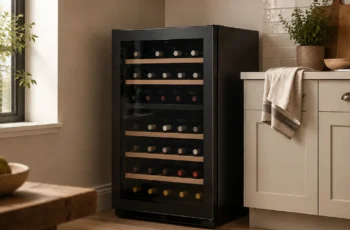
Key takeaway: Most wine coolers last about five to ten years before replacement starts to make more sense than repair.
Small thermoelectric units often land on the shorter end, while better-built compressor coolers can last longer with clean ventilation and stable placement.
The biggest warning signs are unstable temperatures, loud operation, failed cooling, condensation problems, and repair costs that approach replacement.
Typical Wine Cooler Lifespan by Type
Wine cooler type shapes replacement timing because cooling system, installation style, and workload differ. Specifications show stress points, while owner reports reveal noise, cycling, seal wear, and control-board issues.
Freestanding compressor units are common for casual storage and flexible placement. They cost less to install, but need open airflow to avoid heat buildup.
| Wine cooler type | Common capacity band | Typical storage temperature range | Common clearance expectation | Lifespan trade-off |
| Freestanding compressor | Small countertop to mid-size home collections | About 40°F to 65°F | Often about 2 to 6 inches around rear or sides | Good cooling power, but poor ventilation shortens component life |
| Built-in or undercounter compressor | Compact cabinet-width to larger undercounter collections | About 40°F to 65°F | Designed for front ventilation with tight cabinet fit | Usually more durable in cabinetry, but installation errors matter |
| Thermoelectric | Small to modest collections | About 46°F to 66°F, depending on room temperature | Often about 2 to 5 inches for side or rear airflow | Quiet and simple, but weaker in warm rooms |
| Dual-zone compressor | Mid-size to larger mixed collections | About 40°F to 65°F across separate zones | Varies by freestanding or built-in design | More flexible, but more controls and fans can mean more repairs |
Built-in and undercounter coolers are often safer for fitted kitchens. Front venting suits cabinet openings, so the compressor is less likely to fight trapped heat.
Freestanding units can last when placed correctly. Problems start in cabinetry, near heat-producing appliances, or in garages outside stated ambient-temperature limits.
Thermoelectric wine coolers have fewer moving parts than compressor designs, reducing vibration and noise. Their cooling depends heavily on room temperature.
For US kitchens, compressor models usually deliver steadier cooling. Thermoelectric models suit small collections, mild rooms, and buyers who prioritize quiet operation.
| Installation category | Common width range | Typical use case | Replacement risk to watch |
| Countertop or compact freestanding | About 10 to 18 inches | Apartment kitchens, bars, and small collections | Fan noise, weak cooling, and limited ventilation space |
| Undercounter built-in | About 15 to 24 inches | Standard kitchen cabinet runs and beverage stations | Door alignment, blocked front grille, and dirty condenser areas |
| Large freestanding cabinet | About 24 to 30 inches or wider | Bigger collections outside cabinetry | Compressor strain from warm rooms or tight wall placement |
Which type usually needs replacing first?
Thermoelectric and low-cost freestanding coolers are often replaced earlier because expectations change. A unit may run but fail to hold a steady wine-safe range during summer heat.
Built-in compressor models are more likely to justify repair. Better ventilation, sturdier shelving, and serviceable parts help, especially in permanent kitchen layouts.
- Choose freestanding for flexible placement and lower upfront commitment.
- Choose built-in for cabinet installations and better heat management.
- Choose thermoelectric for quiet small-scale storage in climate-controlled rooms.
- Choose dual-zone for mixed red and white storage, accepting more parts and controls.
Replacement timing is rarely about age alone. Compare temperature range, ventilation requirements, installation type, and owner-reported failures before deciding whether repair still makes sense.
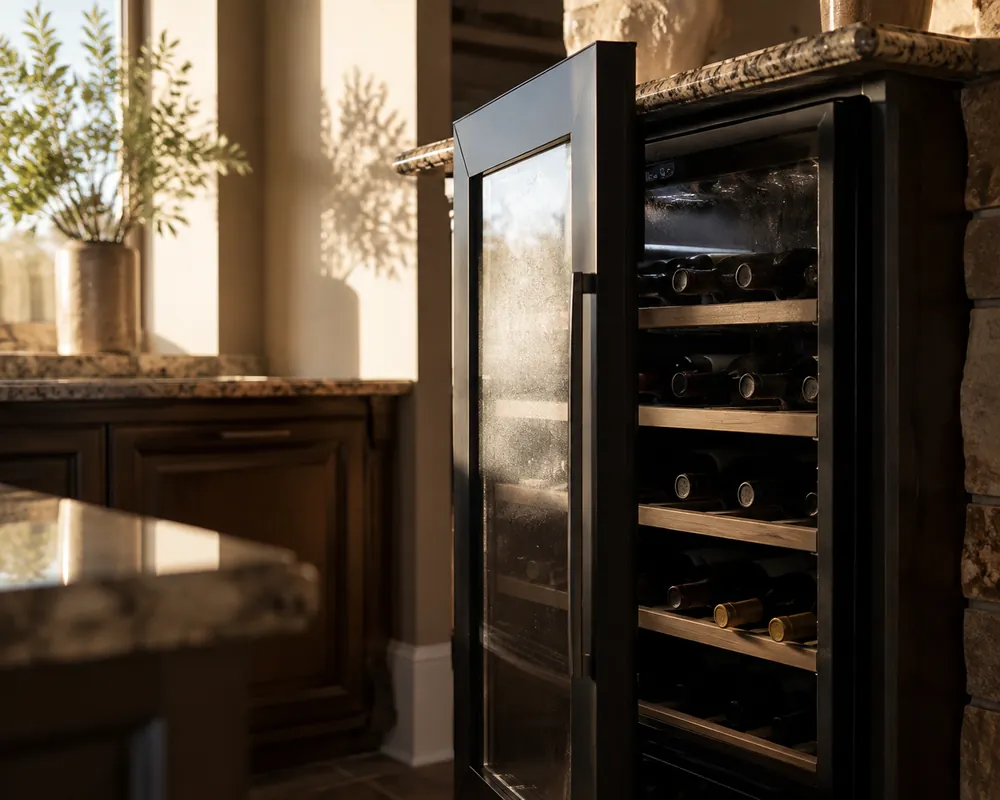
What Usually Fails First
Cooling performance is usually the first weak spot owners notice in a wine cooler. Published specifications can show the intended temperature range, but owner reports often reveal whether the unit struggles to hold it after normal use.
Wine coolers are simpler than full refrigerators, yet several parts work hard in tight spaces. Failures often start with airflow, controls, seals, or the cooling system rather than the cabinet itself.
Temperature Control Problems
A drifting temperature display is one of the most common complaints. The cooler may still run, but it cycles too often, overshoots the set point, or cannot keep red and white zones separated.
| Specification | Typical category range | Why it matters |
| Single-zone storage temperature | About 40°F-65°F | Covers general wine storage and serving needs |
| Dual-zone storage temperature | About 40°F-68°F across zones | Supports separate red and white settings |
| Built-in cabinet opening width | About 12-24 inches | Affects replacement fit under counters |
| Typical ventilation clearance | About 1-3 inches for freestanding units | Helps prevent heat buildup around the condenser |
Control boards and thermostats can be hard to diagnose from symptoms alone. A bad sensor may mimic a weak compressor, while blocked airflow may make a healthy system look underpowered.
Fans, Vibration, and Airflow
Fans are small parts, but they run frequently. Once bearings wear or dust builds up, owners may hear clicking, rattling, or pulsing noises before cooling fully fails.
Airflow faults matter more in compact cabinets. Bottles packed tightly against the rear wall can block circulation, creating warm shelves even while the display shows an acceptable temperature.
- Evaporator fan: Moves cold air across the interior and helps reduce hot spots.
- Condenser fan: Moves heat away from the cooling system on many compressor models.
- Door gasket: Lets warm, humid air enter when cracked, dirty, or compressed.
- Thermostat or sensor: Tells the cooler when to cycle on and off.
Seals, Hinges, and Moisture
Door gaskets often fail gradually. A small leak can cause condensation, longer run times, frost near vents, or temperatures that recover slowly after the door is opened.
Hinges and leveling feet also affect sealing. A cooler that leans forward or sits twisted in a tight opening may never close evenly, even with a usable gasket.
| Symptom | Likely area to check | Replacement concern |
| Temperature swings | Sensor, thermostat, blocked vents | Worth service if parts are available |
| Constant running | Dirty condenser, bad gasket, warm room | Can shorten compressor life |
| Loud rattling | Fan, shelf fit, compressor mount | Repair may be minor unless cooling drops |
| Warm cabinet | Compressor, refrigerant system, control board | Often pushes owners toward replacement |
Compressor or Sealed-System Failure
Compressor trouble is usually the turning point. Once the sealed cooling system is weak, repair costs and part availability can outweigh the value of an older cooler.
Thermoelectric models have different weak points. They may lose performance through failed heat sinks, fans, or power modules, especially where room temperatures stay near the upper end of the published operating range.
Replacement makes more sense when the cabinet no longer fits your storage needs, the door seal is poor, and cooling parts are unavailable.
Compare the published temperature range, installation type, and opening size before choosing the next unit.
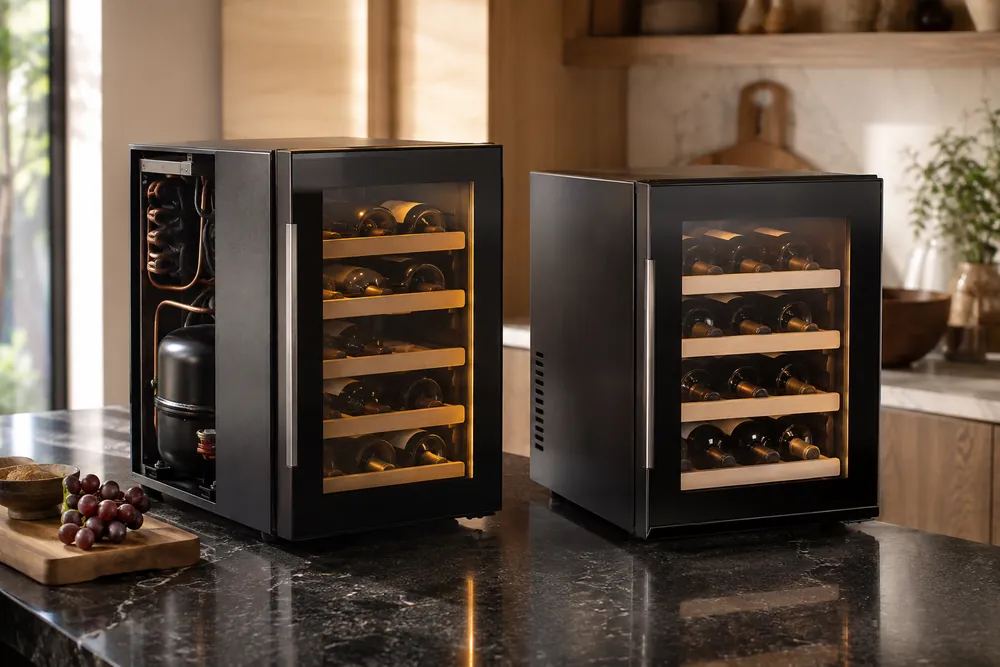
Repair or Replace: How to Decide
Repair decisions start with the fault, the appliance age, and the published specification sheet. Compare the repair against the cooler’s original format, installation type, and temperature claims before spending on parts.
A wine cooler is worth repairing when the cabinet is sound, the door seals tightly, and the issue is a replaceable control, fan, thermostat, or start component.
Replacement makes more sense when cooling performance, noise, and fit problems stack together.
| Category | Typical published range | Why it matters |
| Single-zone wine coolers | About 40°F-65°F | Good for one storage style, with fewer controls to fail. |
| Dual-zone wine coolers | About 40°F-65°F across separate zones | Useful for mixed reds and whites, but adds sensors and controls. |
| Compact countertop capacity | About 6-18 bottles | Lower replacement cost can make major repairs less attractive. |
| Built-in undercounter capacity | About 24-60 bottles | Higher cabinet value can justify a more serious repair. |
| Built-in cabinet width | About 15-24 inches | Exact opening fit can make replacement more restrictive. |
| Freestanding rear and side clearance | About 2-5 inches | Poor ventilation can mimic a failing cooling system. |
Repair makes sense when the problem is isolated
Published parts diagrams and owner reports often point to repeatable failures. A noisy fan, bad display board, worn gasket, or failed relay is different from a sealed-system cooling problem.
- Choose repair when the cooler still reaches its listed temperature range after adjustment.
- Choose repair when the door, hinges, shelves, and cabinet are still in good condition.
- Choose repair when the unit fits a hard-to-match built-in opening.
Replacement makes sense when performance has changed
Cooling drift is the warning sign to treat seriously. A cooler that runs constantly, forms unusual frost, or cannot hold the set zone may be past a simple control repair.
- Replace when compressor noise, heat, and temperature swings appear together.
- Replace when a freestanding unit was installed without the clearance its manual requires.
- Replace when the repair would not improve capacity, zoning, or installation fit.
Use the manual, energy label, and retailer specification page as the baseline. Then compare those published claims with reported owner experience for the same product family, not with one unusually good or bad review.
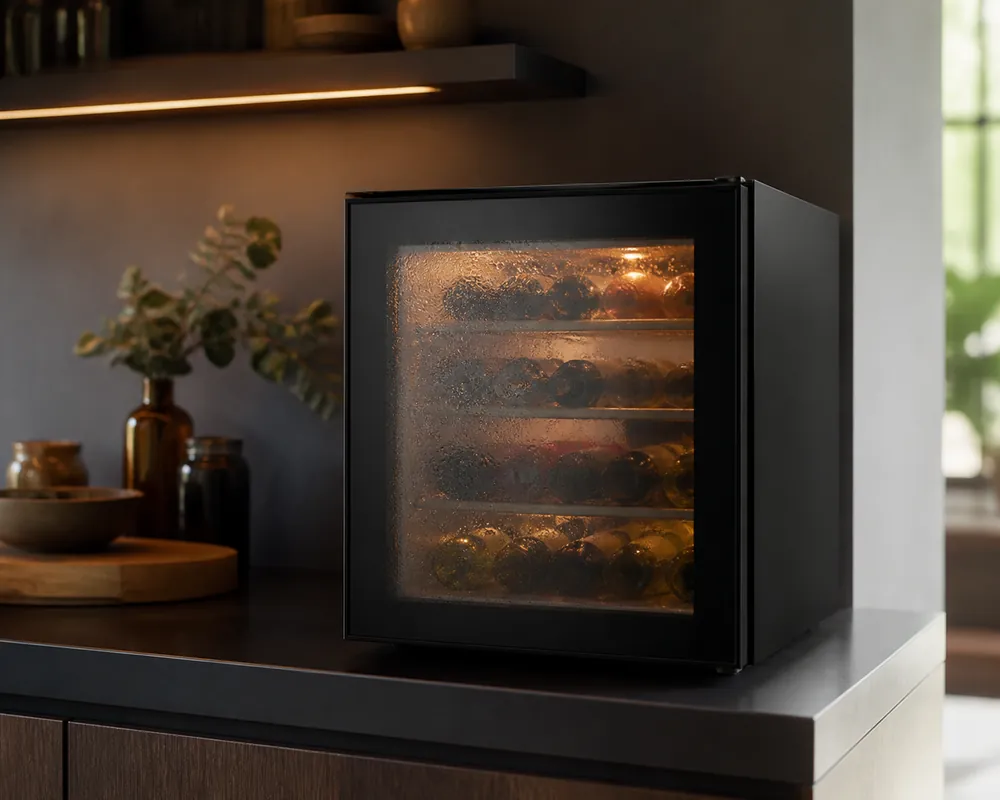
Where Owner Feedback Agrees and Where It Splits
Owner feedback clusters around temperature stability, noise, and early component failures.
Manufacturer documentation usually promises adjustable cooling, required clearances, and defined installation limits, while owner reports describe how those promises feel after daily use.
Across freestanding and built-in wine coolers, the recurring complaint is inconsistent temperature control.
Buyers often report that the display looks reassuring, but bottles feel warmer or cooler than expected, especially near the door or top shelf.
| Category | Typical published range | Why owners notice it |
| Wine storage temperature | About 40-65°F | Wide ranges suit mixed storage, but narrow real-world control matters more. |
| Common capacity bands | About 12-50 bottles | Actual fit drops when bottles are wider than standard Bordeaux shapes. |
| Typical side or rear clearance | About 1-3 inches | Poor airflow is often blamed for heat, noise, and short compressor life. |
What holds up best, according to repeated owner comments, is the cabinet shell, glass door, and basic shelving hardware.
Even dissatisfied buyers often say the cooler still looks acceptable long after cooling performance becomes the concern.
What fails early is usually tied to the cooling system or controls. Owner reports commonly mention compressors, fans, thermostats, control boards, door seals, and interior lights before they mention structural damage.
- Temperature drift: Owners report gradual loss of cooling, cycling problems, or zones that no longer match the set point.
- Fan noise: Rattling, buzzing, and frequent cycling appear often in feedback for compact and undercounter units.
- Shelf frustration: Published bottle counts often assume slim bottles, while pinot, champagne, and odd shapes reduce usable capacity.
- Seal wear: Door gaskets that stop closing tightly can make a working cooler seem weak.
Feedback splits most sharply on noise. Some owners accept a low hum as normal appliance behavior, while others find the same category of cooler distracting in open kitchens, apartments, or dining rooms.
Manufacturer documentation helps explain that split. Freestanding units usually need breathing room around the cabinet, while built-in units are designed to vent through the front or base, depending on the design.
| Issue | Manufacturer documentation usually emphasizes | Owner reports usually emphasize |
| Capacity | Rated bottle count within a stated size class | Reduced fit with mixed bottle shapes |
| Cooling | Adjustable temperature range and zone layout | Uneven shelves, slow recovery, or drifting readings |
| Installation | Ventilation space, level placement, and indoor use | Heat buildup when pushed into tight cabinetry |
Replacement makes sense when repairs approach the cost of a comparable category unit, or when cooling becomes unreliable enough to risk the wine.
For buyers comparing specifications, installation fit and ventilation deserve as much attention as bottle count.
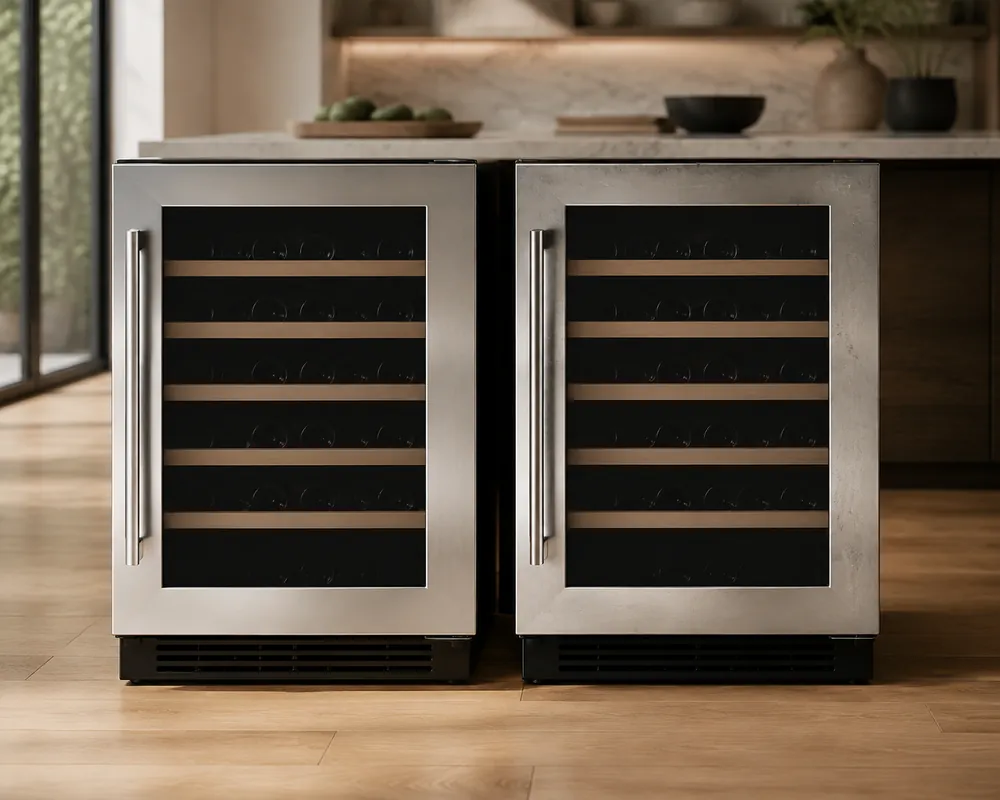
How to Make a Wine Cooler Last Longer
Longer wine cooler life comes from stable temperature, clean airflow, and correct placement. Published specifications usually show the limits; owner complaints often trace back to heat, dust, vibration, or overloaded shelves.
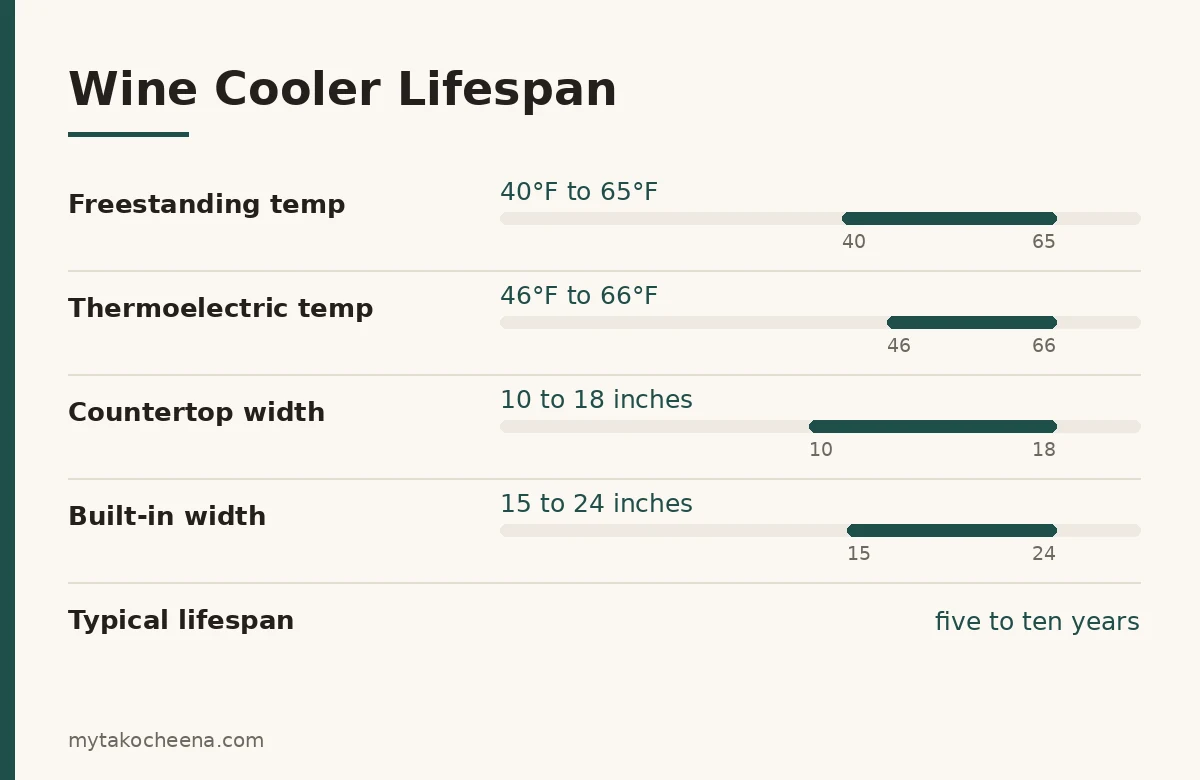
Start with the installation type. A freestanding unit needs open air around it, while a built-in unit is designed to vent through the front grille.
Using either style against its design can make the compressor run longer and age faster.
| Specification item | Typical published range | Why it matters |
| Freestanding rear and side clearance | 2 to 6 inches | Helps warm air leave the cabinet area |
| Built-in cabinet opening width | 15 to 24 inches | Matches common undercounter appliance spaces |
| Wine storage temperature setting | 40 to 65 degrees Fahrenheit | Keeps operation within the intended cooling range |
| Common home wine cooler capacity bands | 6 to 50 bottles | Shows how airflow and loading can vary by size |
Keep the cooler away from ovens, dishwashers, direct sun, and heating vents. Nearby heat raises the temperature around the condenser, so the appliance works harder to hold the same set point.
Clean the condenser area on a regular schedule. Dust on coils, grilles, or rear vents acts like insulation and traps heat. Unplug the cooler before cleaning and follow the manual for access points.
- Leave air space: Do not push freestanding units tight against walls or cabinets.
- Load shelves evenly: Crowded bottles can block internal airflow and create warm spots.
- Protect the door gasket: Wipe spills, remove grit, and check that the seal closes flat.
- Level the cabinet: A tilted unit can strain hinges and prevent a clean door seal.
Temperature settings also affect wear. Setting the cabinet colder than needed can increase compressor cycling, especially in a warm room.
For wine storage, compare the manufacturer’s recommended range with the wine style you keep most often.
| Use pattern | Better range or habit | Trade-off |
| Short-term serving temperature | 40 to 55 degrees Fahrenheit | Colder service may increase cycling |
| General wine storage | 50 to 65 degrees Fahrenheit | Warmer settings may be less ideal for quick serving |
| Door openings during gatherings | Fewer, planned openings | Requires staging bottles before guests arrive |
| Room temperature exposure | Cool, shaded room placement | May limit where the cooler fits decoratively |
Vibration control matters for both the appliance and the wine. Put the cooler on a firm, level surface and avoid placing it beside laundry equipment or garage tools.
Persistent vibration can loosen parts and make noise complaints more likely.
Do not ignore small symptoms. New rattles, frost buildup, slow recovery after door openings, or a warm cabinet can point to airflow, gasket, fan, or thermostat issues.
Early service is usually easier than waiting for a full cooling failure.
Use published specifications as the baseline, then match them to your space. Correct clearance, reasonable temperature settings, and clean ventilation do more for longevity than brand claims alone.
Questions Worth Answering First
Wine cooler lifespan depends on compressor type, installation, temperature stability, and workload. Specs show durability claims; owner reports reveal noise, icing, and control-board issues.
How long do wine coolers usually last?
Freestanding and built-in wine coolers can last several years with correct ventilation and a tight door seal. Compressor models handle larger loads; thermoelectric units suit smaller, quieter spaces.
| Category | Typical published range | What it means |
| Storage temperature | About 40°F-65°F | Covers white, sparkling, and red wine storage settings |
| Common capacity bands | About 6-50+ bottles | Small countertop units through undercounter cabinets |
| Built-in cabinet width | About 15-24 inches | Common undercounter opening classes |
Is a compressor wine cooler worth replacing before it fully fails?
Yes, when temperature swings become frequent, repair costs rise, or the compressor runs constantly. A cooler that cannot hold its set range can age wine poorly even if the display works.
Replacement also makes sense when shelves no longer fit your buying habits. Nominal capacity may exclude Champagne, Burgundy, or wider Pinot Noir bottles.
Do built-in wine coolers last longer than freestanding ones?
Not automatically. Built-in models vent through the front, which helps in cabinetry only when the opening matches the manufacturer’s requirements.
Freestanding units can last in open air, but often overheat when pushed into cabinets. Heat buildup shortens component life and increases compressor cycling.
How much clearance does a wine cooler need?
Clearance depends on venting design. Compare the manual’s installation drawing, not product photos, because poor clearance can void warranty coverage and reduce cooling performance.
| Installation type | Common clearance range | Buyer takeaway |
| Freestanding | About 2-6 inches around heat-venting sides or rear | Needs breathing room outside cabinetry |
| Built-in or undercounter | About 0-1 inch at sides, with front ventilation | Relies on correct cutout and front airflow |
What temperature range should a wine cooler maintain?
Many wine coolers publish adjustable ranges around 40°F-65°F. Dual-zone models split that range so whites stay cooler while reds sit warmer, but limits vary by brand.
For long-term storage, stability matters more than a perfect number. Frequent swings, warm spots, or frost buildup are stronger replacement signals than a small display error.
Are dual-zone wine coolers more likely to need replacement?
Dual-zone units have more controls, sensors, and airflow management than single-zone units. Added complexity improves serving flexibility but creates more possible failure points.
- Choose single-zone for aging one mixed collection near a steady storage setting.
- Choose dual-zone for serving reds and whites at different temperatures.
- Compare warranty terms for sealed systems, electronics, and labor separately.
What signs mean a wine cooler should be replaced?
Repeated compressor noise, rising temperatures, water inside the cabinet, cracked seals, and unstable controls are warning signs. One issue may be repairable; multiple symptoms point toward replacement.
Check parts availability before repair. Control boards, fans, hinges, and sensors can be hard to source for private-label or discontinued appliance lines.
What specs matter most before buying a replacement wine cooler?
Compare capacity, temperature range, venting style, dimensions, warranty coverage, shelf layout, and noise rating when published. Bottle count alone is weak because stated capacity often assumes standard Bordeaux-style bottles.
For My Tako Cheena readers comparing US kitchen appliances, the best replacement fits the opening, vents correctly, and holds the desired range. Specs narrow the field before owner reviews expose recurring problems.