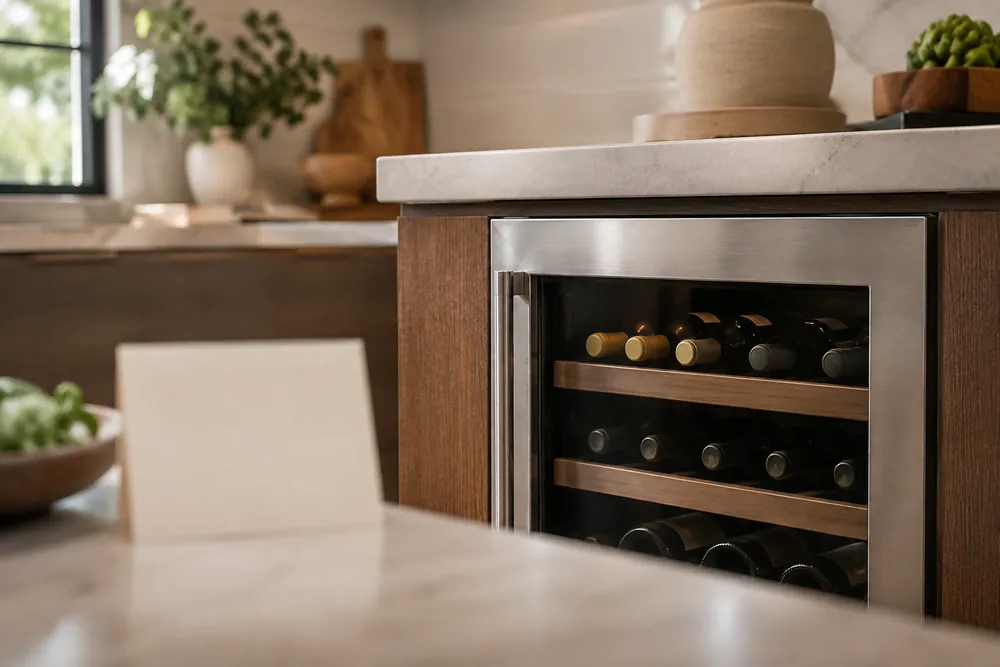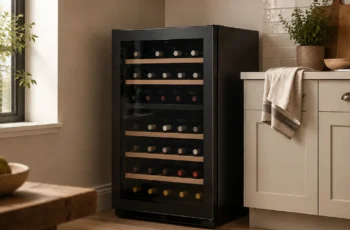
Key takeaway: A countertop wine cooler is a compact appliance that keeps wine at a steadier serving or short-term storage temperature than a refrigerator.
It suits kitchens, apartments, bars, and small collections where floor space is limited. Compare temperature range, bottle fit, ventilation needs, noise reports, shelf layout, and owner feedback before choosing one.
What a Countertop Wine Cooler Does
Countertop wine coolers hold bottles at serving-friendly temperatures without taking over a full-size refrigerator shelf.
They are compact appliances for short-term chilling, small collections, and kitchens where built-in storage is not practical.
A countertop unit uses a small cooling system, an insulated cabinet, racks, and a thermostat to keep wine within a selected range.
It is not the same as a wine cellar, which is built around long-term aging, humidity control, and larger bottle capacity.
| Specification | Typical published range | What it means for buyers |
| Storage capacity | 6-18 bottles | Fits casual use, not case storage |
| Temperature setting | 40-65 degrees F | Covers sparkling, white, rose, and many reds |
| Rear and side clearance | 2-5 inches | Needed for ventilation on many freestanding units |
| Power draw | 50-100 watts | Varies by compressor type, size, and room conditions |
Published capacity usually assumes standard Bordeaux-style bottles. Wider Champagne, Burgundy, or tapered bottles can reduce the real bottle count because racks may not slide cleanly or stack as shown in product photos.
What it is best for
- Serving temperature: Bringing bottles closer to their intended drinking range before dinner or entertaining.
- Kitchen convenience: Keeping wine separate from food odors, door traffic, and refrigerator temperature swings.
- Small-space storage: Using a countertop, bar cart, pantry shelf, or office cabinet area with proper ventilation.
Single-zone coolers hold the whole cabinet at one setting, so they work best for one general style of wine. Dual-zone designs separate temperature areas, but published capacity can drop because the divider and controls take space.
| Design | Typical use | Trade-off |
| Single-zone | One broad temperature range for similar bottles | Simpler controls and often more usable rack space |
| Dual-zone | Different settings for reds and whites | More flexibility, with less internal room in many compact cabinets |
Noise, heat, and placement matter because these appliances vent into the room. Compare the manual’s clearance requirements, listed dimensions, rack layout, and owner reports before choosing a spot on a counter or under open shelving.
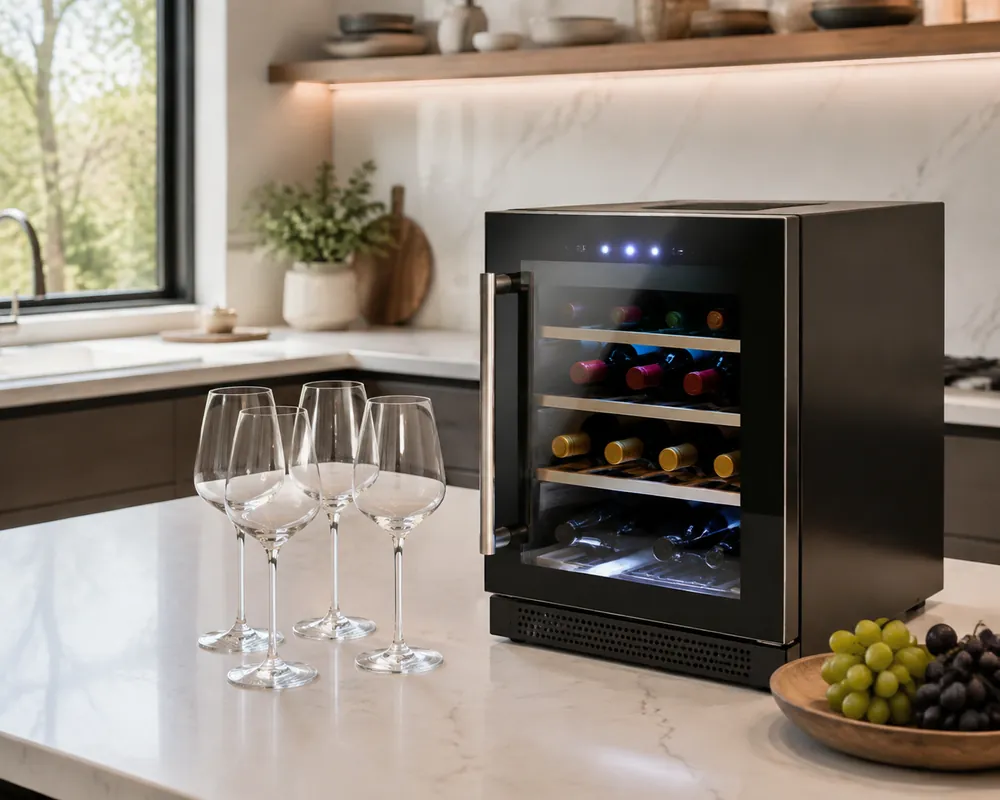
Who Should Buy a Countertop Wine Cooler
Countertop wine coolers fit buyers who want better bottle storage without committing cabinet space or remodeling.
They make the most sense for small collections, short-term serving, and kitchens where published dimensions matter as much as temperature range.
They are not a substitute for a full wine cellar or a built-in undercounter unit. The trade-off is simple: smaller footprint, easier placement, and lower capacity compared with larger freestanding or installed coolers.
| Specification | Typical published range | Why it matters |
| Bottle capacity | 6 to 18 standard bottles | Works for casual drinkers, not long-term collectors. |
| Storage temperature range | About 40°F to 65°F | Covers many white, sparkling, rosé, and red serving targets. |
| Rear and side clearance | About 2 to 5 inches | Helps the compressor or thermoelectric system shed heat. |
| Common countertop capacity band | Under 20 bottles | Keeps the appliance compact enough for many counters. |
Good fits
- Apartment and condo kitchens: A countertop model can avoid landlord restrictions, cabinet cutting, or permanent installation.
- Casual wine drinkers: Small coolers suit people who keep a few bottles ready for dinner, guests, or weekend use.
- Mixed beverage households: Some buyers use the unit for wine, canned cocktails, or nonalcoholic drinks, as long as bottle spacing works.
- Gift buyers: Published size, capacity, and temperature specs make these easier to compare than larger kitchen appliances.
Who should size up instead
Collectors should consider a larger freestanding or built-in cooler. Countertop shelves often limit bottle shapes, especially Champagne, Burgundy, and wider sparkling bottles.
Busy entertainers may also outgrow this category quickly. A small cooler chills a focused selection, while a larger unit keeps backup bottles at a steadier serving temperature.
Buyers with tight counters should check height, door swing, cord location, and ventilation clearances before choosing.
Published specs are the best comparison tool because countertop space, not bottle count, often becomes the real limit.
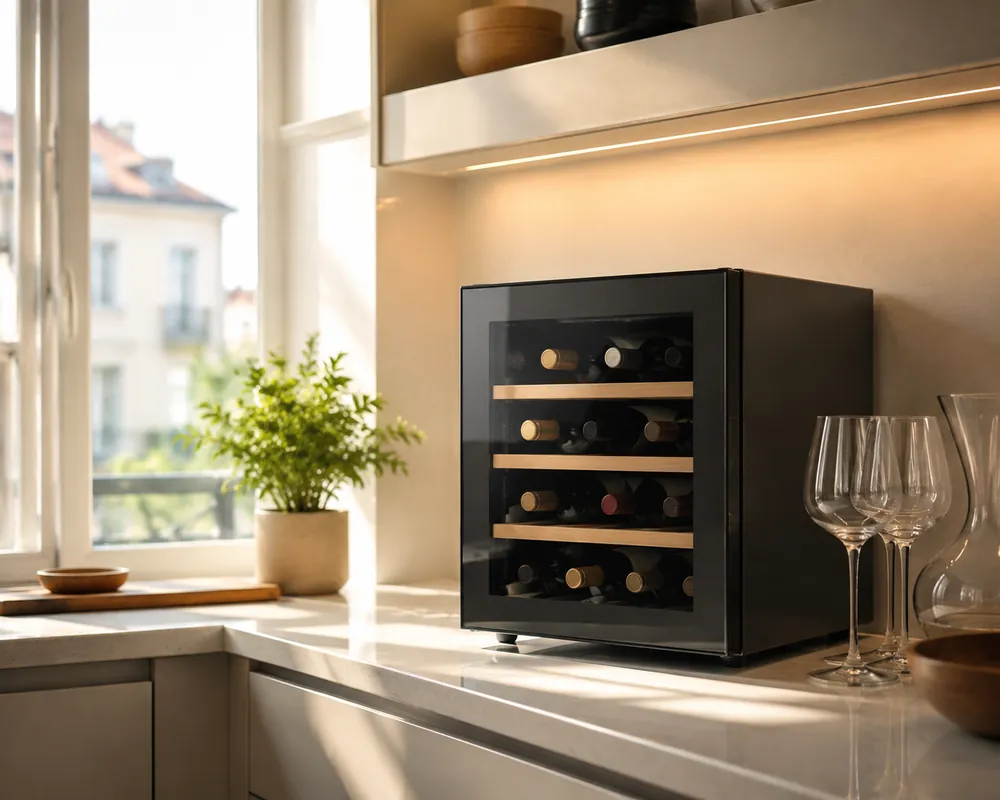
Key Features to Compare Before Buying
Capacity, temperature range, noise, and installation clearance should be compared before finish or brand. Published specifications tell you whether a countertop wine cooler fits your bottles, counter space, and serving habits.
Capacity and bottle shape
Advertised capacity usually assumes standard Bordeaux-style bottles. Wider Burgundy, Champagne, or sparkling wine bottles can reduce usable storage, especially in compact countertop layouts.
| Capacity band | Typical use | Trade-off |
| 6 to 12 bottles | Small apartments, occasional serving, short-term storage | Compact footprint, limited flexibility for larger bottles |
| 12 to 24 bottles | Regular entertaining or mixed red and white storage | More useful capacity, larger counter footprint |
| 24 to 36 bottles | Broader collections without moving to a freestanding cabinet | Higher weight, more clearance and counter depth needed |
Temperature range and zones
Check the listed temperature range against how you actually drink wine. Many countertop units are designed for serving temperature, not long-term cellar aging.
| Feature | Common published range | What it means |
| Single-zone cooling | About 40°F to 65°F | Simple control for one storage or serving style |
| Dual-zone cooling | About 40°F to 55°F and 55°F to 65°F | Better separation for whites and reds, with less total space per zone |
| Room operating range | Often about 60°F to 80°F | Performance can suffer in hot garages or cold utility rooms |
Fit, ventilation, and controls
Countertop wine coolers still need breathing room. Compare the manual’s clearance guidance before placing one under cabinets or tight against a wall.
| Specification | Typical range | Why it matters |
| Side and rear clearance | About 2 to 5 inches | Helps heat escape and protects cooling performance |
| Counter depth needed | About 18 to 24 inches | Prevents the door, plug, or rear vent from crowding the space |
| Unit weight | About 20 to 70 pounds | Affects lifting, shelf strength, and placement stability |
- Noise: Compare stated decibel ranges and owner comments. Thermoelectric units may run quietly, while compressor models can cool more strongly but cycle audibly.
- Door design: Tinted or UV-resistant glass helps reduce light exposure. Reversible doors matter if the cooler sits near a wall.
- Shelves: Removable shelves improve flexibility for nonstandard bottles. Fixed wire shelves may preserve advertised capacity better.
- Controls: External digital controls reduce door opening. Interior controls can look cleaner but require opening the unit to adjust settings.
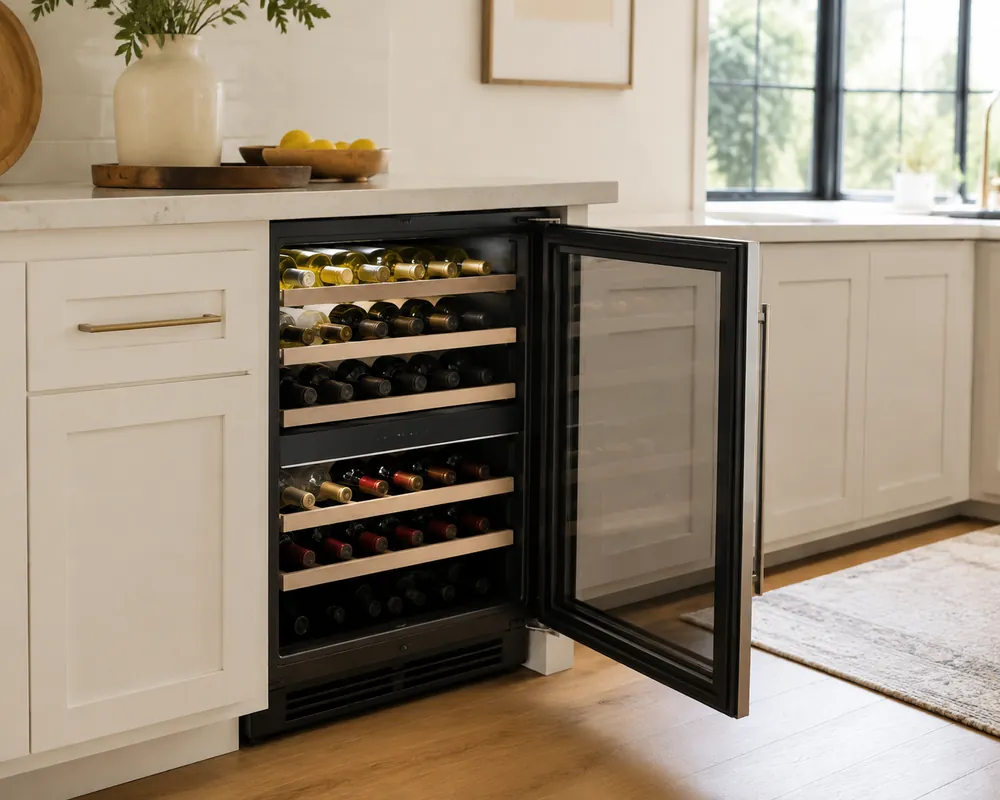
Single-Zone vs Dual-Zone Cooling
Single-zone cooling uses one temperature setting for the whole cabinet. Dual-zone cooling splits the cabinet into two independently controlled areas, which matters when you store red, white, sparkling, or dessert wines together.
Published specifications usually show dual-zone models with separate upper and lower temperature ranges.
Compare those ranges carefully, because some zones overlap broadly while others are designed mainly for serving whites above and reds below.
| Cooling type | Typical published range | Best use |
| Single-zone | About 40°F-65°F | One preferred serving or storage temperature |
| Dual-zone | About 40°F-68°F across separate zones | Mixed red, white, and sparkling wine storage |
Where single-zone makes sense
Single-zone coolers are simpler to shop. They often cost less than comparable dual-zone units, have fewer controls, and give the full interior to one consistent climate.
- Choose single-zone if you mostly drink one style of wine.
- Choose single-zone if you use the cooler for short-term serving rather than long-term collecting.
- Choose single-zone if maximum bottle count matters more than temperature separation.
Where dual-zone earns its space
Dual-zone models help when you want chilled whites ready to pour and reds kept warmer in the same appliance. The trade-off is usable space, because dividers, extra sensors, and separate airflow paths can reduce bottle flexibility.
| Countertop category | Usual bottle range | Shopping note |
| Compact single-zone | About 6-18 bottles | Best for small kitchens and casual storage |
| Compact dual-zone | About 12-24 bottles | Better for mixed wine styles, but less flexible shelf space |
For countertop placement, also check clearance language in the manual. Many freestanding wine coolers call for about 2-5 inches of side, rear, or top clearance so heat can escape properly.
Pick single-zone for simplicity and capacity. Pick dual-zone when separate serving temperatures matter more than shelf flexibility and a slightly larger footprint.
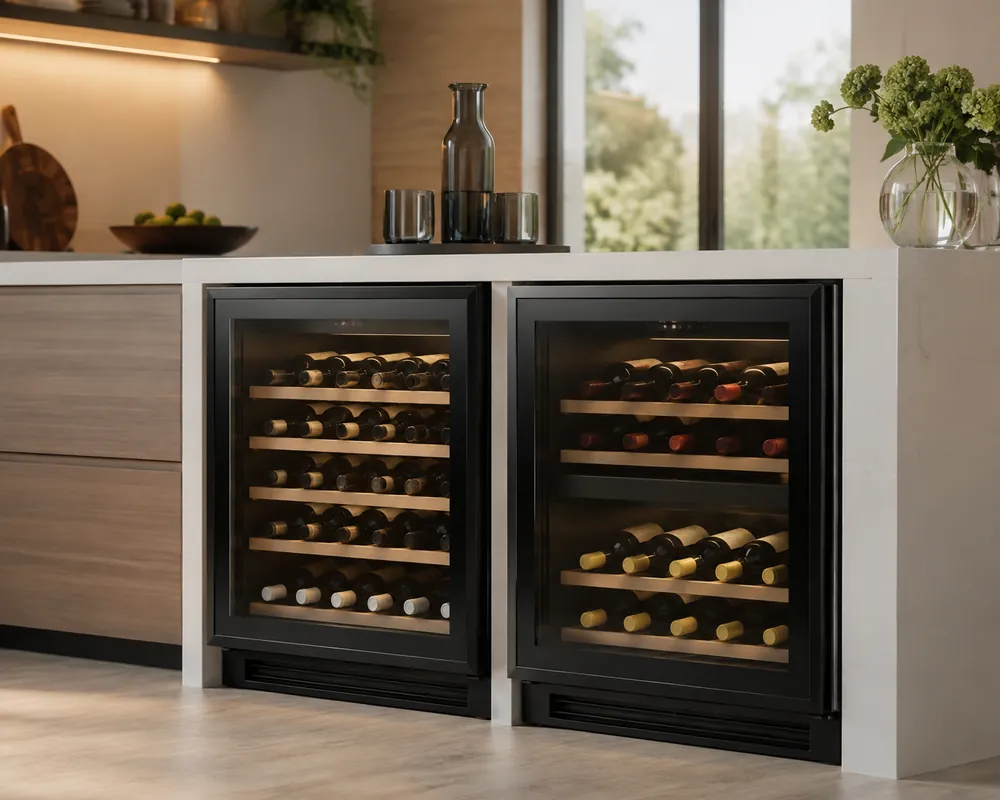
Size, Placement, and Ventilation
Countertop dimensions decide whether a wine cooler is convenient or constantly in the way. Compare the published width, depth, height, door swing, and rear-clearance notes before judging bottle count.
Capacity ratings are useful, but they often assume standard Bordeaux-style bottles. Wider Burgundy, Champagne, or Riesling bottles can reduce usable space, especially in compact coolers with fixed racks.
| Category | Typical published capacity range | Placement trade-off |
| Mini countertop | 6-12 bottles | Fits small counters but may have tighter rack spacing. |
| Standard countertop | 12-24 bottles | More flexible storage but takes more depth and vertical space. |
| Large countertop | 24-36 bottles | Higher capacity but may be too heavy or bulky for upper counters. |
Placement should start with the appliance manual, not the photo on a retail page. Many freestanding countertop wine coolers need open air around the sides, back, or top because the condenser releases heat into the room.
| Specification to compare | Common category-level range | Why it matters |
| Rear or side clearance | 2-6 inches | Restricted airflow can raise internal temperatures and increase noise. |
| Single-zone storage range | 40-65°F | Covers chilled whites through cellar-style red storage. |
| Dual-zone storage range | Upper and lower zones commonly span about 40-65°F | Separate zones help, but each zone may have a narrower usable band. |
A countertop wine cooler is usually not the same as a built-in undercounter unit. Unless the specifications say front-venting or built-in approved, avoid enclosing it tightly inside cabinetry.
- Check counter depth: include the handle, power cord, and space for the door to open fully.
- Check overhead space: top vents need breathing room, and tall bottles may require shelf changes.
- Check nearby heat: keep the cooler away from ovens, dishwashers, sunny windows, and heating vents.
- Check noise expectations: compressor models may cycle audibly, while thermoelectric models are sensitive to warm rooms.
Weight also matters on narrow carts, floating shelves, and older counters. Published shipping weight is not the same as loaded weight, so allow for glass bottles plus the cooler itself.
For small kitchens, measure the intended spot before comparing bottle capacity. A lower-capacity unit with proper ventilation is usually a better buy than a larger cooler that runs hot in a cramped corner.
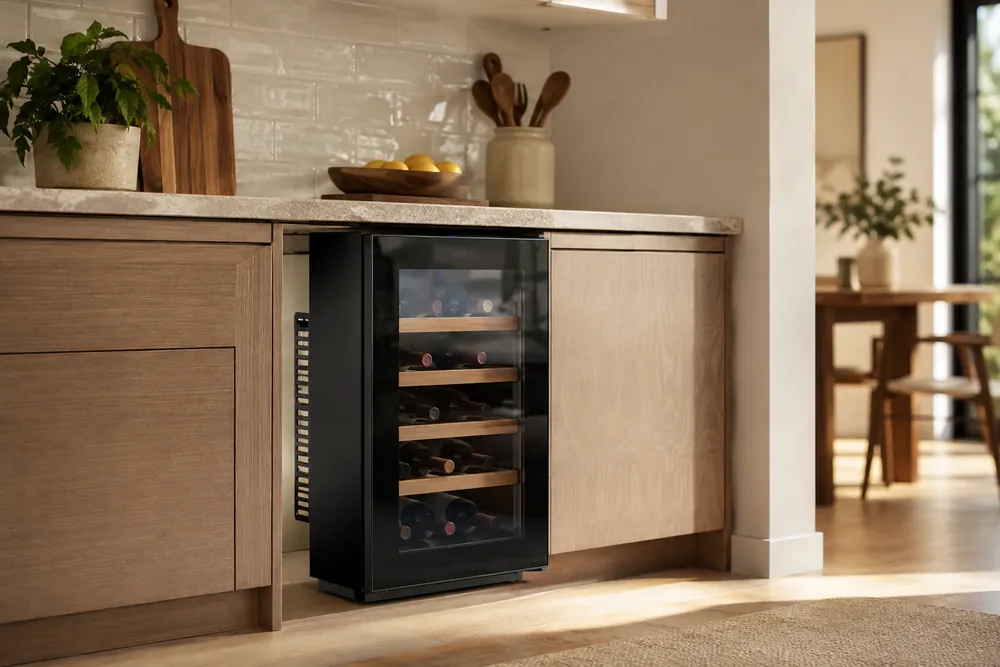
Noise, Energy Use, and Everyday Living
Compressor sound, heat output, and power draw affect where a countertop wine cooler feels practical. Published specs help, but owner reviews often reveal whether cycling noise or fan hum is noticeable in daily use.
Noise ratings are not always listed, so compare product pages carefully. A cooler described only as “quiet” gives less useful information than one with a stated decibel range and clear ventilation requirements.
| Specification | Typical category range | Why it matters |
| Storage temperature | About 40°F-65°F | Covers chilled whites through warmer red wine storage. |
| Countertop capacity | About 6-18 standard bottles | Smaller units fit easier but refill more often. |
| Rear and side clearance | About 2-6 inches | Needed for heat release and steady operation. |
Thermoelectric coolers often have fewer moving parts, while compressor models usually handle warmer rooms better.
That trade-off matters in apartments, open kitchens, and home offices where a low background hum can feel louder at night.
Energy use depends on room temperature, door openings, set point, and insulation. Published annual energy estimates are useful for comparison, but they do not guarantee the same result on a sunny counter or near a dishwasher.
| Location | What to check | Likely compromise |
| Kitchen counter | Vent clearance and door swing | Convenient access, but more heat and vibration nearby. |
| Dining area | Listed noise level and lighting | Better serving access, but sound is more noticeable. |
| Home office | Fan cycling and compressor starts | Compact storage, but interruptions may bother calls. |
Check whether the cooler restarts automatically after a power interruption and whether the controls lock. These small usability details matter more than a glossy door if the unit sits in a busy household.
- Read the manual before buying: clearance rules can decide whether a unit belongs on a counter or an open shelf.
- Compare owner comments: repeated notes about rattling, clicking, or warm interiors are more useful than one vague complaint.
- Avoid enclosed cabinets: unless the appliance is specifically described for built-in use.
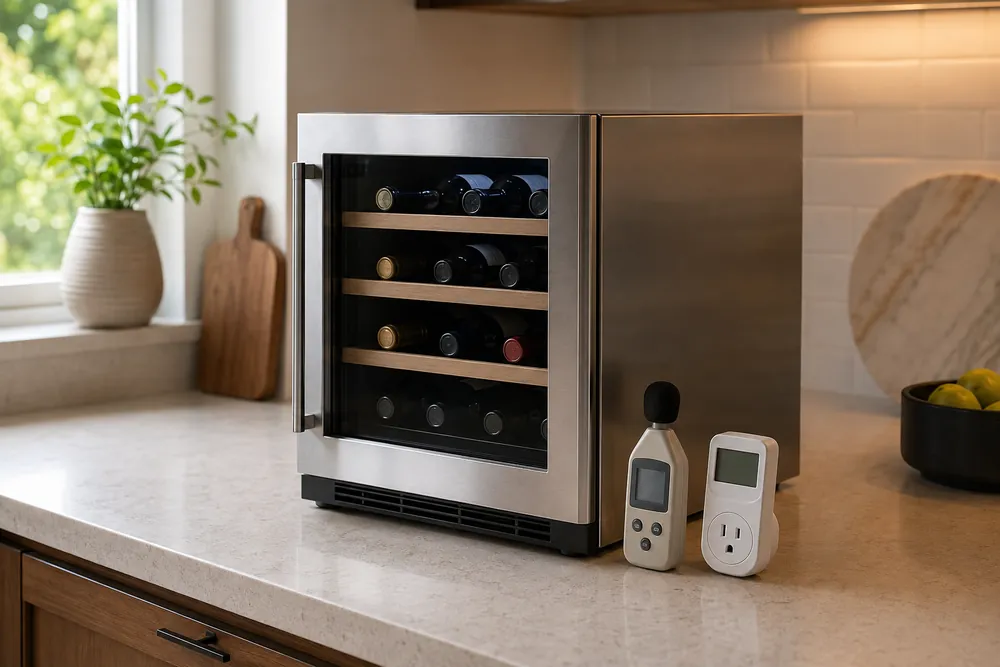
How These Hold Up After a Year
Owner reports tend to converge on one complaint: temperature stability depends heavily on placement, room heat, and airflow.
Manufacturer documentation also states countertop wine coolers need clearance and moderate ambient conditions to work consistently.
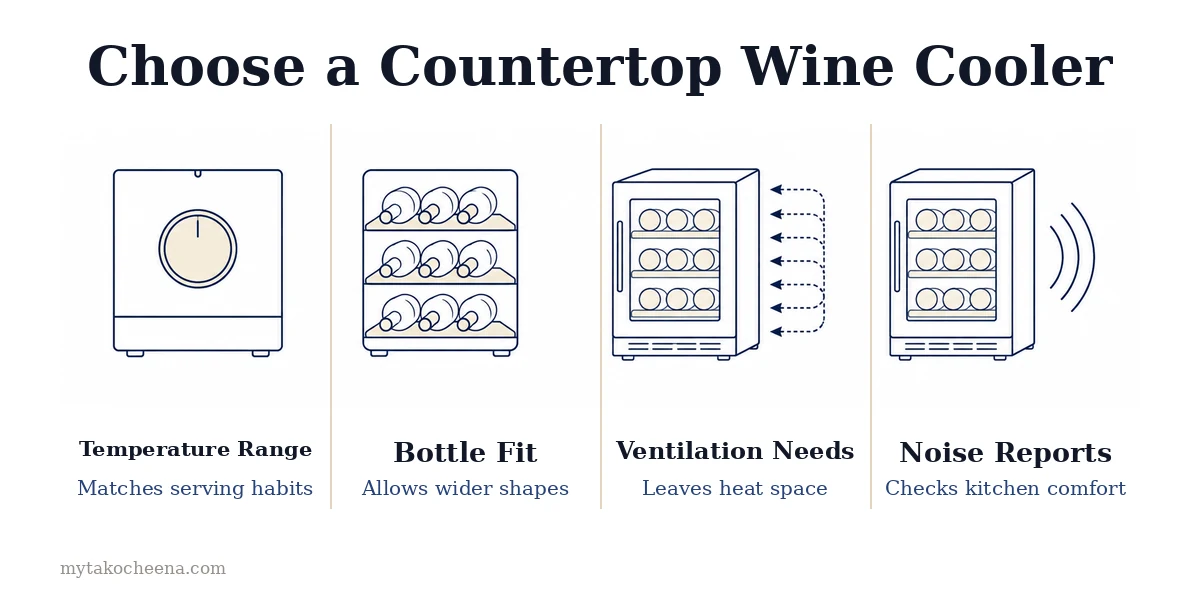
Published specifications usually promise a storage range, not cellar-grade precision.
Buyers report acceptable performance for casual storage, but more frustration when the unit is packed tightly, placed under cabinets, or used in a warm kitchen.
| Category item | Typical published range | What owners commonly report |
| Temperature setting range | About 40°F-66°F | Works better near the middle of the range than at the coldest setting. |
| Countertop bottle capacity bands | About 6-18 standard bottles | Real capacity drops with wider bottles or mixed shapes. |
| Recommended rear or side clearance | About 2-6 inches | Poor clearance is often linked to noise, heat buildup, and cycling. |
The parts that usually hold up best are the cabinet shell, wire shelves, glass door, and basic controls. Owner reports describe these as simple components with few surprises if the cooler is not overloaded or moved frequently.
The weak points are consistent across complaints. Fans can get louder, compressors or thermoelectric modules may cycle more often, and door gaskets can lose effectiveness if the unit sits unevenly or is opened constantly.
- Recurring complaint: the displayed temperature does not always match what owners expect from the set point.
- What holds up: shelves, door panels, exterior finishes, and basic digital controls usually age acceptably.
- What fails early: fans, cooling modules, interior lights, and seals appear most often in negative owner reports.
Manufacturer documentation usually warns against garages, direct sun, built-in installation without ventilation, and operation outside rated ambient conditions.
Those warnings match many complaints, especially units placed beside ovens, dishwashers, or sunny windows.
| Design choice | Benefit | Reported drawback |
| Compact countertop body | Easy placement and low footprint | Less thermal mass, so temperatures swing more easily. |
| High stated bottle count | Better use of shelf space | Capacity assumes standard Bordeaux-style bottles. |
| Glass door | Convenient visibility | More sensitive to room heat and sunlight. |
The safest expectation is not long-term aging storage. These appliances are better viewed as short-term serving coolers for reds, whites, and sparkling wine consumed soon.
Before buying, compare the manual, warranty terms, clearance requirements, and owner reviews mentioning noise after months of use. That evidence is more useful than capacity claims alone.
Frequently Asked Questions
Countertop wine cooler specs look similar until you compare capacity, temperature range, clearance, and installation type.
What size countertop wine cooler should I buy?
Match bottle count to your habits, then allow room for larger shapes. Published capacity usually assumes standard Bordeaux-style bottles, so Champagne, Pinot Noir, and odd-shaped bottles can reduce usable space.
| Capacity band | Typical use |
| 6-12 bottles | Small apartments, occasional wine storage, limited counter space |
| 12-24 bottles | Regular home use, mixed reds and whites, more flexible shelving |
| 24-36 bottles | Larger countertop footprint, entertaining, short-term collection storage |
What temperature range should a countertop wine cooler have?
Look for a published range that fits your main drinking style. Consistency and room-temperature limits matter as much as control-panel numbers.
| Use case | Typical range |
| Red wine storage | 50-65°F |
| White wine serving | 40-55°F |
| Sparkling wine chilling | 38-50°F |
Is a single-zone or dual-zone wine cooler better?
Single-zone models suit buyers who mainly store one wine style. Dual-zone models help when reds and whites need different serving temperatures.
Compare the listed range for each zone. Some dual-zone units have narrower compartments, so confirm both zones fit your bottles.
Can I put a countertop wine cooler inside a cabinet?
Only install one inside a cabinet if the manual allows it. Many freestanding units need open airflow around the sides, rear, or top.
| Location | Typical clearance range |
| Sides | 2-6 inches |
| Rear | 2-6 inches |
| Top | 4-12 inches |
Are thermoelectric or compressor wine coolers better?
Thermoelectric coolers are often quieter and lighter, but can struggle in warm rooms. Compressor models usually handle heat better, but may create more vibration and cycling noise.
Check the ambient operating range. A cooler near a sunny window, oven, or garage wall needs more cooling headroom.
How much noise should I expect from a countertop wine cooler?
Published noise ratings are not always listed, so buyer reviews can reveal humming, fan noise, or compressor cycling complaints.
Look for tone, not only loudness. A low hum may be acceptable, while rattling shelves or frequent clicking can distract.
Do countertop wine coolers use a lot of electricity?
Energy use depends on cooling system, room temperature, insulation, and door opening frequency. Compare the Energy Guide label or annual energy use when available.
| Cooler type | Common listed wattage range |
| Small thermoelectric units | 50-100 watts |
| Small compressor units | 70-150 watts |
What features matter most before buying?
Prioritize fit, temperature control, and daily use. Cosmetic extras matter less than dimensions, flexible shelving, and ventilation requirements.
- Adjustable shelves: useful for larger bottles.
- Reversible door: helpful in tight layouts.
- Interior light: convenient, but should stay cool.
- Lock: useful for shared spaces.