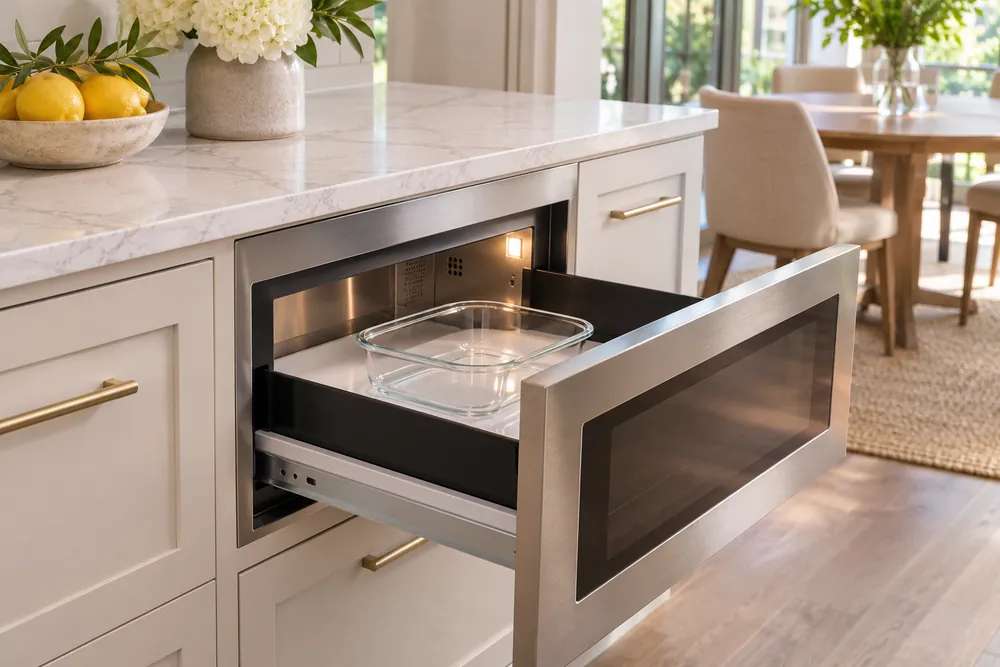
Quick Answer: A microwave drawer is a built-in microwave that slides out from beneath a counter or wall oven, placing the door at waist or counter height instead of overhead.
Choosing one comes down to verifying your cabinet cutout and electrical setup, comparing published capacity and wattage among major brands, and weighing which auto-cook and sensor features match how you actually cook.
How to Choose a Microwave Drawer for Your Kitchen
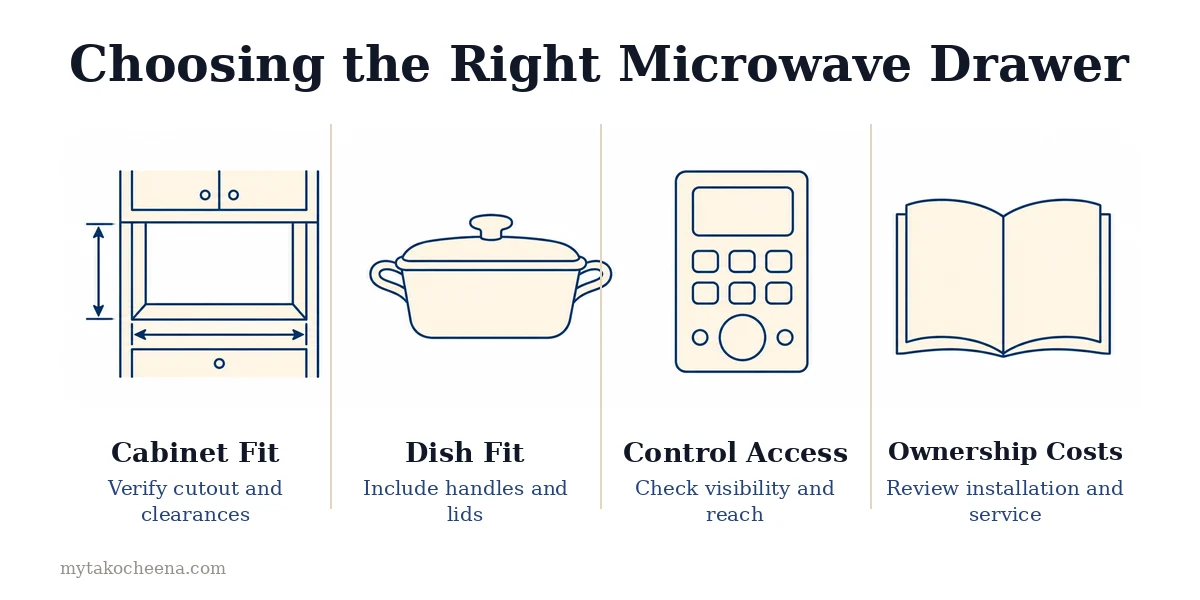
Microwave drawers should fit your cabinetry, everyday dishes, and cooking habits before their finish enters the decision.
Compare published specifications with installation instructions, then use reported owner experience to flag usability concerns rather than treating reviews as controlled performance tests.
Confirm Cabinet Fit Before Ordering
Advertised width describes the appliance category, not the required cabinet opening.
Check the installation drawing for cutout dimensions, support requirements, electrical placement, and space for the drawer to extend without blocking a walkway.
| Specification | Category range | Buying implication |
| Advertised width | 24–30 inches | Use the installation drawing, not nominal width, to size the opening. |
| Microwave cooking output | 950–1,000 watts | Compare rated output separately from electrical input requirements. |
These ranges are screening references, not installation guarantees. Confirm the exact appliance’s electrical requirements and required anti-tip hardware before committing to cabinetry or an outlet location.
Match Interior Space to Your Dishes
Published capacity cannot tell you whether your favorite casserole dish will fit. Look for usable interior dimensions and account for handles, lids, and the height needed to lift hot food out safely.
- Controls: Check visibility and reach from your planned installation height.
- Cooking: Prioritize sensor reheating, defrost options, and adjustable power settings you will actually use.
- Cleaning: Examine access to the drawer floor, interior ceiling, and spill-prone edges.
Weigh Convenience Against Ownership Costs
A drawer frees counter space but adds installation demands and a powered opening mechanism to maintain. Compare warranty coverage, local service availability, and installed cost, including cabinet modifications.
Read owner reports for recurring complaints about controls, opening behavior, or service delays. Favor features that solve your daily needs over a longer preset menu.
What Is a Microwave Drawer and Who Is It For
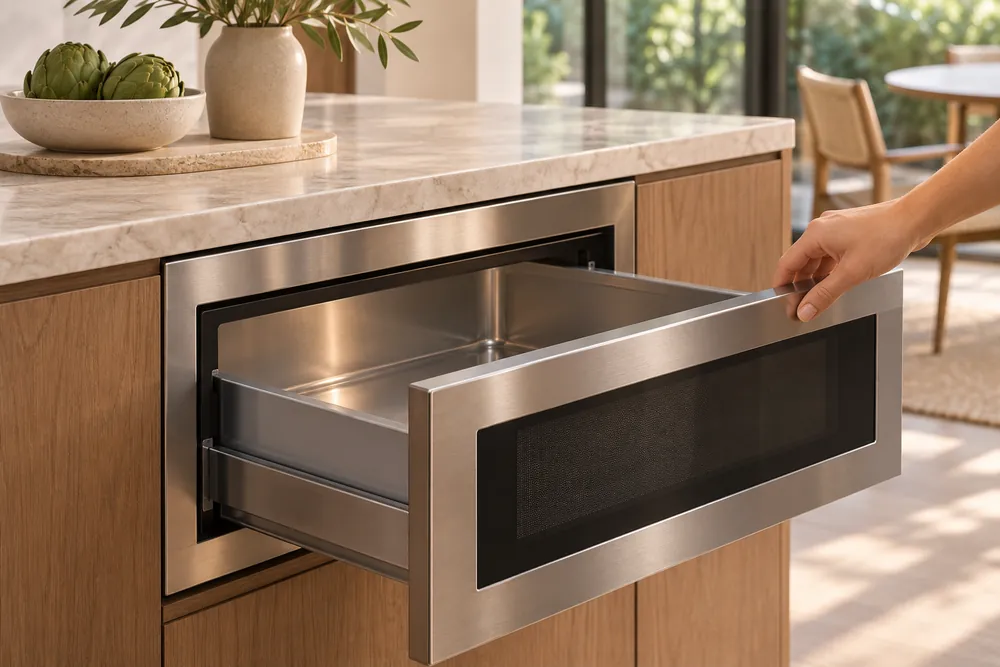
A microwave drawer is a built-in microwave that slides out from base cabinetry, letting you lower food into its cooking compartment from above.
It suits kitchens where keeping counters clear and placing reheating near a prep area matter.
How the Drawer Format Works
Food sits inside a compartment that opens horizontally, often through powered controls. Check the manual for dish placement, usable interior height, and whether covers or tall containers fit without touching the top.
Drawer installation requires a specified cabinet opening, suitable electrical access, and any support or anti-tip provisions listed by the manufacturer.
Published appliance width is not the cabinet cutout width; use the installation drawing before ordering cabinetry.
| Specification | Typical range | Buying implication |
| Nominal appliance width | 24–30 inches | Match the appliance format to your cabinetry plan, then verify the exact cutout. |
| Microwave cooking output | 900–1,000 watts | Check cooking output, not electrical input, when reviewing heating power. |
Who Should Consider One
- Kitchen remodelers: Plan the drawer into an island or base cabinet while electrical work and cabinet sizing remain flexible.
- Frequent reheaters: Look for accessible controls, straightforward presets, and enough usable space for your everyday dishes.
- Households planning accessible layouts: Evaluate reach, visibility, and safe lifting at the proposed installation height. Accessibility depends on the user and layout.
What Could Make It a Poor Fit
A drawer uses base-cabinet storage and needs an unobstructed path into the aisle. Check that an open drawer will not interfere with nearby doors, walking routes, or someone working at the counter.
Low placement also deserves attention around children and hot liquids. Before buying, review control-lock behavior, cleaning instructions, service access, and installation requirements rather than choosing on appearance alone.
Microwave Drawer vs. Countertop and Over-the-Range Models
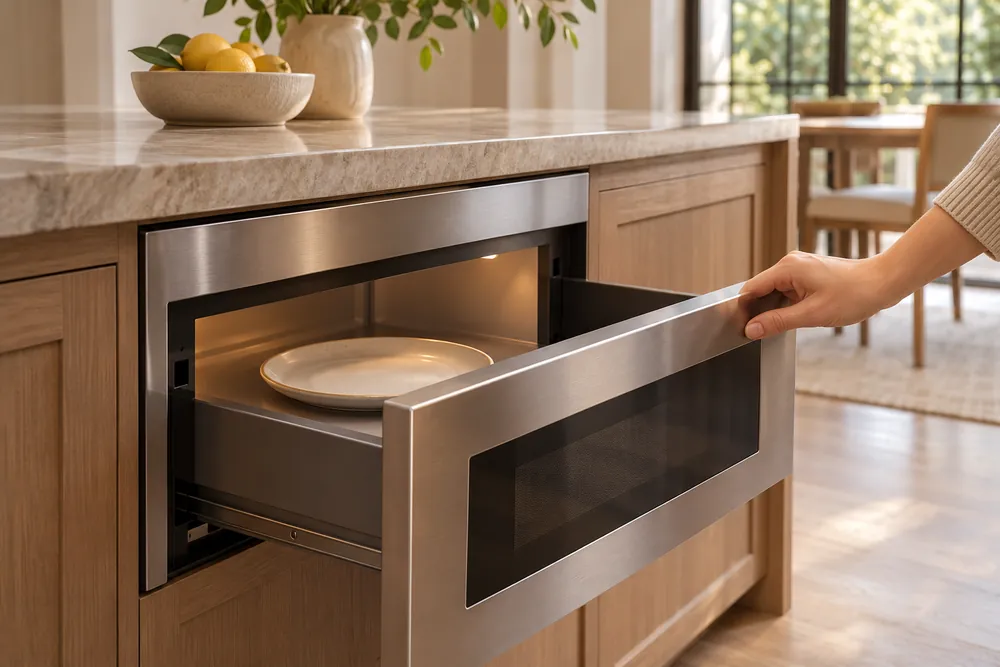
Microwave drawers place the cooking cavity below the counter and open toward you.
Compare published cooking output, installation requirements, and access before choosing a format; capacity alone does not tell you whether your everyday dishes will fit.
| Feature | Drawer | Countertop | Over-the-range |
| Typical cooking output | 900–1,000 watts | 700–1,200 watts | 900–1,100 watts |
| Placement | Dedicated base-cabinet opening | Counter or manufacturer-approved shelf | Mounted above the cooking surface |
| Space trade-off | Preserves countertop space; occupies cabinet storage | Uses countertop workspace; avoids dedicated cabinetry | Preserves countertop space; occupies overhead space |
| Dish access | Load downward into an extended drawer | Load through a front door at counter height | Lift dishes into an elevated cavity |
| Cooktop ventilation | Requires a separate ventilation solution | Requires a separate ventilation solution | Includes ventilation; check ducted or recirculating configuration |
Check the installation documents
For a drawer, use the installation manual’s cutout dimensions, not the advertised appliance width. Confirm cabinet support, electrical placement, required clearances, and space for full extension without blocking a walkway.
For an over-the-range unit, check mounting requirements and permitted spacing above your cooking appliance. Review exhaust routing and filter requirements, because recirculation does not discharge cooking air outdoors.
Match access to everyday use
Check usable cavity dimensions against your casserole dishes, including handles and lids. Drawer access still requires lifting hot containers upward, so consider reach, grip, and the landing surface nearby.
Use reported owner experience to investigate control visibility, cleaning access, and service availability.
Confirm cooking output rather than electrical input wattage, and check whether sensor cooking, child locks, and accessible controls are actually included.
Sizing and Installation Requirements to Check Before Buying
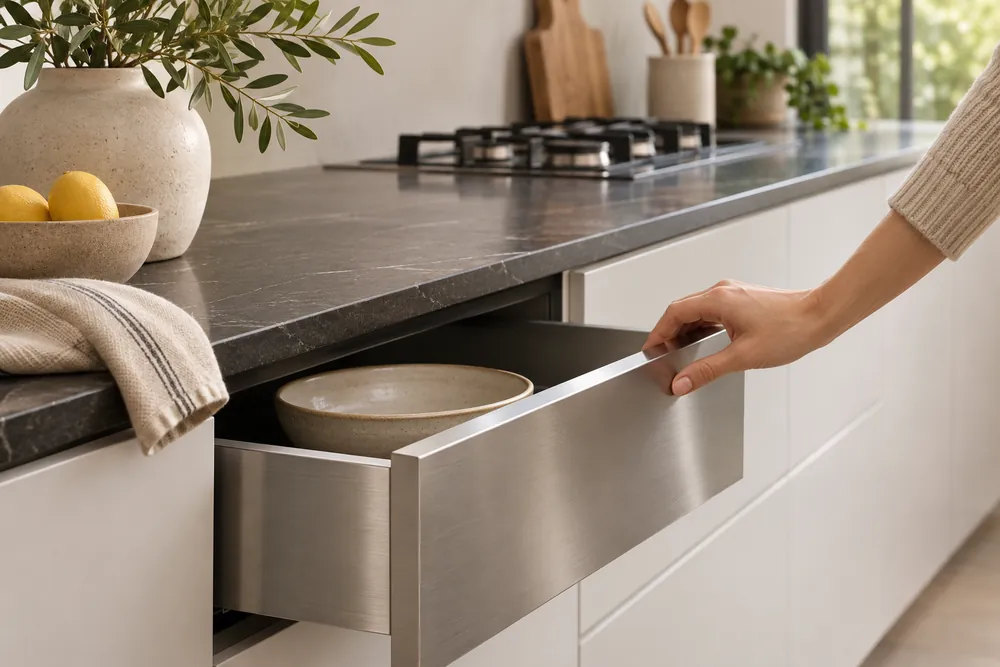
Microwave drawer fit depends on the cabinet cutout, support platform, and space needed for the drawer to open.
Compare the published installation guide with your actual cabinetry before buying; advertised appliance width does not establish the required opening.
Separate appliance dimensions from cabinet requirements
| Specification | Common range | Buying implication |
| Advertised appliance width | 24–30 inches | This describes the appliance’s nominal size, not a universal cabinet opening. Verify the specified cutout and face dimensions. |
| Published cooking capacity | 1.2–1.4 cubic feet | Volume alone does not establish usable dish space. Check interior dimensions and the manufacturer’s container guidance. |
Use these ranges for initial shopping, not construction dimensions. Obtain the exact installation drawing for any candidate, including its requirements for standard or flush mounting.
Check the installation details before ordering
- Cutout geometry: Measure opening width, height, and depth at several points. Account for face frames, trim overlap, and any required rear space.
- Support and anchoring: Confirm the shelf can carry the specified installed load. Follow the manufacturer’s anti-tip block or bracket instructions.
- Electrical access: Verify voltage, circuit requirements, grounding, and the permitted receptacle location. Keep the outlet and cord clear of the appliance’s installation envelope.
- Drawer travel: Check the fully extended drawer’s projection. Include nearby handles, opposing cabinetry, and space to stand while lifting hot dishes.
- Ventilation and service: Preserve every specified vent opening and clearance. Plan access for unplugging and removing the appliance without dismantling surrounding cabinetry.
Flush installation can require additional cabinet preparation and a compatible installation arrangement. Have your cabinetmaker or installer review the published drawing before cutting finished panels or relocating electrical service.
Wattage, Power Levels and Cooking Performance
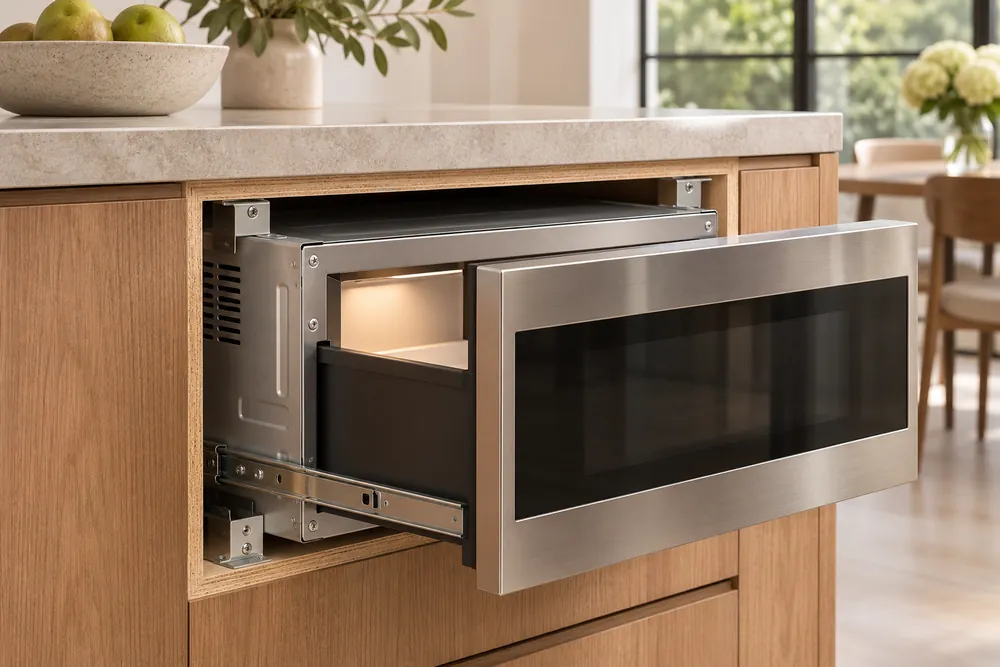
Wattage decides how fast a microwave drawer cooks, and most models in this category cluster in a narrow band.
Drawer-style units typically run between 950 and 1,000 watts, with some compact versions dipping to around 600 watts for lighter duty.
Countertop microwaves span a wider range, roughly 700 to 1,200 watts, so a drawer buyer is usually choosing between “strong” and “slightly stronger” rather than high versus low.
| Microwave Type | Common Wattage Band | What It Means for Cooking |
|---|---|---|
| Drawer models | 950–1,000 watts | Fast reheating, even defrosting |
| Countertop models | 700–1,200 watts | Widest spread of speed and price |
| Over-the-range models | 900–1,000 watts | Comparable speed, venting focus |
| Compact units | 600–800 watts | Slower cook times, smaller loads |
Power Levels Matter as Much as Raw Wattage
Most drawers offer around 10 power levels, letting you simmer, soften, or defrost at reduced output. Fine-grained control matters more than peak wattage for delicate tasks.
- High power (around 950–1,000 watts) suits reheating leftovers and boiling liquids quickly.
- Medium levels handle cooking rice or simmering sauces without splatter.
- Low levels (10–30% output) defrost meat evenly and soften butter or chocolate.
Sensor Cooking and Reported Performance
Many drawer models include humidity sensors that adjust cook time automatically. Owner feedback suggests sensor modes work well for reheating but vary on defrosting, so manual power control remains useful.
A wattage difference of 100 watts shifts cook times by roughly 10%, which is noticeable on long cycles but minor for quick reheats. Compare sensor features and power-level count alongside the raw number before deciding.
For a buyer holding a tape measure, the takeaway is to prioritize usable space over a small difference in rated power.
Check the installation drawing against your cabinet opening, then compare the interior dimensions with the dishes you actually use.
Measure your tallest microwaveable mug and your widest casserole, including its handles. A dish that fits inside may still be awkward to lift out when hot.
Leave room for your hands and check any cookware restrictions in the appliance manual.
Think about access during cooking, not merely loading. If you regularly stir oatmeal or turn food halfway through reheating, make sure the open drawer gives you a comfortable reach.
Nearby cabinet pulls and narrow aisles can make that routine frustrating.
Sensor settings are conveniences, not guarantees that every portion will emerge evenly heated. Follow the manual’s guidance on containers, covers and food quantities.
For leftovers or dense dishes, allow standing time and check the center before deciding they are ready.
Read the controls as closely as the dimensions. Look for straightforward ways to change power, add time and pause a cycle.
If several people share the kitchen, settings they can understand quickly may prove more useful than additional automatic programs.
Finally, match expectations to the appliance’s stated capabilities. Do not assume a drawer will brown or crisp food unless it explicitly supports those functions.
Choose the unit that accommodates your cookware, cooking habits and installation requirements, rather than chasing speed alone.
Features Worth Paying For and Ones to Skip
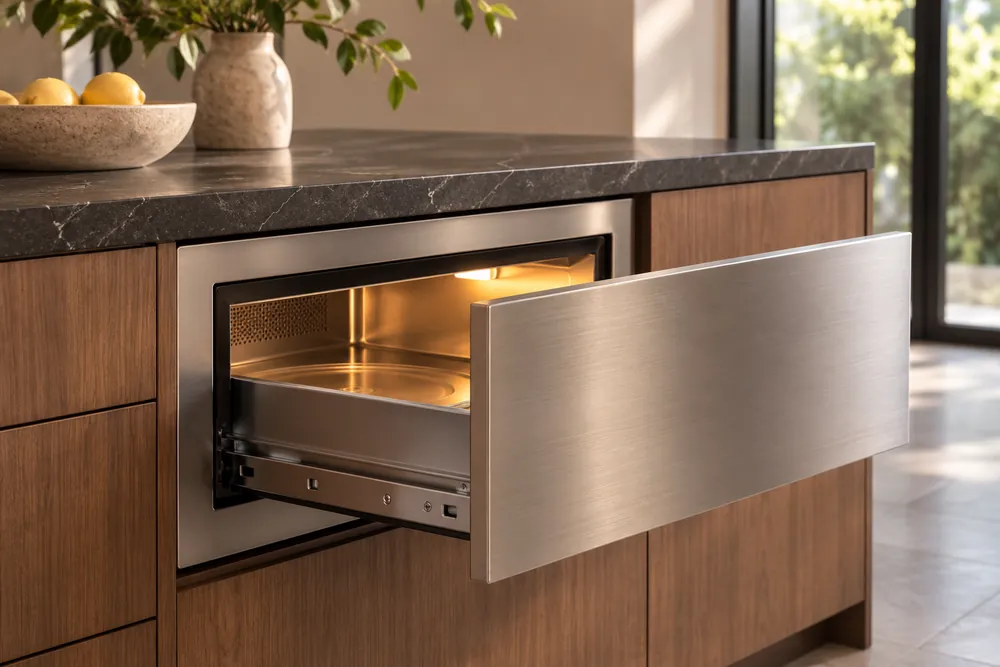
Microwave drawer features should earn their place through easier loading, useful cooking controls, or simpler cleanup.
Compare published specifications and installation manuals before paying for convenience labels that do not explain what the appliance actually does.
Start With Useful Specifications
Capacity and cooking output provide useful screening criteria, but neither guarantees satisfying results.
Check usable interior dimensions against your cookware, and distinguish microwave cooking output from electrical input or required circuit ratings.
| Specification | Category range | Buying implication |
| Advertised capacity | 1.2–1.4 cubic feet | Confirm dish width and height; stated volume does not establish cookware fit. |
| Microwave cooking output | 950–1,000 watts | Use this as a screening band, not proof of heating evenness. |
Features Worth Considering
- Sensor reheating: Useful for leftovers because compatible programs adjust cooking based on detected moisture. Read the manual for supported foods, covering instructions, and limitations.
- Accessible controls: Check display visibility and button placement from your intended operating position. Angled or opening control panels deserve attention in an undercounter installation.
- Drawer operation: Look for clearly documented opening, closing, and obstruction behavior. Owner reports can flag recurring complaints about spills, noise, or inconsistent movement.
- Control lock: Verify exactly what it disables. A cooking-control lock does not necessarily prevent physical drawer access.
Extras You Can Skip
Preset menus deserve little weight unless their foods and portions match your routine.
App connectivity also needs a specific purpose, such as a notification you will actually use; confirm which functions require an account or network connection.
Decorative trim should solve a documented installation or design need. Before ordering accessories, check what comes in the box and whether the installation manual requires a particular kit for your cabinet configuration.
What a Microwave Drawer Costs to Buy and Install
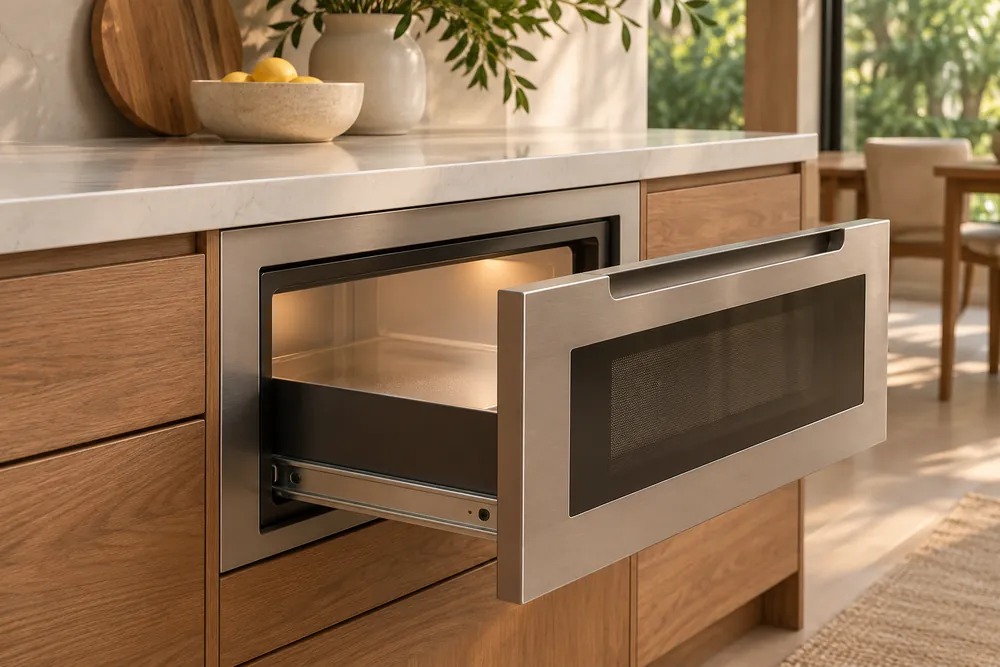
Microwave drawer costs include the appliance, installation labor, and any cabinet or electrical changes.
Compare the complete installed price rather than the advertised price, because fitting a drawer into an existing kitchen can cost more than preparing space during a remodel.
Budget for the appliance and the opening
Use these broad US planning ranges as a starting point, not a contractor quote. Check current retailer listings and installation manuals before committing, since premium finishes and difficult retrofits can push costs higher.
| Item | Category range | What to check |
| Appliance purchase | $1,000–$2,500 | Delivery, tax, and optional trim may be extra. |
| Straightforward installation labor | $200–$600 | Assumes a prepared opening and suitable electrical supply. |
| Common nominal appliance widths | 24–30 inches | Nominal width is not the required cabinet cutout. |
| Common rated microwave output | 950–1,000 watts | Cooking output is not electrical input or circuit sizing. |
Separate necessary work from upgrades
Cabinet alterations and electrical work need separate estimates. A low installation charge may cover securing the appliance but exclude modifying drawers, relocating an outlet, or repairing surrounding finishes.
- Cabinet preparation: Confirm the specified cutout, support requirements, and clearance for the open drawer.
- Electrical preparation: Have an electrician verify the supply, grounding, outlet location, and any dedicated-circuit requirement in the manual.
- Delivery and removal: Ask whether carrying the appliance indoors, unpacking, and hauling away old equipment are included.
Pay more for features you will use, not an assumed improvement in cooking performance. Hidden controls, powered opening, and matching finishes may add convenience without changing the published output.
Request an itemized installed quote before ordering. Keep the installation manual attached to that quote so the cabinetmaker and installer price the same requirements.
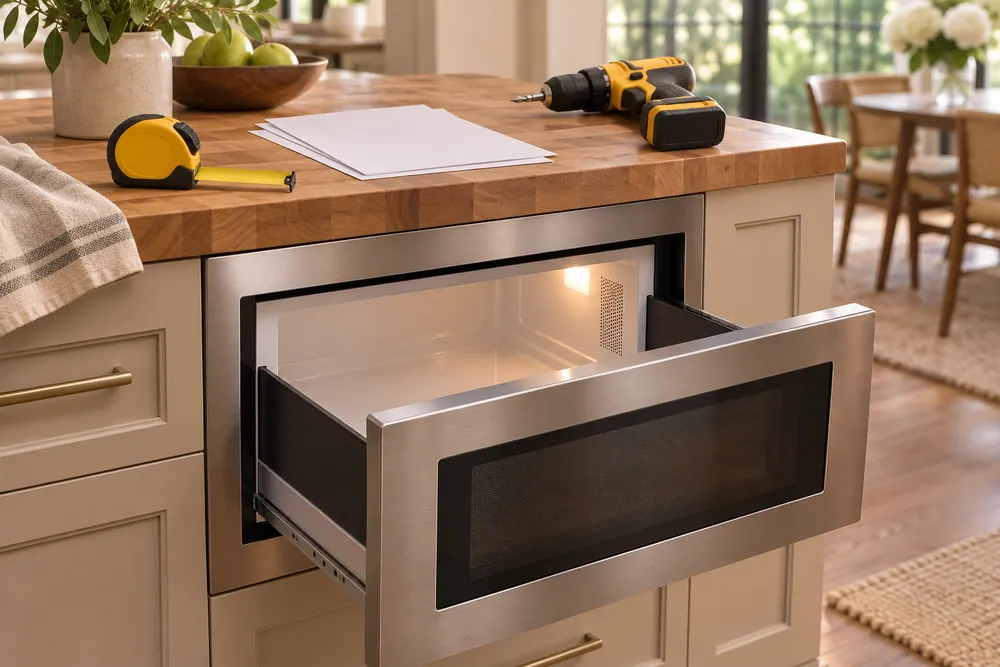
What Buyers Notice Once It Is Installed
Microwave drawer ownership often comes down to access, cleaning, and repair confidence.
Owner reports repeatedly flag failures involving heating or drawer operation, but published reviews do not establish which complaint occurs most often across the category.
What earns lasting praise
Positive owner reports emphasize clear counters and lifting dishes out from above. Smooth drawer travel and dependable reheating earn ongoing praise, although satisfaction reports alone cannot establish an expected service life.
Cleaning access deserves attention before purchase.
Manufacturer care instructions explain how to wipe the interior and protect drawer mechanisms; reaching the cavity ceiling can still require bending, depending on installation height and mobility.
What can disappoint early
Negative owner reports include loss of heat, unresponsive controls, and drawers that stop opening or closing correctly. These are reported failure modes, not proof that every brand shares the same defect or failure rate.
- Check service access. Ask who handles local warranty repairs and whether removing the appliance from its cabinet creates additional charges.
- Read warranty exclusions. Manufacturer documentation distinguishes covered defects from installation problems, misuse, and other excluded costs.
Specifications behind everyday expectations
Published specifications from Sharp and Thermador provide useful category reference points. These ranges describe available configurations, not guaranteed cooking performance or usable dish space.
| Specification | Reference range | Buying implication |
| Advertised capacity | 1.2–1.4 cubic feet | Check interior dimensions and dish height separately. |
| Microwave output | 950–1,000 watts | Follow food instructions and adjust heating as needed. |
Prioritize reviews that explain the installation, failure symptoms, and repair outcome.
Compare those accounts with the exact appliance’s installation manual and warranty rather than treating an isolated complaint as a reliability verdict.
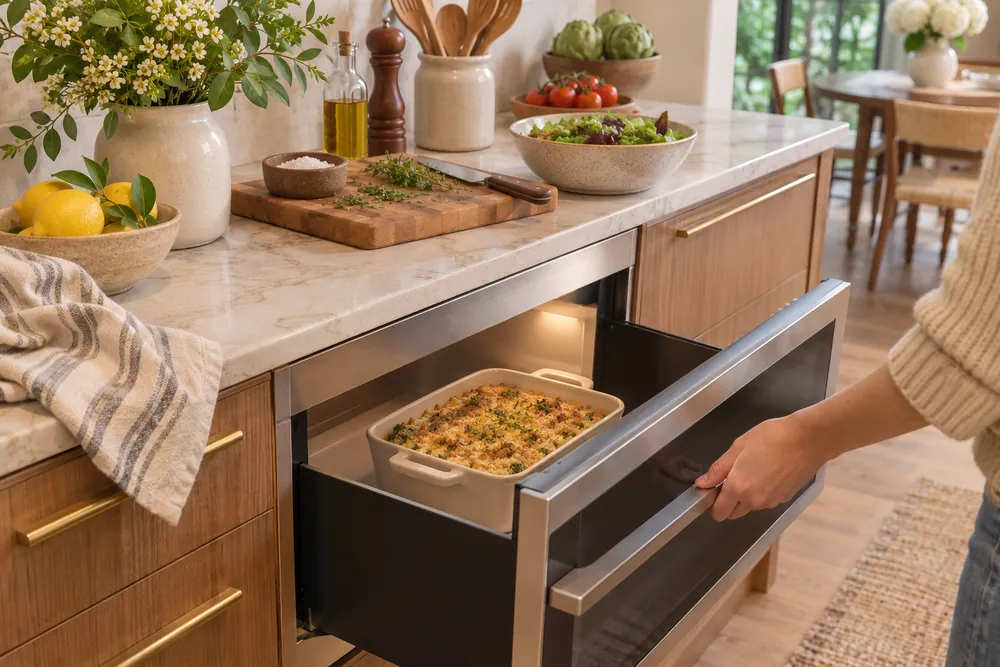
Frequently Asked Questions
Microwave drawers need a cabinet fit check before a feature comparison.
These answers explain how to read published specifications, plan installation, and judge everyday usability without treating advertised dimensions as a universal installation template.
What size microwave drawer will fit my cabinets?
Start with the installation drawing, not the advertised appliance width.
Match the required cutout, cabinet depth, support platform, and drawer travel to your cabinetry, including any nearby handles or doors that could obstruct opening.
What microwave drawer specifications should I look for?
These category ranges provide a starting point for reviewing listings.
Nominal width is not the cabinet opening size, and cooking output is not electrical input; verify both distinctions in the manufacturer’s documentation before ordering.
| Published specification | Category range | Buying relevance |
| Nominal appliance width | 24–30 inches | Check the separate cutout drawing |
| Microwave cooking output | 900–1,000 watts | Confirm recipe adjustment guidance |
Does a microwave drawer need a dedicated circuit?
Check the electrical requirements for the appliance you select; a dedicated circuit may be specified.
Have an electrician confirm circuit capacity, grounding, receptacle placement, and local code requirements rather than assuming an existing cabinet outlet is suitable.
Can I install a microwave drawer under a cooktop?
Only choose this arrangement if the applicable installation instructions permit it.
Check restrictions for the cooktop and drawer together, including heat separation, utility routing, ventilation, and service access; available cabinet space alone does not establish compatibility.
Are microwave drawers easy to clean?
Look for an accessible cavity, wipeable surfaces, and instructions explaining how to remove spills safely.
Owner reports can highlight awkward corners or troublesome drawer tracks, but check the care guide before using cleaners or attempting to remove components.
Which microwave drawer features are worth paying for?
Prioritize features that address your routines, such as sensor reheating, accessible controls, and a control lock.
Read the operating manual to confirm what each setting actually does, especially whether the lock disables heating, drawer movement, or both.
What should I include in my microwave drawer budget?
Request an installed quote covering cabinetry changes, electrical work, delivery, and any required trim or mounting accessories.
Check warranty terms and local service availability before buying, because future repairs may require access to the surrounding cabinetry.