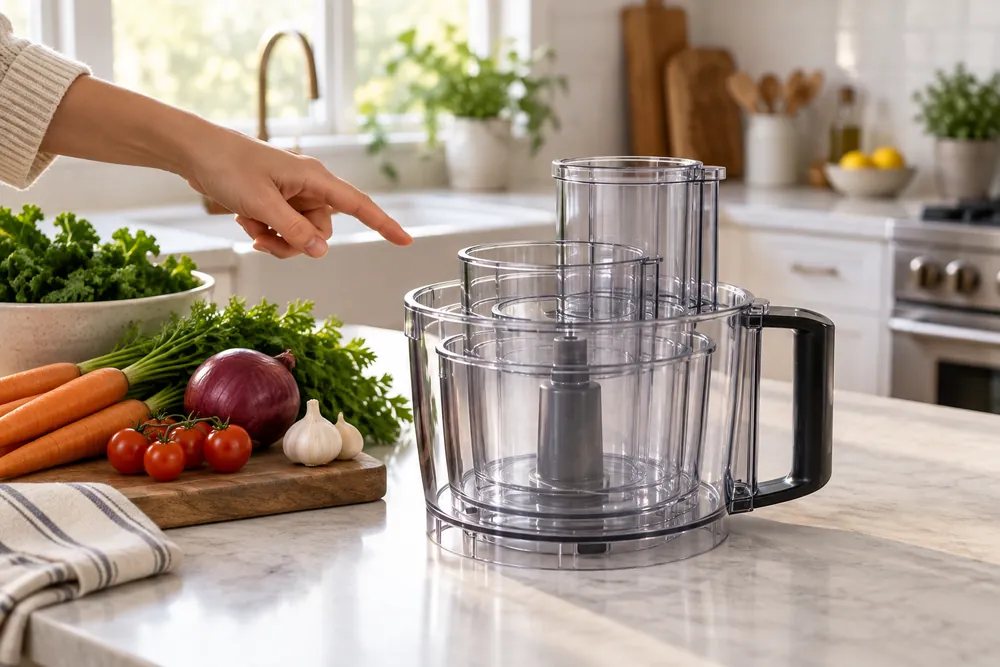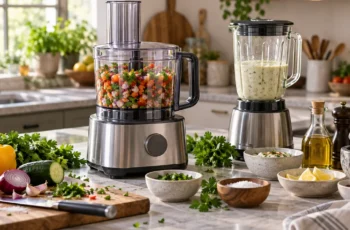
Quick Answer: A food processor bowl size is the working capacity that decides how much food you can chop, slice, shred, mix, or knead at one time.
Most homes do best with a mid-size bowl for daily prep, while small bowls suit sauces and quick chopping, and larger bowls suit batch cooking, dough, or big families.
Why Food Processor Bowl Size Matters
Bowl capacity controls how much food you can process without spilling, stopping, or working in repeated batches. It also affects storage space, cleanup effort, and how well the blade reaches smaller amounts of food.
Published bowl size is usually listed in cups, but that number does not always mean usable liquid capacity.
Dry chopping, dough mixing, slicing, and pureeing all load the bowl differently, so size should match the job, not only the countertop footprint.
| Bowl size band | Typical published capacity range | Best-fit use |
| Mini chopper | 2-4 cups | Garlic, herbs, dips, small sauces |
| Compact processor | 5-8 cups | Small households, prep bowls, limited storage |
| Full-size processor | 9-14 cups | Shredding, slicing, dough, family meals |
| Large-capacity processor | 15-16 cups | Batch cooking, entertaining, high-volume prep |
A larger bowl gives vegetables more room to move, which can help with even chopping. Too large a bowl can be awkward for small batches because ingredients may sit below the blade path or smear along the sides.
A smaller bowl is easier to wash, lift, and store. The trade-off is batch work, especially for cabbage, potatoes, cookie dough, or shredded cheese where volume builds quickly.
| Specification | Common range to check | Why it matters |
| Under-cabinet clearance | 15-18 inches | Helps confirm whether the assembled unit fits on a counter |
| Motor power band | 250-1200 watts | Gives context for light chopping versus heavier dough tasks |
Capacity also changes how attachments feel in daily use. A wide feed tube and slicing disc matter more on a larger processor, while a small work bowl insert can make a full-size machine more flexible.
- Choose smaller for sauces, baby food, herbs, and kitchens with tight storage.
- Choose mid-size for everyday chopping, shredding, and prep for one to three people.
- Choose larger for dough, batch cooking, meal prep, and frequent entertaining.
Owner feedback often centers on mess, storage, and whether the bowl feels too big or too small for routine meals. Compare published capacity, dimensions, and included bowls together before treating cup size as the only deciding factor.
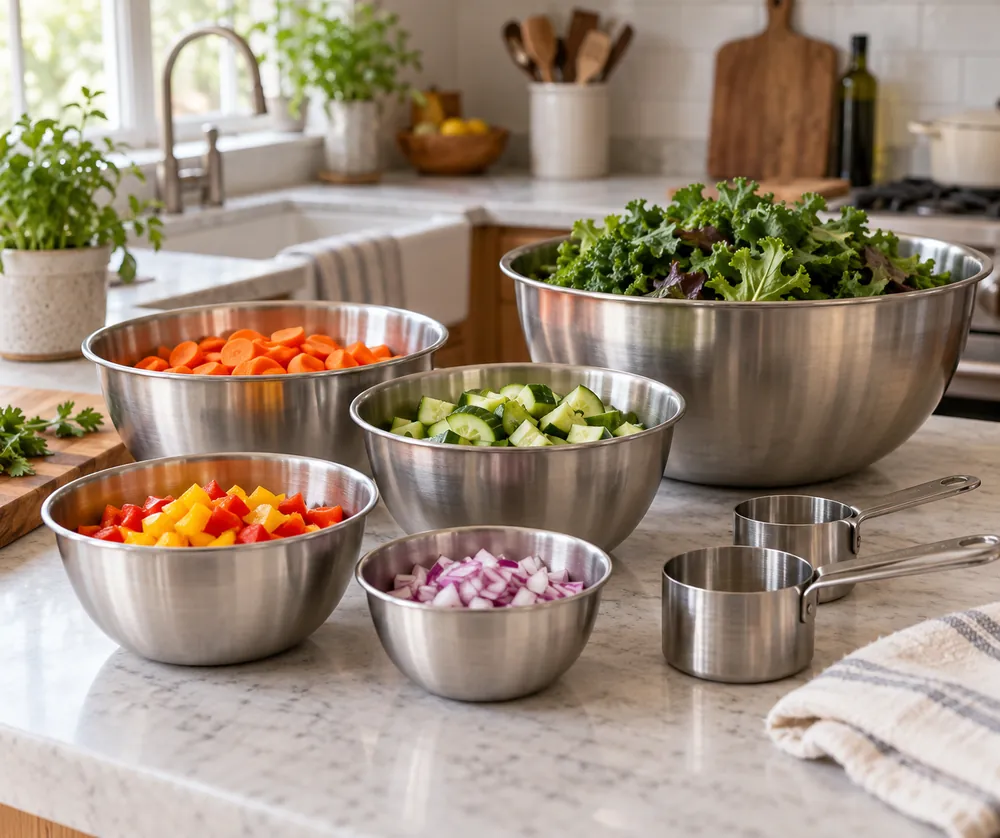
How Food Processor Capacity Is Usually Measured
Food processor capacity usually means the total bowl volume printed in the product specifications, not the amount you can safely chop, knead, or puree. Published bowl size is useful for comparison, but only as a starting point.
Brands usually list capacity in cups for US shoppers. That number often describes the bowl up to its marked or physical limit, while practical working capacity depends on the task, ingredient texture, and blade movement.
| Category | Published bowl range | Typical fit |
| Mini chopper | 2 to 4 cups | Herbs, garlic, dressings, small prep jobs |
| Compact processor | 5 to 8 cups | Small households, dips, vegetables, modest batches |
| Full-size processor | 9 to 14 cups | Family prep, shredding, slicing, pie dough, larger batches |
| Large-capacity processor | 15 to 16 cups | Bulk prep, frequent entertaining, bigger dough or slaw batches |
Dry, chunky ingredients can usually sit closer to the published bowl size than liquids or fine purees. Liquid ingredients climb the bowl wall during processing, so many bowls have a lower liquid fill line.
| Specification term | What it usually means | Buying implication |
| Total bowl capacity | Maximum bowl volume listed by the maker | Best for comparing product size |
| Liquid fill range | Often lower than total capacity | Important for soups, sauces, and thin batters |
| Work bowl clearance | Space needed above and around the machine | Affects storage and countertop use |
Counter space matters because a bigger bowl usually comes with a wider base and taller feed tube. Many US upper cabinets leave a standard opening that can limit where a processor lives.
| Kitchen measurement | Common range | Why it matters |
| Upper-cabinet clearance above counter | 15 to 18 inches | Determines whether the processor can sit out assembled |
| Common full-size processor height band | 14 to 18 inches | Shows why lid and feed-tube height can be a storage issue |
Capacity labels to read carefully
- Work bowl: the main published size used in product listings.
- Mini bowl: a smaller insert for herbs, nuts, and sauces, not a second full processor.
- Feed tube: affects prep time, but it is not bowl capacity.
- Dough capacity: often separate from cup capacity because dough stresses the motor and blade differently.
For apples-to-apples shopping, compare the listed bowl size, liquid guidance, included inserts, and storage height together. A larger number helps only when the bowl, motor category, and kitchen fit match how you cook.
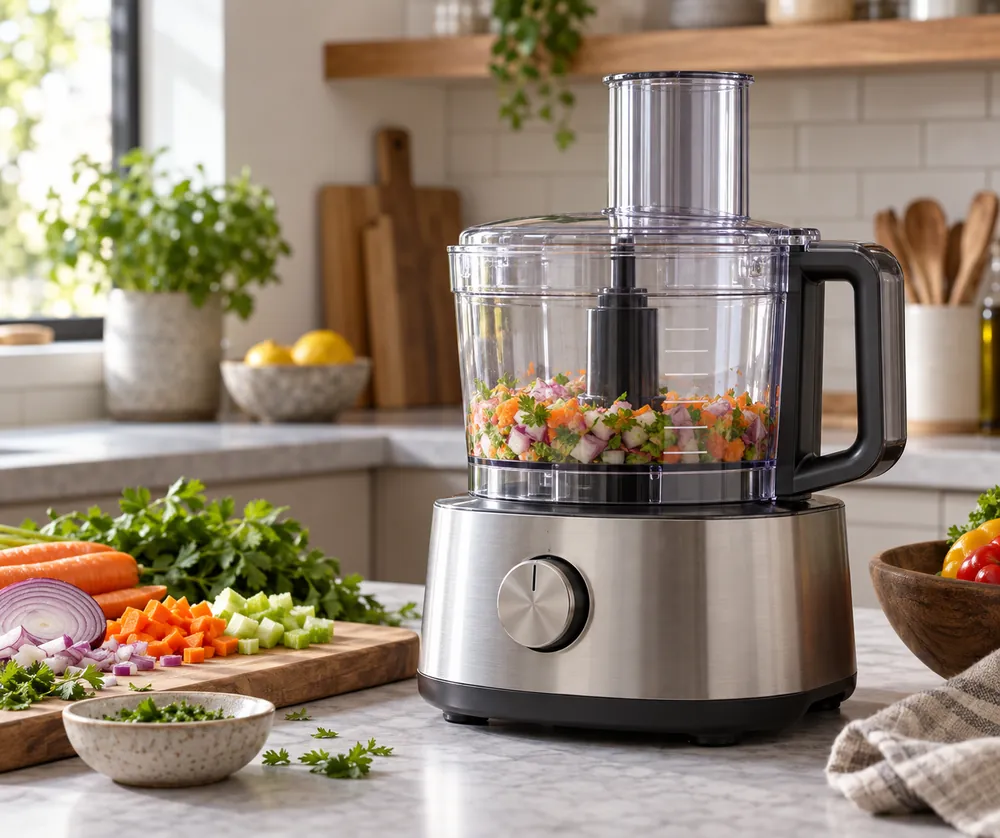
Small Bowls for Chopping, Sauces, and Baby Food
Small food processor bowls are the right fit for garlic, herbs, nuts, dressings, and single-batch baby food. They save counter space, clean faster than full-size work bowls, and usually cost less than larger processors.
Capacity is the first specification to compare.
Published listings often group small processors into mini choppers, compact processors, and small prep bowls, but the useful difference is how much food can circulate without packing against the lid.
| Category | Typical published capacity range | Best fit |
| Mini chopper | 1.5 to 3 cups | Garlic, herbs, small nut portions, vinaigrettes |
| Small prep processor | 3 to 5 cups | Salsa, pesto, baby food, chopped vegetables |
| Compact work bowl | 5 to 7 cups | Small dough tasks, larger dips, meal-prep chopping |
A bowl that is too small can smear soft food instead of chopping it. A bowl that is too large may leave small ingredients below the blade path, especially with herbs, garlic, or a few tablespoons of sauce.
What small bowls do well
- Chopping: Look for a short bowl and low blade position so small ingredients meet the cutting edge quickly.
- Sauces: A drizzle hole or pour opening helps with mayonnaise, dressing, chimichurri, and pesto.
- Baby food: Smooth texture depends on blade reach, liquid amount, and stopping to scrape the sides.
Power ratings vary across this category, and higher wattage does not automatically mean cleaner chopping.
For small processors, published motor ratings commonly fall into broad bands that overlap between mini choppers and compact machines.
| Processor size | Usual published wattage range | Trade-off to compare |
| Mini chopper | 100 to 250 watts | Easy storage, lighter-duty chopping |
| Small prep processor | 250 to 450 watts | More versatility, larger footprint |
| Compact processor | 400 to 700 watts | Better for dense mixes, less convenient for tiny batches |
Storage also matters. Many small processors fit under standard upper cabinets, but check total height, cord storage, and whether accessories nest inside the bowl.
Choose the smallest bowl that still leaves room for movement. For sauces and baby food, prioritize blade coverage and easy scraping over maximum capacity.
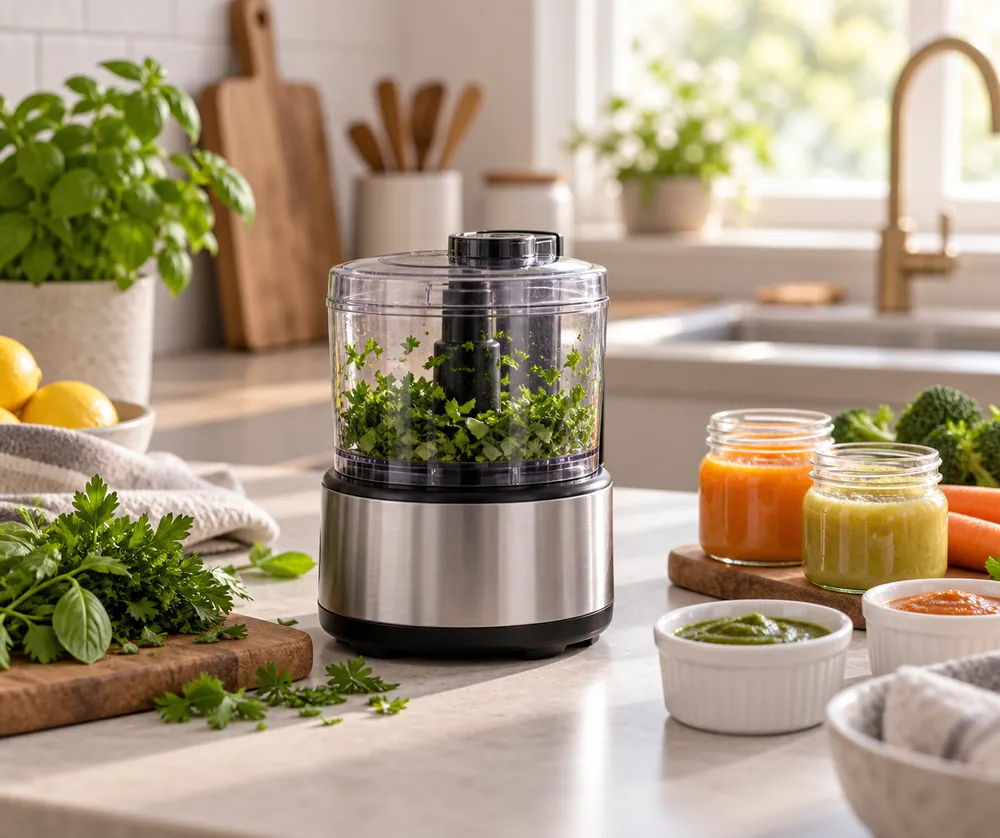
Mid-Size Bowls for Everyday Family Prep
Mid-size food processor bowls fit everyday family prep: shredding cheese, slicing vegetables, mixing dips, pulsing crumbs, and chopping aromatics without taking over the counter.
Published capacity is only a starting point because dry ingredients, liquids, dough, and vegetables require different amounts of working space.
Where Mid-Size Bowls Usually Fit
| Category | Published bowl capacity range | Best fit |
| Mini chopper | About 3 to 5 cups | Garlic, herbs, nuts, small sauces |
| Mid-size processor | About 7 to 10 cups | Family prep, weekly vegetables, dips |
| Full-size processor | About 11 to 14 cups | Batch cooking, larger doughs, big shredding jobs |
This range suits households cooking several nights a week, offering more room than a mini chopper while remaining easier to store and wash than a large machine.
For liquids and loose mixtures, leave headroom rather than filling the bowl to the rim.
Storage and Counter Fit
| Specification to compare | Common range to check | Why it matters |
| Under-cabinet clearance | About 15 to 18 inches | Helps decide whether the unit can stay assembled on the counter |
| Standard upper-cabinet opening | About 12 to 15 inches wide | Affects whether the base, bowl, and lid store together |
| Motor rating band | About 400 to 700 watts | Useful for comparing published power claims across this category |
Check counter height because the feed tube or pusher may hit an upper cabinet, even when the processor looks compact online.
Wattage offers limited context: blade design, bowl shape, and safety interlocks also affect performance and owner experience.
Best Uses for This Bowl Size
- Vegetable prep: Good for shredding carrots, slicing cucumbers, chopping onions, and prepping salad ingredients without repeated tiny batches.
- Family sauces: Useful for hummus, pesto, salsa, dressings, and spreads, especially when a blender would need too much liquid.
- Light dough tasks: Suitable for comparing models that list dough capability, though frequent bread making points toward larger bowls.
- Cleanup balance: Fewer parts than some large systems, but more versatile than a small chopper.
Choose this size for repeatable weeknight prep rather than maximum volume. Compare bowl size, included discs, feed tube design, and storage dimensions before deciding.
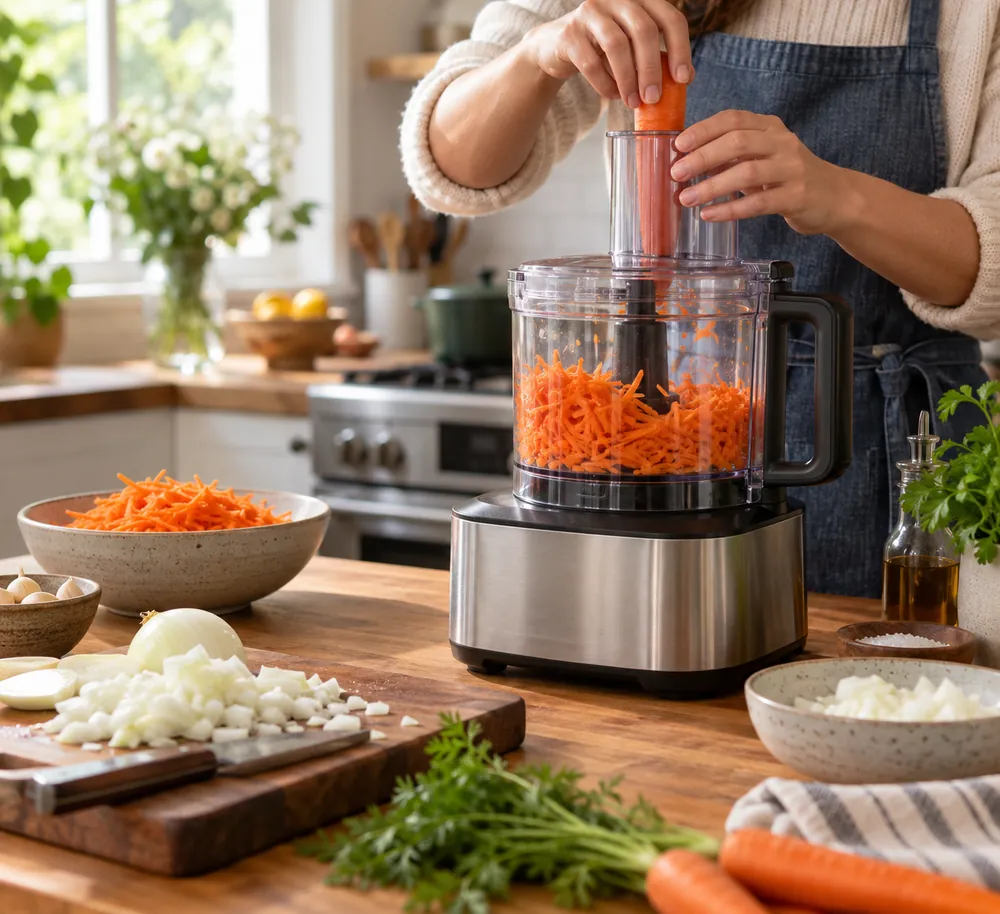
Large Bowls for Dough, Shredding, and Batch Cooking
Large bowls suit cooks who prep dough, shred vegetables, or batch-cook staples for several meals.
Published specifications matter because a bowl that looks generous online can still feel cramped once flour, cabbage, or cooked potatoes start moving.
Capacity bands are the first filter. Compare the advertised work bowl size with the foods you make often, then check whether the brand lists separate liquid or dough guidance.
| Bowl category | Typical published capacity range | Best fit |
| Medium | 7 to 9 cups | Small households, dips, sauces, light chopping |
| Large | 10 to 14 cups | Dough, shredding, slicing, weekly meal prep |
| Extra-large | 14 to 16 cups | Batch cooking, bulk vegetables, larger recipes |
Dough is the toughest use case. A large bowl gives flour room to circulate, but motor load, blade design, and manufacturer dough limits still matter.
- For pizza or bread dough: look for published dough guidance, not only total bowl capacity.
- For pie crust: a wide bowl helps pulse butter into flour without overworking it.
- For sticky doughs: owner reports about lid cleanup and blade removal are worth reading.
Shredding and slicing need headroom more than brute force. Cabbage, cheese, carrots, and potatoes expand quickly, so a larger bowl reduces stop-and-empty cycles.
| Spec category | Common range | Why it matters |
| Large food processor motor rating | 600 to 1,200 watts | Helps compare heavy-use models for dough and shredding |
| Typical counter-to-cabinet clearance | 15 to 18 inches | Helps confirm storage and lid-opening room |
| Common base width range | 7 to 10 inches | Affects counter footprint and cabinet storage |
Batch cooking favors large bowls, but bigger is not automatically better. Extra-large units can be heavier, louder, and more annoying to wash after small jobs.
Pick the smallest large bowl that handles your regular recipes without crowding.
For many US kitchens, that means comparing published capacity, dough limits, accessory storage, and clearance before choosing the biggest bowl on the shelf.
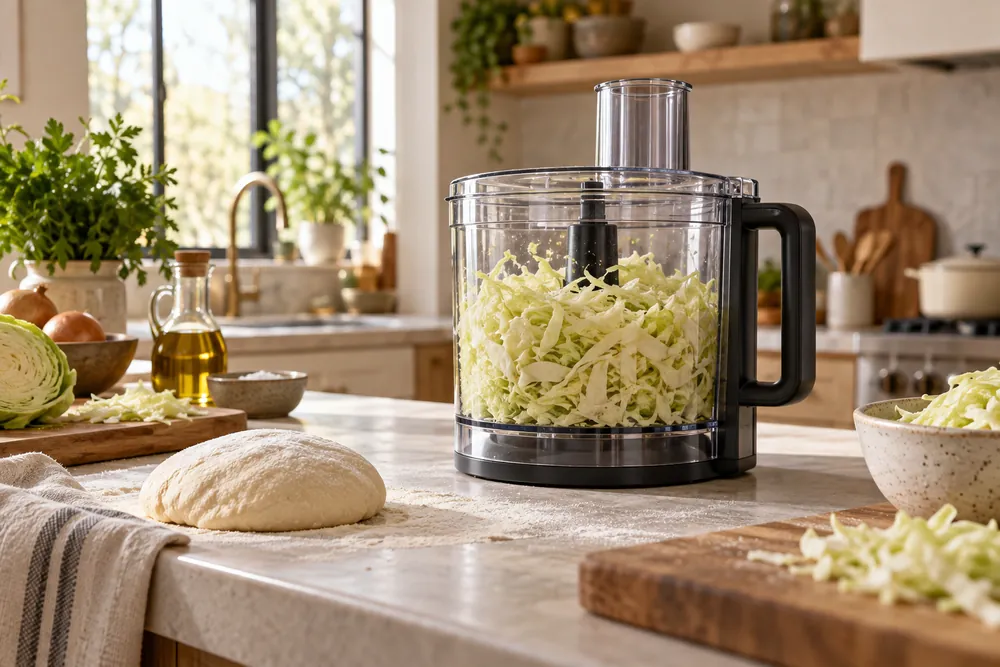
Matching Bowl Size to Storage, Counter Space, and Cleanup
Bowl size affects more than batch volume. It changes where the food processor lives, how often it gets used, and how much sink or dishwasher space cleanup takes.
Published dimensions matter because two processors with similar bowl capacities can have very different footprints. Compare height, width, depth, and accessory storage before treating capacity as the only deciding spec.
| Category | Typical bowl capacity range | Storage and cleanup impact |
| Mini chopper | 2 to 4 cups | Fits more easily in small cabinets, but limits batch size. |
| Compact processor | 5 to 7 cups | Balances prep capacity with easier sink handling. |
| Full-size processor | 8 to 14 cups | Handles larger recipes, but needs more counter and cabinet room. |
Cabinet fit is often the hidden issue. Many US wall cabinets have openings around 12 to 15 inches high, while base cabinets often offer deeper storage but less convenient access.
| Storage spot | Common clearance range | What to verify |
| Wall cabinet shelf | 12 to 15 inches high | Check processor height with the lid attached. |
| Counter under upper cabinets | 15 to 18 inches of vertical clearance | Confirm there is room to lock and remove the lid. |
| Base cabinet or pantry | 18 to 24 inches deep | Allow space for the bowl, discs, blade case, and cord. |
Cleanup gets harder as bowls get wider and feed tubes get taller. A larger bowl may be dishwasher-safe, but it can crowd the rack and block spray coverage.
- Choose smaller: dips, herbs, dressings, baby food, small households, or limited cabinet space.
- Choose mid-size: weekly chopping, shredding cheese, slicing vegetables, and moderate dough or sauce prep.
- Choose larger: batch cooking, big salads, holiday prep, and recipes that overflow smaller bowls.
Accessory storage also counts. Slicing discs, shredding discs, dough blades, and spindle parts can turn a compact-looking appliance into a clutter problem.
Use the published footprint first, then choose the bowl size that fits your cooking pattern. A processor stored within easy reach usually beats a larger one that stays boxed away.
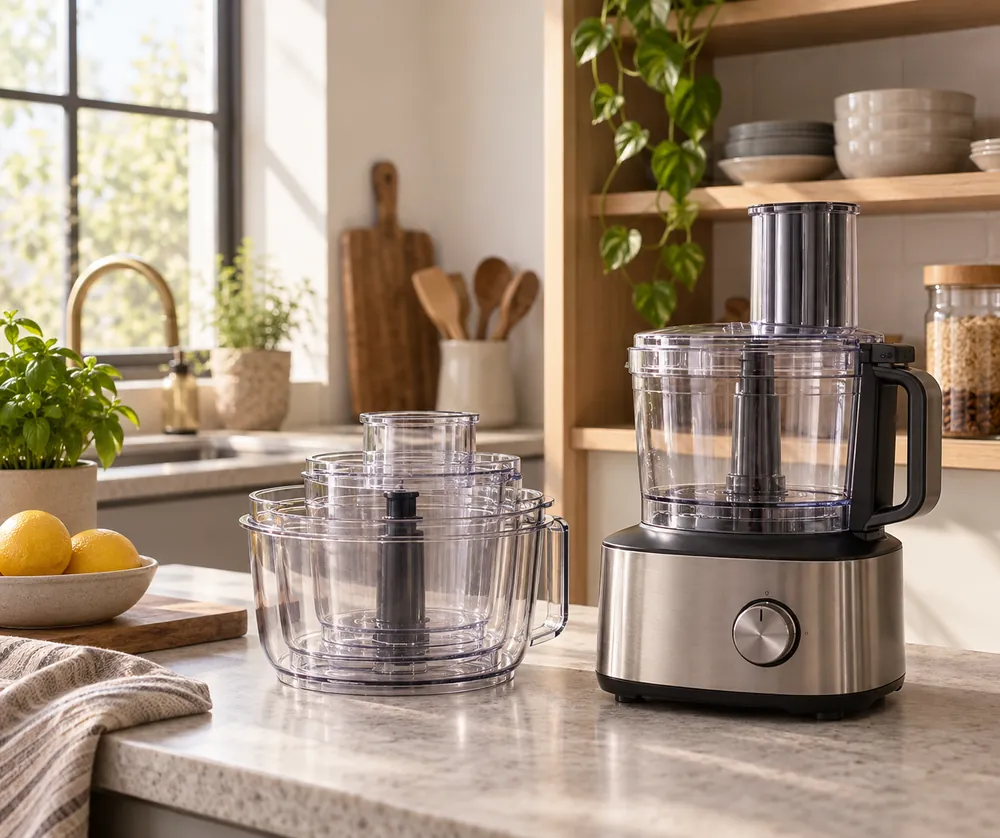
What Buyers Notice Once It Is Installed
Installed bowl size feedback usually centers on usable volume, not the headline capacity printed in the listing.
Owner reports and manufacturer documentation often point to the same trade-off: larger bowls reduce batch splitting, while smaller bowls store and clean more easily.
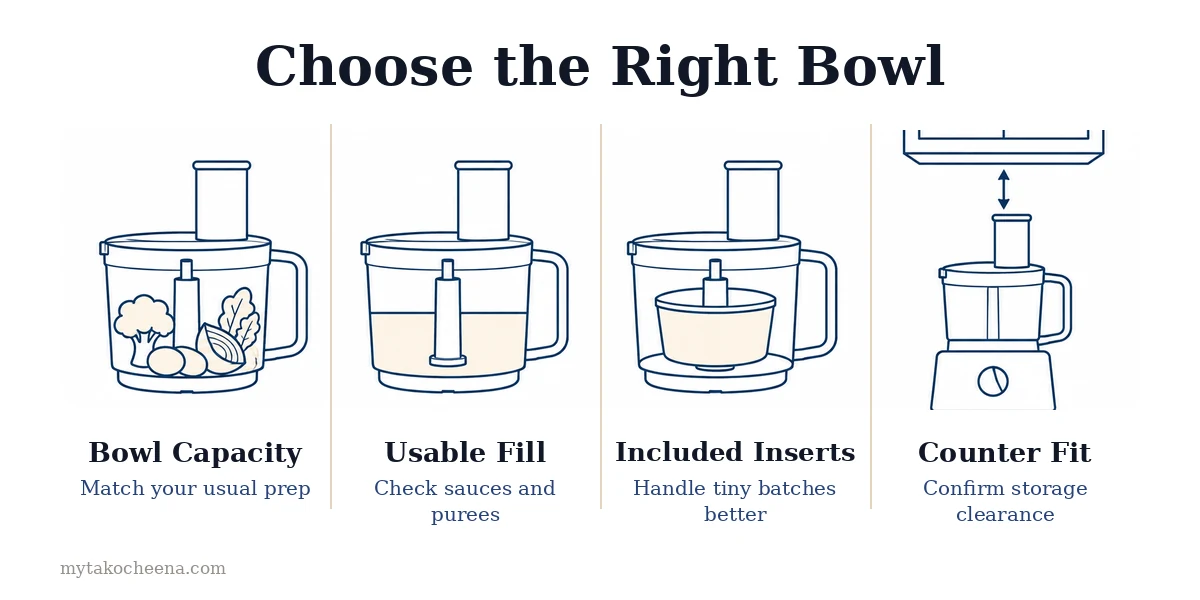
Recurring complaints are usually about overfilling, leakage, and uneven chopping near the top of the bowl.
Buyers often say the marked maximum line matters more than the advertised bowl size, especially for wet mixtures, shredded vegetables, and dough.
| Category | Typical published bowl range | Common owner takeaway |
| Mini chopper | 2 to 4 cups | Easy to store, but too small for meal prep batches. |
| Mid-size processor | 7 to 9 cups | Useful for everyday prep, with some batch limits. |
| Large processor | 11 to 14 cups | Better for families, dough, and repeated shredding jobs. |
What tends to hold up best is the motor housing and simple controls. Owner reports more often praise heavy bases, stable feet, and straightforward pulse buttons than extra attachments.
Early failures are more often tied to plastic parts than motors. Reported weak points include bowl tabs, lid locks, feed-pusher pieces, and thin accessory storage cases.
- Most repeated complaint: the bowl looks large on paper but handles less liquid or bulky food than expected.
- Most praised feature: a stable base that does not walk across the counter during chopping or dough mixing.
- Most common early issue: cracked locking parts or lids that become hard to align.
| Kitchen constraint | Typical range to compare | Why buyers mention it later |
| Under-cabinet clearance | 15 to 18 inches | Tall feed tubes may not fit assembled under wall cabinets. |
| Counter depth | 24 to 25 inches | Large bowls and pushers need room in front and behind. |
| Motor power band | 400 to 1,200 watts | Buyers compare this for dough, shredding, and dense mixtures. |
Manufacturer documentation usually warns against filling past liquid lines, processing hot ingredients, or forcing lid locks.
Owner reports echo those warnings, especially where leaks or broken safety interlocks appear soon after purchase.
For long-term satisfaction, buyers seem to value a bowl size that matches routine tasks over the largest capacity available. Compare the published bowl range, clearance needs, and replacement-part availability before choosing.
Common Questions Before You Buy
Bowl size affects batch volume, clearance, storage, and cleanup. Usable capacity is often lower than published capacity.
Compare models by the foods you prepare most.
What food processor bowl size do I need for everyday cooking?
Mid-size models suit daily chopping, shredding, and sauces. Smaller bowls save space; larger bowls reduce batch splitting.
| Category | Published bowl capacity range | Best fit |
| Mini chopper | 2 to 4 cups | Garlic, herbs, small sauces |
| Compact processor | 5 to 7 cups | Small households, light prep |
| Full-size processor | 8 to 14 cups | Family meals, slicing, shredding |
| Large-capacity processor | 14 to 16 cups or more | Batch cooking, entertaining |
Is a bigger food processor bowl always better?
No. Large bowls handle bigger batches but may struggle with tiny amounts and require more storage and cleanup.
How much usable capacity is different from advertised capacity?
Advertised capacity is total volume, not safe working volume. Liquids, sauces, and dough need headroom.
Check manuals for liquid fill lines, dough limits, and attachment guidance.
Will a food processor fit under my kitchen cabinets?
Measure the assembled height with the bowl, lid, and feed tube installed.
| Space to check | Common range | Why it matters |
| Counter to upper cabinet | 15 to 18 inches | Limits assembled storage height |
| Standard base cabinet depth | 23 to 24 inches | Affects pull-out shelf storage |
| Typical appliance width band | 7 to 11 inches | Impacts counter footprint |
What wattage range should I compare for bowl size?
Wattage helps compare categories, though motor strength and gearing also matter.
| Category | Common wattage range | Typical task load |
| Mini chopper | 150 to 300 watts | Small chopping and sauces |
| Compact processor | 300 to 600 watts | Light slicing and prep |
| Full-size processor | 600 to 1,200 watts | Dough, shredding, larger batches |
Should I buy one large bowl or a set with multiple bowls?
Multiple bowls can simplify switching between batch sizes and reduce cleanup.
Does bowl shape matter as much as cup capacity?
Yes. Bowl width and blade reach affect circulation, scraping, and small-quantity processing.
What bowl size is best for dough?
Compare the manual’s flour or dough limit, not just capacity. Dough needs room to turn and stresses the motor.