Short version: A suitable Ninja food processor is one sized for your usual batches and equipped for the tasks you repeat most.
Compact models suit chopping, sauces, and small portions, while larger systems are better for slicing, shredding, dough, and batch cooking.
Compare bowl size, accessories, storage needs, and cleanup before choosing the model that fits your kitchen.
Start With the Bowl Size You Will Actually Use
Bowl size determines how efficiently a Ninja food processor handles your regular prep, from a small batch of salsa to a large pile of shredded vegetables.
Choose the bowl you can fill properly, clean without resistance, and store without turning every use into a cabinet rearrangement.
A bowl that is too small forces repeated batches, which adds preparation time and creates more washing.
A bowl that is too large can leave a small amount of garlic, herbs, or nuts spread across the bottom instead of gathered where the blade can reach it.
| Capacity band | Best fit | Main trade-off |
|---|---|---|
| Compact: about 2–4 cups | Salsas, dips, garlic, herbs, baby food, and small portions | Limited room for dough, shredding, and family-size batches |
| Mid-size: about 5–8 cups | Couples, smaller families, sauces, vegetables, and mixed weekly prep | More capable, but less convenient for very large batches |
| Large: about 9–14 cups | Slaws, shredded cheese, sliced potatoes, dough, and batch cooking | Needs more storage and may be inefficient for tiny portions |
A compact processor suits one or two people who mainly chop onions, mince garlic, make dips, or prepare one meal at a time.
Its smaller bowl and lighter accessories are usually easier to lift from a cabinet and faster to rinse after a quick task.
Mid-size bowls offer a practical compromise for cooks with varied routines. They provide enough room for regular vegetable prep and sauces without demanding the storage space or counter presence associated with a full-size system.
Large bowls earn their footprint for families, meal preppers, frequent entertainers, and anyone who prepares dough or shredded vegetables in quantity.
Extra room helps ingredients move through the blade and discs, but it does not automatically improve a tiny batch.
| Check | Common range to compare | Why it matters |
|---|---|---|
| Cabinet opening height | About 12–18 inches | A bowl, lid, or feed chute may need to pass through the opening |
| Counter depth | About 20–25 inches | A deep base can compete with appliances and reduce workspace |
| Clearance above the base | About 4–8 inches | Extra room may be needed to remove a lid or feed ingredients |
Measure the shelf, cabinet opening, and counter area before comparing accessory bundles.
Include the motor base, bowl, lid, feed chute, pushers, discs, and storage case, because the box dimensions rarely describe the space the complete system will occupy.
Consider how full the bowl will be during your most common recipes. A processor works best when ingredients have room to circulate, so choosing a larger capacity only makes sense if your normal batches require it.
Accessory storage deserves equal attention. Slicing discs, shredding discs, dough tools, lids, and pushers can make a capable processor inconvenient if they have no assigned place and must be searched for before every use.
Choose larger than your daily minimum when you regularly cook for guests or prepare several meals at once. Choose smaller when speed, easy cleanup, and compact storage matter more than processing a full recipe in one pass.
The right bowl is not the biggest one available. It is the size that handles your repeated tasks with minimal batching while remaining easy to wash, store, and leave accessible in your kitchen.
Match the Model to the Jobs You Repeat Most
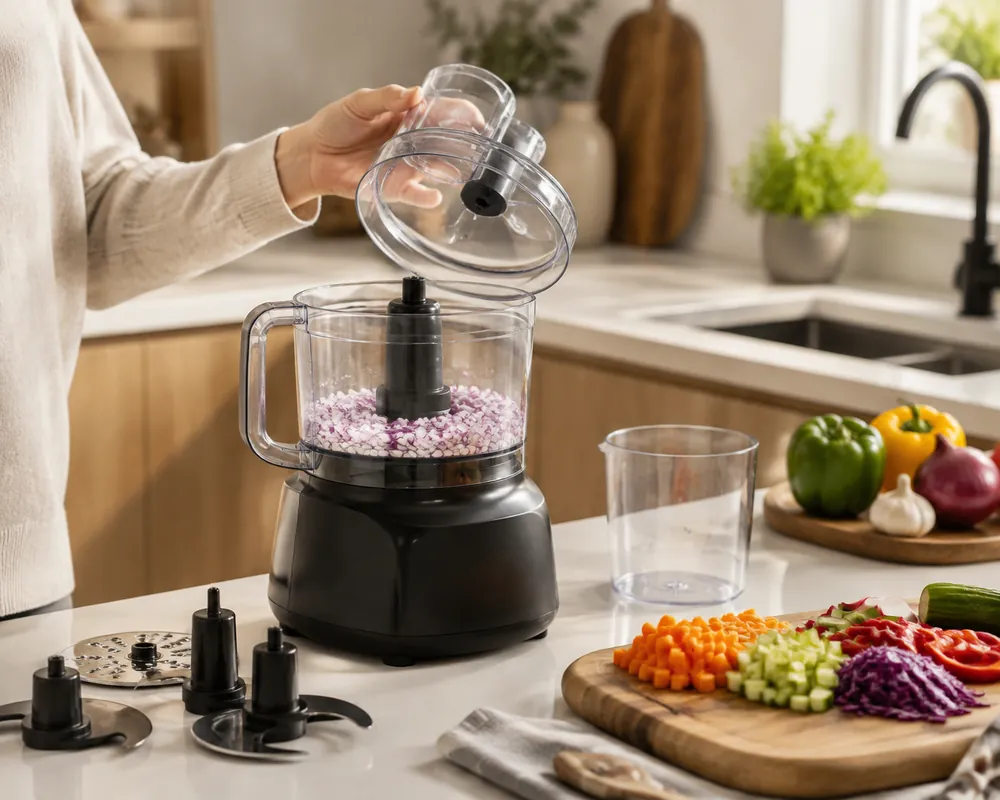
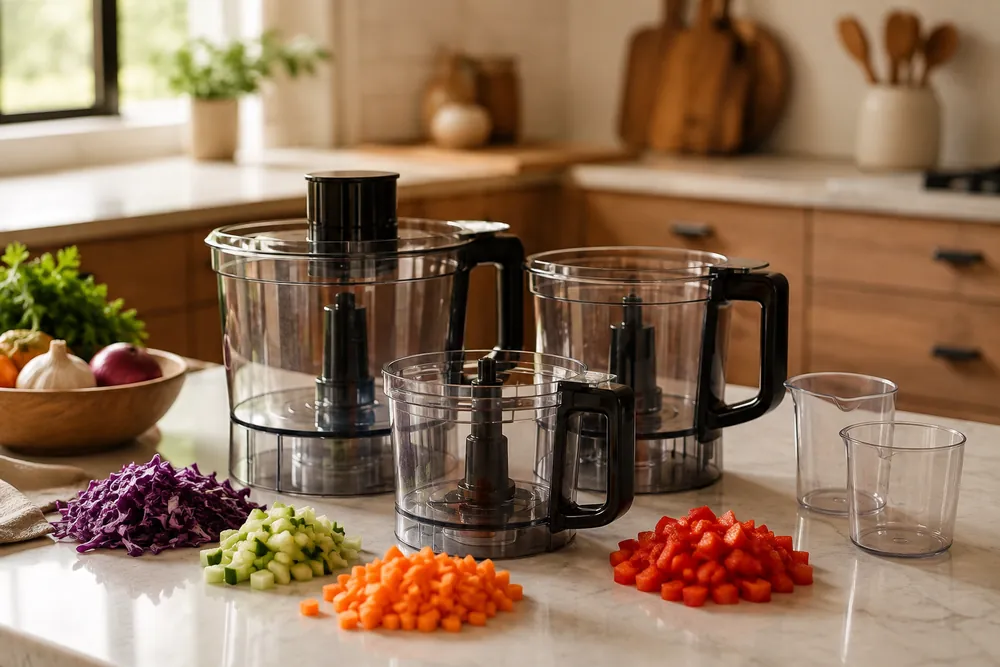
Your repeated tasks should decide which Ninja food processor earns counter space. Chopping, slicing, shredding, kneading, and blending place different demands on the bowl, blade, discs, and storage setup.
Start with the jobs you perform every week, then remove features that do not support them.
Choose the bowl around your normal batch
A compact chopper suits salsa, herbs, garlic, nuts, baby food, and small portions. It is easier to lift, wash, and store, but repeated batch work becomes tedious when vegetables or sauces exceed its comfortable working space.
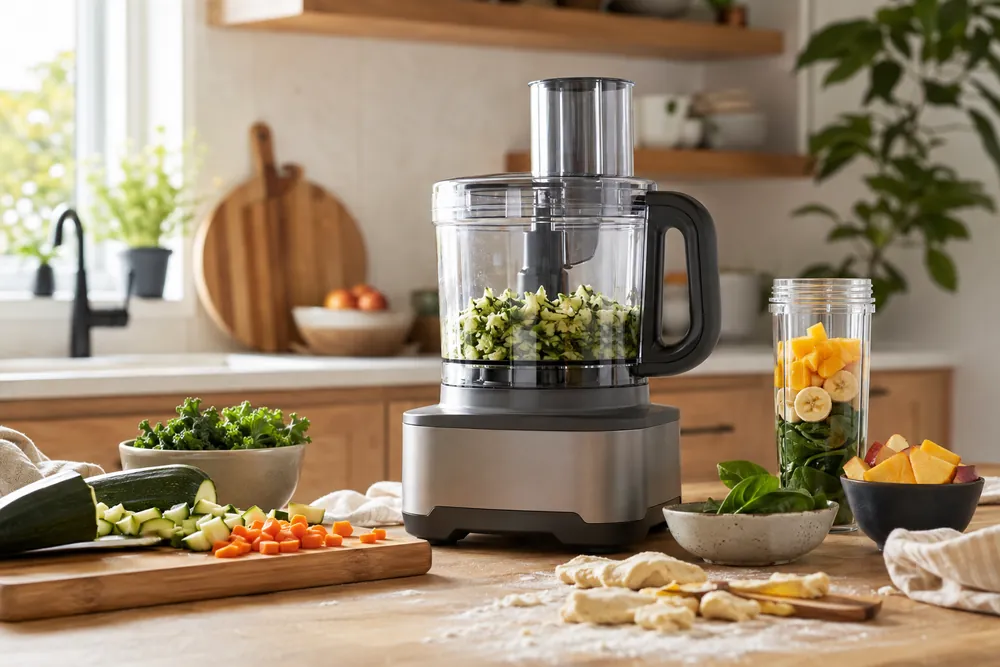
A full-size processor is more useful for family meals, meal preparation, shredded cheese, slaw, sliced potatoes, and dough.
Its larger bowl and feed chute reduce batching, although the base, lid, discs, and accessories require more cabinet or counter room.
| Category | Common capacity range | Best fit |
|---|---|---|
| Compact | 2–5 cups | Small sauces, herbs, nuts, and single-meal prep |
| Mid-size | 5–9 cups | Couples, smaller families, and mixed weekly use |
| Large | 9–14 cups | Batch cooking, shredding, slicing, and dough |
Match attachments to the food you make
Chopping blades handle onions, garlic, salsa, dips, and rough vegetable preparation.
Slicing and shredding discs matter more for cucumber, cabbage, potatoes, carrots, and cheese because they create consistent pieces that a standard blade cannot reproduce.
Dough changes the buying decision. Look for a bowl and blade arrangement intended for heavier mixtures, with enough room for the dough to circulate rather than collect in corners.
A processor that handles occasional pastry may not be the best choice for frequent bread making.
- Quick chopping: choose a compact bowl, stable base, and easy-empty design.
- Vegetable preparation: prioritize slicing and shredding discs, a wide feed chute, and safe storage.
- Dough: favor a full-size work bowl and a dedicated dough blade or suitable mixing attachment.
- Blended drinks: consider a system with a pitcher or cups, but treat those containers as separate tools from the processor bowl.
Check where the machine will live
Measure the shelf, cabinet opening, and usable counter depth before choosing a larger system. Category-level storage needs commonly fall within these ranges:
| Measurement | Typical range | Why it matters |
|---|---|---|
| Counter depth | 18–25 inches | Allows room for the base and bowl |
| Cabinet opening height | 12–18 inches | Determines whether assembled parts can be stored |
| Overhead lifting clearance | 6–12 inches | Helps remove lids and feed chutes safely |
The right Ninja model is the one that fits your recurring jobs, available storage, and cleaning tolerance. Choose the larger system only when its discs, bowl, or dough capacity will replace work you currently do in batches.
Look Closely at the Accessories Before You Buy
Accessory bundles often decide whether a Ninja food processor becomes a weekly tool or an awkward appliance that stays in the cabinet.
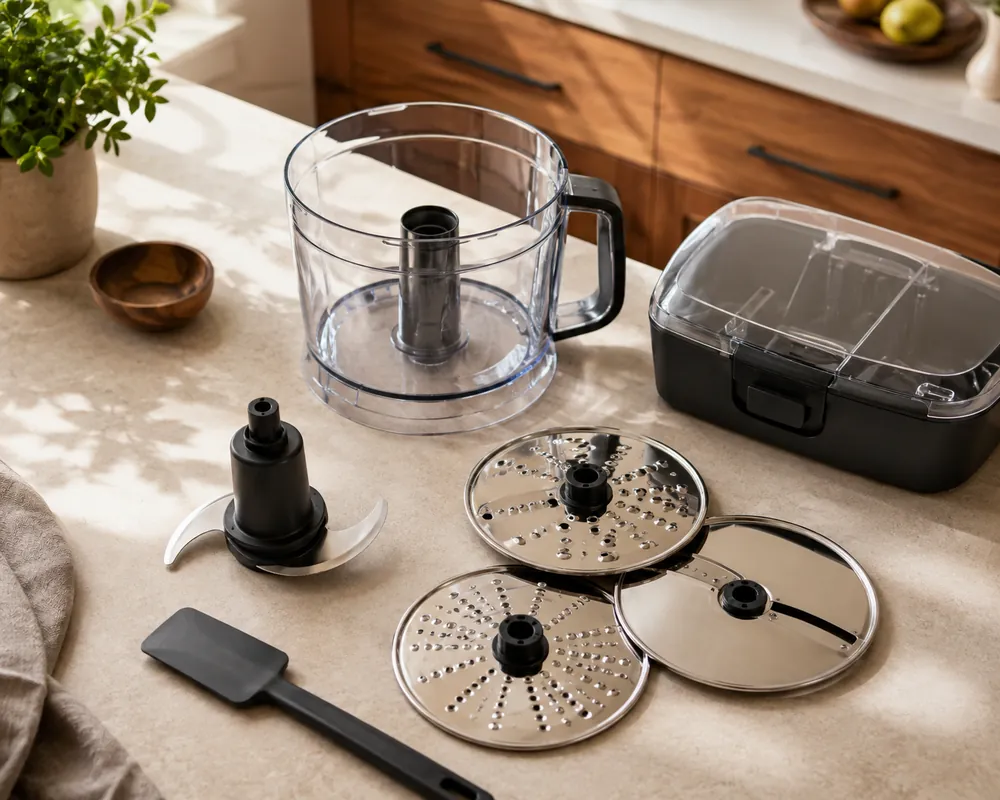
Compare each blade, disc, bowl, lid, and storage case with the jobs you actually repeat, because unused parts still take up space and require cleaning.
Check the complete package rather than assuming every model includes the same tools. A lower-priced setup may cover chopping well but omit the discs or dough attachment that made the larger system attractive.
Match Each Attachment to a Real Task
A standard chopping blade handles onions, herbs, garlic, nuts, dips, sauces, and many everyday mixtures.
It is useful, but it does not produce the consistent slices or shreds needed for slaw, gratins, hash browns, or large batches of grated cheese.
- Chopping blade: Choose it for minced vegetables, pesto, hummus, salsa, and coarse or fine pulsing.
- Slicing disc: Look for it if you prepare cucumbers, potatoes, carrots, cabbage, or other vegetables in uniform slices.
- Shredding disc: Consider it for cheese, coleslaw, rösti, grated vegetables, and faster batch preparation.
- Dough blade: Select it only when pizza dough, pastry, biscuits, or other heavier mixtures are regular parts of your cooking.
- Extra cups or bowls: Value these when you make separate sauces, smoothies, or small portions and want fewer transfers.
Disc design matters as much as disc count. Some bundles provide only one reversible disc, while others separate slicing and shredding into dedicated pieces.
A reversible disc saves storage space, but dedicated discs can make the intended function easier to identify and may offer a more useful cutting range.
| Bundle type | Typical contents | Best fit |
| Basic | Chopping blade and one bowl | Quick prep and small recipes |
| Vegetable-focused | Chopping blade plus slicing or shredding discs | Slaw, cheese, potatoes, and batch prep |
| Multi-function | Blades, discs, cups, or a pitcher | Kitchens replacing several appliances |
Plan for Storage and Cleaning
Measure the space before buying a bundle.
Common countertop appliance footprints occupy roughly 8–14 inches of width, while the complete bowl, lid, pusher, and discs can need roughly 12–18 inches of vertical cabinet clearance, depending on the design.
Storage cases help protect sharp discs and prevent small parts from disappearing, but they also need a dedicated location. Check whether the case fits your cabinet opening, and do not count the storage box as free space.
Cleaning can outweigh an extra accessory. Look for dishwasher-safe removable parts, smooth bowl interiors, and discs that can be handled without touching exposed cutting edges.
More attachments are worthwhile only when their convenience exceeds the washing and storage they add.
Before checkout, confirm that the required accessories come in the box rather than as optional purchases.
The strongest choice offers the attachments for your recurring tasks, a storage plan that fits your kitchen, and no unnecessary collection of parts.
Choose a Footprint Your Kitchen Can Live With
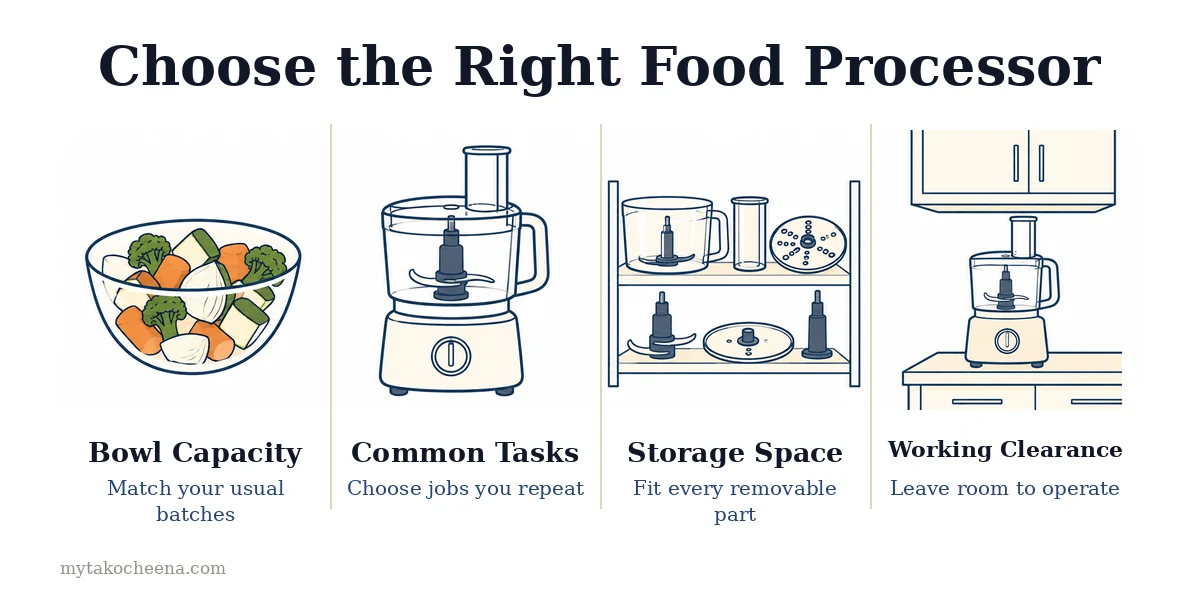
Counter space, cabinet access, and cleanup determine whether a Ninja food processor becomes a weekly tool or an appliance you avoid.
Choose the bowl and base around the work you repeat, then confirm that the complete set fits your storage routine.
Measure the Complete Setup
Do not measure only the motor base. Account for the bowl, lid, pusher, blade, discs, and any cups or pitcher included in the system.
A processor may fit beneath a cabinet but still require extra room when you lift the lid or feed ingredients through the chute.
| Planning point | Common range | What it affects |
| Compact work-bowl capacity | About 2–5 cups | Salsas, herbs, sauces, garlic, and small portions |
| Full-size work-bowl capacity | About 7–14 cups | Batch prep, shredding, slicing, and dough |
| Typical cabinet opening height | About 12–18 inches | Whether the assembled processor can stay under a cabinet |
| Useful lifting clearance | About 4–8 inches above the appliance | Removing the lid, bowl, or feed pusher comfortably |
Measure the shelf depth as well as its width. A deep base may fit from front to back while the bowl, cord, or accessories prevent the door from closing.
Store removable parts together in a bin or drawer so the processor does not become a search project before every meal.
Match Bowl Size to Your Normal Batch
A compact chopper suits one or two people who mainly mince onions, pulse nuts, mix dips, or make a small amount of salsa. Its smaller bowl is easier to carry and wash, and it usually creates less cabinet competition.
A larger bowl earns its space when you shred cheese, slice potatoes, prepare slaw, knead dough, or cook several meals at once.
Extra capacity reduces repeated batches, but a large bowl can handle small amounts poorly, leaving herbs or garlic smeared around the sides instead of evenly chopped.
- Choose compact for quick chopping, sauces, baby food, herbs, and single-meal preparation.
- Choose mid-size for mixed weekly use, couples, and smaller households that want more flexibility.
- Choose full-size for family portions, entertaining, dough, cabbage, potatoes, and freezer preparation.
Budget Space for Accessories
Discs often provide the biggest practical upgrade for slicing and shredding, but they also add storage demands. A model with several attachments is useful only if you can keep those parts accessible, dry, and organized.
Pick the smallest setup that handles your recurring jobs without forcing unnecessary batches.
The right Ninja processor should fit its storage location, leave enough working clearance, and remain easy to assemble and wash after ordinary use.
Know the Trade-Offs Between Ninja and Other Brands
Ninja competes well on convenience, bundled accessories, and fast chopping, but another brand may suit your kitchen better.
Compare the work bowl, controls, cleanup, storage demands, and long-term repair support rather than treating one brand as the automatic winner.
Compare Capacity With Your Prep Routine
Ninja offers compact choppers, mid-size processors, and larger systems that overlap with options from Cuisinart, KitchenAid, Hamilton Beach, and other brands.
Capacity affects batch size, ingredient movement, cabinet storage, and how often you must stop to scrape the bowl.
| Category | Typical capacity | Best fit |
| Compact | 0.5–1.5 quarts | Sauces, herbs, garlic, and small portions |
| Mid-size | 1.5–3 quarts | Couples, everyday vegetables, and mixed prep |
| Large | 3–5+ quarts | Shredding, dough, slaw, and batch cooking |
A compact Ninja can beat a larger competitor when you value quick setup and easy storage.
A traditional full-size processor may be better for repeated slicing, shredding, and dough work because its bowl and feed chute are designed around those tasks.
Account for Space and Power
Measure the space around the appliance, not only the shelf where the base sits. A processor also needs room for its bowl, lid, pusher, discs, and blade cases, plus enough overhead clearance to remove the lid safely.
| Planning factor | Common range | Why it matters |
| Vertical clearance | 12–18 inches | Allows lid removal and storage access |
| Typical motor band | 300–1,200 watts | Suggests different workloads, not guaranteed performance |
| Counter depth | 10–16 inches | Helps estimate front-to-back footprint |
Higher power does not automatically mean cleaner chopping or better dough handling. Bowl shape, blade design, feed-chute size, and speed control can matter more, so compare the complete specification sheet and owner reports.
Value Cleanup and Accessories Honestly
Ninja systems often make versatility attractive by combining processor bowls, blending vessels, and several blades.
That bundle is useful only when you will use the attachments; otherwise, extra parts become another storage and washing burden.
- Choose Ninja for bundled versatility, quick pulsing, and a compact appliance ecosystem.
- Consider another brand for dedicated slicing, shredding, dough handling, or simpler replacement-part support.
- Check before buying whether discs, lids, bowls, and blades are dishwasher-safe and sold separately.
The right choice is the system that matches your repeated jobs and stays accessible. Compare the bowl you will fill, the attachments you will store, and the cleanup you will accept after every meal.
Start by measuring the appliance’s full footprint with the bowl and lid attached, then mark that outline on the counter. Include space for your hands, nearby ingredients, and a stable place to set the lid or pusher during preparation.
Check vertical clearance with any upper cabinet doors open. A machine that fits beneath the cabinet may still be awkward if you must move it forward before removing the bowl, adding ingredients, or changing an attachment.
Measure the cabinet or drawer where accessories will live, including its usable depth behind hinges and rails.
If discs and blades must be stored separately, compare that storage burden with a simpler competitor before choosing a bundled system.
Look at the outlet position and cord path as part of the layout. A processor should sit away from the sink and cooktop, with the cord clear of prep space. If the counter is narrow, frequent repositioning can cancel out convenience.
Use the measurements to compare complete routines, not empty appliance footprints.
Choose Ninja when its setup and accessory storage fit your kitchen naturally; choose another brand when a dedicated feed chute, steadier placement, or easier service access better matches how you cook.
Common Questions Before You Buy
Choosing a Ninja food processor comes down to bowl size, repeated tasks, cleanup, and storage rather than the largest accessory bundle.
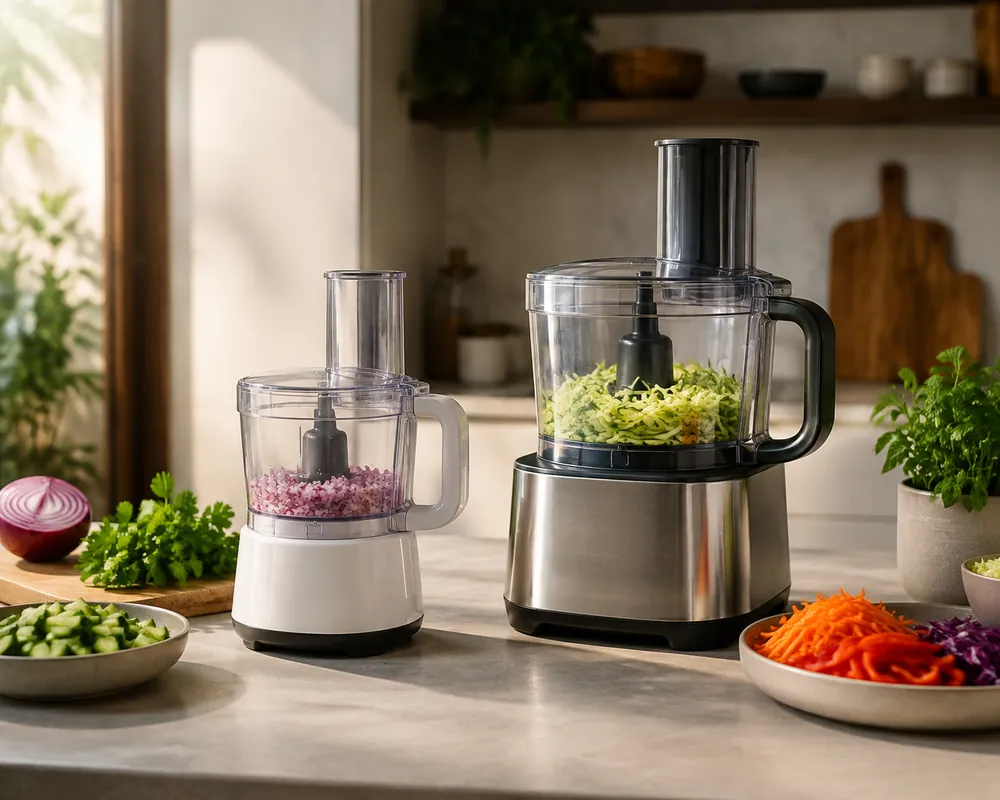
A compact chopper can cover salsa and onions, while a full-size processor is better suited to dough, shredding, slicing, and batch preparation.
Use the questions below to compare the machine with your actual kitchen routine. The best choice is the one you can keep accessible, load comfortably, clean without resistance, and store without losing essential parts.
What size Ninja food processor should I buy?
Match the bowl to the amount you usually prepare, not the biggest meal you might make once a year. Smaller bowls suit sauces, herbs, garlic, dips, baby food, and quick vegetable preparation.
| Category | Typical capacity band | Best fit |
| Compact | 2–5 cups | Small portions and quick chopping |
| Mid-size | 5–9 cups | Mixed weekly preparation |
| Large | 9–14 cups | Dough, shredding, slicing, and batch cooking |
Do I need a full-size processor or a mini chopper?
Choose a mini chopper for repeated tasks such as chopping onions, mincing garlic, making salsa, or pulsing nuts.
Choose a full-size processor when you regularly prepare large quantities or need slicing, shredding, and dough accessories.
A larger machine offers capacity and versatility, but it also brings more parts to wash and more space to reserve. Buying the smaller option makes sense when convenience matters more than accessory range.
Is a Ninja food processor good for dough?
Look for a bowl and blade arrangement designed for heavier mixtures if pizza dough, pie crust, biscuits, or bread preparation is part of your routine. The bowl should give dough room to move rather than trap it around corners.
Check the instructions for recommended dough types and batch limits before buying. A processor that excels at vegetables may still be inconvenient for dense mixtures.
Which Ninja food processor is best for slicing and shredding?
Prioritize models that include dedicated slicing and shredding discs. A chopping blade produces smaller irregular pieces, so it cannot replace discs when you want consistent cabbage, cheese, potatoes, carrots, or cucumber.
Review how the discs load, where they can be stored, and whether the feed chute accepts the vegetables you normally buy. Accessory convenience affects how often you will use these functions.
Will a Ninja food processor fit in my kitchen?
Measure the counter, cabinet opening, and shelf depth before choosing a larger system. Allow room to lift the lid, insert ingredients, and remove the bowl without moving other appliances.
| Space to check | Common range | Why it matters |
| Cabinet opening | 12–18 inches | Determines whether the base can be stored upright |
| Working clearance | 4–8 inches above the lid | Allows safe loading and removal |
| Accessory shelf depth | 12–16 inches | Helps contain bowls, discs, and blades |
Are Ninja food processor parts easy to clean?
Favor a design with parts that separate quickly and have few awkward grooves. Dishwasher-safe components can reduce effort, but confirm which pieces qualify and whether sharp blades require hand washing.
Consider the cleanup after your most common recipe, not an ideal demonstration. A machine that chops well but leaves food beneath seals or inside narrow feed-chute areas may stay unused.
Should I buy a Ninja blender and food processor combo?
A combination system can earn its space when smoothies, sauces, frozen drinks, and food preparation are all regular tasks. Shared bases reduce appliance clutter, while separate containers preserve the strengths of each tool.
Do not assume a blender jar replaces a processor bowl. Blenders excel at liquids and smooth mixtures; processors handle chopping, slicing, shredding, and many dough tasks more effectively.