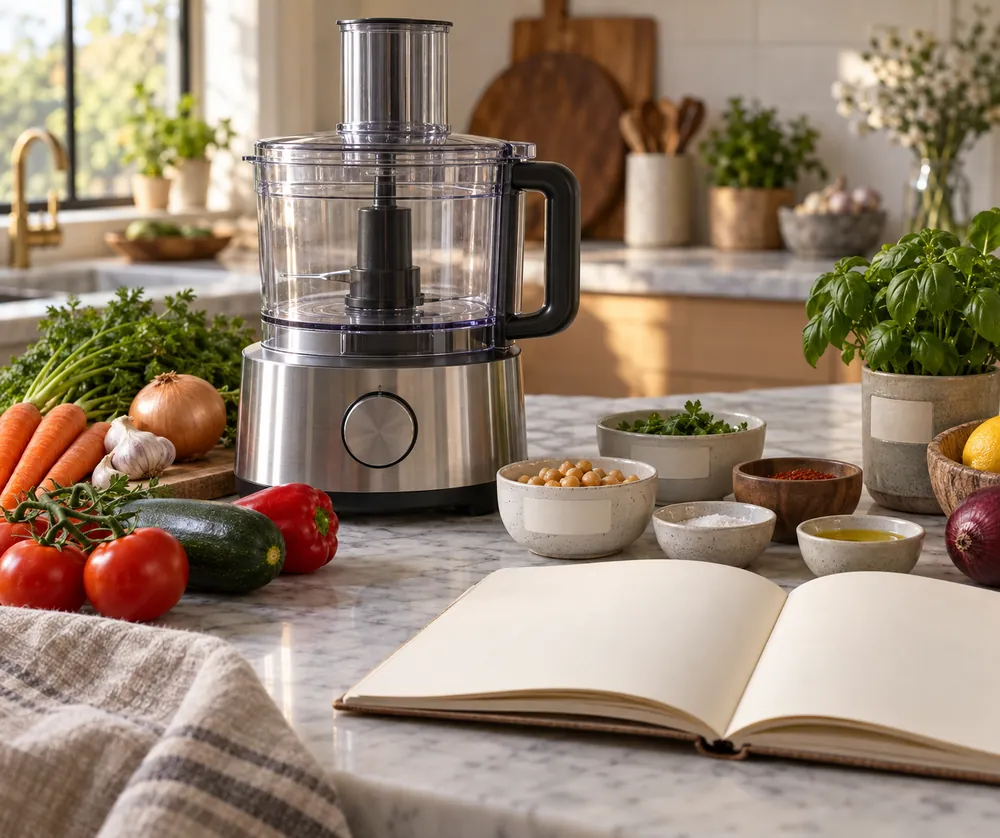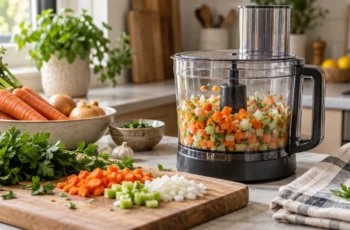
Straight answer: A food processor is a meal prep tool for quickly chopping vegetables, shredding cheese, slicing firm produce, pureeing sauces, and mixing some doughs or fillings.
It saves the most time when you batch similar tasks, use the right blade, avoid overfilling the bowl, and clean parts immediately before food dries onto them.
Why a Food Processor Helps With Meal Prep
Batch chopping is the core advantage. A food processor turns repeated knife work into one setup, so onions, carrots, cabbage, herbs, nuts, and dough bases can move faster from prep board to storage containers.
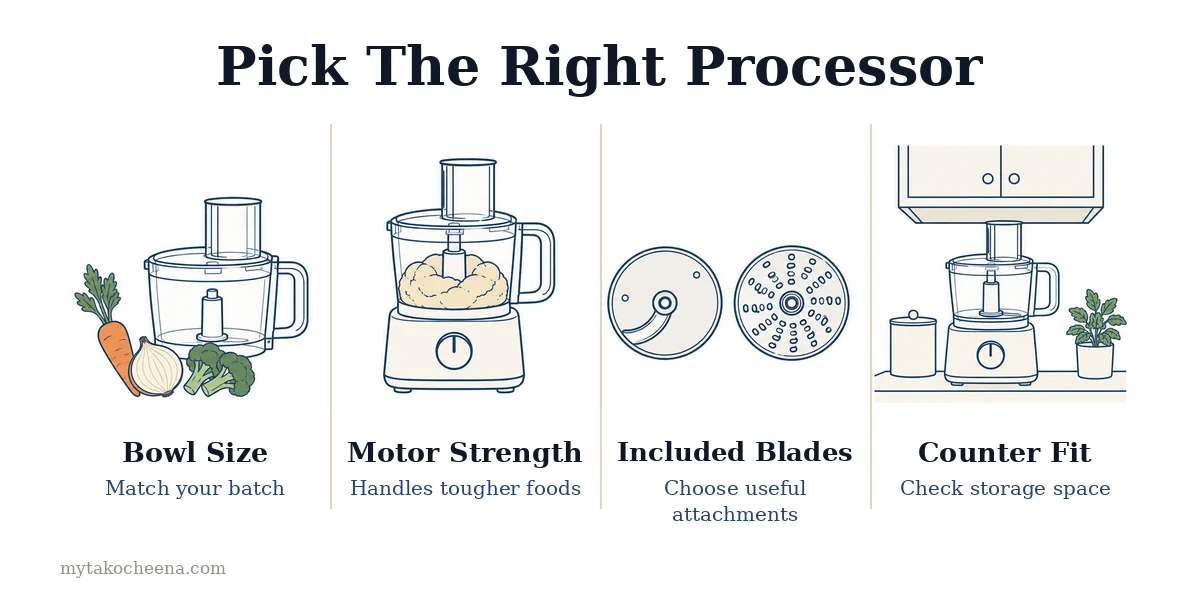
For meal prep, the best fit depends on bowl size, motor range, and how much counter space you can spare. Published specifications help compare these trade-offs before choosing a unit.
| Category | Typical published range | Best meal prep use |
| Mini chopper | About 3 to 5 cups | Garlic, herbs, sauces, small nut portions |
| Compact processor | About 7 to 9 cups | Weekly vegetables, slaws, dips, small doughs |
| Full-size processor | About 11 to 14 cups | Batch shredding, large salads, family prep |
| Typical motor band | About 250 to 1,200 watts | Higher ranges usually handle denser foods better |
A processor also improves consistency. Even slices cook more evenly, shredded vegetables portion cleanly, and chopped aromatics freeze better than uneven hand-cut pieces.
- Time savings: Repeated tasks such as slicing, shredding, and pulsing happen in batches.
- Better planning: Prepped ingredients can be divided for soups, bowls, tacos, casseroles, and salads.
- Less cleanup drift: One bowl and blade set can replace several cutting boards and graters.
| Specification | Typical range | Why it matters |
| Under-cabinet clearance | About 15 to 18 inches | Affects whether the unit can stay on the counter |
| Standard base cabinet width | About 12 to 24 inches | Helps judge storage space for bowl, lid, and discs |
The trade-off is setup and storage. A food processor helps most when you prep several ingredients at once, not when you need only a single small garnish.
What to Prep First for the Biggest Time Savings
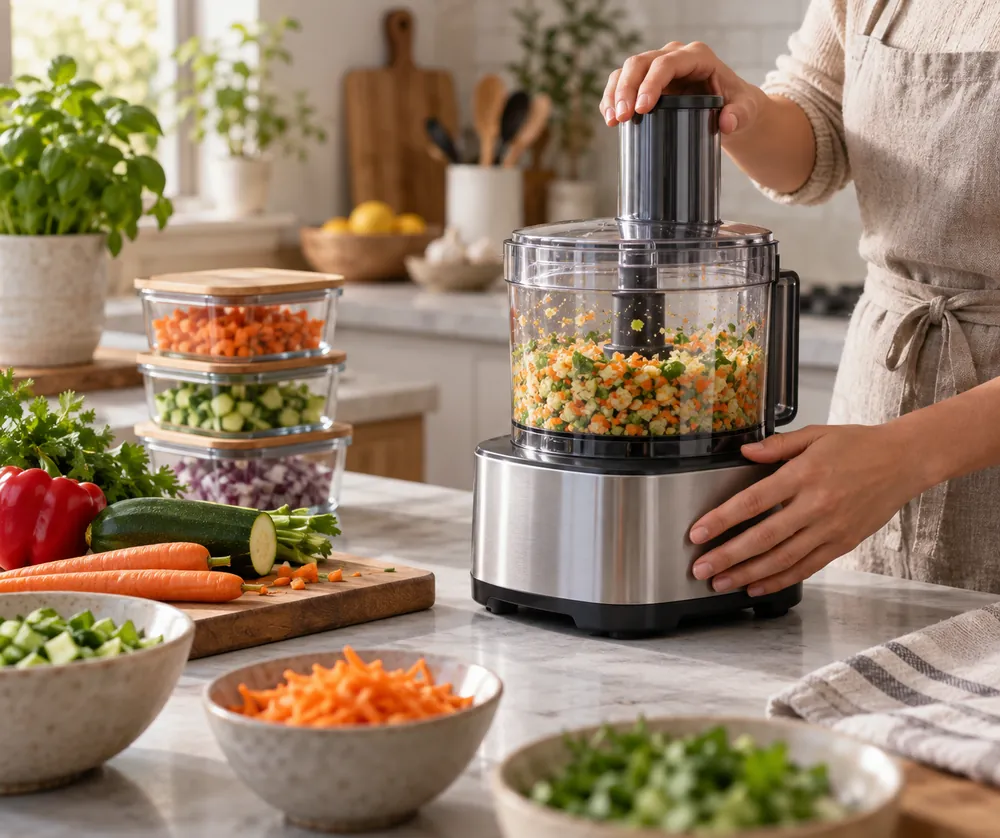
Onion, carrot, celery, cabbage, herbs, and firm cheeses usually deliver the fastest payoff because they repeat across many meals. Start with ingredients that store well after cutting, then move to wetter foods that shorten shelf life.
Start with dry, sturdy ingredients
Dry vegetables and hard ingredients leave less residue in the bowl, so you can keep moving without washing between every task. Chop aromatics first, then shred cabbage or carrots, then grate cheese before switching to sauces.
| Capacity band | Best prep use |
| 3-5 cups | Herbs, garlic, small sauces, single-meal chopping |
| 7-9 cups | Weeknight vegetables, slaws, shredded cheese |
| 11-14 cups | Batch prep, family-size slicing, larger dough or cabbage loads |
Capacity matters because overfilling causes uneven cuts and more stopping. Published specifications usually list bowl size clearly, but usable working space can feel smaller with bulky vegetables.
Batch by blade, not by recipe
Group tasks around the attachment already installed. Use the S-blade for onions, garlic, herbs, and breadcrumbs, then switch once to the slicing or shredding disc.
- First: chop aromatics for soups, tacos, casseroles, and egg dishes.
- Second: shred carrots, cabbage, zucchini, or cheese for bowls and salads.
- Third: slice cucumbers, potatoes, Brussels sprouts, or firm fruit.
- Last: make dips, dressings, pesto, or wet marinades.
| Prep category | Typical storage range |
| Chopped vegetables | 34-40°F refrigerated |
| Prepared dips and sauces | 34-40°F refrigerated |
| Freezer-ready shredded vegetables | 0°F or below |
Finish with wet or strongly scented foods because they make cleanup more important. This order reduces rinsing, protects mild ingredients from odor transfer, and keeps the processor useful for several meals instead of one recipe.
How to Chop, Slice, Shred, and Puree Efficiently
Efficient prep starts with matching the blade, bowl size, and speed setting to the food. Specs narrow the choice, while owner reports reveal how well a processor handles repeated batches.
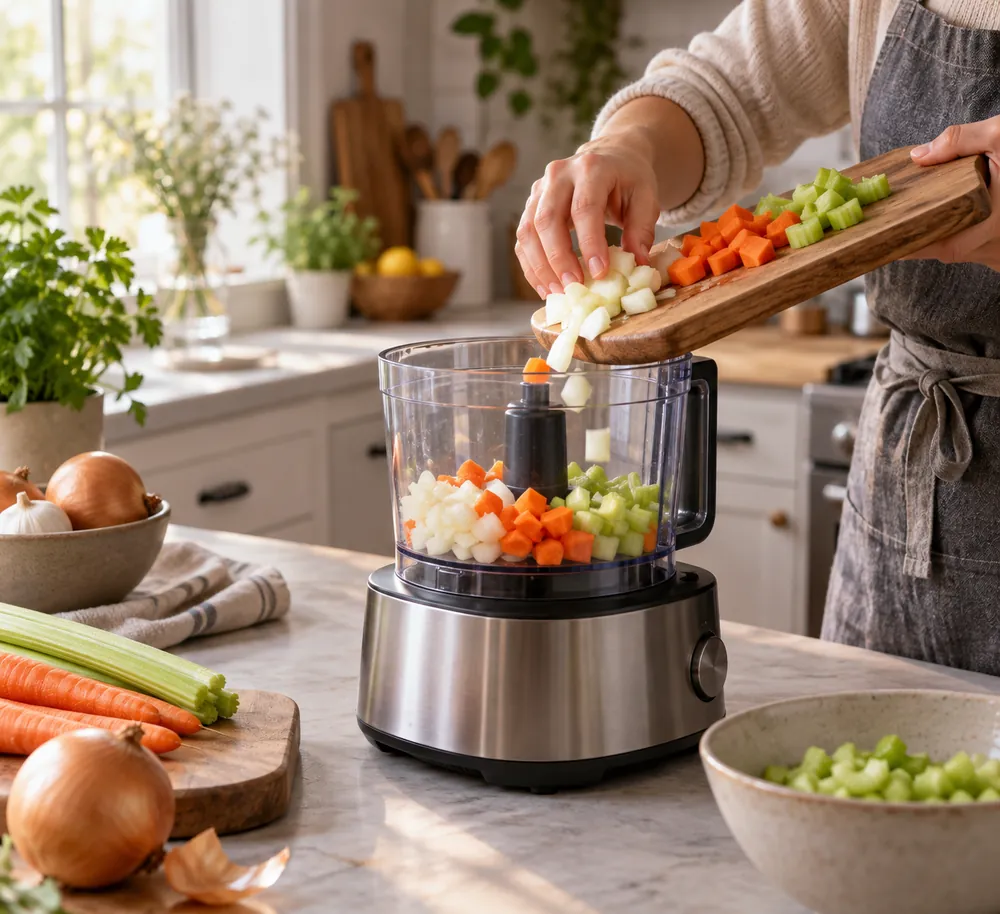
Use the standard S-blade for chopping and pureeing. Pulse onions, nuts, herbs, and cooked vegetables in short bursts so the bottom does not turn pasty before the top breaks down.
| Category | Typical stated capacity range | Best use |
| Mini chopper | 1.5-4 cups | Garlic, herbs, dressings, small sauces |
| Compact processor | 5-8 cups | One-meal vegetables, dips, small doughs |
| Full-size processor | 9-14 cups | Batch slicing, shredding, family meal prep |
Slicing works best with firm food and steady feed-tube pressure. Chill soft cheese, trim vegetables flat, and load narrow items upright to reduce tipping and uneven cuts.
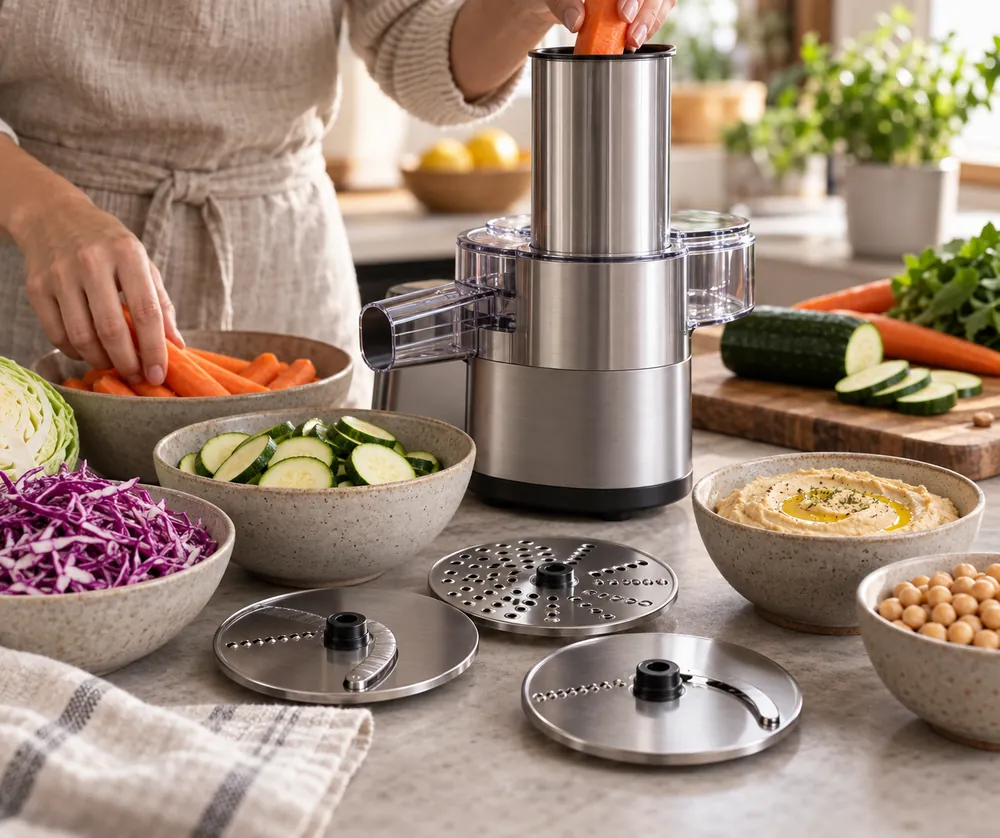
Shredding discs save time on carrots, cabbage, potatoes, and cheese. A reversible disc adds flexibility, but a dedicated fine or coarse disc may give a more consistent texture.
| Processor class | Usual published wattage range | Trade-off |
| Small chopper | 150-300 watts | Easy storage, limited dense prep |
| Mid-size processor | 350-700 watts | Balanced for everyday chopping and shredding |
| Heavy-duty full-size unit | 750-1,200 watts | Better for dense loads, heavier appliance |
Purees need enough liquid and time. Scrape the bowl between runs, then process again until beans, soups, sauces, or baby food reach the texture you want.
Fast prep habits that improve consistency
- Cut food evenly: smaller starting pieces help the blade grab food at the same rate.
- Use pulses first: pulsing prevents overprocessing before switching to a longer run.
- Do not overfill: leave room for food to circulate instead of packing the bowl tight.
- Match the disc to the task: slicing is for uniform sheets, shredding is for strands, and the S-blade is for chop or puree work.
For meal prep, efficiency is about repeatable results. Compare bowl capacity, motor range, included discs, and reported cleaning effort before choosing a processor.
Batch Prep Ideas That Store Well
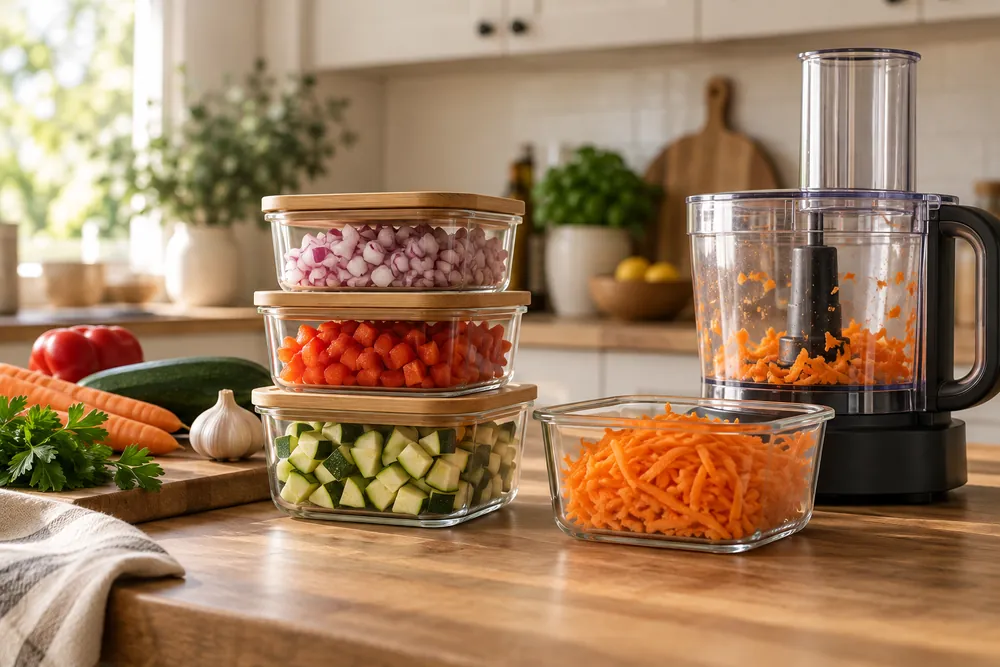
Shredded vegetables, chopped aromatics, sauces, and dough bases are strong food processor meal prep candidates. They hold texture, reduce weekday knife work, and match the capacity bands buyers compare before choosing a machine.
Use the processor for ingredients that benefit from uniform cuts. Avoid storing watery chopped produce too long unless it is headed for soup, stir-fry, salsa, or cooked fillings.
| Prep factor | Common published range | Why it matters |
| Work bowl capacity bands | About 3 to 5 cups, 7 to 9 cups, and 11 to 14 cups | Small bowls suit sauces; larger bowls handle cabbage, carrots, and dough in fewer loads. |
| Typical full-size motor range | About 500 to 1,200 watts | Higher bands are commonly marketed for dense doughs, hard vegetables, and longer batch sessions. |
| Refrigerator storage temperature | About 34°F to 40°F | Cold storage slows spoilage for chopped produce, cooked grains, and prepared sauces. |
| Freezer storage temperature | About -10°F to 0°F | Freezing works better for pesto, dough portions, cooked fillings, and soup bases than raw watery vegetables. |
Prep sturdy vegetables before softer items. Carrots, cabbage, onions, celery, and broccoli stems usually store better than tomatoes or cucumbers after processing.
- Shredded slaw mix: Process cabbage and carrots, then store the dressing separately to keep the texture crisp.
- Aromatic starter packs: Chop onion, celery, garlic, and herbs for soups, beans, meatloaf, or skillet dinners.
- Pesto and herb sauces: Pulse herbs, nuts, garlic, and oil, then refrigerate or freeze in small portions.
- Meatball or burger mix-ins: Mince mushrooms, onions, and herbs so they blend evenly into ground meat or plant-based patties.
- Pie or biscuit dry mix: Cut butter into flour, then chill the mixture until ready to add liquid.
Store batches in shallow containers so they chill quickly and stack neatly. Label by use because “taco filling base” is easier to use than “chopped peppers.”
Clean the blade and lid gasket promptly after sticky or oily prep. Owner reports often point to residue in lid channels as the difference between quick weeknight use and a chore.
How to Avoid Mushy, Uneven, or Watery Results
Mushy results usually come from overfilling, over-processing, or adding wet ingredients too early. Uneven pieces usually mean the bowl is too crowded or the feed tube is packed inconsistently.
Published specs help set expectations before meal prep starts. Bowl capacity, motor range, and ingredient temperature all affect whether chopped food stays distinct or turns into paste.
| Category | Typical published range | Best use |
| Mini chopper | 1.5-4 cups | Herbs, garlic, small sauces |
| Mid-size processor | 7-9 cups | Weekly prep for vegetables, crumbs, dips |
| Full-size processor | 11-14 cups | Batch slicing, shredding, dough, large salads |
| Common motor band | 250-1,200 watts | Higher ranges usually handle denser loads better |
Use the bowl size as a limit, not a target. For chopped vegetables, work below the top of the blade hub area when possible, then pulse in short bursts.
- For onions and peppers: quarter pieces evenly, pulse, then scrape the bowl before pulsing again.
- For carrots and potatoes: cut chunks to similar size before they enter the bowl.
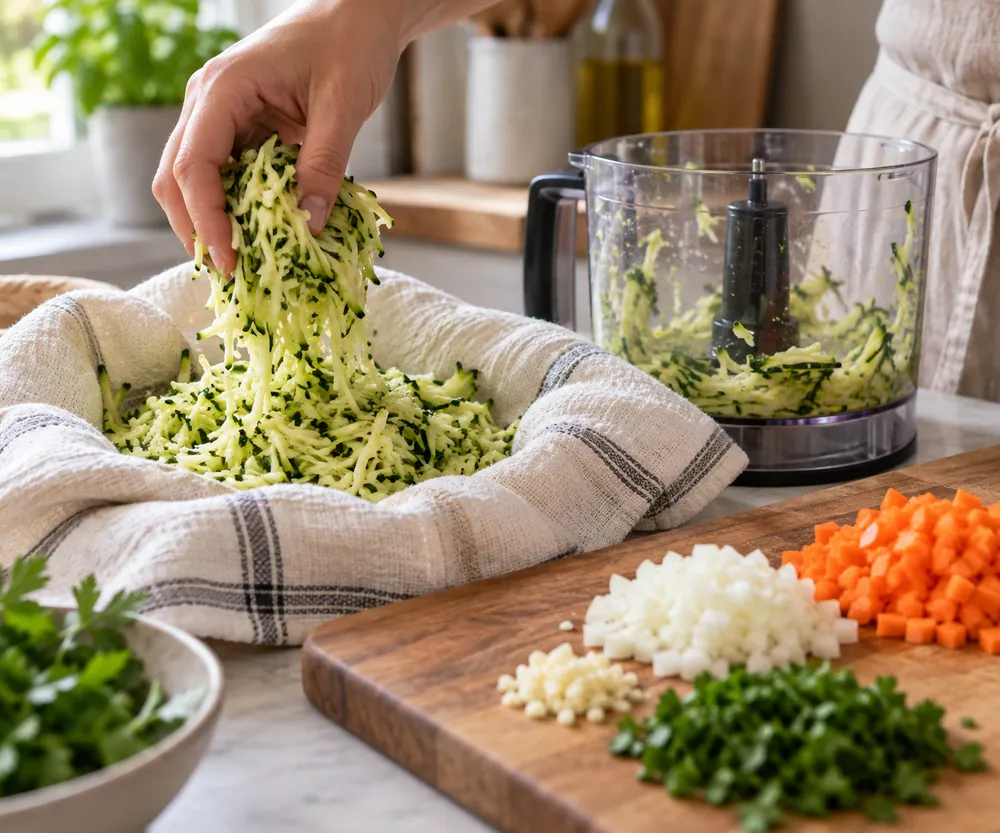
- For herbs: dry them well, because surface water quickly turns chopped leaves dark and clumpy.
Temperature matters for texture. Cold, firm ingredients cut cleaner, while warm or thawed foods release moisture faster under a spinning blade.
| Food or storage condition | Typical range | Texture effect |
| Refrigerated produce | 34-40°F | Firmer cuts, less weeping |
| Chilled butter or cheese | 35-45°F | Cleaner shredding and less smearing |
| Hot cooked ingredients | 140-165°F | More steam, more condensation, softer texture |
Drain canned beans, tomatoes, and cooked vegetables before processing. Patting food dry matters more than running the motor longer, because extra liquid keeps circulating through the bowl.
Use the pulse button for chopped prep and continuous run for purees, nut butters, and sauces. Stop before pieces look perfect, because carryover chopping continues as food tumbles after each pulse.
Cleaning and Storage Habits That Keep Prep Moving
Clean parts, dry seals, and reachable storage decide whether a food processor stays useful. Published specifications help compare bowl size, part count, and storage footprint before the appliance takes over a cabinet.
Rinse the bowl, lid, pusher, and blade right after chopping onions, herbs, cheese, or dough. Dried starch and oil make the next batch slower.
Check the manual before using a dishwasher. Many bowls and lids are top-rack safe, while sharp blades, gaskets, and specialty discs may last longer with hand washing.
| Category | Typical published range | Storage trade-off |
| Mini chopper | 3-4 cups | Easy drawer storage, limited batch size |
| Mid-size processor | 7-9 cups | Fits many cabinets, handles weekly prep |
| Full-size processor | 11-14 cups | Better for bulk prep, needs more shelf height |
Dry every part before reassembly. Moisture under the feed tube, around the spindle, or inside the pusher can cause odors and make plastic parts feel slick.
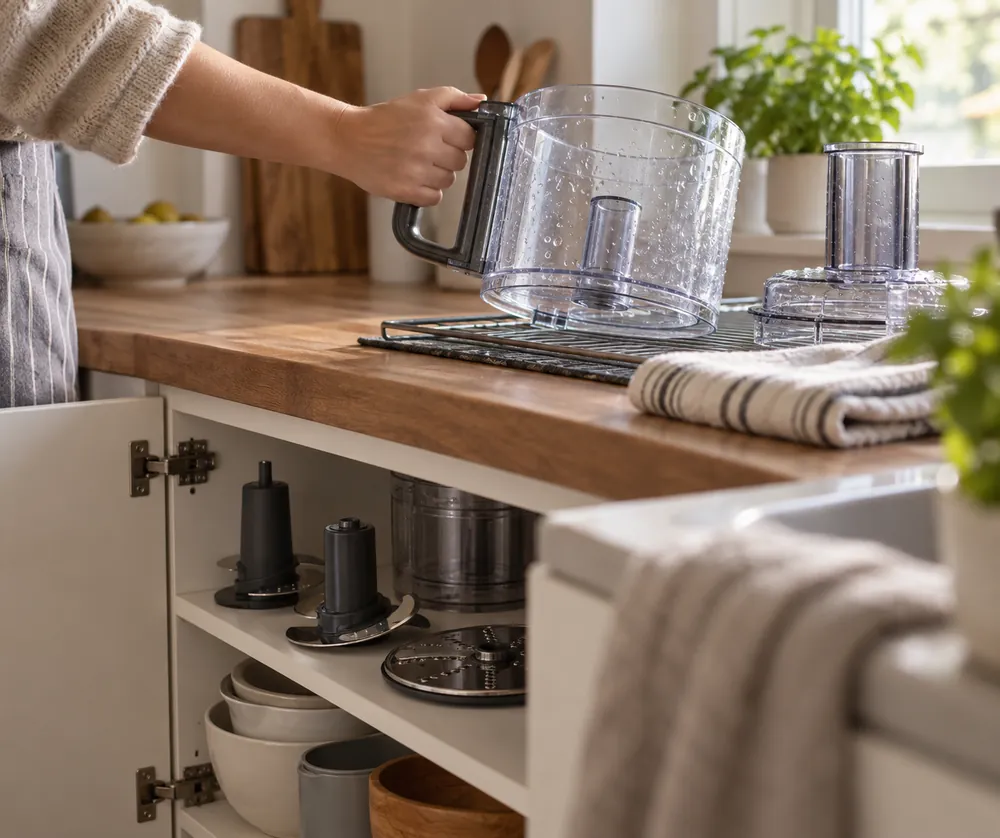
- Store blades safely: Use the included case when provided, or keep blades in a covered bin away from loose utensils.
- Keep discs vertical: A file-style organizer prevents rubbing and makes slicing or shredding discs easier to identify.
- Leave the bowl unlocked: Storing some lids slightly open can reduce gasket compression and lingering smells.
| Storage area | Common range | Why it matters |
| Upper cabinet opening | 10-13 inches | May limit taller bowls with lids attached |
| Base cabinet opening | 12-24 inches | Supports wider bowls, cases, and accessories |
| Counter working clearance | 2-4 inches behind unit | Helps manage cords and lid removal |
Store the motor base where lifting feels reasonable. Owner reviews often mention that heavy bases discourage use even when the processor performs well.
Group accessories by task so prep starts faster. Keep shredding discs near lunch containers, dough blades near baking tools, and the chopping blade with the bowl when safe.
Finish each session by wiping the base, checking the cord, and returning parts to the same spot. That habit turns cleanup into setup.
What Owners Report After Six Months
Six-month owner reports tend to separate food processors by daily friction: cleanup, bowl locking, and whether the motor sounds strained during dense prep.
Manufacturer documentation usually explains the limits, while reviews show where those limits become annoying.
The recurring complaint is not chopping power. Owners more often mention food trapped around lids, feed tubes, gasket areas, and blade posts.
For meal prep, that matters because repeated washing can discourage batch cooking more than one imperfect dice.
| Specification area | Typical published range | Why owners mention it later |
| Work bowl capacity | 3 to 14 cups | Small bowls suit sauces; larger bowls reduce batch splitting. |
| Motor power band | 250 to 1,200 watts | Lower bands may struggle with doughs, nuts, and dense vegetables. |
| Under-cabinet clearance | 15 to 18 inches | Tall units can be left out less often, reducing use. |
What holds up best, according to repeated owner comments, is the basic chopping and slicing function on mid-size machines.
Bowls, pushers, and standard blades often remain serviceable when users avoid overfilling and follow the documented pulse limits.
Early failures are usually reported around plastic stress points rather than blades. Owners cite cracked lids, broken locking tabs, loose handles, and worn seals.
Manufacturer manuals commonly warn against hot liquids, dishwasher heat, and forcing misaligned parts.
- Best long-term sign: owners still leave the processor on the counter after the first novelty period.
- Common regret: buying too small, then needing multiple batches for weekly vegetables.
- Common durability issue: lid and bowl parts that cost enough to make replacement annoying.
For meal prep buyers, the practical comparison is capacity versus cleanup.
Published specifications show size and power, but owner reports reveal whether the machine stays convenient after months of chopping onions, shredding cabbage, and making sauces.
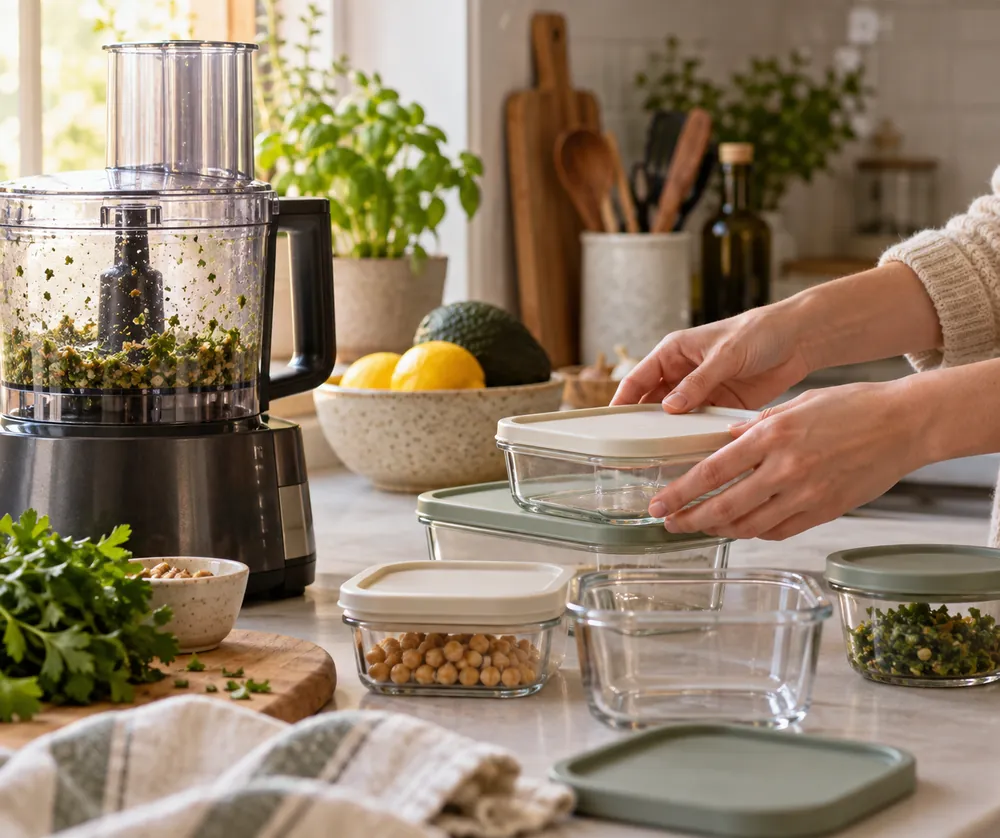
Safety, Noise, and Counter Space Considerations
Blade safety, motor noise, and footprint decide whether a food processor stays useful for meal prep.
Published specs help compare size and power, while owner reports often reveal how disruptive a unit feels during everyday chopping, shredding, and dough work.
Safety features worth checking
Food processors use sharp S-blades and high-speed discs, so look for interlock systems that stop operation unless the bowl and lid are locked.
A wide, stable base also matters because heavy chopping can make lighter machines walk across the counter.
- Lid lock: Reduces the chance of accidental startup during assembly.
- Feed tube pusher: Keeps fingers away from slicing and shredding discs.
- Non-slip feet: Helps control vibration on smooth countertops.
- Dishwasher-safe parts: Makes cleanup safer because you handle blades less.
Noise and power trade-offs
Higher-power processors usually handle dense dough, nuts, and large vegetable batches better, but they can sound harsher under load.
Published wattage does not equal real cutting performance, so compare it with bowl size, blade design, and repeated owner comments about vibration.
| Category | Typical published range | Meal prep trade-off |
| Compact processors | 250-500 watts | Good for herbs, sauces, and small chopping jobs |
| Full-size processors | 600-1,200 watts | Better for batch prep, shredding, and heavier mixtures |
| Common bowl capacities | 3-14 cups | Smaller bowls store easier; larger bowls reduce repeat batches |
Counter space and storage
Counter space matters because a processor is more likely to get used if it can stay accessible. Tall feed tubes, nested bowls, and accessory cases can change the real storage need beyond the base footprint.
| Space factor | Common range | Why it matters |
| Upper cabinet clearance above counters | 15-18 inches | May limit storing or operating taller units under cabinets |
| Comfortable side clearance | 2-4 inches | Helps with bowl twisting, cord routing, and ventilation |
Choose the smallest processor that fits your normal batch size, not the biggest bowl available.
For safety and convenience, also check whether the cord length, accessory storage, and lid design match where the appliance will actually sit.
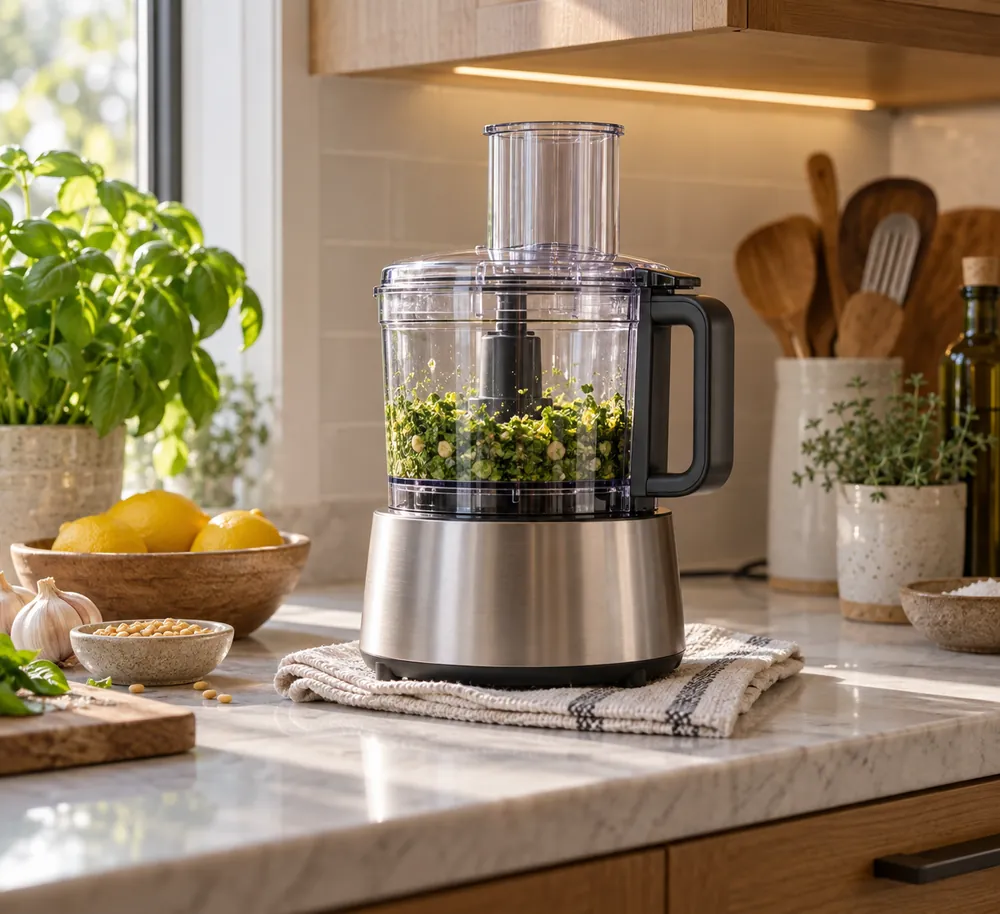
Questions Worth Answering First
Meal prep with a food processor depends on bowl size, motor range, blades, and cleanup. Compare specifications before chopping vegetables, shredding cheese, slicing cabbage, or making sauces.
What size food processor do I need for meal prep?
Choose capacity by batch size. Small bowls suit sauces and herbs; larger bowls handle cabbage, potatoes, onions, and shredded vegetables with less emptying.
| Capacity range | Best fit |
| 3 to 5 cups | Dips, herbs, garlic, small sauces |
| 7 to 9 cups | Basic weekly chopping and slicing |
| 10 to 14 cups | Family meal prep and larger batches |
How much wattage should a food processor have?
Published wattage helps compare motor class, but it does not prove cutting quality. Blade design, feed tube shape, and bowl stability also matter.
| Wattage range | Typical use |
| 250 to 450 watts | Light chopping, sauces, soft ingredients |
| 500 to 750 watts | General meal prep, shredding, slicing |
| 800 to 1,200 watts | Dense vegetables, dough, frequent batches |
Can a food processor replace a blender?
Not completely. A food processor handles chopping, slicing, shredding, and thick mixtures; a blender suits smooth drinks, thin soups, and icy blends.
Is a food processor good for slicing vegetables evenly?
Yes, with slicing discs and a stable feed tube. Adjustable discs add control; fixed discs are simpler but less flexible.
What attachments matter most for weekly meal prep?
Prioritize attachments that reduce repetitive knife work. Extra accessories can add storage and cleaning work.
- S-blade: chopping, mixing, pesto, crumbs.
- Slicing disc: cucumbers, potatoes, cabbage, onions.
- Shredding disc: cheese, carrots, slaw, zucchini.
- Dough blade: useful only if you make dough often.
How much counter clearance does a food processor need?
Check height with the lid and pusher installed. Many models need 15 to 18 inches of vertical clearance.
Are dishwasher-safe parts worth it?
Yes, especially for frequent meal prep. Specs may separate dishwasher-safe bowls, lids, pushers, and blades, so confirm qualifying parts.
What safety features should I compare?
Look for lid locks, bowl locks, non-slip feet, and overload protection. Compare them with footprint, weight, and cleaning access.