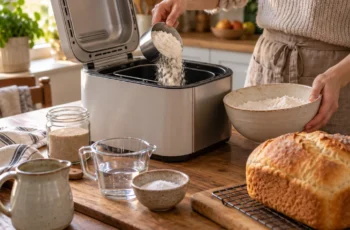
TL;DR: A waffle maker that fits is one whose footprint, plate size, and cleanup routine match your counter space, storage habits, and how often you actually cook.
Measure where it will live, compare published specifications like plate depth and browning settings, then weigh owner reports on sticking, durability, and heat consistency before committing to any single model.
What Fits Actually Means in a Small or Busy Kitchen
A waffle maker fits only if you can store it, open it safely, and keep breakfast moving without losing your prep space.
Published dimensions are the starting point, but lid movement, cord placement, and cleanup determine whether that footprint works.
Read beyond the closed dimensions
Check whether listed dimensions describe the appliance closed, open, or packaged for shipping.
Then look for instructions covering operating clearance, surface protection, and storage orientation; a compact housing does not establish how much working room the appliance needs.
| Specification | Common range | What it tells you |
| Rated power | 700–1,800 watts | Electrical demand, not a guaranteed cooking speed. Check the rating label and instructions before sharing a circuit with other heating appliances. |
| Stated batch capacity | 1–4 waffles | Output per batch, but waffle dimensions and thickness vary. Check whether the count describes separate waffles or sections of a larger grid. |
These ranges are shopping reference points, not limits or performance promises.
For any candidate, confirm the manufacturer’s current specifications and manual, especially where a retailer omits open dimensions or describes capacity without showing the cooking surface.
Map the whole breakfast routine
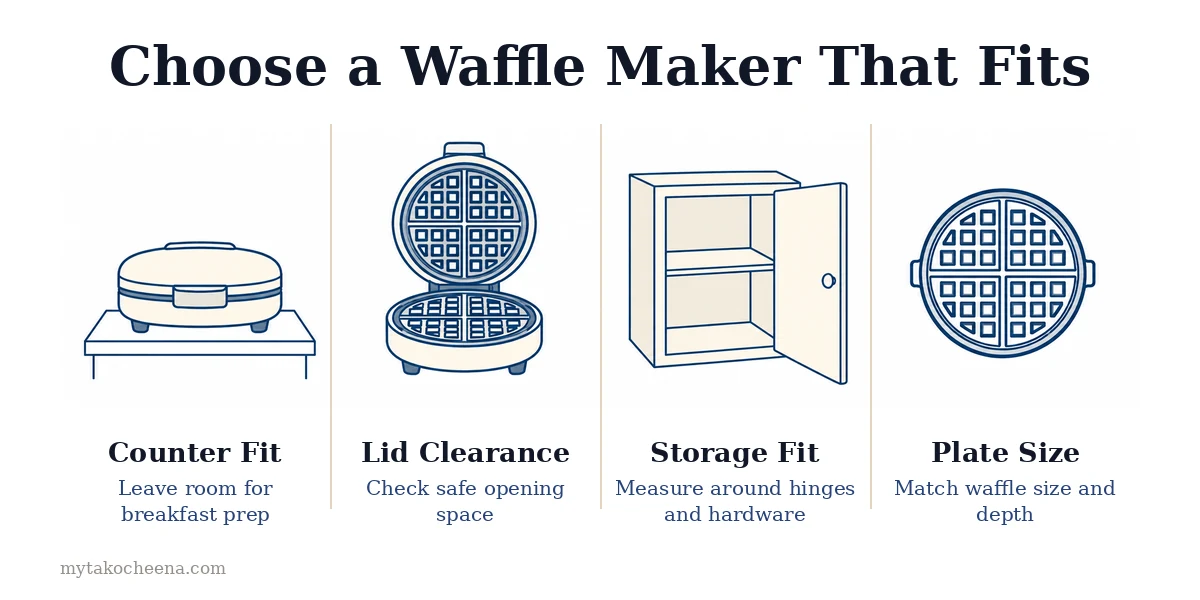
Mark the listed footprint on your counter with removable tape, then account for the handle and lid swing. Leave room for batter, a plate, and safe access to the outlet without routing the cord across a sink or walkway.
- Storage: Confirm upright storage is explicitly supported and the cabinet accommodates handles and hinges.
- Cooking: Follow the manual‘s clearance requirements, including space beneath overhead cabinets.
- Cleanup: Check plate removability, washing instructions, and access to overflow channels.
Reported owner experience can flag awkward latches, messy edges, or inconvenient cord storage. Treat those reports as prompts to inspect the design, not substitutes for dimensions or safety instructions.
Choose around your actual bottleneck: storage, counter access, or batch turnover. Keep cooking-time claims separate from wattage, and look for documented timing before planning a breakfast queue.
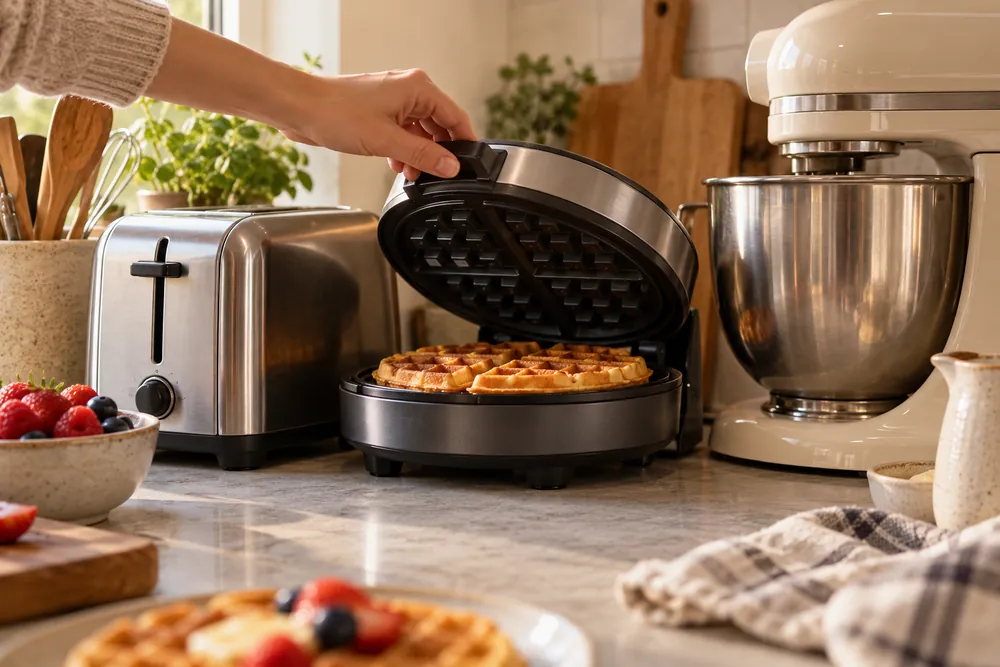
Start With Your Counter and Storage Reality
Counter space should narrow your waffle-maker shortlist before plate shape or browning controls do. Compare published dimensions with the actual spot where you will cook, including room to open the lid and reach the handle.
Measure the Space You Can Actually Use
Cabinet dimensions provide a starting point, not a guarantee of fit. These common US cabinet ranges describe nominal exterior sizes; measure your usable opening around hinges, shelf supports, and door hardware.
| Cabinet dimension | Common range | Buying implication |
| Wall-cabinet box depth | 12–15 inches | Interior shelf depth will be smaller; include the appliance handle and cord. |
| Base-cabinet box width | 12–36 inches | Doors, framing, and hardware reduce the opening available for moving an appliance through. |
Read the specification sheet carefully because listed dimensions may describe only the closed appliance. Check the manual for operating clearances, lid travel, and restrictions on use beneath cabinets.
- Cooking position: Allow access to controls and space for a plate without crowding the appliance.
- Moving parts: Check the full motion of a flip mechanism, not merely its resting footprint.
- Cord routing: Confirm the cord reaches a suitable outlet without crossing a sink or hot surface.
- Storage position: Verify that upright storage is explicitly supported and that any latch secures the appliance as intended.
Plan the Put-Away Routine
Upright storage can reduce shelf footprint, but it still requires adequate height and stable support. A bulky handle or projecting drip tray may determine whether the appliance fits.
Check published weight before choosing a high shelf. Leave a suitable cooling spot available, and follow the manual before wiping, wrapping the cord, or storing.
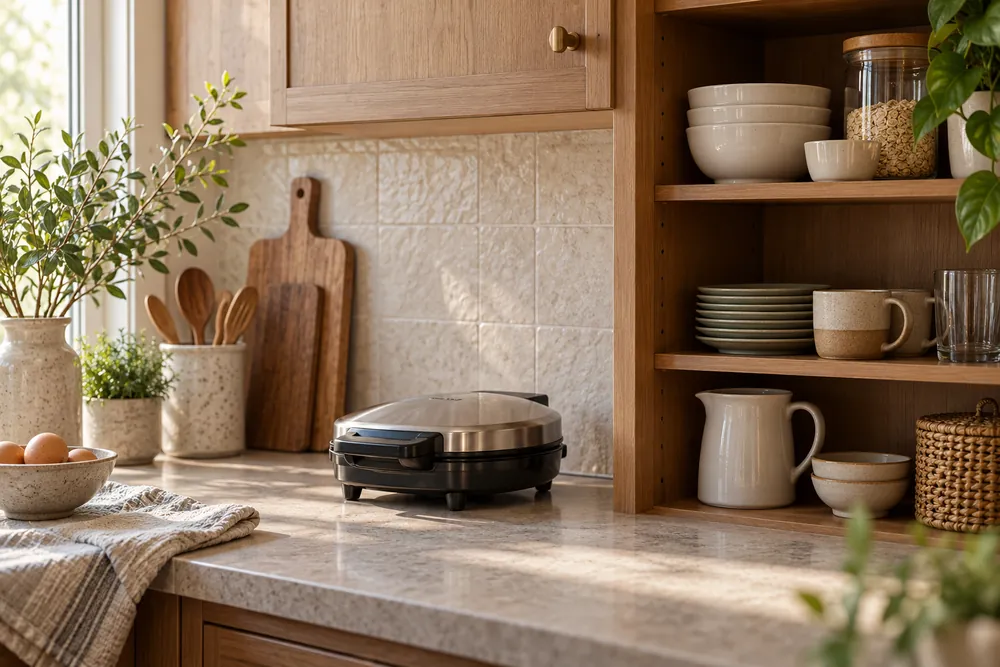
Plate Shape, Size, and Depth
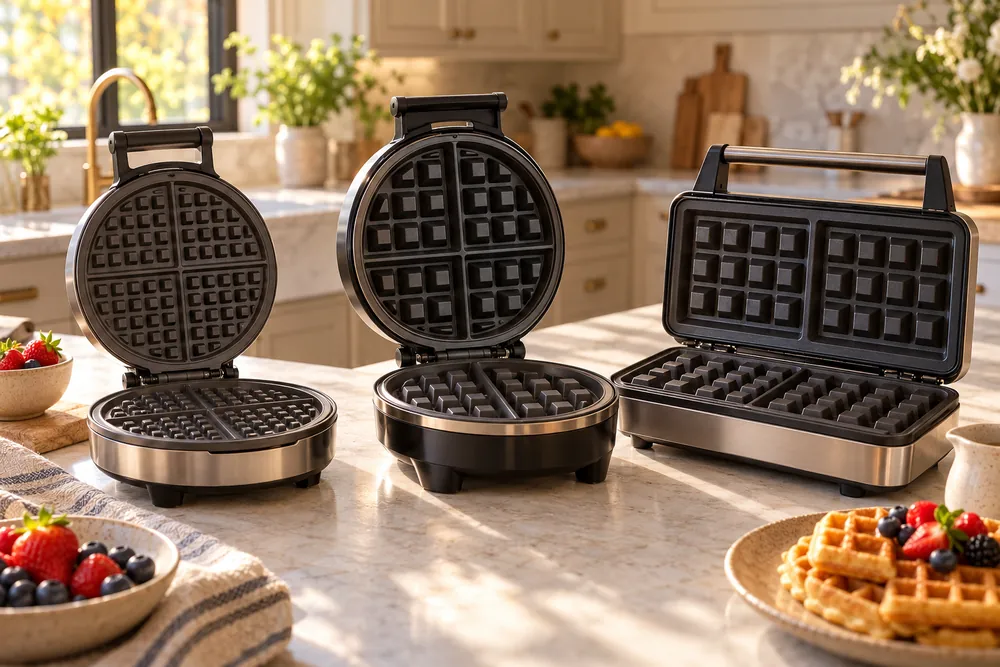
Plate shape, cooking surface size, and pocket depth determine what comes out of a waffle maker and how you serve it.
Compare these details in published specifications, and keep cooking dimensions separate from the appliance’s overall footprint.
Read Cooking Dimensions Before Exterior Dimensions
Product listings may emphasize housing measurements without identifying the usable plate area.
Look for waffle diameter, finished waffle dimensions, or a clearly labeled cooking surface; photographs alone cannot establish how much batter the plates hold.
| Plate category | Published specification to check | Practical trade-off |
| Mini round | Common waffle diameter range: 4–5 inches. | Small portions suit snacks and breakfast sandwiches, but feeding a group can require repeated batches. |
| Full-size round | Common waffle diameter range: 6–8 inches. | A broad waffle can be divided into wedges, though its diameter does not establish thickness or batter capacity. |
| Square or rectangular | Check finished waffle dimensions and whether dividing lines create separate pieces. | Straight edges simplify portioning and packing, but exterior width does not reveal usable cooking area. |
| Deep-pocket Belgian style | Look for stated waffle thickness or an explicit description of pocket depth. | Deep wells hold toppings; thick waffles require attention to batter quantity and doneness. |
| Shallow traditional style | Check plate-profile descriptions and finished waffle thickness where provided. | A thin profile suits a crisp-style waffle, but plate geometry alone cannot guarantee texture. |
These diameter bands describe common categories, not universal standards or guaranteed dimensions.
Confirm the exact cooking size in the manufacturer’s specification sheet or manual before choosing a machine for particular portions, serving plates, or freezer containers.
Separate Pocket Depth From Waffle Thickness
Pocket depth describes the indentations, while waffle thickness describes the finished waffle’s overall profile.
Sellers sometimes use “Belgian” without publishing either measurement, so treat that label as a style description rather than a precise dimensional specification.
- Check whether removable plates have raised borders that limit usable space.
- Read batter instructions for overflow guidance.
- Use reported owner experience to flag unclear sizing claims, not replace published measurements.
Browning Control and Heat Consistency
Browning control lets you adjust waffle color, but it does not guarantee even cooking across the plates.
Compare the control description, heating specifications, and reported owner experience to judge whether a waffle maker suits your preferred finish.
Read the dial’s actual function
A shade dial may change cooking time, target temperature, or both. Look for an explanation in the manual; numbered positions are not standardized temperatures, and a dark setting cannot compensate for uneven plate heating.
| Specification | Common range | Buying significance |
| Household electric waffle-maker power | 700–1,600 watts | Power input alone does not establish even browning or recovery speed. |
| Numbered browning selections | 5–7 settings | These menus offer shade choices, not calibrated temperature steps. |
These ranges are shopping reference points, not requirements or limits for the category. Check each listing and manual for the actual specification, especially whether the browning control uses fixed positions or a continuous dial.
Look for repeatable heat
Heat consistency matters across the cooking surface and between batches.
Published thermostat details can clarify how heating is controlled, but claims such as “even heat” need support from credible reviews describing center-to-edge color and successive batches.
Read what the ready indicator actually signals: preheated plates, a completed timer, or another condition.
Follow the manual’s reheating instructions between batches, and look for recurring owner reports of pale patches or premature completion alerts.
For your kitchen, translate those claims into a workable cooking station. Measure the counter space you can leave clear during use, not merely the spot where the appliance will sit when cold.
A tight fit can make routine cooking awkward.
Check the manufacturer’s required clearances before deciding that a footprint fits. Include room for the lid to open fully and for steam to escape away from surfaces the manual says to protect.
Closed dimensions alone will not settle that question.
If a design rotates, compare its operating dimensions with your available space. Leave room to turn the handle without hitting a wall or another appliance.
Rotation is a cooking feature, not proof that every part of a waffle browns evenly.
Locate the outlet before choosing a position. Check the published cord length and the manual’s electrical instructions; do not assume the cord will reach from your preferred corner.
Plan a placement that keeps it away from the sink and hot surfaces.
Then picture making breakfast there. You need somewhere to set batter, rest a utensil, and transfer a hot waffle without crowding the controls.
Measure that working area alongside the appliance footprint, especially if your usable counter is narrow or interrupted.
Your serving routine determines which owner reports deserve the most attention. For consecutive waffles, look for accounts that explain whether later batches need longer waits or different settings.
A review describing one attractive waffle tells you less about that particular demand.
Read indicator descriptions closely, too. A light or beep may signal preheating, a timed cycle, or another programmed stage rather than directly assess doneness.
Knowing what it means helps you judge how much attention the machine will require while you cook.
Separate appliance behavior from recipe differences when reading complaints. Batter composition, fill amount, and opening the lid early can affect results.
Give more weight to reviews that describe their method and repeated outcomes than to isolated comments about waffles being pale.
The best match is one whose controls, batch behavior, and operating space suit your routine together. Before buying, confirm any missing open-lid dimensions or clearance instructions.
More shade options offer little practical benefit if using them means rearranging your kitchen every morning.
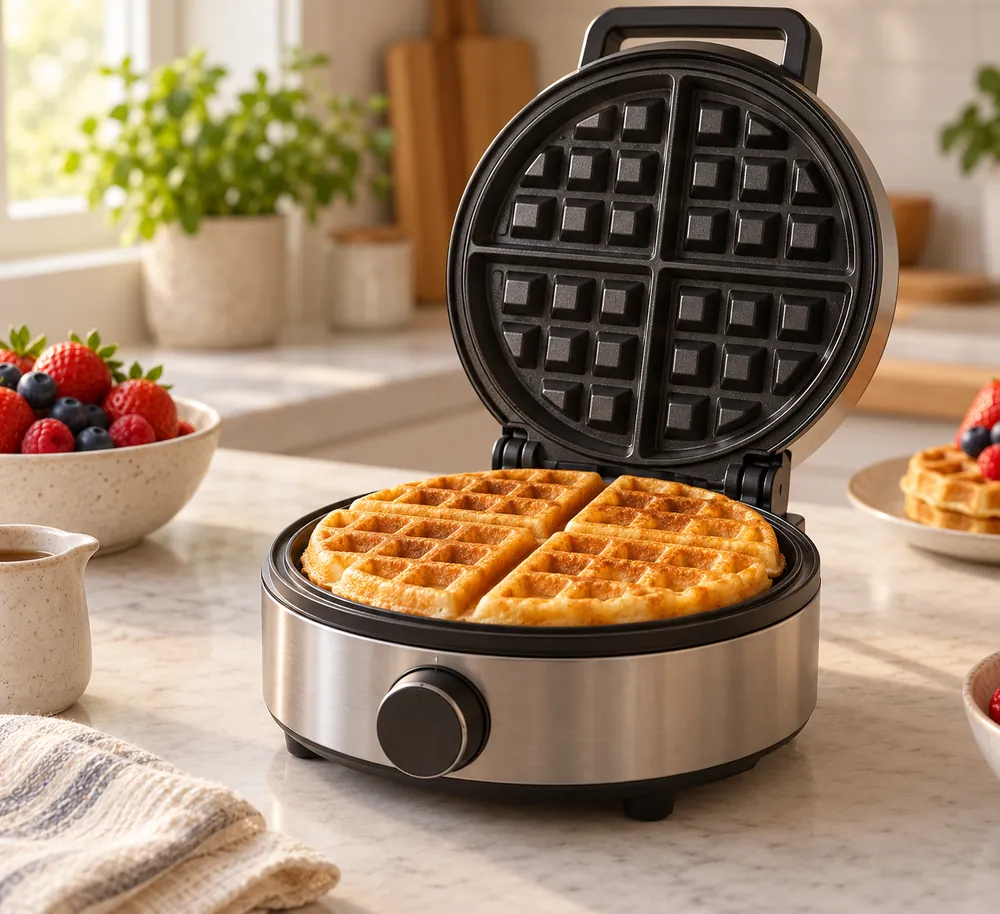
Removable Plates and Cleanup
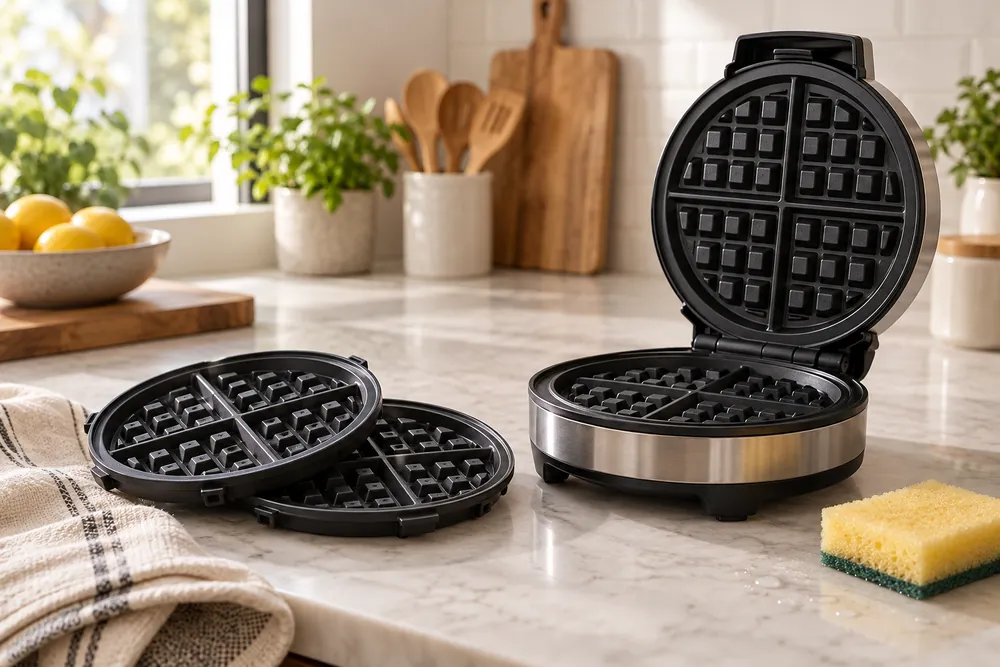
Removable plates make it easier to reach waffle grids, but they do not automatically make a waffle maker dishwasher-safe. Read the care instructions for the exact appliance, including restrictions on coatings, detergents, and soaking.
Check What Actually Comes Out
Look for explicit confirmation that the cooking plates detach, not merely that the appliance has a removable drip tray.
Product photos can show release buttons, but the manual should explain removal, washing, drying, and reinstallation.
- Dishwasher permission: Check whether it covers every removable plate and specifies rack placement.
- Hand-washing requirements: Look for guidance on soft sponges, mild detergent, and protecting the nonstick finish.
- Replacement availability: Confirm whether replacement plates can be ordered before treating removability as a long-term advantage.
Allow Room for Handling
Use these broad category-level shopping ranges to screen countertop waffle makers for storage fit. They are not installation clearances; verify the published dimensions and required operating space for each candidate.
| Dimension | Broad shopping range | Cleanup consideration |
| Body width | 8–14 inches | Leave room to reach plate releases without moving a hot appliance. |
| Body depth | 10–16 inches | Check cord routing and space behind the hinge. |
Body dimensions do not describe the detached plates or the open lid. Check plate size against your sink and drying rack, and confirm that the lid opens fully beneath nearby cabinets.
Read Beyond the Nonstick Label
Nonstick describes a surface, not a complete cleaning method. Batter can still collect around hinges, seams, and release mechanisms, so examine photos and reported owner experience for those trouble spots.
Unplug the appliance and let it cool before removing plates or wiping the housing. Follow the manual on immersion, and dry removable parts thoroughly before reinstalling them.
Features Worth Paying For Versus Gimmicks
Adjustable browning, clear doneness signals, and manageable cleanup deserve attention in a waffle maker’s specifications.
Pay for features that solve a specific cooking or storage problem, and check the manual before treating a marketing label as a useful capability.
Read the Specifications in Context
| Specification | Category range | Buying significance |
| Rated power | 700–1,500 watts | Indicates electrical demand, not guaranteed browning quality or recovery speed between batches. |
| Advertised batch capacity | 1–4 waffles | Check waffle dimensions and plate diagrams; marketing descriptions may count sections as individual waffles. |
These ranges are shopping reference points, not limits for every design. Read the manufacturer’s instructions for outlet requirements, operating clearance, and whether the appliance can actually stand upright for storage.
Features With a Clear Job
- Adjustable browning: Look for clearly marked settings. A color selector does not necessarily provide precise temperature control.
- Ready and done signals: Confirm what each light or beep means. A preheat indicator does not establish that the waffle is finished.
- Removable plates: Check whether the manual permits dishwasher cleaning and whether replacement plates are available.
- Overflow management: A moat or drip tray can contain excess batter. Check whether its corners and channels are accessible for cleaning.
Make Extras Earn Their Space
A flip mechanism needs room to rotate and does not guarantee even browning. Pay for it only after checking its operating footprint and reading owner reports about leakage and handling.
App connectivity, recipe presets, and decorative displays need a practical purpose. Check whether they provide useful control or merely duplicate instructions available in the manual.
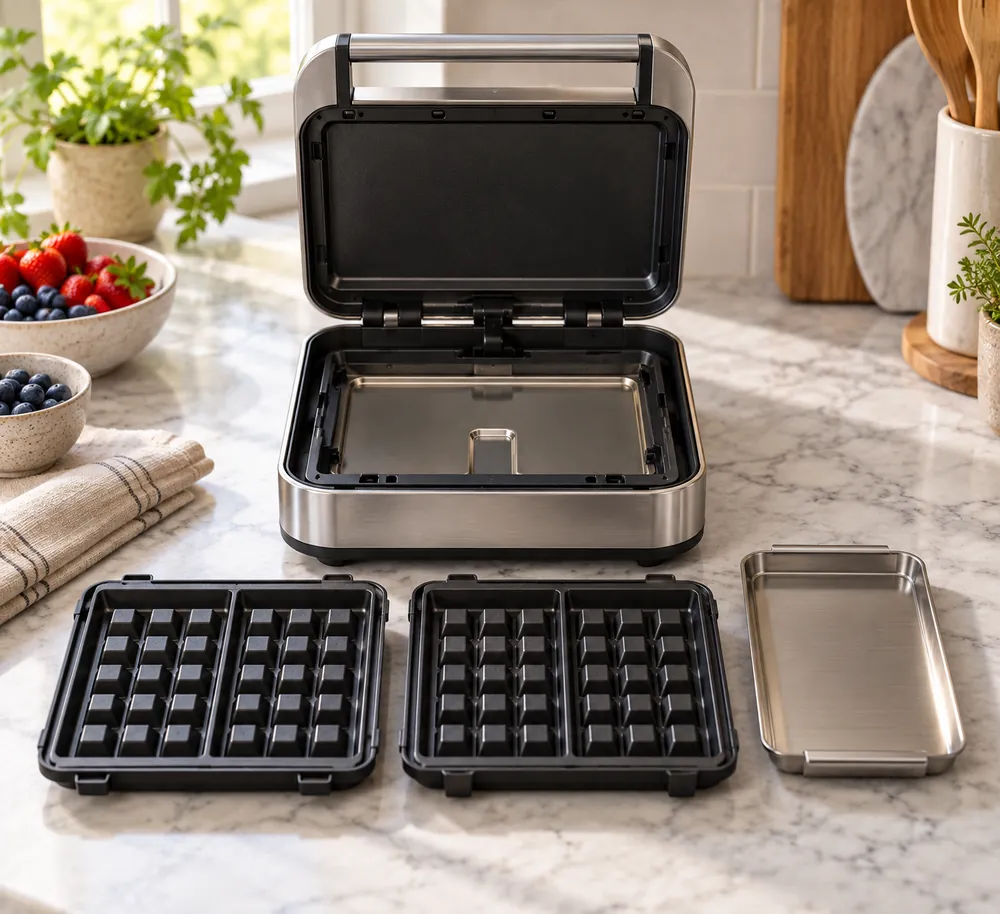
Matching the Maker to Your Household
Household fit starts with how many people eat together and where the waffle maker will live.
Compare published batch capacity, dimensions, and handling features against your breakfast routine, not just the appliance’s appearance or advertised power.
Match output to breakfast demand
Batch capacity matters when everyone wants breakfast together. Check whether the listing counts separate waffles or sections of a larger waffle, because those descriptions can create very different expectations about serving size.
| Specification | Broad range | What to check |
| Batch capacity | 1–4 whole waffles | Confirm waffle dimensions and whether divided sections count as separate waffles. |
| Rated power | 700–1,800 watts | Check the appliance rating; wattage alone does not establish cooking speed or browning consistency. |
These ranges describe useful shopping bands, not universal limits; specialty designs can fall outside them.
For repeated batches, look for published cooking guidance and owner reports about heat recovery, rather than treating capacity as a guarantee of quick service.
Check the working footprint
Closed dimensions tell you whether the appliance fits its storage spot. Find open-lid dimensions or setup instructions too, since hinges, rotating handles, and steam release affect where you can safely operate it.
- Counter placement: Follow the manual’s clearance requirements and keep escaping steam away from cabinet surfaces.
- Storage: Verify upright-storage approval, handle projection, cord storage, and any lid latch.
- Cleanup: Check whether plates detach and whether the manufacturer explicitly permits dishwasher cleaning.
Choose features you will use
Browning controls and audible alerts can help coordinate breakfast without constant checking.
Read reported owner experience for recurring complaints about awkward latches, batter overflow, or difficult cleaning, while keeping those observations separate from verified specifications.
What Long-Term Owners Say
Sticking waffles are a recurring frustration in long-term owner reports, particularly as nonstick surfaces age.
Treat this as a complaint to investigate, not proof that every coating fails or that review frequency establishes a category-wide failure rate.
What holds up—and what disappoints
Positive owner reports often describe consistent browning and plates that release waffles with little cleanup.
Negative reports describe deteriorating release, loose hinges, broken latches, or indicators that stop working; early failures deserve particular attention in recent reviews.
Look for repeated descriptions of the same problem, including how owners cleaned and stored the appliance.
An isolated failure says less than a recurring pattern, but reviews rarely establish whether damage came from construction, handling, or maintenance.
Specifications worth checking against those reports
These broad shopping ranges provide context for household countertop waffle makers, not limits that every product follows. Confirm the manufacturer’s published dimensions and electrical rating before buying.
| Specification | Shopping range | Practical meaning |
| Rated power | 700–1,800 watts | Higher wattage alone does not establish even browning or durability. |
| Closed width | 8–15 inches | Check depth, handle projection, and open-lid space separately. |
Read the care instructions before committing
Manufacturer care documentation commonly specifies nonabrasive cleaning and utensils that protect coated plates.
Follow the particular manual on cooking sprays, washing removable plates, and upright storage rather than assuming those practices are universally permitted.
- Check whether the warranty excludes coating wear.
- Look for replacement plates, trays, and accessible customer support.
- Prioritize reviews updated after extended ownership over unboxing impressions.
Questions Worth Answering First
Waffle maker specifications help narrow your options before countertop space or cleanup becomes a problem. Use these questions to connect published details with the waffles you want, your household’s appetite, and your storage setup.
What size waffle maker do I need?
Check the closed dimensions against your storage space, then look for the height with the lid open. Allow room to lift the handle comfortably, and follow the manual’s clearance instructions around hot surfaces.
How many waffles can a waffle maker cook?
Published capacity describes a batch, not necessarily a serving. Check waffle dimensions and whether the listing counts separate waffles or sections of a larger waffle before estimating how quickly breakfast will be ready.
| Specification | Common shopping range |
| Rated power | 700–1,800 watts |
| Batch capacity | 1–4 waffles |
Does higher wattage make waffles cook faster?
Wattage describes electrical power, but it cannot establish cooking speed by itself.
Plate construction, thermostat behavior, and batter affect results, so look for clearly explained timing claims and recurring owner reports about slow recovery.
Do I need a flip waffle maker?
A rotating design can help distribute batter across the plates, but it does not guarantee even browning. Check how much operating space the mechanism needs and whether the handle folds for storage.
Are removable waffle plates worth it?
Removable plates make sink cleanup more convenient, especially around overflow edges.
Confirm whether the manufacturer permits dishwasher cleaning, and check coating care instructions rather than assuming every detachable plate tolerates the same treatment.
Which waffle maker controls should I look for?
Look for adjustable browning and clearly described indicator lights or audible alerts. A ready light may signal preheating rather than waffle doneness, so read the manual to understand what each signal actually means.
Can I store a waffle maker upright?
Choose a model explicitly approved for upright storage, with a secure latch and stable resting surface. Let it cool and dry before putting it away, and check whether the cord stores without tight bending.