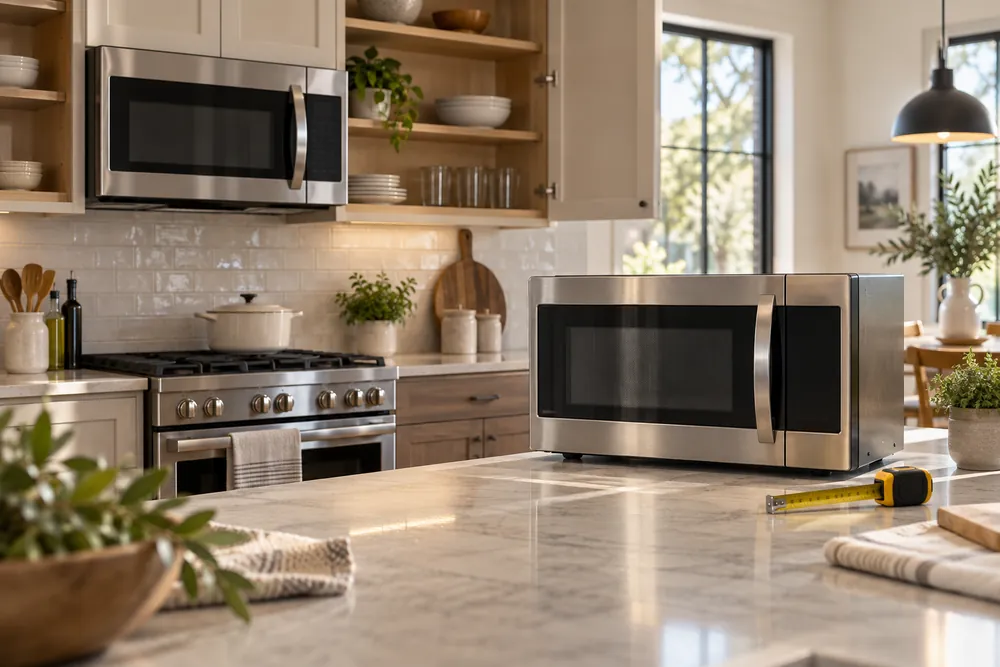
TL;DR: Over-the-range convection microwaves combine microwave cooking, convection baking, and range ventilation in one installed appliance, while countertop convection microwaves offer similar cooking modes without permanent installation.
Over-the-range models save counter space and replace a hood, but they depend on cabinet fit and venting. Countertop models are easier to place, move, and replace, but they take work surface space.
What Over-the-Range and Countertop Convection Microwaves Are
Over-the-range and countertop convection microwaves combine microwave heating with fan-circulated hot air.
One appliance can reheat leftovers, melt butter, brown casseroles, and bake small trays, but the formats solve different kitchen problems.
An over-the-range convection microwave mounts above a cooktop or range. It also works as a ventilation hood, so specifications include cooking modes, exhaust fan ratings, filters, lighting, and cabinet fit.
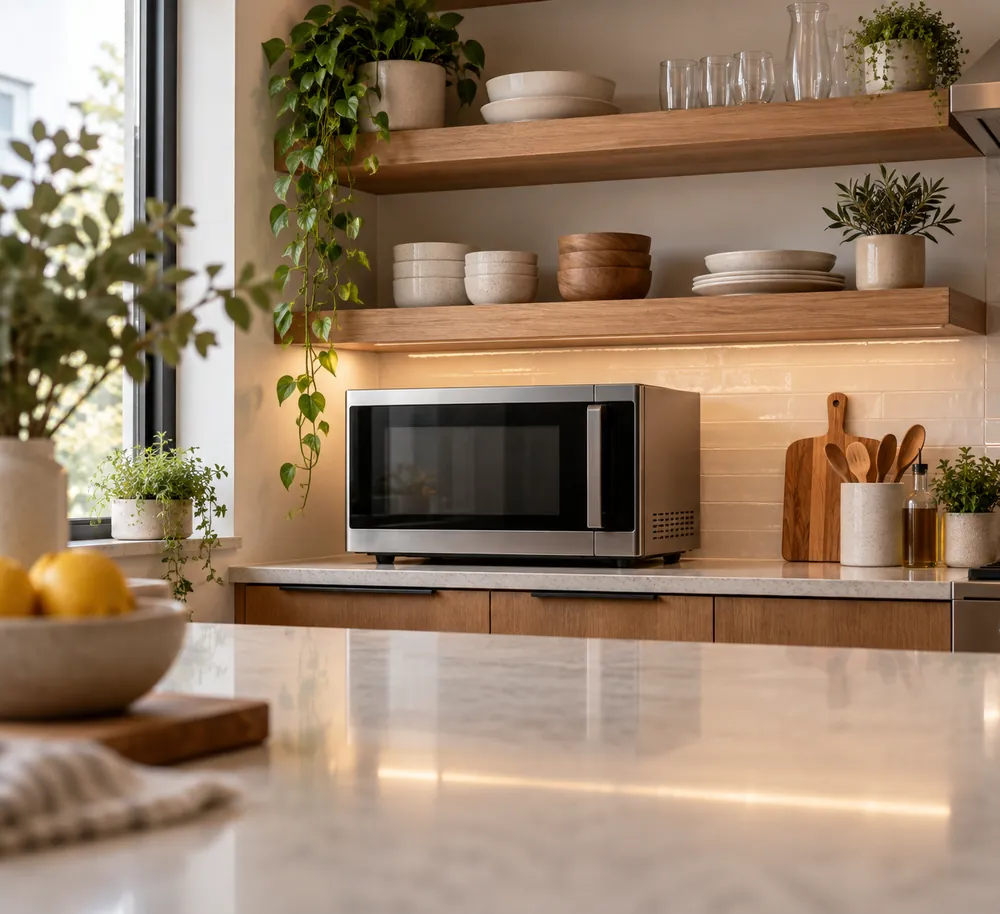
A countertop convection microwave sits on a counter, cart, or open shelf. It does not replace a range hood, but it is easier to place, unplug, move, or replace.
| Specification | Over-the-range convection microwave | Countertop convection microwave |
| Common capacity band | About 1.6-2.2 cu. ft. | About 0.9-1.6 cu. ft. |
| Usual microwave power band | About 900-1,100 watts | About 900-1,250 watts |
| Typical convection temperature range | About 100-450°F | About 100-450°F |
| Common cabinet opening width | About 30 inches | Not tied to a cabinet opening |
| Typical cooktop clearance requirement | Often about 13-18 inches from cooking surface to microwave bottom, depending on installation instructions | Not installed above the cooktop |
Capacity matters because convection cooking needs airflow. A larger cavity may fit wider dishes, while a smaller cavity may preheat faster and need less counter depth.
Published wattage is useful, but not the whole story. Microwave wattage affects reheating speed, while convection performance depends on fan design, element placement, rack position, and interior shape.
What the over-the-range format adds
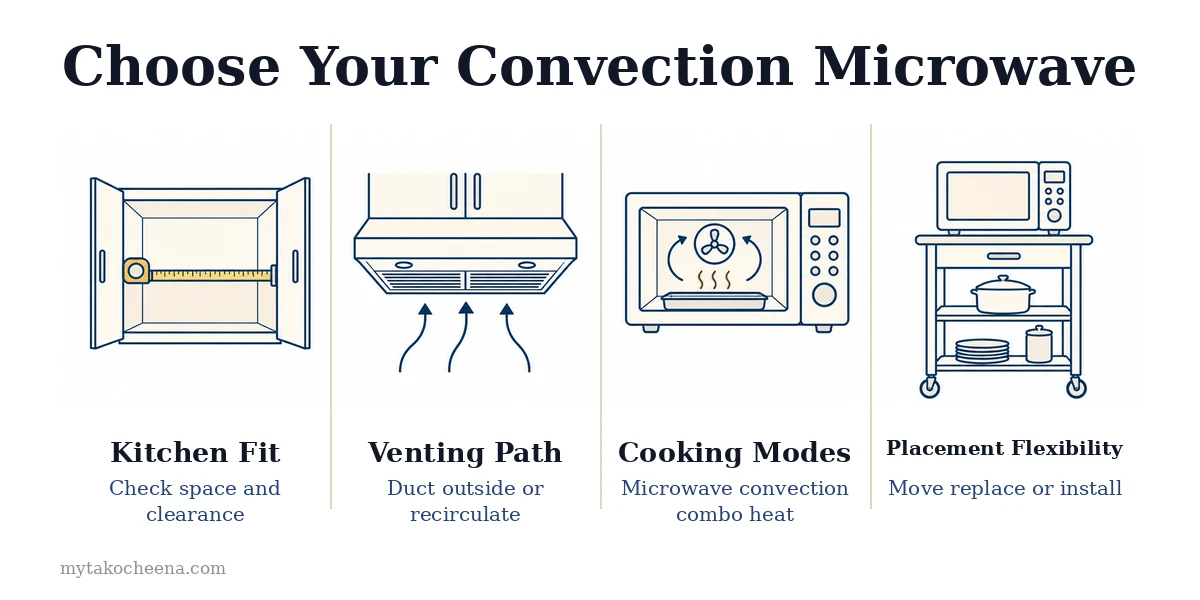
The over-the-range design saves counter space and creates a built-in look. Its trade-off is installation: buyers must match cabinet width, outlet location, mounting hardware, ducting choice, and clearance rules.
- Best fit: kitchens short on counter space.
- Main advantage: combines microwave, convection, light, and ventilation functions.
- Main limitation: harder to install, reach, clean, and replace.
What the countertop format adds
The countertop design is simpler to buy around published dimensions. It still needs breathing room around vents, but avoids wall mounting, overhead lifting, and range-hood replacement decisions.
- Best fit: renters, dorm-style setups, secondary kitchens, and flexible layouts.
- Main advantage: easier placement and replacement.
- Main limitation: uses counter space and does not ventilate the cooktop.
For comparison shopping, treat both as specification-driven appliances rather than direct substitutes. Choose over-the-range for space saving and ventilation; choose countertop for flexibility, simpler setup, and easier future changes.
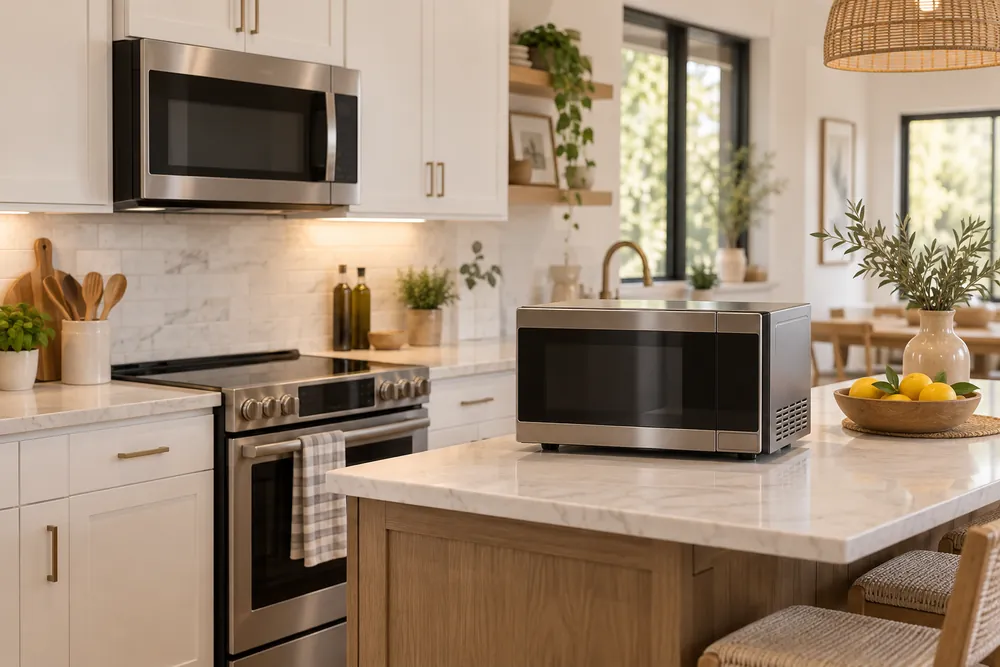
Key Differences in Installation, Space, and Venting
Installation style is the main split. One replaces a range hood and mounts into cabinetry; the other sits on a work surface and plugs into a standard outlet.
Check dimensions, clearances, and venting notes before comparing presets or finishes.
Installation and space requirements
Over-the-range models need a cabinet opening, wall support, and cooktop alignment. Remodels often favor them because cabinets control the fit.
Countertop convection microwaves need flat counter space and airflow. They move easily but can reduce prep area in small kitchens.
| Specification area | Over-the-range convection microwave | Countertop convection microwave |
| Typical width range | About 29 to 30 inches for many standard cabinet openings | About 20 to 25 inches for many full-size countertop units |
| Common capacity band | About 1.7 to 2.2 cubic feet | About 1.0 to 2.2 cubic feet |
| Typical clearance focus | Cooktop-to-bottom clearance and upper-cabinet fit | Side, rear, and top airflow clearance |
| Usual power category | Often published around 900 to 1,100 cooking watts | Often published around 900 to 1,200 cooking watts |
These ranges are guides, not promises. Verify the installation guide because trim, handle depth, door swing, and rear clearance can change fit.
Venting trade-offs
Over-the-range models usually include a fan for steam, smoke, and odors. They save wall space but may not match a dedicated range hood.
Common vent options include outside exhaust or recirculating airflow through filters. Outside venting sends air outdoors; recirculation returns filtered air to the kitchen.
| Venting factor | Over-the-range | Countertop |
| Range ventilation role | Built to replace basic hood ventilation in many layouts | No cooktop ventilation function |
| Air path | Often convertible between external exhaust and recirculation | Uses internal cooling airflow only |
| Placement limits | Must match cabinet, wall, and duct direction requirements | Must keep vents unobstructed on the counter |
Countertop units need ventilation for cooling, not kitchen exhaust. Blocking vents can affect performance and conflict with the owner’s manual.
- Choose over-the-range when cabinet fit, built-in appearance, and freeing counter space matter more than portability.
- Choose countertop when easy installation, rental flexibility, and simpler replacement matter more than range ventilation.
- Check first the cutout, outlet type, duct path, clearance notes, and capacity range listed in the published specifications.
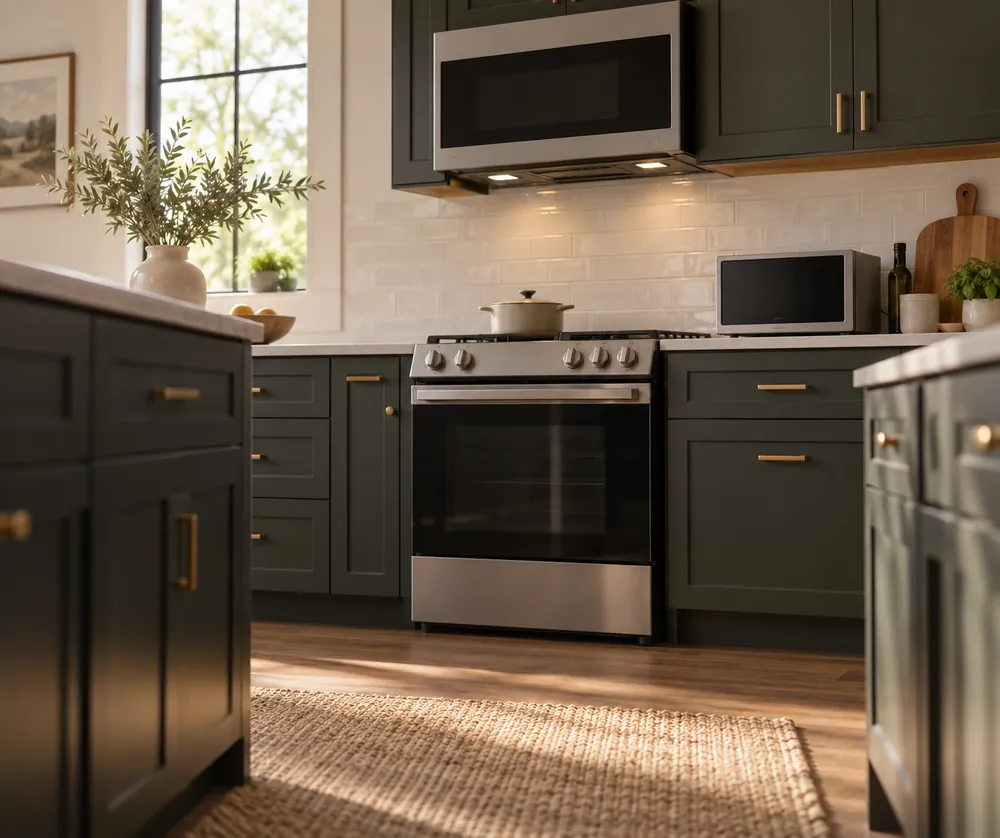
Cooking Performance: Convection, Microwave, and Combination Modes
Cooking performance depends on how each format moves heat, manages moisture, and switches modes.
Over-the-range convection microwaves favor built-in ventilation and space savings, while countertop units offer easier placement and access.
Published specifications matter because convection labels vary. Some models use true convection with a fan and heating element, while others rely on assisted airflow that browns less evenly.
| Specification category | Over-the-range convection microwave | Countertop convection microwave |
| Typical microwave output range | 850-1,100 watts | 900-1,250 watts |
| Common convection temperature range | 250-450°F | 100-450°F |
| Common capacity band | 1.7-2.2 cu. ft. | 0.9-1.5 cu. ft. |
Microwave mode is strongest for reheating, steaming, and defrosting. Countertop models may list higher output, but performance also depends on turntable size, sensor programs, and how evenly the cavity distributes energy.
Convection mode shifts the comparison. A countertop unit can sit at eye level or on an open counter, making browning easier to check, while an over-the-range unit places hot food higher and farther back.
- Over-the-range strength: better space efficiency and one appliance above the range.
- Countertop strength: easier loading, unloading, and visual checking during convection cooking.
- Shared limitation: smaller cavities restrict airflow compared with a full-size wall oven or range oven.
Combination mode uses microwave energy to speed cooking while convection heat promotes browning. It works best for casseroles, roasted vegetables, frozen snacks, and small meat cuts, but is less forgiving for delicate baking.
| Mode | Best use | Main trade-off |
| Microwave | Fast reheating, steaming, defrosting | Limited browning and crisping |
| Convection | Browning, roasting, small-batch baking | Slower than microwave-only cooking |
| Combination | Speed plus surface color | Requires attention to cookware and timing |
Owner reports often focus on learning curve. Combination cooking can overcook edges before centers finish, especially with dense foods, so preset quality and manual control matter more than the label.
For frequent convection use, compare rack positions, temperature range, fan design, and interior shape.
For frequent reheating, compare wattage band, sensor cooking options, and usable turntable area before choosing an installation style.
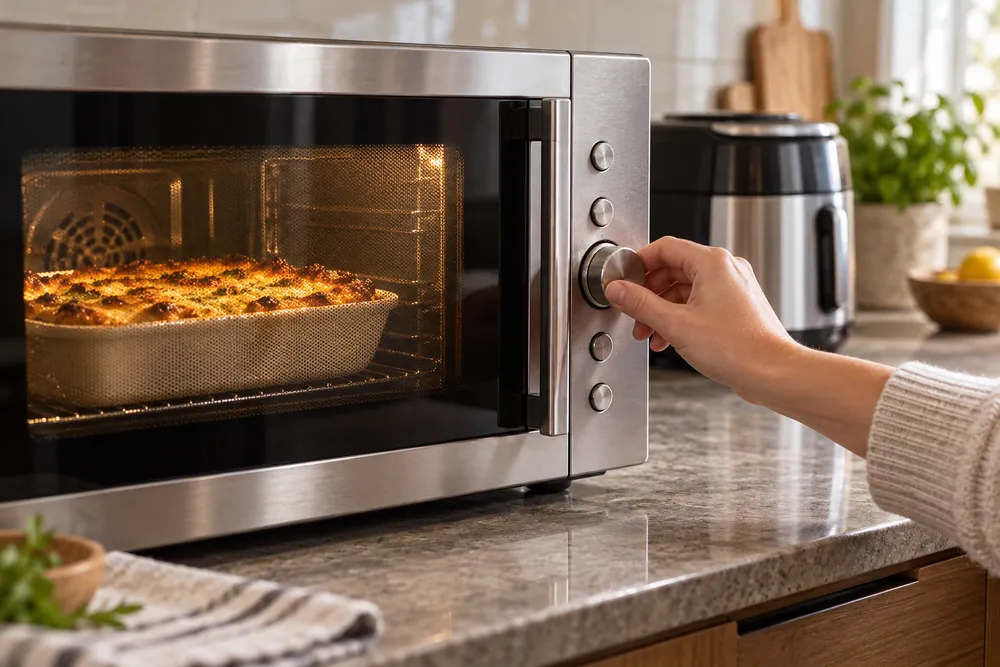
When an Over-the-Range Convection Microwave Makes Sense
An over-the-range convection microwave makes sense when one appliance needs to handle reheating, venting, and secondary baking without taking counter space.
It fits kitchens where cabinet layout, electrical access, and cooktop clearance match published specifications.
Best-fit kitchen situations
This style works best in a kitchen with an upper-cabinet opening above the range.
Replacing an existing over-the-range microwave is usually simpler than converting from a countertop unit because the mounting area and vent path may already exist.
| Specification | Typical published range | Why it matters |
| Cabinet opening width | About 30 to 36 inches | Matches the space above many US ranges |
| Clearance above cooktop | About 13 to 18 inches | Affects pot access and heat safety |
| Interior capacity | About 1.1 to 2.2 cubic feet | Determines dish and turntable size |
Convection adds value when the main oven is busy or oversized for small meals. Published specs often show convection ranges around 100°F to 450°F, but usability depends on rack position, preheat behavior, and hot-air circulation.
Why choose it over a countertop convection microwave
The main advantage is space recovery. A countertop convection microwave can be easier to install and move, but it occupies prep area and may need side or rear ventilation clearance.
| Category | Over-the-range convection microwave | Countertop convection microwave |
| Placement | Mounted above the range | Sits on counter or cart |
| Ventilation role | Often includes recirculating or ducted venting | Usually does not replace a range hood |
| Typical cooking power band | About 900 to 1,200 watts | About 900 to 1,250 watts |
Choose over-the-range when ventilation matters as much as microwave cooking. Owner feedback often favors models with easy-clean filters, strong lighting, and controls readable from below.
- Good fit: small kitchens, apartments, and remodels preserving counter space.
- Weak fit: households with short users, tall stockpots, or heavy daily wok cooking.
- Check first: mounting bracket, outlet location, duct direction, and cabinet depth.
For My Tako Cheena readers comparing specifications, the decision is less about convection alone and more about placement.
Buy this style when dimensions, venting options, and clearance ranges match the kitchen before brand features enter the shortlist.
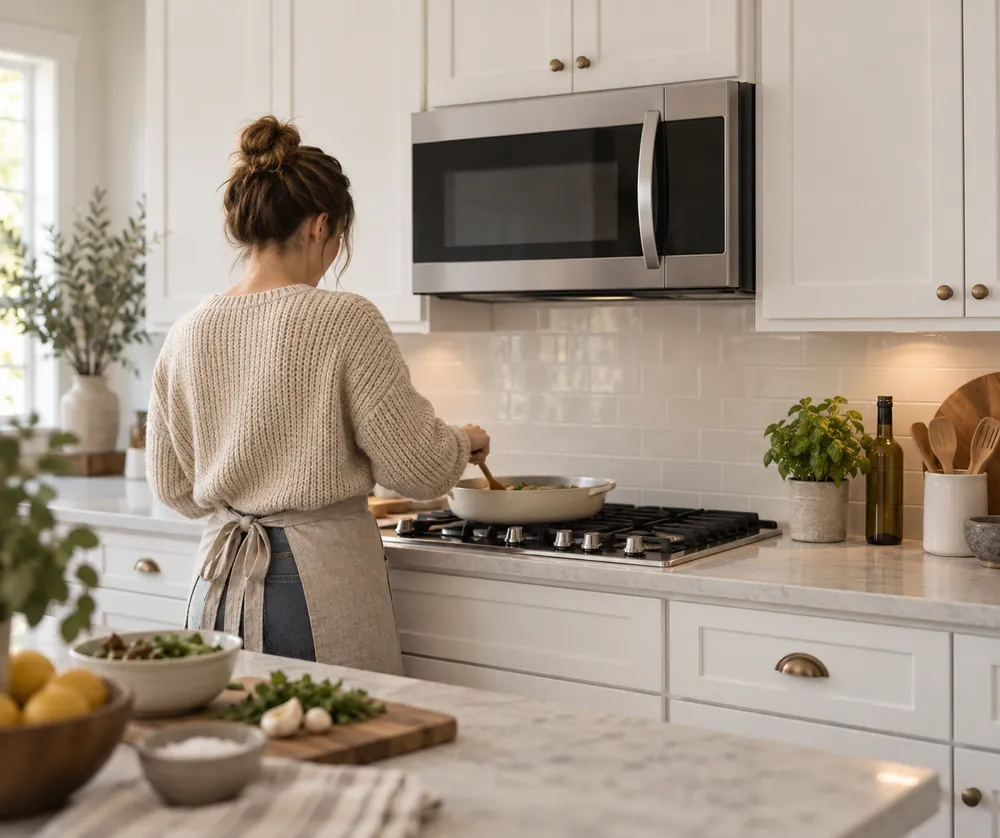
When a Countertop Convection Microwave Makes Sense
Countertop convection microwaves fit buyers who want baking-style airflow without using cabinet space for an over-the-range install. They are easier to replace, move, and fit into varied kitchen layouts.
This choice works best when ventilation is already handled by a separate range hood. The usual trade-off is simple: countertop units reduce installation complexity, while over-the-range units save counter space.
Better fit for renters and flexible kitchens
A countertop model usually needs a grounded outlet, stable surface, and open clearance. That suits apartments, temporary homes, basement kitchens, and remodels where cutting cabinets is not worth the cost.
Over-the-range models depend on cabinet width, mounting height, wall structure, and ducting options. A mismatch can turn an appliance purchase into a carpentry or electrical project.
| Specification area | Countertop convection microwave | Over-the-range convection microwave |
| Common capacity band | About 0.9-1.6 cu. ft. | About 1.7-2.2 cu. ft. |
| Typical cabinet opening width | Not required | About 30 inches |
| Typical side/top clearance guidance | About 3-6 inches, depending on manual | Built into installation instructions |
Better for convection use away from the range
Countertop placement can be more comfortable for checking browned food, rotating pans, or removing hot cookware. You are not reaching over burners during convection baking.
Category specifications often show convection temperature ranges that overlap with compact ovens. That makes countertop convection microwaves useful for small batches, frozen foods, crisp reheating, and side dishes.
| Specification | Common range to compare |
| Microwave cooking power | About 900-1,250 watts |
| Convection temperature range | About 100-450°F |
| Turntable diameter band | About 12-16 inches |
Trade-offs to accept
- Counter space: The appliance stays visible and occupies prep area.
- Ventilation: It will not replace a hood above the cooktop.
- Capacity: Larger casserole dishes may fit better in over-the-range models.
- Appearance: It looks less built-in unless paired with a trim kit.
Choose countertop when flexibility, easy replacement, and safer eye-level handling matter more than a built-in look.
Choose over-the-range when freeing counter space and combining microwave placement with cooktop ventilation matter more.
Where Owner Feedback Agrees and Where It Splits
Owner feedback centers on fit, noise, venting, and door or keypad durability.
Documentation explains the split: over-the-range models have installation limits, while countertop convection microwaves trade built-in venting for simpler placement.
Complaints differ by format. Over-the-range buyers mention fan noise, weak steam capture, and hard installation. Countertop buyers mention lost counter space, exterior heat, and confusion over convection settings.
| Category | Typical published range | Why owners notice it |
| Over-the-range cabinet width | About 30 to 36 inches | Fit complaints rise when cabinets, backsplash depth, or old brackets do not match. |
| Countertop convection capacity | About 0.9 to 1.6 cubic feet | Larger interiors help with pans but take more counter depth. |
| Microwave cooking power | About 900 to 1,200 watts | Lower-power units draw complaints about uneven reheating and longer cook times. |
| Convection temperature range | About 100 to 450 degrees Fahrenheit | Broiling, crisping, and baking expectations vary by the top-end setting. |
Repeated owner reports say basic microwave heating holds up best. Reheating, defrosting, and popcorn-style tasks often remain dependable after convection novelty fades.
Convection satisfaction splits more. Owners who use racks, preheat steps, and smaller loads report better results. Those expecting a full oven replacement cite pale browning, slow baking, or uneven crisping.
- Over-the-range strengths: frees counter space, adds a built-in light, and can replace a range hood in modest cooking setups.
- Over-the-range weak points: installation fit, loud exhaust fans, door latch wear, and limited venting performance over high-output cooking.
- Countertop strengths: easier replacement, no cabinet cutting, and more placement flexibility near a suitable outlet.
- Countertop weak points: footprint, side or rear clearance needs, and heat buildup around tight appliance garages.
Early failures in reviews often involve touch panels, door switches, turntable motors, or interior light access. Warranty terms and labor coverage vary.
Venting is the clearest over-the-range complaint. Specifications may list recirculating or external vent options, yet capture still depends on duct layout, filter maintenance, and burner position.
Countertop convection models get more forgiving reliability feedback because replacement is simpler. A failed unit is inconvenient, but usually avoids a cabinet gap or second installation visit.
Best reading: choose over-the-range for space savings and integrated lighting, not premium ventilation. Choose countertop convection for easier ownership and replacement, accepting the counter-space cost and learning curve.
Common Questions Before You Buy
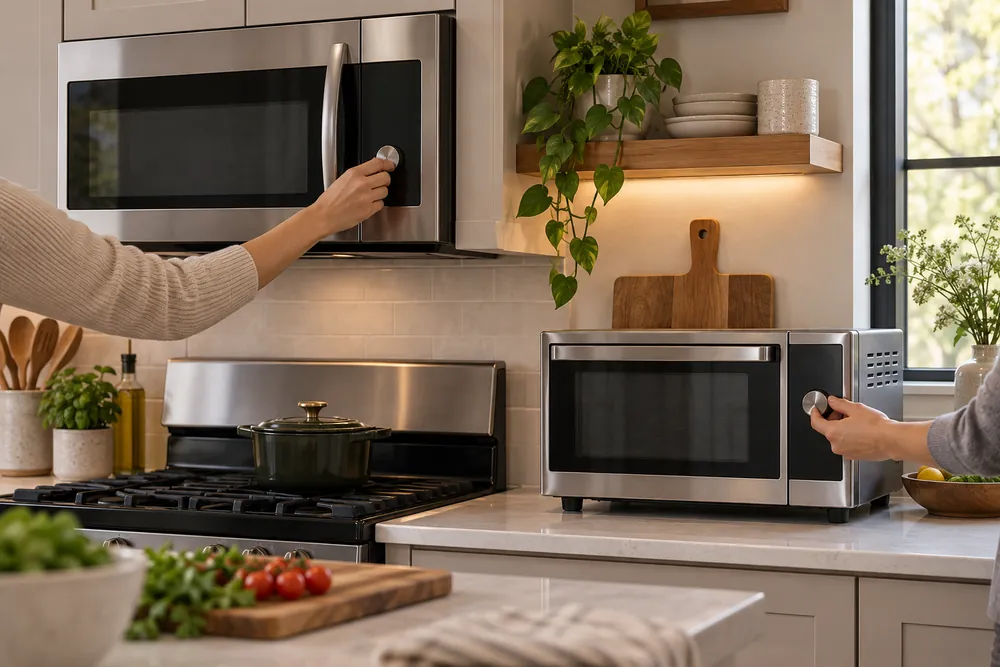
Buyer questions usually come down to space, venting, power, and installation. Over-the-range models save counter space and add ventilation; countertop models are easier to place and replace.
Is an over-the-range convection microwave better than a countertop one?
Neither format is automatically better. Choose by cabinet space, counter space, ventilation, rental rules, and replacement cost.
What size convection microwave do I need?
Capacity helps, but exterior dimensions matter more. Check cabinet openings, clearances, door swing, airflow, and usable depth.
| Format | Common published capacity range | Typical fit consideration |
| Over-the-range convection microwave | About 1.5-2.2 cubic feet | Often designed for 30-inch cabinet openings |
| Countertop convection microwave | About 0.9-1.6 cubic feet | Needs counter depth, door swing, and side or rear airflow |
How much clearance does an over-the-range microwave need?
Clearance depends on the manual, cooktop, cabinet layout, and local code. Check both appliance manuals before buying.
Do convection microwaves replace a regular oven?
They handle many small baking, roasting, reheating, and browning jobs, but not large trays or holiday cooking.
How many watts should a convection microwave have?
Compare microwave wattage, convection wattage, fan design, cavity size, and temperature control.
| Specification | Usual category range | Why it matters |
| Microwave cooking power | About 900-1,200 watts | Affects reheating and defrosting speed |
| Convection temperature range | About 250-450°F | Defines baking and roasting flexibility |
| Vent fan rating for over-the-range units | About 300-400 CFM | Helps compare steam and odor removal claims |
Is venting required for an over-the-range convection microwave?
Over-the-range units need exterior ducting or recirculation with filters. Exterior venting usually handles smoke, steam, and odors better.
Are countertop convection microwaves safer for renters?
Countertop models are usually simpler for renters because they avoid cabinet mounting, duct decisions, and changes above the range.
What specs should I compare before buying?
Compare installation dimensions, capacity, wattage, convection temperature range, vent rating, filter type, turntable or flatbed design, warranty, noise, keypad readability, door feel, and cleaning.
- Pick over-the-range for counter-space savings and integrated venting.
- Pick countertop for easier setup, lower installation complexity, and flexible placement.